Sunday, August 28, 2022

Announcing the Devilishly Delightful Donald Pleasence Blogathon


Donald Pleasence Blogathon

When Gill from Realweegiemidget Reviews asked me if I was interested in co-hosting a blogathon devoted to the one and only Donald Pleasence, how could I resist? Who else but Mr. Pleasence could be a Bond villain, a blind POW, a Soviet conspirator, William Hare (of the notorious duo Burke and Hare), and a determined psychiatrist, all with equal conviction? Friend or foe, the infinitely versatile character actor was always committed to his craft.

Dr. Loomis, Halloween

Since the blogathon will take place Halloween week, you’re more than welcome to cover any of his horror roles, but don’t forget his many other non-horror characters, as well. You might choose to review one of his films, do a retrospective of his filmography, or cover one aspect of his career (such as his enduring role as Dr. Loomis in the Halloween series). There are no limits to the possibilities.

Dr. Michaels, Fantastic Voyage

Of course, you’re not just restricted to blog posts about Pleasence. Feel free to send us links to your YouTube video, podcast, black-light velvet paintings – wherever your creative impulses take you. Not sure where to start? With acting credits, according to IMDB, there’s bound to be something that will strike your fancy. Check out a list of his roles here

SEN, THX-1138
 

What: The Devilishly Delightful Donald Pleasence Blogathon


Who: Hosted by Gill Jacob and Barry P. 


Where: Realweegiemidget Reviews & Cinematic Catharsis


When: October 28-30, 2022 


How: Please read the rules below, and send me your post request (review, podcast, etc…) via email (barry_cinematic@yahoo.com), Twitter (@barry_cinematic), or by commenting below. You may also contact Gill by commenting on her post, or through her blog’s Contact Me page. (Be sure to include your preferred name, along with your blog’s title).

Priest, Prince of Darkness
 

The Rules…

1.     You may review ANY of his film or TV appearances. Or if you want to review books or topics about him that’s fine with us as well.

2.     Because Mr. Pleasence has such a large number of appearances in his filmography, NO DUPLICATE MOVIE OR TV SHOW TITLES WILL BE ALLOWED. If a specific title has already been claimed, you may only include that title if it’s part of a list or retrospective review. If you choose to write about Donald Pleasence, tell us what your topic will be. We won’t accept posts that are uncomplimentary or disrespectful to him.

3.     Review choices may be requested as a comment on this page or you may contact me through the methods listed above.

4.     Add your Twitter username so we can promote your post.

5.     A full list of blogs and review choices will be posted on a separate page, and updated regularly.

6.     Only original, never-before-published posts will be accepted.

7.     Limit TWO blog posts per participant, please.

8.     Send a link of your post(s) to me or Gill on one of the days of the blogathon. Note: We will be publishing all links on both blogs.  

9.     Please also note: Gill and I have already claimed the following titles below:

Gill at Realweegiemidget Reviews – Telefon (1970)

Barry at Cinematic Catharsis – Circus of Horrors (1960)


One more thing: 

If you plan to participate, or just want to show your support, please grab one of the following banners to display on your blog:


We’re looking forward to seeing your submissions!

Thursday, August 25, 2022

The Ginger Snaps Trilogy


Werewolf

“The goal was to create a werewolf movie that no one had seen before. It was to kind of take people’s expectations of the genre, and then… bend them and twist them, and really make it something that was a departure. I really wanted to strip the magic away from the werewolf, and create the werewolf as a kind of a biological entity. The werewolf was a virus that infected the human body…” - John Fawcett (Director, Ginger Snaps)

Aroooo… Ho hum. There’s a certain sameness to many werewolf movies: Man gets bitten by werewolf and subsequently acquires curse, man transforms into werewolf, followed by man living a tortured existence until he meets a tragic ending. Sure, there’s infinite possibilities within these confines, but most permutations seem to follow a similar trajectory, with predictable results.

Brigitte and Ginger

The first Ginger Snaps movie (which seemingly sprung from nowhere) was just the shot in the arm the genre needed, managing to be a clever twist on coming-of-age comedies and werewolf flicks in one go. It was a refreshing departure from the usual male-centric genre offerings, which typically portrayed men as the problem-solvers and women as passive and virtually extraneous (except, perhaps, as sex objects). Instead, the men are often depicted as ineffectual or toxic (or a combination of both).  

Brigitte and Ginger in 1815

How do you follow up a successful film? The usual sequel formula involves upping the action and raising the stakes, while making everything louder, faster and more bombastic. The Ginger Snaps sequels are a surprising exception, despite featuring different writing/directing teams (which usually isn’t a good sign). Then again, the changing of the guard created a unique tone for each film, as well as providing an opportunity to take the two principal characters in unexpected directions.

Ginger Snaps Poster

Ginger Snaps (2000) Directed by John Fawcett; Written by Karen Walton; Story by John Fawcett; Starring: Emily Perkins, Katharine Isabelle, Kris Lemche, Mimi Rogers and Jesse Moss; Available on Blu-ray and DVD

Rating: ****

“A girl can only be a slut, a bitch, a tease, or the virgin next door.” – Ginger (Katharine Isabelle)  

Ginger Snaps was barely a blip on the radar when it debuted in Canadian theaters. After it failed to score a distribution deal in the States,* director John Fawcett feared that was the final nail in the coffin for his independent werewolf flick. A screening in New York breathed new life into his movie, and it was subsequently picked up by HBO, where it enjoyed heavy rotation. Thanks to home video and positive word of mouth, the little-werewolf-movie-that-could grew to become a cult favorite, as well as a modern genre classic.

Ginger and Brigitte

Gawky teen sisters Ginger and Brigitte* (Katharine Isabelle and Emily Perkins) share an odd sort of symbiosis. Not unlike the eponymous Harold from Harold and Maude, Ginger and Brigitte enjoy staging brutal deaths and filming them – the more revolting, the better. Their long-suffering parents, Pamela (Mimi Rogers) and Henry (John Bourgeois) have come to begrudgingly tolerate their stunts as some sort of weird phase. Being late to the puberty party, they’re further isolated from their high school** peers, so they stick together as one death-obsessed unit, with outgoing Ginger and reclusive Brigitte against the world. But for Ginger, at least, she’s about to undergo a radical transformation. After she’s viciously attacked by a wolflike creature, her body seems to be making up for lost time, as she experiences her first period, and boys begin to take notice of her appearance. The dyad between the sisters begins to splinter, as Ginger begins to discover boys, while wielding her newly discovered sexual charms. But puberty is only the beginning for Ginger, as her body has new, monstrous changes in store. Brigitte becomes increasingly alarmed at her sister’s metamorphosis, and is determined to find a cure. 

* Fun Fact #1: Just after casting Perkins as Brigitte, Fawcett was chagrined to learn that she had cut her hair extremely short. His less-than-elegant solution was to put her in a wig. 

** Fun Fact #2: The various high school PA announcements throughout the film were done by an uncredited Lucy Lawless. At one point, she pages the “Raimi twins, Samuel and Theodore,” to the principal’s office, a fun reference to her longtime working partnership with Sam and Ted Raimi.

Brigitte and Pamela

Mimi Rogers’ amusing supporting performance as the sisters’ peppy but clueless mother Pamela, is well worth noting. She sports one tacky outfit after another (selected by Rogers, herself), and her default coping method for a life-changing event is to bake something. There’s unexpected depth to Pamela (unlike her obtuse husband), as she gets wise to some of the strange and awful things that are occurring around town.
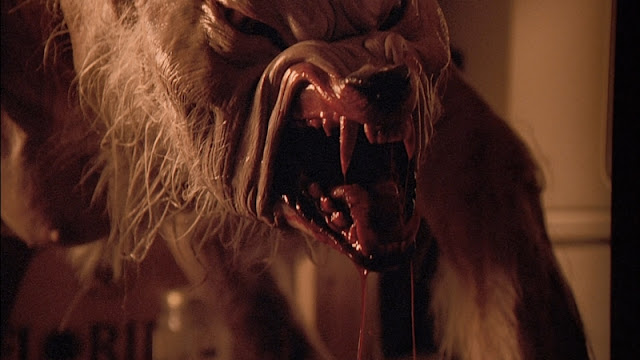
Werewolf

Director Fawcett aimed for a monster that seemed biologically plausible, rather than a product of some magical process. Other than lunar phases being associated with menstrual cycles, the filmmakers didn’t want the moon linked to Ginger’s transformation.* Compared to their hirsute cousins in nearly every other werewolf film, the beasties in this movie were mostly hairless (featuring makeup effects by Paul Jones). Also, unlike most other werewolf depictions, changing into the mythical beast is a one-way street – there’s no reverse transformation from werewolf to human. Likewise, screenwriter Karen Walton wanted veracity in her teen characters. As a result, the characters sound like flesh and blood teens, rather than some idealized Hollywood construct. Walton equates lycanthropy with teens becoming something monstrous, as the culmination of a self-destructive lifestyle. 

* Fun Fact #3: Fawcett joked that it was the first werewolf movie without a shot of the full moon. Although I can’t confirm the veracity of that statement, it’s safe to say few other filmmakers would dare to omit an obligatory shot of the full moon in their werewolf movies.

Ginger with Janitor

If Heathers had been filmed by David Cronenberg,* it might look something like Ginger Snaps. It’s an inspired mix of the comic and the grotesque with an insightful study of human nature, deftly balancing the drama with well-timed comic moments (Walton’s ear for how people talk runs circles around the sequels in the dialogue department). As an intentional departure from genre stereotypes, Ginger Snaps thumbs its muzzle at werewolf lore, while honoring its horror roots, making this an essential addition to the sub-genre. 

* Fun Fact #4: Fawcett and Walton cited several films as the inspiration for Ginger Snaps, including Carrie, Heavenly Creatures, and the films of fellow Canuck, Cronenberg (especially Dead Ringers and The Fly). 


Ginger Snaps 2 Poster

Ginger Snaps 2: Unleashed (2004) Directed by Brett Sullivan; Written by Megan Martin; Characters by Karen Walton; Starring: Emily Perkins, Brendan Fletcher, Katharine Isabelle and Tatiana Maslany; Available on Blu-ray and DVD 

Rating: *** 

“You’re healing faster, aren’t you? That shit’s not a cure, you know. It just slows the transformation. It doesn’t stop it, B. Nothing will stop it.” – Ginger (Katharine Isabelle) 

It must have been a daunting task following up one of the most original werewolf movies in years, but director Brett Sullivan and writer Megan Martin did an admirable job with Ginger Snaps 2: Unleashed. This time, the focus is on Brigitte, who’s become increasingly withdrawn from society, following the aftermath of the first film. Now afflicted with the same curse as Ginger, the only thing that keeps her transformation at bay is a solution of poisonous monkshood (a relative of wolfsbane), which she injects on a regular basis. Her escalating self-destructive behavior eventually leads her (unwillingly) to a rehab center for young women.

Brigitte and Ginger

If the first film is about lycanthropy as a metaphor for puberty, the second concerns werewolves standing in for the ravages of addiction. Brigitte has become sickly and gaunt, waiting for her next fix of an antidote that isn’t really an antidote. Haunted by the threat of turning into a werewolf, she starts shooting up with greater frequency, but it appears to have a diminishing effect. She finds little solace in her visions of Ginger (reprised by Katharine Isabelle), who mercilessly goads her.

Brigitte and Ghost

The film introduces some interesting characters, including Tyler (Eric Johnson), a loathsome orderly who gives the inpatients the drugs they crave, in exchange for sexual favors. A strange young girl, known only as Ghost (Tatiana Maslany), follows Brigitte around the facility, narrating everything that’s going on, as if she’s writing a story. With Ginger out of the picture, there’s a reversal of roles, with Brigitte standing in as the unwitting surrogate older sister. As we soon learn, however, there’s more to Ghost than Brigitte first suspects.

Brigitte and a Werewolf

The creature effects, employed sparingly, are handled by KNB Effects Group. Instead of the mostly hairless creatures in the first film, the werewolves have a more traditional, furry appearance, which carries over to the third film (also featuring KNB Effects). The annoying rapid-cut shock scenes (especially ubiquitous in the early 2000s) are distracting rather than engaging. It’s disappointing, albeit unsurprising, that Ginger Snaps 2 doesn’t have as much to say as the first movie. Although it’s more like an epilogue to Ginger Snaps, rather than a fully satisfying sequel, it ultimately gets more right than it does wrong.


Ginger Snaps Back Poster

Ginger Snaps Back: The Beginning (2004) Directed by Grant Harvey; Written by Christina Ray and Stephen Massicotte; Starring: Katherine Isabelle, Emily Perkins, Nathaniel Arcand, JR Bourne, Hugh Dillon and Brendan Fletcher; Available on Blu-ray and DVD 

Rating: ***   

“The English and the French brought with them their diseases to plague our land. And with them came the Wendigo. This was all foretold. Watched for. And with the Wendigo would come two sisters, the Red and the Black. And their love and their deaths would decide the way of things.” – Hunter (Nathaniel Arcand)

Instead of following the sequence of events in the first two installments, the third Ginger Snaps movie regresses 200 years, to Canada’s pre-history, focusing on Ginger and Brigitte’s ancestors (who conveniently look identical and possess the same names). This time, the setting is a remote outpost, surrounded by hostile assailants.

Burying the Dead

Ginger Snaps Back is essentially a siege film, taking its inspiration from John Carpenter movies such as Assault at Precinct 13 and The Thing. A pervasive sense of dread and paranoia takes hold, as the outpost’s occupants view outsiders Ginger and Brigitte with suspicion. Things drag on a bit long, as we anticipate the inevitable bloody werewolf onslaught, but arrive it does. In this film, the werewolf is an unstoppable supernatural force, a manifestation of the Wendigo legend. A First Nations warrior (Nathaniel Arcand, in an intriguing but underwritten role) protects the sisters from harm, as he watches an ancient prophecy come to fruition.  

Hunter and Elder

Considering its meager budget, Ginger Snaps Back boasts strong production values and some excellent cinematography. It’s too bad the pacing, as well as the dialogue is so inconsistent. Much like the previous installment, it’s a mostly humorless affair, with the witty exchanges of the first film sorely missed. Ginger and Brigitte appear to be transplanted from a different era, speaking contemporary English, while everyone else remains entrenched in the early 19th century. Faults aside, it’s laudable that the filmmakers avoided the easy route, choosing to take the third movie in a completely different direction. Here’s hoping this isn’t the last adventure of Ginger and Brigitte. 


Sources: Shout Factory Blu-ray commentary by John Fawcett; “Ginger Snaps: Blood, Teeth and Fur” (2014 documentary); “A Different Kind of Monster Movie: Writer Karen Walton Reflects on Ginger Snaps 20 Years Later,” by Tatiana Tenreyro, Bloody Disgusting 


Monday, August 8, 2022

The Night of the Werewolf

The Night of the Werewolf Spanish Poster

(1981) Written and directed by Paul Naschy (as Jacinto Molina); Starring: Paul Naschy, Julia Saly, Silvia Aguilar, Azucena Hernández, Beatriz Elorrieta and Pilar Alcón; Available on Blu-ray (Part of the Paul Naschy Collection) and DVD (Out of Print) 

Rating: ***½ 

“The movies I was making not only reflected my spirit and personality, but was the result of a series of circumstances that surrounded the peculiar country of Spain. The Wolf Man created by the English or Americans, like Larry Talbot, had nothing to do with Spanish culture. I guess that’s why my fans are people who know my movies and have been subconsciously affected by all of this, by a very special country that has always been in conflict, which is Spain. This is reflected in my work.” – Paul Naschy (excerpted from a 2002 interview)

Werewolf

Over the course of his career, Paul Naschy* earned a well-deserved reputation as the Spanish Lon Chaney, portraying a variety of boogeymen, including Dracula, Frankenstein’s monster, the mummy, and of course, a werewolf. Arguably his best-known character was the eternally doomed Polish nobleman/lycanthrope Waldemar Daninsky (a role he played 12 times). ** The Night of the Werewolf (aka: El Retorno del Hombre Lobo) represented a return to familiar territory, blending old-fashioned Hammer-style gothic atmosphere and pools of blood, with a sprinkling of sex and nudity* for good measure. 

* Fun Fact #1: Jacinto Molina adopted the moniker “Paul Naschy,” in an effort to make his name more marketable to international audiences. According to the prolific actor/filmmaker he chose “Paul” after seeing a picture of Pope Paul VI in a newspaper, and the surname “Naschy” was based on Hungarian weightlifter, Imre Nagy. 

** Fun Fact #2: By comparison Lon Chaney Jr. only played his signature role, Lawrence Talbot (aka: The Wolf Man), five times. 

*** Fun Fact #3: According to Naschy, horror filmmakers were allowed to slip by the persnickety Spanish censors, provided all of the supernatural mayhem took place in a different country.

Erika Revives Elizabeth Bathory

In the film’s prologue, set in 16th Century Hungary, we witness a tribunal, where Countess Elizabeth Báthory (Julia Saly) and her confederates are punished for their sadistic crimes against humanity. Compared to her cohorts, Báthory receives a veritable slap on the wrist, confined to her chambers for the rest of her life, while her accomplices are sentenced to death. Most notable among the doomed, is Polish nobleman Waldemar Daninsky (Paul Naschy),* who moonlights as a werewolf (under the control of Báthory, he preyed on hundreds of villagers). But (Surprise!) death isn’t the end for Báthory and her troublesome troupe. Skip forward several centuries, when diligent archeology student Erika (Silvia Aguilar) is hot on the trail of the site that houses Báthory’s not-so-final resting place. Erika, whose ambition is only matched by her ruthlessness, strangles her mentor (Narciso Ibáñez Menta) and takes his amulet, which holds the key to bringing the evil countess back to life. Meanwhile, a wealthy collector and his lackey unwittingly bring Daninsky back to life by removing a silver cross from his chest. If Erika’s previous exploits weren’t enough to convince you of her malevolent intentions, she brings along two of her nubile colleagues, Barbara (Pilar Alcón) and Karen (Azucena Hernández), just so she can sacrifice them. Proving how cutthroat the field of archeology can be, Erika suspends Barbara’s body above Báthory’s crypt, puncturing her neck. In return for Erika’s loyalty, the newly revived Báthory bites her number one fan in the neck, adding her to the ranks of the undead. 

* Fun Fact #4: Unlike Elizabeth Báthory, don’t bother searching for Waldemar Daninsky in the history books. Naschy derived his venerable character’s name from Polish weightlifting champion Waldemar Baszanowski.

Werewolf

Since Naschy is the star of the movie, we’ll conveniently forget about all those murders that occurred several hundred years ago, so he can emerge as the nominal hero. In an early scene, he comes to Erika and her friends’ rescue when they’re ambushed and assaulted by bandits. 300 years of slumber haven’t dulled Daninsky’s impulse to settle the score with Báthory and stop her growing league of vampire minions. To reinforce Daninsky as a sympathetic character, there’s a brief poignant moment (paralleling a shot in Jean Cocteau’s Beauty and the Beast) in which the werewolf regards his reflection in a pool of water with contempt. Karen plays Beauty to Naschy’s Beast, whose unconditional love for Daninsky can set him free.

Bathory vs. Daninsky

Julia Saly seems to be having a blast as Elizabeth Báthory, and why not? Along with her vampire henchwomen, she’s a formidable opponent for Daninsky – a force of nature to be reckoned with. Compared to Báthory, goody-two-shoes Karen couldn’t be anything but bland. The closest thing to a tragic figure is Mircalla (Beatriz Elorrieta), Daninsky’s live-in caretaker. Although persecuted by the villagers as a witch (half of Mircalla’s body is horribly scarred from an attempt to burn her), she’s a force of good, protecting her benefactor and Karen from harm. She scarcely hides the fact that she’s also in love with Daninsky, but no thanks to her hideous appearance, she remains squarely entrenched in the friend zone (Yeah, so much for “It’s what’s inside that counts.”).
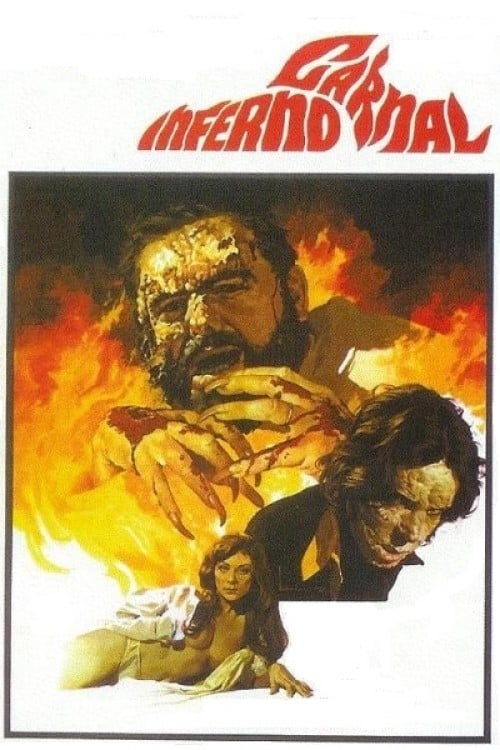
Vampire Attack

Despite some creaky elements, recycled from countless other monster movies, The Night of the Werewolf never fails to entertain. It’s the equivalent of cinematic comfort food, packed with the usual trappings we’ve come to expect from modern gothic horror: a tortured protagonist, a shadowy castle shrouded in fog, comely women clad in diaphanous nightgowns (carrying an unwieldly candelabra, no less). If one ignored the movie’s origins, it could almost be confused with a Hammer production (if Hammer played fast and loose with their properties). It’s an irresistible blend of trashy and sublime that hooks you in from the first reel. Who wouldn’t want to see Elizabeth Bathory and her vampire horde versus a werewolf, in a struggle for ultimate power? It’s the historical smackdown we so richly deserved, if reality hadn’t denied us.


Sources: “Paul Naschy: Interview with the Werewolf,” 2002 Blue Underground interview; Paul Naschy wiki 


Wednesday, July 27, 2022

South America Month Quick Picks and Pans


The Aerial Poster

The Aerial (aka: La Antena) (2007) If Guy Maddin took a wrong turn in Winnipeg and ended up in Buenos Aires, he might have concocted something like this. Writer/director Esteban Sapir’s whimsically dark fantasy recalls the style of the Canadian director, but has an energy all its own. The predominately silent black-and-white film, takes place (appropriately enough) in a city that’s lost its voice. A faceless singer and her eyeless son (who inherited her vocal gift) are stalked by a ruthless millionaire, who wants to exploit them for his own devious ends. It’s up to a lowly TV repairman and his estranged wife to save the day. The Aerial may not be the easiest movie to find, but worth seeking out. 

Rating: ****. Available on DVD (Region 2)

The Beast Must Die Poster

The Beast Must Die (1952) Not to be confused with the 1974 Amicus movie carrying the same name, this delectable slice of Argentine noir from director/co-writer Román Viñoly Barreto captivates from start to finish. Felix Lane (Narciso Ibáñez Menta), a writer of murder mysteries, plots a murder of his own when his son is struck and killed by a hit-and-run driver. He befriends a glamorous actress (Laura Hidalgo), who could be his only link to the driver, Jorge Rattery. Guillermo Battaglia is excellent in the role of unscrupulous (and aptly named) businessman Rattery, one of the most despicable characters in noir. The story, told mostly in flashback, illustrates how everyone around Jorge wanted him dead. It’s an emotionally devastating, beautifully acted, meditation on the weight of loss.   

Rating: ****. Available on Blu-ray and DVD


The Wolf House Poster

The Wolf House (aka: La Casa Lobo) (2018) This visually inventive, profoundly unsettling Chilean film by co-directors Joaquín Cociña and Cristóbal León employs a variety of animation techniques to tell its melancholy tale, steeped in metaphor and mythology. After fleeing a religious cult, Maria tries to make a home for herself, with two pigs in tow. The nightmarish images are purposely rough around the edges, adding to the tumultuous feel, making no attempt to hide the artifice of the animation. It’s a soul-wrenching portrait of abuse, and the terrible cycle that perpetuates. 

Rating: ****. Available on DVD, Kanopy, Shudder and Tubi


Bacurau Poster

Bacurau (2019) The tiny village of Bacurau suddenly falls off the map, leaving the residents vulnerable to the sick machinations of a corrupt local politician and a group of bloodthirsty mercenaries (led by Udo Kier). The film starts with a mystery, as people are prevented from entering or leaving the town. As secrets are slowly revealed, the mystery gives way to a standard revenge flick, with shades of The Most Dangerous Game. Even if it falls somewhat short, Bacurau features some excellent performances by Kier and Sonia Braga (who plays one of the village elders), and an interesting depiction of rural Brazilian life, making this well worth your time. 

Rating: ***½. Available on Blu-ray, DVD and Kanopy


Dona Flor and Her Two Husbands Poster

Dona Flor and Her Two Husbands (1976) Sonia Braga stars as the title character, married to two-timing ne’er do well Valdomiro (José Wilker). When Valdomiro unexpectedly expires, due to another round of debauchery, Dona Flor is on the lookout for new husband material. She eventually settles for mild-mannered pharmacist Teodoro (Mauro Mendonça), and his promise of domestic stability. But a trivial thing like death doesn’t end things for her first husband (who’s only visible to her), who frequently returns for some amorous attention. Now, Dona must reconcile her mixed feelings for Valdomiro’s lecherous ways and Teodoro’s kind but dull personality. It’s well-acted, albeit a trifle overlong, and one has to question the dated premise that Dona has to choose at all between two less-than-stellar prospects. 

Rating: ***. Available on Blu-ray, DVD and Kanopy

Hellish Flesh Poster

Hellish Flesh (aka: Inferno Carnal) (1977) Brazilian shock pioneer José Mojica Marins (who also wrote and directed) stars as Dr. George Medeiros, a scientist (studying what, I couldn’t tell you) and doting husband. Unfortunately for Medeiros, he doesn’t realize that his wife Raquel (Luely Figueiró) has been sleeping with his friend Oliver (Oswaldo De Souza). The two lovers scheme to get rid of Medeiros by throwing acid (which has been conveniently sitting in an open flask above his work desk) in his face, followed by a laboratory fire. Naturally, Medeiros’ disfigurement doesn’t stop him from plotting his revenge. It’s cheaply made, with a twist that isn’t much of a twist, and there’s nothing particularly original about the plot, but it’s marginally diverting. 

Rating: **½. Available on DVD (Out of Print)  


Los Decentes Poster

Los Decentes (aka: A Decent Woman) (2016) Belen (Iride Mockert), a repressed 32-year-old woman takes a job as a live-in maid at an exclusive gated community. She soon discovers just beyond the immaculately trimmed hedges and rolling golf course, lies a nudist colony. One day, she decides to throw caution (and her clothes) to the wind and join them, finding a new-found freedom in her covert lifestyle. The first two-thirds provide an interesting, subtle satire on a clash of cultures and values, with ample commentary on the haves and have nots. Unfortunately, it disintegrates in the third act, with a surprise (and tasteless) twist that undermines the rest of the film. Close, but no cigar.    

Rating: **½. Available on DVD and Kanopy


Hallucinations of a Deranged Mind Poster

Hallucinations of a Deranged Mind (1978) Writer/director José Mojica Marins, working with next to no budget, cobbled together this half-baked horror film, with a surprisingly unique premise. A psychologist goes off the deep end, hallucinating that he’s being tormented by Coffin Joe His colleagues try to bring him out of his trance, bringing in the actor who played Coffin Joe (Marins as himself) in an attempt to bring him out of his trance. The interesting meta theme pre-dates Wes Craven’s A New Nightmare by several years. Unfortunately, it’s padded out with multiple scenes from previous Coffin Joe movies. The seemingly endless repetition of the same shots makes this one a chore to watch. For Coffin Joe completists, only. 

Rating: **. Available on DVD

Friday, July 15, 2022

Man Facing Southeast


Man Facing Southeast Poster

(1986) Written and directed by Eliseo Subiela; Starring: Lorenzo Quinteros, Hugo Soto and Inés Vernengo; Available on Blu-ray and DVD 

Rating ****½ 

“I’m more rational than you. I respond rationally to stimulus. If someone suffers, I console him. If someone needs my help, I give it. Why then, do you think I’m crazy? If someone looks at me, I respond. If someone speaks, I listen. You have slowly gone mad by ignoring those stimuli, simply by looking the other way. Someone is dying and you let him die. Someone asks for your help and you look away. Someone is hungry and you squander what you have. Someone is dying of sorrow and you lock him up so as not to see him. Anybody who systematically behaves this way, who walks among them as if the victims weren’t there, may dress well, may pay taxes, may go to Mass, but you can’t deny he is sick. Your reality is terrifying, Doctor.” – Rantes (Hugo Soto)

Rantes

How do we separate the mentally ill from the sane, and is there such a thing as “normal?” Writer/director Eliseo Subiela raises these questions, and many others, with his nuanced parable Man Facing Southeast. Thematically, his film shares many aspects of One Flew Over the Cuckoo’s Nest, by way of The Man Who Fell to Earth but transcends those notable titles, largely thanks to Hugo Soto’s extraordinary, otherworldly performance as the enigmatic inpatient Rantes. Subiela based the character (and the film’s title) on an incident from his old neighborhood, where a strange man spent hour after hour standing stiff and motionless, while staring blankly into space, facing a southeasterly direction.* Man Facing Southeast was filmed in a real-life working institution, Borda Hospital,** located in Buenos Aires. 

* Fun Fact #1: Subiela later learned that the man from his neighborhood was a former psychiatric patient who fell in love with one of the nurses. When he was discharged from the hospital, he would stand vigil, pointed towards her apartment window (until she eventually moved away). 

** Not So Fun Fact: Prior to working on the film, Soto already had an intimate knowledge of Borda Hospital, as it was the same institution where his father had once been committed.  

Rantes and Dr. Denis

Dr. Julio Denis (Lorenzo Quinteros) is a psychiatrist at the end of his rope, burned out and devoid of passion, after seeing one patient too many swallowed up by the system. Likewise, his personal life is in tatters. Currently divorced, he only sees his kids intermittently. Denis spends his lonely hours at home playing his saxophone and watching home movies, ruminating over what was, and might have been. His life suddenly takes an unexpected turn when a new patient enters his life, seemingly from nowhere (during the latest headcount, there’s one extra individual among the patient roster). Rantes who claims to be an advanced form of holographic projection from outer space, stands in the hospital’s courtyard for hours, pointed southeast so he can (in his words) gather transmissions. Supposed extraterrestrial origins aside, Rantes exhibits a certain magnetism – many of the patients are drawn to him, finding comfort in his presence (even the doctor’s kids seem entranced). The new patient becomes a source of frustration for Dr. Denis, who’s convinced there must be some diagnosable form of mental illness, even though he can’t determine what it is. Based on this assumption, the doctor resigns himself to searching for holes in Rantes’ outwardly airtight argument. The third major player is Beatriz (Inés Vernengo), who visits Rantes at the hospital, and whom he refers to as “The Saint.” They share a connection and a past, although the details are sketchy. Dr. Denis thinks her presence could be the key to Rantes’ origin, as well as a possible cure, although her past proves to be as shadowy as Rantes. 

* Fun Fact #2: Soto’s appearance as a Borda resident was so convincing that the guards confused him for a real patient, and tried to prevent him from leaving the premises.

Rantes in Pathology Lab

Hugo Soto’s intense, measured portrayal of Rantes is the heart of Man Facing Southeast.  He’s presented as a tragic, Christ-like figure, who cares for the downtrodden. Despite his keen observations, and empathetic behavior toward the marginalized patients the staff routinely ignore, he confides that he can’t feel. At times, we’re unsure who’s the doctor and who’s the patient. Rantes’ insightful questions cut to the quick (“Why do psychiatrists lean back when they listen to patients? Do they fear it’s contagious?”). When Dr. Denis tries to assure his patient of their equal ground, it prompts Rantes to ask, “…Why do you wear the uniform of the sane and I wear the uniform of the insane?” Rantes continually challenges the doctor, pushing him to the limit of his definition of mental illness. In an early scene, Rantes questions where the “magic” resides: What is the spark that creates prodigious intelligence, or love, or the impetus to create beautiful music? This parallels a later scene when the patient, working as an assistant in a pathology lab, pondering a dead lump of tissue that was once a living human brain, picking apart its creases in a futile attempt to unlock its secrets.

Rantes Conducts an Orchestra

Music, in one form or another, plays a vital role throughout the film. Pedro Aznar’s* haunting, ethereal soundtrack adds greatly to the mystique that surrounds Rantes. The combination of conventional instruments (piano, flute, saxophone) and electronic sounds, evokes the chaotic, yet elegant labyrinth of his mind. Rantes’ spirited, flawless playing of the hospital church’s organ serves as a contrast to the emotional emptiness he feels inside. Music also provides the backdrop for a much-needed moment of levity in an otherwise somber, introspective film, as Beatriz, Rantes and Dr. Denis attend a concert in the park. In the middle of a performance of Beethoven’s 9th Symphony (aka: the appropriately named, “Ode to Joy”),** Rantes butts in, taking over for the conductor. The audience members dance and sway to the orchestra, under Rantes’ direction, while in the nearby hospital, his fellow patients parade around the facility, absorbed in a trance of ecstatic revelry. To the viewer, it implies that not only can he receive signals, but transmit them as well. Alas, to the hospital’s obstinate director, it’s the final straw. 

* Fun Fact #3: Surprisingly, Aznar was not Subiela’s initial choice. Scoring of the film was already underway when the composer approached the director, entreating him to hear a tape of his version. One listen convinced Subiela that Aznar was the right guy for the job, which left the director with the unenviable task of firing the talented composer he originally hired. 

** Fun Fact #4: The orchestra members refused to play the piece again, so Subiela and his crew could get a shot from a different angle. Instead, they were forced to edit in a tight shot of Rantes conducting, since the orchestra had already left.

Beatriz visits Rantes

Denis is left with a dilemma: either Rantes* is insane or an alien. Because Rantes claims he’s from another planet, the psychiatrist concludes there must be something wrong with him. It’s impossible to accept the prospect that he’s an alien, because it would shake up everything that he believes to be true. To concede Rantes is not insane would only be an admission of his own insanity. Rantes tells Denis that the same thing is going on at psychiatric hospitals around the world, with similar patients to himself. At one point, the doctor almost indulges his curiosity, but pulls away at the last moment, because it’s easier to accept the former proposition. If it was mental illness and delusion, as Dr. Denis and his supervisor contended, what was Rantes’ crime and whom was he hurting? The short answer is that he was an embarrassment that needed to be suppressed. The director’s decision to ultimately drug Rantes (rationalizing that he could turn violent any moment) is more political than ethical. In the end, he’s more worried about saving face than the common good, and in his endeavors to maintain the status quo, he extinguishes the very thing that makes Rantes so special. 

* Fun Fact #5: Cinematographer Ricardo DeAngelis wanted to illustrate Rantes’ genius through the progression of light on his face. By using a single light source, dangling just out of the frame the viewer could see the reflection in actor Hugo Soto’s eyes. As the film progressed, DeAngelis found ways to diffuse the light, to show the vibrancy gradually dissolving from Rantes.

Dr. Denis, Rantes and kids

For the most part, Subiela sidesteps a definitive answer about whether or not Rantes is human. We simply accept the reality of his present situation. The film tips its hand slightly when we see a couple of instances that appear to be telekinesis, but that only opens more questions. Was this something that Rantes achieved, or was it only something he imagined? Does it matter what he is? Ultimately, we are all responsible for Rantes’ eventual fate. Society tends to value conformity, and pigeonholing everyone into neat categories. If they don’t fit in, they’re sick. Rantes’ only crime was being unlike everyone else. As a species, we abhor ambiguity. We fear and despise anyone who defies categorization. It’s often much easier to go with the simplest explanation, because it doesn’t challenge us. Besides the obvious theological analogy, the story mirrors the fable of the Golden Goose. Rantes is a gift to humanity that’s wasted – something too good and pure for this world. Man Facing Southeast will linger in your mind and conscience, long after the final credits roll.

Sources for this review: (Fox-Lorber Blu-ray extras) Interview with Eliseo Subiela (2016), Interview with Hugo Soto (1993), Interview with Ricardo DeAngelis (2016)