Showing posts with label Canada. Show all posts

Monday, April 20, 2026

Quest for Fire


Quest for Fire Poster

(1981) Directed by Jean-Jacques Annaud; Written by Gérard Brach; Based on the novel by J.H. Rosny Sr.; Starring: Everett McGill, Rae Dawn Chong, Ron Perlman, Nicholas Kadi, and Naseer El-Kadi; Available on Blu-ray and DVD 

Rating: ****½


Amoukar - Ron Perlman

“I thought I was making this crap caveman movie. I found out that this guy (Jean-Jacques Annaud) had won an Academy Award for ‘Black and White in Color,’ and he was a distinguished filmmaker. By the time I got nervous, I already had the role, so I didn’t trip myself up.” – Ron Perlman, on auditioning for Quest for Fire (Excerpted from 2017 Variety interview)

Sabretooth Cat

It’s no big surprise that most film depictions of early humankind are somewhat lacking in veracity. Whether due to lack of budget, research, or by design, most caveman movies end up looking silly, bordering on self-parody, or straight-out comedies. By default, filmmakers and production companies preferred a more fanciful recreation of primitive people, grunting gibberish, wearing very little, and more often than not, walking amongst dinosaurs (even though the mighty beasts died out many millions of years before our earliest ancestors were on the scene).* Few filmmakers bothered with a “serious” depiction about our early ancestors. One notable exception was Stanley Kubrick’s “Dawn of Man” segment of 2001: A Space Odyssey, which served as a point of reference for French director Jean-Jacques Annaud. Far from the norm, Quest for Fire would reflect the combined efforts of anthropologists, linguists, and many other talented researchers and artists to create a more authentic experience. After three-and-a-half years of development, and an exhaustive search for locations around the world,  filming** commenced in Glencoe, Scotland, Nairobi, Kenya, and Northern Ontario, Canada.*** Budgeted at $12 million, Annaud’s film faced numerous hurdles to overcome, not the least of which were strict Canadian regulations, requiring a certain percentage of Canadian actors, makeup artists and editors. 

* Fun Fact #1: According to Annaud, he purposely wanted to avoid making something like Hammer’s One Million Years B.C. (1966) or Prehistoric Women (1967). 

** Fun Fact #2: In his DVD commentary, Annaud noted that everything was shot live, without post-production trickery. There were very few second takes. 

*** Fun Fact #3: Original plans were to film in Iceland, with its primordial landscape, but shooting was called off due to delays from an ongoing actors’ strike and bad weather.

Trying to Save the Fire

Set 80,000 years in the past, when early humans were just gaining a foothold at the top of the food chain, they endured multiple threats from creatures and hostile tribes, in defense of the one rare commodity that determined who would survive – the possession of fire. When a Neanderthal tribe (the Ulam people) is ambushed by a savage clan of pre-humans (the Wagabou tribe), they set out to make a new home, carrying their precious fire in a crude lantern fashioned from animal skin and bones. In their haste to relocate, their fire is accidentally extinguished. Three are chosen to bring it back to the tribe: Naoh (Everett McGill), Amoukar (Ron Perlman), and Gaw (Nameer El-Kadi).* As our intrepid protagonists set out on their adventure, dangers lurk around every corner, including a pair of hungry sabretooth cats,** who chase our intrepid protagonists up a tree, a stately herd of wooly mammoths,***/**** and a hostile tribe of cannibals (the Kzamm). But all isn’t misery and strife, when they find a new friend with Ika (Rae Dawn Chong)***** a representative from the Ivaka tribe. Over the course of their travels, they will learn to cooperate with each other, and not only gather fire, but learn to create it.******  

* Fun Fact #4: Nameer El-Kadi had a twin brother, Naseer, who played a fellow member of the Ulam tribe in early scenes. Naseer also stood in for Nameer when his brother was unavailable to shoot a scene involving the tribe’s run-in with a bear. 

** Fun Fact #5: Ligers (half-lion/half-tiger), equipped with prosthetic teeth, were utilized for the “sabretooth” cats. 

*** Fun Fact #6: In a scene when the trio of Neanderthals encounter a herd of wooly mammoths, the filmmakers employed children made up to resemble the leads, so the creatures would appear more massive. 

**** Fun Fact #7: The “mammoths” were 14 circus elephants fitted with masks, specially created hairpieces made from knotted yak hair, and enlarged prosthetic tusks. 

***** Fun Fact #8: According to Annaud, Chong wasn’t an actor when he discovered her on the beach in California, but he persuaded her to act in his movie. 

****** Fun Fact #9: For a pivotal scene in which an Ivaka tribesman creates fire…the filmmakers hired a Masai tribesman

Ika - Rae Dawn Chong

While McGill, Perlman, and El-Kadi do an extraordinary job as the three Neanderthal leads, Rae Dawn Chong deserves special mention for one of the film’s most challenging roles as Ika, a Homo Sapiens woman, who spends a large portion of the film clad in nothing but body paint (actually layers of clay and charcoal, inspired by modern tribes). Much to the delight and dismay of her somewhat dim Neanderthal counterparts, she schools them in the ways of making fire, humor (reacting to a rock falling on Amoukar’s head with laughter), and instructing Naoh in the art of lovemaking. The sex and nudity depicted in the movie are presented in a matter-of-fact manner, not intended to be titillating or exploitive, but reminiscent of an anthropological study.

Wooly Mammoths

Quest for Fire invites us to immerse ourselves in the prehistoric world, starting with Annuad’s insistence on no subtitles (despite the urging of a short-sighted film executive). Instead, the filmmakers trust us to infer what’s happening onscreen through the characters’ facial expressions, gesticulations and body language. One of the film’s conceits is that not a single word of modern language is spoken. Instead, author/linguist Anthony Burgess (A Clockwork Orange), devised a language*/** for the Neanderthals, based on Indo-European roots. British zoologist Desmond Morris arranged sessions for the cast to mimic apelike behaviors, and Canadian mime Gary Schwartz (who appears as Rouka, from the Ulam tribe), instructed the actors on movement. Great care also went into the makeup,* to ensure the characters appropriately resembled their parts.   

* Fun Fact #10: The language used by the Ulam tribe included 350 distinct words. 

** Fun Fact #11: Because Burgess was only available for a relatively short time, there was no time to devise a completely different language for Ika’s tribe. Instead, the filmmakers recorded native Inuit speakers for their dialogue. 

*** Fun Fact #12: The elaborate Academy-award-winning makeup (by Sarah Monzani and Michèle Burke) for the principal characters, comprised of five separate pieces, took five hours to apply and two hours to remove. The wigs were designed in three pieces instead of one piece (as in most other caveman films), to make the characters’ hair look more authentic. 

Naoh - Everett McGill and Ika - Rae Dawn Chong

45 years after its release, Quest for Fire remains the gold standard of caveman movies – the touchstone that all other films like it are compared against. While no one alive has ever heard a Neanderthal speak or watched sabretooth cats relentlessly pursue their prey, Quest for Fire’s compelling images are probably the closest thing to a documentarian traveling 80,000 years into the past to observe our ancestors.  


Sources for this article: DVD commentary by Jean-Jacques Annaud; “Quest for Fire – Pretty Department, Dirty Work,” by Suzanna Plowright (Cinema Canada, September 1981); “Final Cut: My First Time in Variety – Ron Perlman” (Variety, Sept. 20, 2017); “Canadian Regulations Under Fire As ‘Quest’ Shoot Continues,” by Gloria Kissin (The Hollywood Reporter, May 5, 1981)


Sunday, July 7, 2024

The Pit

The Pit Poster

(1981) Directed by Lew Lehman; Written by Ian A. Stuart; Starring: Sammy Snyders, Jeannie Elias, Sonja Smits and Laura Hollingsworth; Available on Blu-ray and DVD 

Rating: ***

Jamie Stares Into the Pit

“I look back and I think to myself, there’s always things you can do better… Jamie’s character, even when you watch it today, is gonna freak you out. You can see the eyes on Jamie. There was something there, and I’m proud of that.” – Sammy Snyders

Talking with Teddy

Everyone likely has a story about the weird kid at school other kids seemed to steer clear of, because of their appearance or behavior (Hey, no judgment here! I was probably that weird kid).  By necessity or choice, they become immersed in their own world – someplace they feel accepted. While we wonder what’s his or her deal, our imaginations take flight with idle (and often inaccurate) speculation. In most cases, they’re harmless but lack the social skills to navigate the nuances and pitfalls of social interactions, have interests that no one else cares about, or just behave a little differently from their peers. The Pit (1981)*/** is about a not-so-benign oddball kid, with the repercussions of his social estrangement taken to horrible extremes.    

Fun Fact #1: Although The Pit was another example of a Canadian tax shelter production, filming was predominately in the United States (with a combination of Canadian and American cast and crew), in the small town of Beaver Dam, Wisconsin. 

Fun Fact #2: The film’s original title, Teddy, was also the title of the novelization.

Jamie and Sandy

Jamie Benjamin (Sammy Snyders)*/** is a smart but troubled 12-year-old boy that other kids avoid like a communicable disease. Everyone, including the adults in his life, sense something is “off” about him. Interactions with other kids often end in disaster (such as the opening scene, where he’s punched in the face by a schoolyard bully), so he mostly keeps to himself. His only friends are the critters he keeps in an overcrowded terrarium and his stuffed toy, Teddy, who “tells” him what to do. His frustrated parents (Laura Press and Richard Alden) have gone through several babysitters, but when they need to travel out of town, they hire a new sitter, perky college student Sandy O’Reilly (Jeannie Elias). Sandy views Jamie as an interesting challenge. With a major in psychology, she somehow considers herself qualified to conduct some dime-store analysis on him (which goes about as well as you would imagine). While she gradually earns Jamie’s confidence, she becomes the unwitting object of his infatuation. In an effort to gain her trust, he reveals his secret about a pit hidden in the woods (with some particularly nasty little residents), but things don’t quite end up as planned. 

* Fun Fact #3: Screenwriter Ian A. Stuart was less than enthused about the final results, claiming that his “story was destroyed,” turning it into a pure horror film rather than a psychological drama. The filmmakers omitted the ending as originally written, which suggested that everything was in Jamie’s mind (and depicted Jamie institutionalized). 

** Fun Fact #4: Stuart’s screenplay envisioned Jamie as a pre-pubescent boy, around 8 or 9. Instead, the filmmakers cast 14-year-old Sammy Snyders to play the now12-year-old lead character, significantly changing the dynamics of the movie.

An Inappropriate Moment

We’re never sure how we should feel about Jamie. On the one hand, it’s easy to sympathize with his social and mental isolation as a result of the ostracism he endures. On the other hand, it’s not so easy to excuse his antisocial (not to mention wildly inappropriate) behavior. In one especially uncomfortable scene, when Sandy reluctantly agrees to wash his back, Jamie confesses that his mother still bathes him (“She really tried to make me clean.”), providing some insight into the family’s dysfunctional relationship. He follows up by asking Sandy, “Do you like washing me?”  which predicably sends her running out of the bathroom. In a later scene, he extorts the town librarian (who believes her niece has been kidnapped) into giving him an impromptu striptease (Yes, this scene is about as creepy as you would likely imagine).* In another scene, he professes his love to Sandy by writing on the bathroom mirror while she’s showering. In times of discomfort or indecision, he consults his teddy bear (whose voice sounds suspiciously like him), bringing to the surface his suppressed urges. In the case of Teddy, the conversations are strictly in Jamie’s head. It’s not so easy to explain away the existence of the pit and some troglodytic primordial humanoids (which he calls “Troliwogs”)**/*** that dwell at the bottom. He takes it upon himself to feed the creatures (buying meat with stolen money), but the food supply quickly diminishes, forcing him to take more drastic measures – anyone he deems to be a "bad” person is fair game for the pit. He once again faces a moral dilemma, however, when his supply of enemies runs out. 

* Fun Fact #5: According to Stuart, director Lew Lehman’s wife (who was frequently on the set) didn’t want her husband directing the brief nude scenes. Those sequences, shot later as inserts, were directed by Stuart instead. 

** Fun Fact #6: The troglodytes were initially played by young children, but when the kids started getting sick and passing out from the constrictive costumes, they were replaced by adult little people. 

*** Fun Fact #7: There were two types of costumes used to depict the troglodytes, with the initial crude, makeshift costumes created on location. The filmmakers weren’t impressed with the results, prompting them to fabricate new costumes for close-up shots in a Toronto-based studio.


Feeding the Pit Creatures

Considering the scenes that preceded his homicidal conversion, it’s an odd choice of the filmmakers to play Jamie’s murder streak for laughs. The Pit lapses into dark comedy through a montage of scenes (accompanied by wacky musical cues), as he leads his enemies (real or perceived) to their doom. Following an argument with Sandy (who believes the pit creatures should be studied), Jamie allows them to escape to the surface, which in turn condemns them to a harsher fate. At this point, the film’s narrative loses its way, with our central character disappearing for the next few scenes. Left to their own devices, the little subterranean beasties create more murder and mayhem than they might have been capable of otherwise. The local police and townspeople combine forces to hunt down the malevolent troglodytes, but it’s never made clear whether Jamie learned about their eventual fate or if he felt any remorse about them. 


The Troglodytes

The distributors should have warned audiences about the risk of whiplash, considering the abrupt mid-film tonal shift, when Jamie starts luring his victims to the pit. In the context of the film, it’s a jarring choice (it’s a credit to composer Victor Davies that he does his best to keep up with the changes). By far, the best part of The Pit is Sammy Snyders’ convincing and creepy performance as the antiheroic main character. Despite the excesses of the rest of the movie, Snyders creates a believable character in Jamie, with a warped sense of justice but recognizable motivations. In Jamie’s defense, the adults he interacts with aren’t much better than his peers, ranging from dismissive to outright hostile, so it’s hard for Jamie to find a moral/ethical compass when no one else does the right thing around him. The Pit is a fascinating mess – a near-miss that almost works, despite its numerous inconsistencies and weird structure. Fans of offbeat low-budget horror may want to give this a try. All others might consider proceeding with caution. 

* Fun Fact #8: Some of The Pit’s disjointed nature could be attributed to the fact that director Lew Lehman was fired before the film’s completion, and wasn’t available to provide input for the subsequent editing. 


Sources for this article: Blu-ray commentary by Paul Corupe and Jason Pichonsky; Interview wish Sammy Snyders, “The Babysitter – An Interview with Jeannie Elias,” “Teddy Told Me To – An Interview with Ian A. Stuart.”


Monday, July 31, 2023

July Quick Picks and Pans


Sea Fever Poster

Sea Fever (2019) The crew of an Irish fishing vessel encounter a new species lurking in the depths. With the help of a socially awkward doctoral student, Siobhán (Hermione Corfield), they attempt to combat the new threat before everyone becomes infected. The massive creature resembles a cross between an enormous bioluminescent jellyfish and the “Graboids” from Tremors. Writer/director Neasa Hardiman’s claustrophobic film is tense and bleak, with excellent performances all around. While it was completed pre-COVID, Sea Fever works as an apt parable for the pandemic, pondering the ramifications of infecting the greater population. 

Rating: ****. Available on Blu-ray and DVD


Exotica Poster

Exotica (1994) Writer/director Atom Egoyan’s brooding character study follows the lives of several individuals around an exotic dance club. The film is anchored by Bruce Greenwood’s captivating performance as Francis, one of the club’s frequent patrons, who harbors a terrible secret. It’s a somber portrait of several intermingling individuals, whose lives are hanging by a slender thread. 

Rating: ****. Available on Blu-ray and DVD


Satanis - The Devil's Mass Poster

Satanis: The Devil’s Mass (1970) This amusing documentary provides a little-seen glimpse into the Church of Satan (situated in a San Francisco neighborhood) and its charismatic founder, Anton LaVey, who preaches indulgence in worldly pleasures, universal acceptance, and rejection of what he considers religious hypocrisy. We also take a peek at some of the church’s rituals, which normally occur behind closed doors. In addition to LaVey, we hear from some of his ardent followers, puzzled neighbors, and detractors. It's an intriguing, if overlong (the scenes with the rituals could have been significantly trimmed) profile of a group of frequently maligned, albeit harmless eccentrics.   

Rating: ***. Available on Blu-ray and DVD (both out of print)

The Deadly Spawn Poster

The Deadly Spawn (1983) Director/co-writer Douglas McKeown’s low-budget wonder is a fun throwback to ‘50s monster movies. Extraterrestrial creatures arrive on earth via meteorite, leaving death and mayhem in their wake. One of the malevolent beasts settles in the basement of a house, which serves as a breeding ground for the rapidly multiplying, sluglike larvae. The only person who seems equipped to fight the otherworldly menace is a kid influenced by classic horror movies. Considering how little the filmmakers likely had to work with, the creature effects aren’t half bad. Give it a try. 

Rating: ***. Available on Blu-ray (out of print), DVD and Shudder


War-Gods of the Deep Poster

War-Gods of the Deep (1965) More like "Bore-Gods of the Deep." Vincent Price plays Sir Hugh, the de facto ruler of an ancient underwater city. With Price, direction by Jacques Tourneur, and Edgar Allan Poe source material (based on his poem “The City in the Sea”), how can you lose? Well, the cavernous “city” is confined to a couple of sets, the civilization’s original amphibious denizens represented by a few guys in barely disguised rubber wet suits, and not much really happens for most of the film’s running time. Co-stars Tab Hunter, David Tomlinson (who carries a pet chicken), and Susan Hart have little to do but run in circles until the film’s underwhelming climax. Great poster, though. If you’re dead set on watching a movie about a lost underwater civilization, might I suggest Atragon (1963), instead? 

Rating: **. Available on DVD and Amazon Prime


Monday, July 3, 2023

Pontypool


Pontypool Poster

(2008) Directed by Bruce McDonald; Written by Tony Burgess; Based on the novel Pontypool Changes Everything, by Tony Burgess; Starring: Stephen McHattie, Lisa Houle, Georgina Reilly and Hrant Alianak; Available on Blu-ray and DVD 

Rating: **** 

Grant Mazzy

“I think that you want to start from a ridiculous place… You start from an enormous set of restrictions that are just impossible to deal with, and if you can make that succeed, then it’s only a matter of how big do you want to make it for that experience to be satisfying… The challenge is, we have to make everything work, a siege, the end of the world, enormous countries involved, and levels of media, all work in a six-by-six-inch space. If you can do that, from a writing perspective, and make it sort of have all these rhythms and paces and action… How much bigger do you have to go before an audience buys it – and don’t go bigger, because you’re gonna lose the tight knots of the original principle.” – Bruce McDonald (from DVD commentary)

Can words be weaponized? In elementary school we’re all taught that “sticks and stones will break my bones, but names will never hurt me.” Carrying that mindset to the fractious world of internet discourse, some individuals claim words only have power if we give them power (which seems a convenient excuse for oppressors to continue their verbal onslaught, while eschewing any semblance of accountability). But what if words could kill? Such is the premise of Pontypool, a zombie film like no other.

Grant Mazzy in Radio Studio

It’s a particularly miserable, blustery winter morning in the normally quiet rural community of Pontypool, Ontario. As talk radio DJ Grant Mazzy (Stephen McHattie) prepares for his shift at CLSY, something is awry during his morning drive. He stops to exchange words with a woman wandering in the snow, behaving erratically and gibbering, but she disappears almost as soon as she appears. It soon dawns on Mazzy that her behavior isn’t as anomalous as he suspected, but a symptom of a much larger problem. He begins the morning show amidst news reports of strange occurrences around town. While Mazzy and his co-workers try to make sense out of the senselessness, the situation outside the confines of their radio station becomes explosive, with reports of people turning into zombies compelled to kill. Their worst fears are confirmed when impromptu guest Dr. Mendez (Hrant Alianak), at once fascinated and terrified by the sudden progression of events, describes the epidemic as a disease.

Mazzy, Briar, and Dr. Mendez

Screenwriter Tony Burgess (who adapted his own novel) thought of the film’s title after driving through the unincorporated area of Pontypool. Intrigued with semiotics (how words symbolized abstractions and objects), Burgess latched onto the concept that the name “Pontypool” lent itself to distortion, with the word “typo” in the middle. The film’s disease is transmitted through specific words (or a specific combination), which carry a virus of sorts.* The infected brain sends the afflicted individual into endless loops, “seeking” the solace of others, in a misguided effort to purge the semantic demons inside. Unlike the mindless, half-dead, brain-eating sort of monsters depicted in most zombie movies, Pontypool’s zombies are emotional creatures – their distorted speech is a desperate cry for help. 

* Fun Fact #1: Director Bruce McDonald described three components of distorted communication, as it relates to a character in the film: 1) The thing she meant to say, 2) What she actually said, followed by 3) How she reacted to the things she said.

Sydney Briar and Grant Mazzy

McHattie is perfectly cast as shock jock Mazzy,* who, with his grizzled appearance, looks like he just crawled out of a honkytonk bar. He’s been around the block a few too many times, bumped around from several stations in the process (we get a clue to his past, as he prepares for the morning ahead with a shot of booze in his morning coffee). His current stint could be the end of the road for his career, but he’s still something of a diva, accustomed to big city audiences (He bristles at hosting a low-rent musical comedy act, chock-full of unfortunate Middle-Eastern stereotypes). Mazzy employs his self-professed “take no prisoners” approach, which involves inciting his listeners into debate, much to the irritation of station manager Sydney Briar (Lisa Houle).** Briar, who’s not amused by his antics, acts more like a zoo keeper than his boss, attempting to rein in his bad behavior, before he alienates the rural community where everyone knows everyone else. They become unlikely allies when their co-worker, technical assistant/gulf war veteran Laurel-Ann Drummond (Georgina Reilly), succumbs to the disease. 

* Fun Fact #2: McDonald’s original vision was to make Mazzy’s face the center of the film, with all other characters off-screen. 

** Fun Fact #3: In real life, Houle is married to McHattie.


Laurel-Ann Drummond

McDonald described Pontypool as an “action film in a six-inch space.” Because of the small cast, largely confined to the radio studio, Pontypool is much more intimate than most other films in this genre, exploiting its low-budget trappings to its advantage. We don’t have the big picture, or the luxury of wide-angle vistas, with hordes of the infected storming the snowy landscape and overwhelming unsuspecting victims. Instead, we’re right there with a few frightened individuals as the event rapidly unfolds. Pontypool takes the tired zombie genre and sets it askew, bringing something almost miraculous to the well-worn subgenre, an ingeniously original concept. It’s a uniquely unsettling experience that might leave you unconsciously watching your words.  

Monday, June 26, 2023

Weird Canada Month Quick Picks and Pans


The Pyx

The Pyx (1973) Karen Black stars (and also sings three songs in the film’s soundtrack) as Elizabeth Lucy, a heroin-addicted prostitute in Montreal. Christopher Plummer plays police detective Jim Henderson, tasked with investigating her untimely death (Did she jump from a high-rise apartment, or was she pushed?). The film alternates between Henderson gathering clues and Elizabeth’s story (told in flashback). As Henderson approaches the truth, The Pyx departs from a straight police procedural, descending into horror territory. This slow-building, criminally underseen thriller captivates, thanks to Black’s committed, sympathetic performance. What’s a Pyx? Watch and find out. 

Rating: ***½. Available on DVD

Blood and Donuts

Blood and Donuts (1995) Director Holly Dale’s low budget romantic horror comedy isn’t the same old thing, balancing its disparate thematic elements surprisingly well. Boya (Gordon Currie), a vampire, wakes up from a 25-year slumber, settling into a seedy Toronto flophouse. He befriends Earl (Louis Ferreira), a down-on-his-luck cab driver, and falls for Molly (Helene Clarkson) a jaded waitress at an all-night donut hangout. While he’s exploring his romantic options with Molly, he’s pursued by his former girlfriend from the late ‘60s. Complications ensue, no thanks to some inept two-bit hoods and their impatient crime boss (played by David Cronenberg – Yes, that David Cronenberg). It manages to maintain a light touch, without skimping on the horror aspects – a difficult task, indeed.   

Rating: ***½. Available on DVD (If you can find it) 


The Dog Who Stopped the War

The Dog Who Stopped the War (1984)* The first in producer Rock Demers’ series of family films, “Tales for All,” is a gentle parable about the futility of war. During winter break, a group of bored kids agree to fight a war, while adhering to a strict set of rules. The ensuing series of battles pit friends against friends and household against household. The child actors appear refreshingly natural in their roles, presumably just playing themselves. Amidst the comedy are some important lessons about life, death, and friendship, galvanized by the eponymous neighborhood dog. 

* Fun Fact: The movie was remade in 2015, in animated form, as Snowtime! 

Rating: ***. Available on DVD (If you can find it) 

Happy Birthday to Me

Happy Birthday to Me (1981) Director J. Lee Thompson’s slasher movie (with obvious giallo influences) keeps you guessing throughout, with red herrings a-plenty. Melissa Sue Anderson stars as Virginia Wainwright, a high school girl with gaps in her memory, due to a past traumatic event. Things are brought to a head when her friends start dying off, one by one, in grisly ways. Glenn Ford co-stars as her psychiatrist, Dr. David Farady, who attempts to assemble the pieces of her missing past. The story’s myriad twists and turns don’t always make sense, but it’s a diverting funhouse ride. 

Rating: ***. Available on Blu-ray and DVD 

The Christmas Martian 

The Christmas Martian (1971) A pair of plucky kids befriend a Martian wearing a fishnet body stocking and ski mask (don’t ask). They engage in a bunch of frolicsome winter hijinks, and help him repair his flying saucer. Their parents seem oddly unconcerned about their missing progeny, taking most of the movie’s running time to eventually get off their butts to form a search party. Provided you can endure the bad acting and terrible songs, you might learn the true meaning of friendship… or something. I don’t know, my brain hurts. 

Rating: **. Available on Prime Video (to rent), or YouTube (for now)


Things

Things (1989) Two aimless friends spend a night in an in-law’s house, only to become mixed up in the aftermath of a fertility experiment gone horribly awry. That’s about the extent of this 83-minute plotless exercise in frustration. The “Things” in question, resemble poorly articulated, lumpy Zanti Misfits (from the eponymous Outer Limits episode). Porn actress Amber Lynn appears for no particular reason (except, perhaps, so filmmakers Andrew Jordan and Barry J. Gillis could feature some “star” power), as a news anchor, delivering her lines in the most monotone way imaginable. It’s tedious, incoherent, and utterly lacking in any entertainment value (Don’t give me the “so bad it’s good” defense. It’s simply bad). Oh, the humanity! 

Rating: *. Available on DVD


Wednesday, June 14, 2023

Rock ‘n’ Roll Nightmare


Rock 'n' Roll Nightmare Poster

(1987) Directed by John Fasano; Written by Jon-Mikl Thor; Starring: Jon-Mikl Thor, Jillian Peri, Adam Fried, Teresa Simpson, Jesse D'Angelo; Available on Blu-ray and DVD. 

Rating: **½ 

Triton, the "Intercessor"

“I am Triton, the archangel. You overstepped your line again, bub. It is the creator’s highest law that keeps you in your dark place, and yet you and your brethren still insist on coming into this world, trying to steal a place in the world of the living. When will you ever learn?” – John Triton (Jon-Mikl Thor) 

Can rock ‘n roll save the world? Considering rock’s impact in The Gate (1987) and Wild Zero (1999), signs point to yes. Submitted for your approval, is the one-and-only Jon-Mikl Thor (resembling Jareth from Labyrinth, if Jareth spent all his waking hours at Gold’s Gym),* whose cinematic exploits defy any conventional notions of sense. Director John Fasano shot the film in seven days around Markham, Ontario for $53,000 (Cdn), keeping costs down by hiring mostly friends and family members for the princely sum of $100 per head. If Fasano was the captain who kept the ship running, producer/star/writer/musician Thor was the admiral who handled everything else (well, in an Ed Wood sort of way, at least). The finished product was released as Rock ‘n’ Roll Nightmare** in the U.S. and Canada, and The Edge of Hell in the rest of the world.  

* Fun Fact #1: According to Thor, his onstage theatrics were heavily influenced by glam artists Alice Cooper, Kiss, and (you guessed it) David Bowie.  

** Fun Fact #2: The film’s original title was Archangel.

Triton and Friends

The film opens in a secluded Canadian farmhouse, depicting a family succumbing to demonic possession. Years (or months?) later, John Triton (Jon-Mikl Thor) and his pals (“The Tritonz”) visit said farmhouse to record their new album. The motley group (not to be confused with Mötley Crüe), includes their obnoxious manager Phil (Adam Fried) who resembles Duckie from Pretty in Pink, and Stig (Jim Cirile), an “Australian” drummer, who’s about as Australian as an Outback steakhouse. But something in the house has other plans for its new occupants. Wouldn’t you know it? One by one, they become possessed by the same evil forces introduced in the beginning. Soon, only Triton stands between all that’s good and the earth being dominated by satanic powers.

"We Live to Rock"

Every song by the Tritonz is an emphatic statement, starting with the bold proclamation, “We Live to Rock.” Triton follows up this thoughtful sentiment with "Energy,” reaching a zenith with the climactic “The Challenge.” Who needs a Greek chorus when you have Jon-Mikl Thor? When we’re not being pummeled by rock anthems, Rock ‘n’ Roll Nightmare is peppered with awkward love scenes, presumably to pad out the film’s running time,* and justify the “R” rating (take away the filler, and it probably wouldn’t run more than 60 minutes). 

* Fun Fact #3: Speaking of padding, Fasano admitted that the run time was a bit short, hence the opening, overlong scene with Triton and bandmates driving in a van.

The Evil One

The lo-fi effects, many by director Fasano himself, add a special charm to the proceedings. A bunch of phallic critters* scuttle around the house, peeping on the band members and hocking loogies in drinks. A roast chicken suddenly becomes animate, taking over the fridge, and rubber starfish creatures fly at Triton (okay, they’re thrown from offscreen) while he clutches them to his chest, to sell the illusion that they’re sucking his life essence. But these are mere warm-up for the film’s pièce de resistance, a climactic battle with a fearsome demon. 

* Fun Fact #4: The (ahem) one-eyed monsters were called “Gibsons,” after their creature designer, John Gibson.

The Intercessor Battles the Evil One

The movie’s last-minute plot twist is frosting on one weird cake (SPOILER: Triton is an interdimensional superhero and his bandmates were merely an illusion “created” by him to deceive the Evil One. Right…). When the big baddie finally appears, Triton, sporting metal-studded underoos and a cape (What else would you wear to fight a demon?), identifies himself as the “Intercessor” (whatever that is). Summoning superhuman powers, he engages in a mano y mano battle with the head demon. The scene is supposed to represent a life-or-death struggle with ultimate evil, but it just looks like he’s either dancing with the puppet, or preventing it from toppling over.*   

* Fun Fact #5: Signs point to the latter explanation. According to director/creature designer John Fasano, the unwieldly 70-pound fiberglass puppet was particularly top heavy.   

One of the "Gibsons"

Some bad movies are simply bad viewing experiences. Thankfully, this is the kind of bad movie that lives to entertain (Or should I say, lives to rock?). So, is it a flick about a nightmare infused with rock ‘n roll music, or is the music simply nightmarish? You be the judge. Rock ‘n’ Roll Nightmare is meant to be watched with friends (or unsuspecting loved ones), complemented by your favorite adult refreshments. This may not be a Carl Theodor Dreyer movie, but then again, did The Passion of Joan of Arc feature the acting chops of Mr. Thor, overblown hair band music, and barely articulated rubber monsters? I think not. 


Source for this article: DVD commentary by John Fasano and Jon-Mikl Thor; 2005 featurette, “Revelations of a Rock ‘N Roll Warrior”

Wednesday, December 28, 2022

Documentary December Quick Picks and Pans


Night and Fog Poster

Night and Fog (1956) 10 years after the liberation of Auschwitz, French filmmaker Alain Resnais revisited the grounds of the infamous concentration camp. The bucolic, tranquil surroundings (filmed in color), belie the fact that this was once the backdrop for some of the greatest atrocities perpetrated in the 20th century. The buildings are dilapidated and covered in overgrown foliage, but the stories remain, like a wound that refuses to heal. Through archival footage and stills, Resnais illustrates through visuals and narration (written by concentration camp survivor Jean Cayrol) how the Nazis set out to systematically extinguish the people they deemed undesirable. The film’s scant 30-minute length tells a sobering, heart-wrenching true-life horror story that no imaginary tale could ever match. It’s a difficult, but all-too-necessary watch, filled with imagery that will remain burned into my cerebral cortex forever. 

Rating: *****. Available on Blu-ray and DVD

Paris is Burning_Poster1a

Paris is Burning (1990) Director Jennie Livingston’s film about the drag pageant scene in 1980s New York is joyous and depressing in equal parts. Amidst poverty, abuse, and bigotry, there’s one place where the African American and Latino LGBTQ+ community can live out their fantasies. We meet the members of several “houses,” getting acquainted with their differing styles and philosophies. Despite the myriad conflicts and personal tragedies, the overarching message is a positive one, depicting people embracing their true selves. While it’s a snapshot of a different era, the issues and themes are still just as salient now. Although fashions change, hate and discrimination, unfortunately, never seem to go out of style. In an era of increasing divisiveness and diminishing compassion, this should be required viewing for high school students (and anyone who wants to expand their consciousness). 

Rating: ****½. Available on Blu-ray and DVD


Anvil! The Story of Anvil Poster

Anvil! The Story of Anvil (2008) Steve “Lips” Kudlow and Robb Reiner (no relation to that Rob Reiner) started a heavy metal band as teenagers and toured with some of the biggest names in the business in the late ‘70s and early ‘80s. Fame, however, has always eluded them. Now in their early fifties, they’re desperately trying to gather the cash necessary to produce another album, and hopefully another shot at the big time. Their disastrous European tour and squabbles in the recording studio beg inevitable comparisons to This is Spinal Tap, but their story rises above mere self-parody. Above all else it’s about persistence in the face of numerous setbacks and personal hardship; sticking with their childhood dreams, when common sense dictates they should have quit long ago. Director Sacha Gervasi hits all the right buttons in this surprisingly nuanced, sympathetic profile. While it might not make you a fan of their music, it’ll make you a believer in never abandoning your ideals. 

Rating: ****. Available on Blu-ray and DVD


The Howlin' Wolf Story Poster

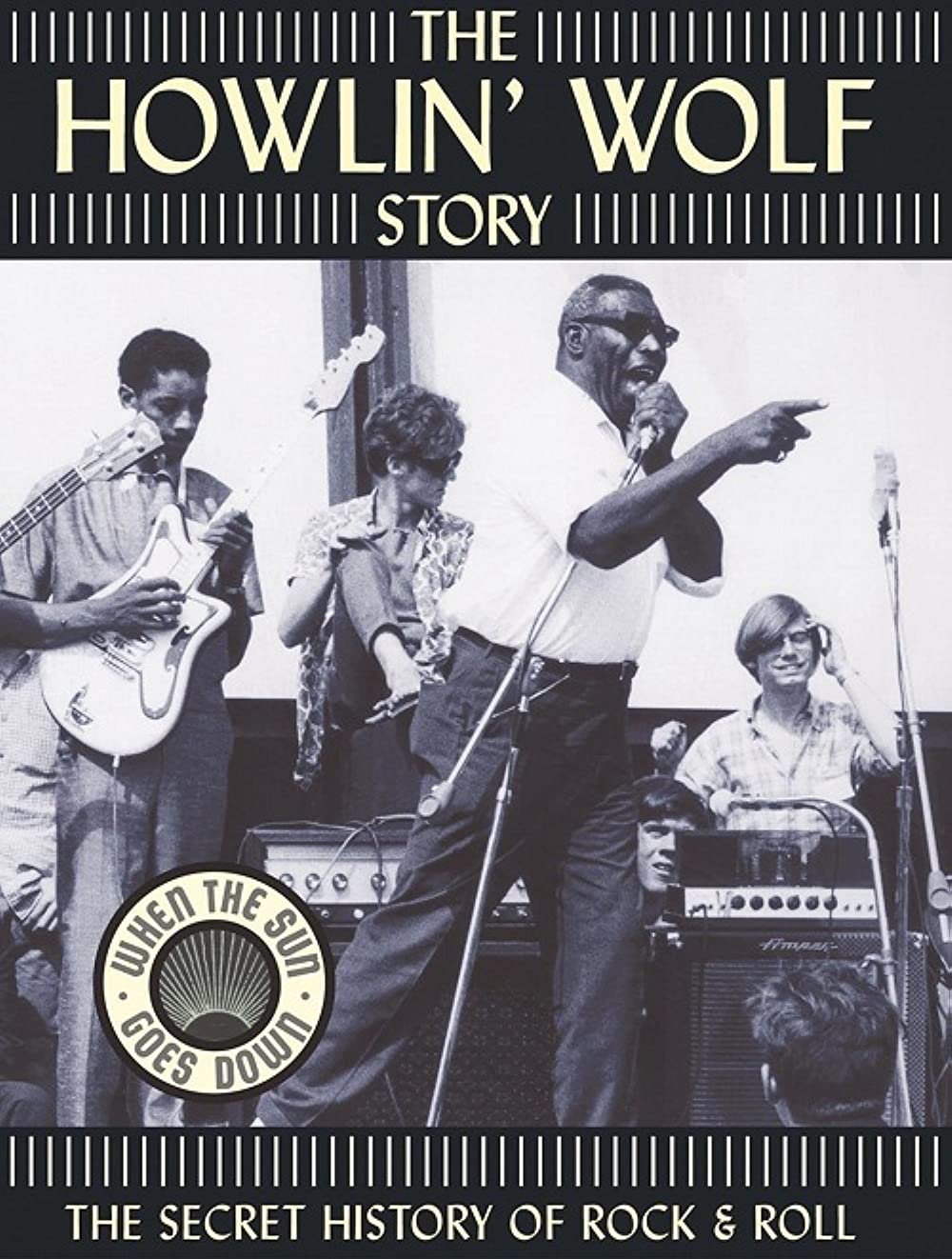
The Howlin’ Wolf Story: The Secret History of Rock ‘n Roll (2003) This low-key, informative documentary covers the life and career of blues legend Chester Burnett, best known as “Howlin’ Wolf,” told through interviews with the people who knew him best. The film chronicles his humble childhood beginnings in the South, followed by his rise to fame in Chicago. One thing that sets this documentary apart from many others is that it doesn’t just play snippets of his music, but complete songs, allowing his work to speak for itself. 

Rating: ***½. Available on DVD and Amazon Prime (Freevee)

Sickies Making Films Poster

Sickies Making Films (2018) This film’s eye-catching title comes from a quote by Mary Avara, who led the locally appointed Maryland State Board of Censors (the last state in the U.S. to have such a committee). We hear recollections from scholars and filmmakers (including Baltimore-based filmmaker John Waters) about some of the struggles with the board’s decisions, many of which were often arbitrary. It’s a fascinating examination of artistic expression versus artistic hindrance.

Rating: ***½. Available on DVD and Kanopy


Lucha Mexico Poster

Lucha Mexico (2016) Documentarians Alex Hammond and Ian Markiewicz follow the colorful world of Lucha Libre, the professional wrestling circuit in Mexico. We learn the good, the bad, and the ugly about the wrestling scene, through interviews with some of the heavy hitters, including Shocker (aka: 1000% Guapo), Blue Demon Jr., and Sexy Star. It’s a profession that many pursue, but few succeed, exacting a tremendous mental and physical toll. If you thought everything in the ring was fake, this might change your mind. 

Rating: ***½. Available on DVD, Tubi and Kino Cult 


Diving Into the Unknown Poster

Diving into the Unknown (2016) Director Juan Reina provides an exclusive glimpse into a hidden part of our world that most of us will probably never see. We meet a Finnish group of divers who participate in one of the most hazardous sports on the planet: exploring underwater caverns. After a tragic incident in Norway that left two of their friends dead, the remaining team of divers embark on a perilous (and illegal) mission to recover the bodies. Diving Into the Unknown benefits from some claustrophobic cinematography, giving us a taste of what it must be like to enter these dark, foreboding, underwater crevices. 

Rating: ***½. Available on DVD and Tubi

Filmed in Supermarionation Poster

Filmed in Supermarionation (2014) Lady Penelope and her faithful butler Parker host an affectionate look at Gerry and Sylvia Anderson’s puppetry process, dubbed “Supermarionation.” From the late ‘50s to the late ‘60s, their television shows (including Thunderbirds and Captain Scarlet), became a ubiquitous fixture on British television, featuring increasingly innovative and elaborate effects. Gerry and Sylvia (along with several of the cast and crew members who collaborated with them) share their memories about the numerous challenges of their productions. As an officially sanctioned documentary, Filmed in Supermarionation glosses over some of the behind-the-scenes drama, but it’s an amusing, informative tour for casual and die-hard fans alike. 

Rating: ***½. Available on Blu-ray, DVD and Tubi

Heavy Petting Poster

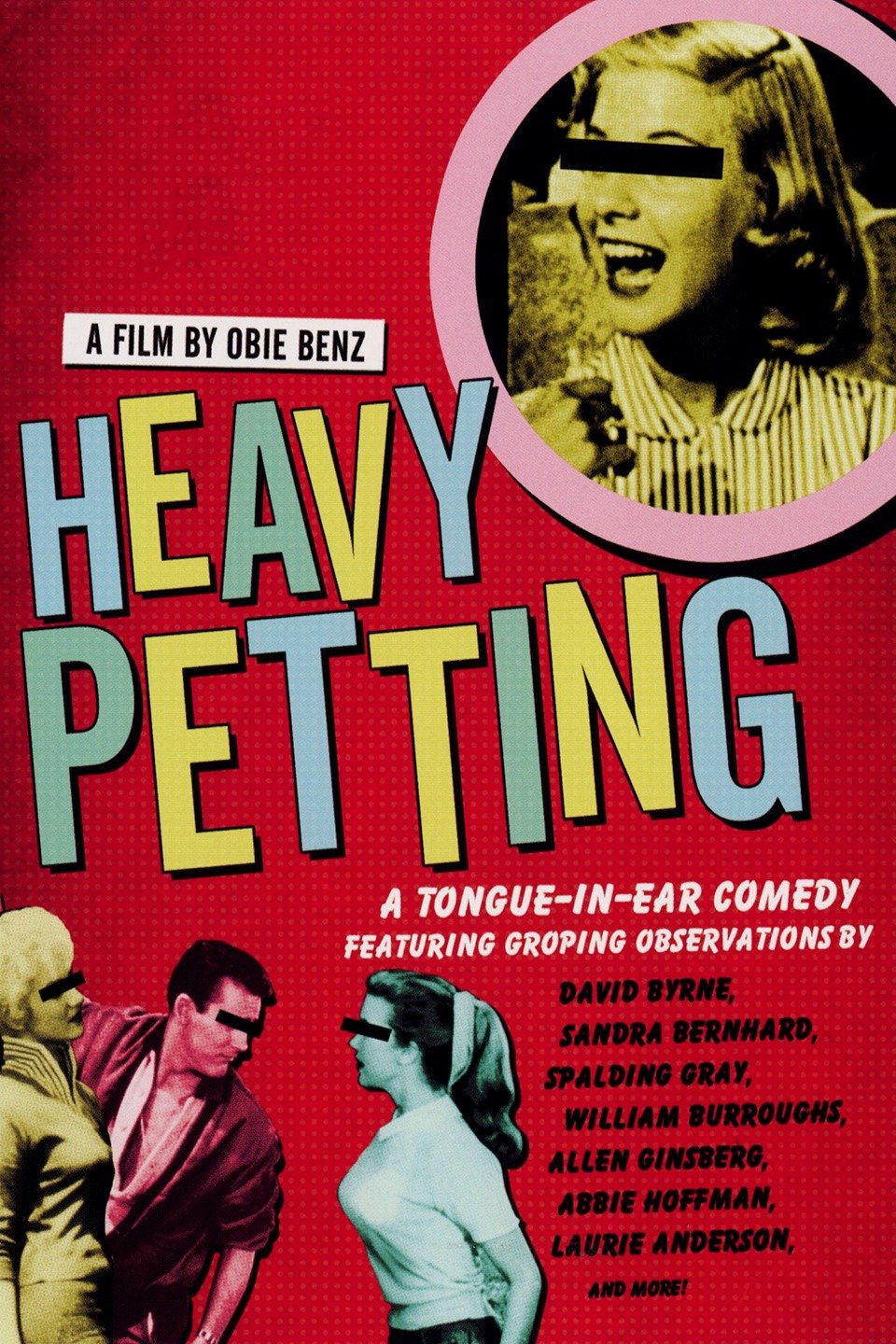
Heavy Petting (1989) Obie Benz and Joshua Waletzky piece together attitudes and recollections about sex from children of the ‘50s. David Byrne, Sandra Bernhard, Abbie Hoffman, and others recollect their early (and frequently awkward) sexual experiences, contrasting the “wholesome” Hollywood image of the era. Interspersed between the interviews are clips from several vintage instructional films that reinforce the push-pull between antiquated morality and the exploration of sexual boundaries. 

Rating: ***½. Available on Amazon Prime 


Project Grizzly Poster

Project Grizzly (1996) This is the story of one-of-a-kind Canadian eccentric Troy Hurtubise,* on a quest to build the perfect grizzly-proof suit. At great personal expense (and physical risk), he puts the latest iteration, the “Ursus Mark VI,” through its paces. Sporting a stylized mullet, red beret, and buckskin jacket, the fast-talking Hurtubise comes across as something between a shyster and a shaman. If you crossed a goofy inventor with a would-be commando, and a used car salesman, you might get something like him. Whether he succeeds or fails is less relevant than getting the chance to spend 90 minutes with this one-of-a-kind crackpot. 

* Not-So-Fun-Fact: Hurtubise survived the death-defying exploits with various versions of the Ursus suit (including a confrontation with a grizzly in 2001), only to meet his demise in a car crash in 2018. 

Rating: ***½. Available on DVD