Showing posts with label Box Office Bombs. Show all posts

Wednesday, June 1, 2022

Space Month II Quick Picks and Pans

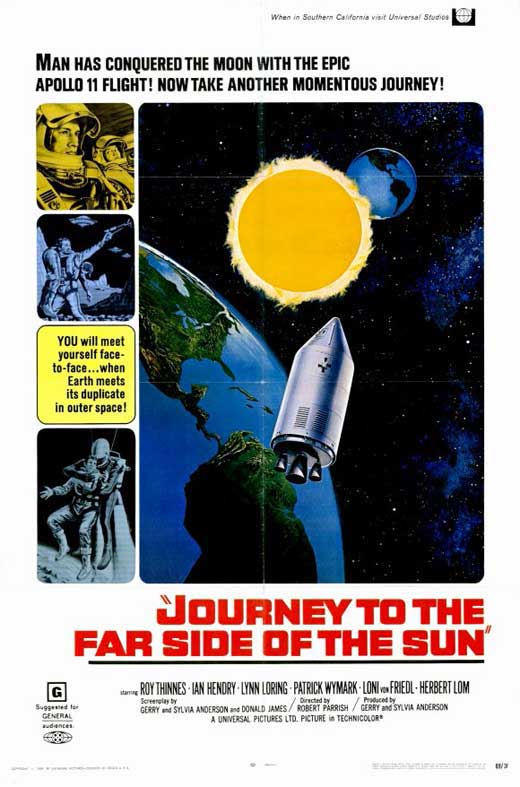
Journey to the Far Side of the Sun Poster

Journey to the Far Side of the Sun (1969) In this intriguing live-action venture from Gerry and Sylvia Anderson (of Supermarionation fame), scientists discover another planet on the opposite side of the sun, which has remained undetected until now. The U.S. and Europe launch an arduous joint mission, only to discover a duplicate Earth (with everything reversed). The movie has a funky ‘60s future aesthetic, and features some excellent miniature model/effects work by longtime Anderson-collaborator Derek Meddings. It has a solid cast, but it’s hampered by an unsympathetic lead (played by Roy Thinnes). Also, not exploiting the possibilities of a second Earth seems like a missed opportunity (Even if it was populated by duplicate people, why wouldn’t the events unfold in a divergent manner?). It’s still a fascinating concept, though, well worth a look.

Rating: ***½. Available on Blu-ray and DVD

Solaris Poster

Solaris (2002) Writer/director Steven Soderbergh’s remake of Andrei Tarkovsky’s 1972 film (adapted from Stanislaw Lem’s novel) is a brooding drama, short on spectacle but long on introspection. Chris Kelvin (George Clooney) is a psychologist, sent to a deep space station orbiting a planet with unusual properties. He soon discovers how unusual Solaris is, when his dead wife suddenly returns. But is it really her, or only a simulacrum, based on his skewed memories? It’s a slow-moving, somber experience that could have benefited from some humor, as well as science fiction elements that were more than window dressing. Soderbergh does a respectable job with the material, but the overall effort seems restrained to the point where it doesn’t embrace the genre as much as tolerate it.

Rating: ***. Available on Blu-ray (Region B) and DVD
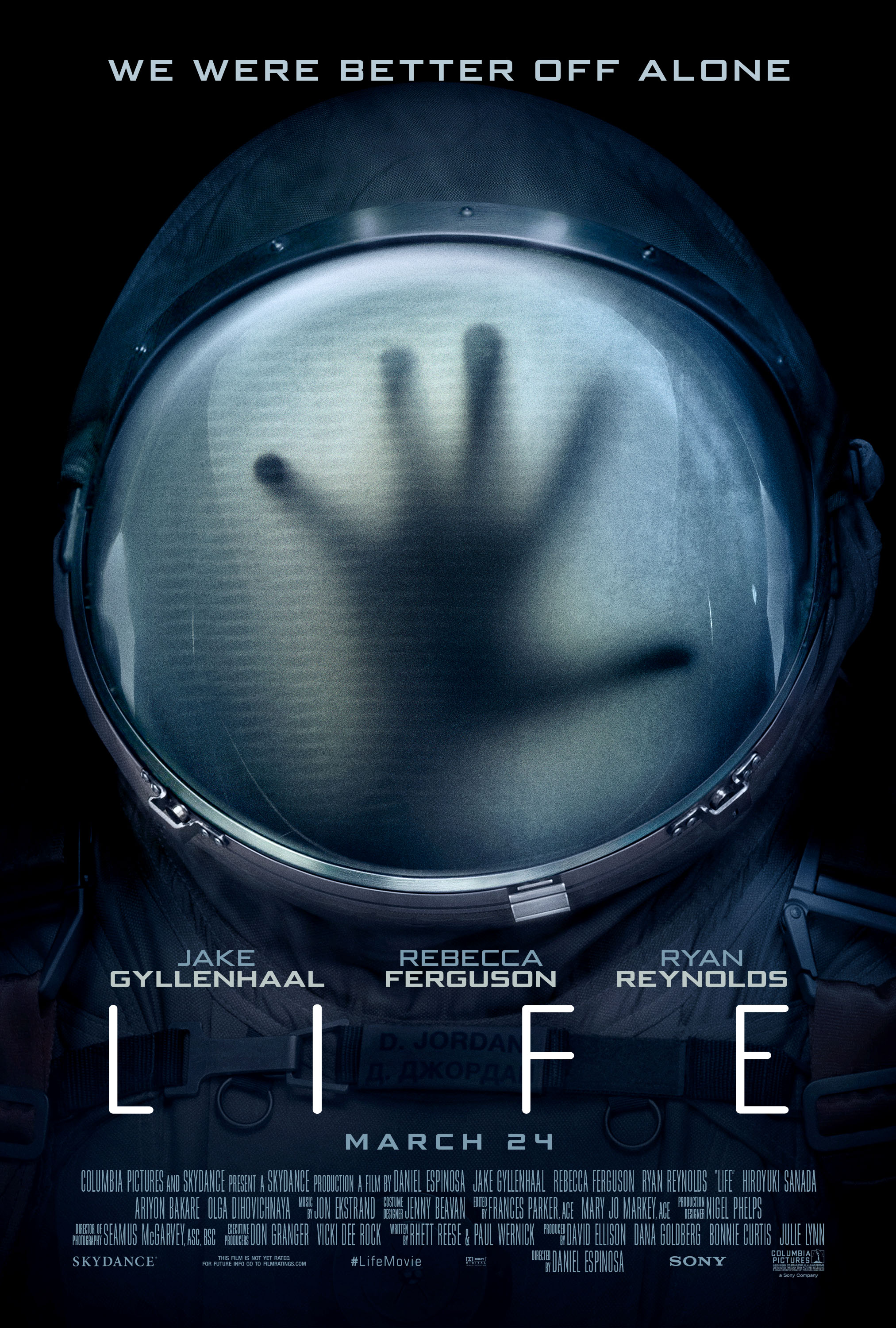
Life Poster

Life (2017) A soil sample containing a living organism from Mars is brought on board the International Space Station, with predictable results. The crew members (supposedly the best and the brightest) make stupid mistakes, as they’re picked off one by one. If you can get past the less than original premise, it’s entertaining enough, and the alien creature is pretty cool – just don’t think about it too much. If nothing else, I have to give the filmmakers credit for the gutsy ending. 

Rating: ***. Available on Blu-ray and DVD

Meteor Poster

Meteor (1979) America and the Soviet Union reluctantly combine forces to stave off certain destruction from a five-mile-wide chunk of rock, hurtling towards the Earth. Sean Connery and Natalie Wood lead an all-star cast of actors who are more talented than this by-the-numbers effort deserves. Released at the tail-end of a glut of ‘70s disaster movies, Meteor was a notorious flop for Samuel Z. Arkoff and American International Pictures.* The $16 million investment was the most expensive production to date for the low-budget film company, but it’s hard to see where the money went. Compared to the high standards set by its contemporaries (Alien, Star Trek: The Motion Picture), the special effects aren’t very special. Yawn.

* Fun Fact: The filmmakers used an avalanche sequence (borrowed from the eponymous 1978 film), which was produced by rival (and former business partner) Roger Corman’s New World Pictures. According to Corman, one review that criticized the overall quality of the effects, lauded the avalanche as the one high point. 

Rating: **½. Available on Blu-ray and DVD

The Ice Pirates

The Ice Pirates (1985) Robert Urich stars as Jason, the leader of a ragtag bunch of space pirates who plunder freighters for their payload of water – which has become a precious commodity in the galaxy. Things get complicated when Jason falls for a beautiful princess (Mary Crosby), while his crew try to stay one step ahead of an evil empire. It’s not a bad premise, but the execution is clumsy, and the jokes never rise above sophomoric levels (“Space herpes,” anyone?). It’s notable for the supporting cast, including Angelica Huston and Ron Perlman, who went on to bigger and better things. 

Rating: **½. Available on Blu-ray and DVD

Spaceship

The Creature Wasn’t Nice (aka: Spaceship; aka: Naked Space) (1981) Writer/director/star Bruce Kimmel probably shouldn’t have juggled so many roles for this unfunny Alien-influenced spoof. The bored crew of a deep-space mission, led by Captain Jamieson (Leslie Nielsen), pick up some goop on an alien planet, which turns into a voracious monster. Despite a talented cast (featuring Cindy Williams as the ship’s morale officer, Patrick Macnee as a scientist with divided loyalties, and Gerrit Graham as an oversexed crewmember) Kimmel can’t save his film from itself, with limp gags and bad songs galore. It’s not the easiest movie to find, which is probably a good thing.

Rating: **. Available on DVD

Creature Poster

Creature (1985) In space, no one can hear you sigh. American and German teams race to an alien planet to plunder untold riches at an ancient archeological site. Unfortunately for them, a nasty extraterrestrial has other ideas. The only saving grace is the presence of Klaus Kinski (for maybe five minutes of screen time), to liven things up a bit in this otherwise pedestrian Alien rip-off.  

Rating: **. Available on Blu-ray, DVD and Tubi

Mars Needs Women

Mars Needs Women (1968) Tommy Kirk plays Dop, the leader of a Martian expedition to bring back five young women to help repopulate the species. How hard could it possibly be to fulfill their mission? Apparently, it’s a Herculean task for the inept extraterrestrials, who wander about aimlessly, stumbling around a strip club, ogling a flight attendant, and bumbling into a hotel. Yvonne Craig (who apparently had nothing better to do at this point in her career) stars as a biologist, and unfathomably falls in love with Dop. The “Martians” walk around in wetsuits, and carry a speargun for a weapon (I’m guessing writer/director/producer Larry Buchanan had some old scuba gear lying around). The goofy premise should have been played for laughs. Instead, it’s all deadpan, which only makes the proceedings more unbearable. 

Rating: *½. Available on DVD and Amazon Prime


Sunday, March 13, 2022

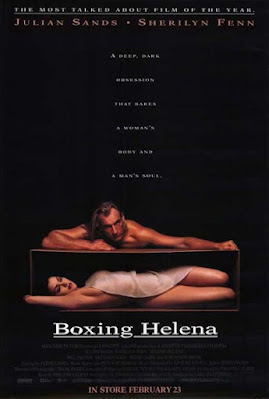
Short Take: Boxing Helena


Boxin g Helena Poster

(1993) Written and directed by Jennifer Lynch; Story by Philippe Caland; Starring: Julian Sands, Sherilyn Fenn, Bill Paxton, Art Garfunkel, Betsy Clark, and Kurtwood Smith; Available on DVD 

Rating: ** 

Nick and Helena

Helena (Sherilyn Fenn): “I’ll never need you.”

Nick (Julian Sands): “You need me now. None of those other men ever cared for you, but I always loved you, and I’ll take care of you, no matter what.” 

Helena: “You don’t love me. You think you can’t be a man without me.” 

Nick: “But I have you.” 

The controversy surrounding some films makes a bigger splash than the movie itself. Such is the dilemma with Boxing Helena, written and directed by then 24-year-old Jennifer Lynch (daughter of David Lynch). It’s probably best remembered for the controversy surrounding the production: three weeks before shooting was slated to commence, Kim Basinger walked out on the film, and a $3 million paycheck. She was later successfully sued, and Sherilyn Fenn (of Twin Peaks fame) was brought on. Considering Boxing Helena’s twisted premise and the filmmaker’s lineage, one might expect something truly unconventional. Oh, if only that were the case…   

* Fun Fact: Prior to Basinger leaving, Madonna was slated to star in the role, but she also decided to bow out.

Nick Performing Surgery

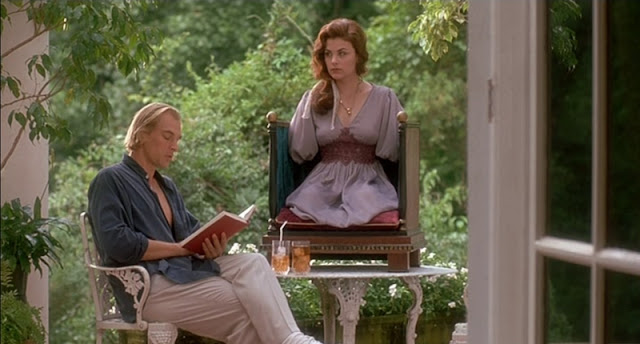
Dr. Nick Cavanaugh (Julian Sands) is a gifted surgeon, skilled (presumably) in the reattachment of severed limbs. Despite the admonitions of his pal Dr. Augustine (Art Garfunkel), Nick can’t seem to get his ex-girlfriend, Helena (Sherilyn Fenn) out of his mind. Soon, he’s trying everything to win her back, which alienates him from his current partner Anne (Betsy Clark). I’m unsure if it was intentional, but Anne is so vanilla that anyone else might be an improvement. The friction comes to a head when Helena appears at Nick’s party (which was intended to celebrate Anne and Nick’s engagement), and he follows her around like a lost puppy. In the following scene, Nick finagles a way to get Helena back to his sprawling estate, where an unfortunate accident forces her to be his patient and prisoner.  

Ray and Helena

The over-the-top performances in this would-be erotic thriller border on camp. Instead of being intimidating and sinister, Sands portrays Nick as whiney and sniveling. Fenn does the best she can with an underwritten role, as the largely unsympathetic Helena. She doesn’t deserve the hand she’s dealt, but it’s hard to feel much sympathy for her either way. The normally reliable Bill Paxton (sporting a terrible wig) is terribly miscast as Ray O’Malley, Helena’s narcissistic boyfriend. We’re supposed to accept him as a modern-day Lothario, but he comes across as a cartoon character.

Nick Reads to Helena

Watching Boxing Helena, it’s hard to see what all the fuss was about (including a threatened NC-17 rating). While there are a few borderline slow-motion sex scenes, there’s nothing that wouldn’t pass muster on ‘90s-era Cinemax (aka: Skinemax). Besides its tedious pacing, however, the movie’s biggest fault is pulling its punches with the subject matter. Lynch had an opportunity to show something truly grotesque, but what remains onscreen is a largely bloodless affair. The surgical procedures that render Helena limbless are left offscreen. Instead, we’re left with a common magician’s trick, presenting the illusion that there’s nothing underneath the table supporting her (I spent half of the movie wondering how they hid Fenn’s legs when she sat on a bed or in a wheelchair). If nothing else, Boxing Helena serves as a textbook illustration of how arbitrary the MPAA can be. I can only conclude that the ratings board people were so fixated on the unsavory premise, they neglected to pay attention to what was actually depicted.

Nick and Helena in the Rain

(Spoiler Alert) It somehow seems fitting that the icing on this under-baked cake is the big reveal (Gasp!) that it was only a dream. Jennifer Lynch’s tale of obsession and control is a ham-handed, unsubtle metaphor for the level of control that some men would like to exert against their wives or significant others. What we’re left with is a movie that’s all hype and no show. Anyone expecting something that overwhelms our senses or stretches the boundaries of our endurance should likely search elsewhere.


Sources: “Fenn Loses Limbs as Lawyers Grill Kim,” by Michael Fleming, Variety (April 27, 1992); “Lynch: Basinger Not Deceived,” by Donna Parker, The Hollywood Reporter (March 1, 1993); “Lynch: Basinger Loved Script,” by Donna Parker, The Hollywood Reporter (February 26, 1993) 

Thursday, December 10, 2020

Fly the Unfriendly Skies: The Airport Movies


Airport

During a time when global travel is inadvisable or outright restricted, most of us can only dream about flying off to exotic, faraway locations, let alone enjoying frivolous travel within our own country. Back in the weird and wacky 1970s, Hollywood set its sights on every conceivable sort of calamity as a potential cash cow. One of the most enduring relics from this era were the Airport movies. Over the course of the decade-long series, four installments, each more audacious than the former, graced the silver screen. They were products of their time in the best and worst ways, featuring ridiculous feats of heroism, an expansive cast of recognizable faces from old and (then) new Hollywood, and quotable dialogue. On the other hand, the Airport movies reflected some aspects of a previous decade best left behind, with borderline racist comments, rampant workplace sexism, and atrocious fashions. Watching the Airport movies, we’re at once reminded of the rewards of travel and its inherent dangers. Considering the string of disasters depicted in these films, however, we’re reminded, on second thought, we’re probably better off staying home.

Airport Poster

Airport

(1970) Written and directed by George Seaton; Based on the novel by Arthur Hailey; Starring: Burt Lancaster, Dean Martin, Jean Seberg, Jacqueline Bisset, George Kennedy, Helen Hayes, Van Heflin, Maureen Stapleton; Available on Blu ray and DVD

Rating: ***

“It’s an old-fashioned, formula entertainment. It’s not art, it’s fun.” – Producer Ross Hunter (from 1986 L.A. Times interview by Dennis Hunt)

Airport

Airport general manager Mel Bakersfeld (Burt Lancaster) is having a rough night at (the fictional) Lincoln International. After spending a few too many long days at the office, managing crisis after crisis, his marriage to stuffy, waspish Cindy (Dana Wynter) is on the skids. He’s testing the bounds of his relationship with his assistant Tanya (Jean Seberg), while she ponders transferring to another position. Meanwhile, following the worst snowstorm in years, the airport is in danger of operations screeching to a halt, as Bakersfeld’s ground crew struggle to keep the runways clear with limited equipment. And if that isn’t enough, he’s faced with a public relations nightmare as a group of angry homeowners protest the noisy flyovers by airliners.

But that’s not all, folks…

Airport

Enter Dean Martin as Vernon Demerest a philandering pilot who’s coming to grips with the fact that his stewardess girlfriend Gwen (Jacqueline Bisset) is pregnant. Fold into this complicated batter Ada Quonsett, a plucky little old lady (Helen Hayes), with a talent for sneaking on flights. As Bakersfeld soon learns, the serial stowaway has more than a few tricks in her arsenal to elude unsuspecting airport officials (Who needs frequent flyer miles when you have her dubious skill set?). We’re also introduced to unflappable chief mechanic Joe Patroni, played with zeal by George Kennedy (Get used to that character, folks, because he provides a thread of continuity between the first movie and the sequels). Snow plows be damned, he’s determined to free a stranded 707,* if he has to do it himself. Oh, and last but not least (in what’s arguably the focal point of the film), down-on-his-luck ex-demolitionist, Guerrero (Van Heflin), takes the idea of bringing his work home with him just a smidge too seriously, boarding a 707 bound for Rome (flown by Vernon). Armed with a bomb and a flight insurance policy worth more than 200 grand, he intends to detonate the aircraft over the ocean, where there’ll be no traceable evidence.  

* Fun Fact #1: Petroni makes a point that the aircraft in question costs $8 million (or about $54 million in 2020 dollars), a lofty sum in 1970. For comparison, a new Boeing 787 will set you back about $170 million.

Airport

Much like many of the big American cars that came out of that era, Airport is a clunky, inefficient machine with more style than substance. It takes half the movie to arrive at the main conflict (Arguably 30-45 minutes could have been cut from the film, and no one would have complained). Also, Airport suffers from an abundance of split screens. What begins as a cute little stylistic flourish is repeated ad nauseum, to the point where you’ll be prompted to scream, “Enough already!” To his credit, writer/director George Seaton keeps multiple threads of Airport’s convoluted soap opera story going. Despite its myriad flaws, this ungainly bird somehow stays up in the air.

Airport 1975

Airport 1975

(1974) Directed by Jack Smight; Written by Don Ingalls; Based on the novel by Arthur Hailey; Starring: Charlton Heston, Karen Black, George Kennedy, Efrem Zimbalist Jr., Helen Reddy, Linda Blair, Dana Andrews, Sid Cesar and Erik Estrada; Available on Blu ray and DVD

Rating: ***

“Climb baby, climb.” – Alan Murdock (Charlton Heston)

Airport 1975

The Boeing 747 was a really big deal, in more ways than one when it entered service in 1970. You didn’t have to be an aviation enthusiast to appreciate its distinctive double-decker shape, massive proportions and luxurious amenities, which ushered in a new era of air travel. It’s therefore no surprise that the 747 should be the star of Airport 1975 (released in 1974). Disaster strikes (quite literally) when the airliner is diverted from L.A. to Salt Lake City, and the pilot (Dana Andrews) of a small private plane suffers a heart attack mid-flight. His craft collides with the huge passenger jet, leaving a gaping hole in the cockpit. In the blink of an eye, the number of personnel qualified to operate the plane drops to zero after the co-pilot is sucked out, the pilot (Efrem Zimbalist Jr.) is blinded by shrapnel, and the navigator (Erik Estrada) is killed by wreckage. All seems hopeless until intrepid stewardess Nancy Pryor (Karen Black) is forced to take the controls, with the help of ground control.

Airport 1975

Since this is an Airport movie, expect the requisite all-star cast, including Gloria Swanson, in her final film appearance, playing herself. Myrna Loy plays an alcoholic elderly lady. Sid Caesar appears as a chatterbox passenger, and Jerry Stiller spends most of the picture asleep while chaos reigns around him. In one scene that will be instantly familiar to anyone acquainted with a certain famous parody flick, see Helen Reddy as a singing, guitar-playing nun, entertaining Janice Abbott (Linda Blair), a sick kid awaiting a kidney transplant. George Kennedy is back as the irascible Joe Petroni, now a VP of operations for the fictional Columbia airlines. This time, there’s more at stake, with his wife and son, Joe Jr., aboard the damaged 747.

Airport 1975

No ‘70s disaster film would be complete without Charlton Heston (1974 was a busy year for Heston, who also appeared in Earthquake the same year) as ace flight instructor (and Pryor’s ex-boyfriend) Alan Murdock. He attempts a dangerous gambit by rappelling via helicopter to the damaged cockpit. Will he reach the cockpit in time, thus preventing an imminent tragedy? Will Murdock and Pryor patch up their relationship? I think you can guess the outcome, although the movie never addresses how the last-minute diversion to Salt Lake City affects poor Janice and her transplant. While the script conditions us to accept Murdock as the default hero, Nancy doesn’t get nearly enough credit for keeping the jumbo jet in the skies and preventing a passenger riot when they learn about the sudden shortage of pilots onboard. It’s difficult, nigh impossible, for modern viewers to imagine this film before Zucker, Zucker and Abrahams had the last word on airplane disaster flicks with their parody to end all parodies, Airplane! (1980), but that shouldn’t dissuade you from booking a ticket on Airport 1975.


Airport 77

Airport ‘77

(1977) Directed by Jerry Jameson; Written by Michael Scheff and David Spector; Based on the novel by Arthur Hailey; Starring: James Stewart, Jack Lemmon, Lee Grant, Brenda Vaccaro, Joseph Cotten, Christopher Lee, Darren McGavin, Kathleen Quinlan and George Kennedy; Available on Blu ray and DVD

Rating: ***

Karen Wallace (Lee Grant): “If I weren’t such a sinner how would you look like such a saint? Isn’t that why we’re together? If it isn’t, tell me, and I’ll stop acting like an idiot.”

Martin Wallace (Christopher Lee): “Why should I, my dear? You’re so proficient at it.”

Airport 77

The third installment of the durable series takes things up another notch with the most unlikely premise to date: a hijacked 747 sinks in the Bermuda Triangle. This time around, the filmmakers do away with any pretense that we give a hoot about the airport-based drama, concentrating solely on the aviation disaster. Family, friends and press are invited to a gala event hosted by billionaire Philip Stevens (James Stewart) on his island estate. The guests board Stevens’ private 747, loaded with priceless artwork, bound for his new museum. But evil-doings are afoot, as an organized ring of thieves conspire to rob the plane of its valuable cargo, and strand the passengers and crew on an island. Soon after they take control of the plane (with the passengers and crew incapacitated), their plans go awry when a wingtip smacks into an offshore oil derrick, subsequently causing the plane to careen into the ocean. Somehow, the jumbo jet remains miraculously intact after hitting the water, retaining its structural integrity even while it sinks.* Any semblance of credulity is stretched to the breaking point as the survivors are stuck at the bottom of the ocean, pondering their respective fates. Call me skeptical, but I doubt Boeing ever considered the viability of one of their aircraft doubling as a submersible.

* Fun Fact #2: Visitors to Universal Studios in the late ‘70s and early ‘80s (including Yours Truly) were treated to an attraction, Screen Test Theatre, where a few lucky audience members could participate in their own version of Airport ’77, and take home a copy for posterity.

Airport 77

Jack Lemmon is fine as stalwart pilot Don Gallagher, who risks life and limb (including learning how to scuba dive with Navy frogmen) to save the passengers. George Kennedy is back, reprising his role as Petroni (now employed by Stevens), although his character isn’t given much to do in this outing. In one brief scene, we learn that he’s been tasked to provide technical assistance to the U.S. Navy in their search and rescue operation. Expect the usual assortment of old and new Hollywood in the supporting cast. Olivia de Havilland and Joseph Cotten lend some old-school class to the production. Darren McGavin lends his gruff but lovable persona as operations manager Stan Buchek (a name that suspiciously sounds like Kolchak). Christopher Lee, playing a non-villainous role for a change, appears as oceanographer Martin Wallace. His selfless efforts helping humankind with undersea research are contrasted with his selfish wife Karen (Lee Grant), who uses booze as an excuse for her terrible, entitled behavior (Hmm… Perhaps she was the original template for the “Karen” meme?). Blind piano player Steve (played by Tom Sullivan) sings the non-hit “Beauty Is In The Eye Of The Beholder” (I’m sure the producers were looking for another “The Morning After,” but you’ll probably forget it as soon as it’s over).

Airport 77

Much like its predecessors, Airport ‘77 has more than its share of clunky elements, with plenty of plot holes and unresolved threads. It suffers from what seem to be excessive cuts – we don’t know enough about the characters and their relationships to care. Also, in several establishing shots, it appears that the nose of the jumbo jet is dangerously close to the precipice of a continental shelf, but nothing much is made of this. But undeveloped characters and missed opportunities aside, there’s something compelling in the premise, spurred by the 9-year-old inside us all, who asks “What if an airliner was stuck underwater?”* My suggestion? Make sure your chair is a reclined position while keeping your brain in standby mode, and enjoy a glass or two of your favorite beverage.

* Fun Fact #3: So, what does a commercial pilot think about such an unlikely scenario? Don’t count on it. Read more here.  

Airport 79

The Concorde: Airport 79

(1979) Directed by: David Lowell Rich; Written by Eric Roth; Story by Jennings Lang; Based on the novel by Arthur Hailey Starring: Alain Delon, Susan Blakely, Robert Wagner, George Kennedy, Sylvia Kristel, Eddie Albert, Bibi Andersson, Charo, John Davidson, Martha Raye and Jimmie Walker; Available on Blu ray and DVD

Rating: **

Isabelle (Sylvia Kristel): “You pilots are such... men.”

Capt. Joe Patroni (George Kennedy): “They don't call it the cockpit for nothing, honey.”

Airport 79

While notorious for many reasons, the 1970s also heralded some aviation milestones. The Concorde, one of the most ambitious (and ostentatious) examples of commercial aviation first flew in the late ‘60s, but didn’t enter service until 1976. The supersonic airliner, instantly recognizable for its sleek shape and delta wing configuration, was the vehicle of choice for the select few wealthy enough to afford a ticket. It was a symbol of excess that proved what was possible, if not particularly necessary. The same sentiment goes for this third and final sequel to Airport.

Airport 79

This time around, the filmmakers attempted to inject some intrigue into the mix, with a plot about corrupt arms manufacturer Kevin Harrison (Robert Wagner) and his TV news reporter girlfriend, Maggie Whelan (Susan Blakely), who stumbles on documents proving that he participated in illegal arms trafficking. Now she’s become a target as Harrison, willing to go o any lengths to keep her silent, schemes to shoot down her plane.

Airport 79

Once again, George Kennedy appears as the series’ common thread, Joe Patroni. I may have lamented the fact that Kennedy was under-utilized in the previous film, but I was wrong – oh, so wrong. The filmmakers somehow forgot (or hoped that audiences forgot) Petroni was a flight mechanic by trade (the first film made a point of stating that he only had clearance to taxi aircraft), but we’re suddenly expected to believe he’s a seasoned pilot, qualified to fly one of the most advanced airliners ever built. Throw in a steamy love scene no one asked for, add enough toxic masculinity for ten movies, and watch any good will he fostered in the first and subsequent films fly out the window. Patroni’s French co-pilot, played by Alain Delon (probably wishing he was still doing films for Jean-Pierre Melville), mainly reacts to his brash American counterpart, while cavorting with comely flight attendant Isabelle (Sylvia Kristel). Sadly, flight engineer Peter O'Neill (David Warner) isn’t given much to do.

Airport 79

The passengers are played by the usual odd assortment of has-beens and marginal celebrities, reduced to lame comic moments. Eddie Albert plays Eli Sands, the wealthy owner of the airline that operates the sole American Concorde. Jimmie Walker spends some quality time with his saxophone, Martha Raye contends with her irritable bowels, and Margarita (played by Charo, the “Cuchi Cuchi girl and frequent Love Boat guest star), attempts to smuggle her chihuahua onboard.


(There are a few spoilers ahead, but I suspect most folks won’t care). What follows are a series of mind-numbing plot holes big enough to fly a fleet of Concordes through. Harrison attempts to shoot down the supersonic airliner with an experimental surface-to-air missile, but Petroni’s flying skills save the day. With his plans thwarted, Harrison deploys a hired gun in a fighter jet, equipped with heat-seeking missiles. Before the French military can intercept the rogue plane, Petroni puts the Concorde through some acrobatic evasive maneuvers, while shooting flares out of an open cockpit window, all presumably at supersonic speed (at this point, the filmmakers must have decided to eschew anything remotely plausible). Petroni’s damaged craft is forced to make an emergency landing in Paris, but it doesn’t stop there, dear reader. After the big kerfuffle in the sky, which in the real world would have certainly spurred a massive international investigation, and likely grounded the aircraft for an unspecified time, the Concorde is tidied up and departs for the final leg of the journey to Moscow. In a last-ditch attempt to down the airliner, Harrison arranges a phony maintenance man to sabotage a cargo door so it will open mid-flight, resulting in rapid decompression. Said maintenance man is caught by authorities after giving chase on the runway, with cash spilling out of his suit. Pop quiz – If you were in a position of authority would you A), Immediately order the Concorde back to the airport, or B) Allow it go on its merry way? If you chose “B,” congratulations! You unnecessarily endangered the lives of everyone aboard, leaving the crew to attempt a crash landing in the Swiss Alps.

Airport 79

 Produced for a middling $13 million, this was the most expensive of the Airport films, but you’d be hard-pressed to see any evidence on screen, with some truly awful special effects on display (considering this was the same year as Alien, Star Trek: The Motion Picture, and Moonraker, it’s inexcusable). Airport ’79 turned out to be a disaster in more ways than one, with poor reviews and tepid box office performance. It’s hard to say much in the defense of this albatross, which brought the decade-long series to such an inauspicious end, but hey, we had a few laughs along the way, right? 

Monday, June 25, 2018

Krull


(1983) Directed by Peter Yates; Written by: Stanford Sherman; Starring: Ken Marshall, Lysette Anthony, Freddie Jones, Francesca Annis, David Battley, Liam Neeson and Robbie Coltrane; Available on Blu-ray and DVD.

Rating: ***

“What we were doing was portraying a fantasy story with realities of its own. This is no period, no country. It’s completely a fantasy about what could happen.” – Peter Yates (from “Cast and Crew” DVD commentary)


Thanks to Becky from Film Music Central for hosting the 3rd Annual James Horner Blogathon, profiling the career of this talented and prolific film composer on the third anniversary of his untimely death. Horner created some of my favorite film scores from the ‘80s and ‘90s, including Battle Beyond the Stars (1980), Star Trek II: The Wrath of Khan (1982), and The Rocketeer (1991). Today, I’m taking a look at Krull, featuring another fine score.


Director Peter Yates stated he wanted to distance his movie from the sword and sorcery films of the era, but other than a few odd sci-fi flourishes, it doesn’t quite diverge from the conventions of the genre. Krull* could best be described as sword and sorcery meets Star Wars, combining swashbuckling derring-do with alien invaders. It’s notorious for being an expensive flop, with budget estimates ranging from $40 to $50 million, and a paltry $16.5 million box-office take. There are plenty of possible reasons why Krull never won over audiences back in the day, but perhaps Columbia Pictures’ biggest mistake was releasing it two months after Return of the Jedi, into a summer crowded with sequels.* Moviegoers might have suffered from fantasy fatigue by this point, and were probably looking for the safe harbor of established properties, rather than new adventures. Despite the diminutive box office receipts, Krull gained a small but ardent fan base over the years, due in no small part to the starfish-shaped weapon, the Glaive (more on this later).


On the eve of two kingdoms uniting, a dark force arrives from the stars in a massive fortress. The horrible Beast, and his army of Slayers (who resemble a cross between a storm trooper and a crustacean), lay siege to the castle where Prince Colwyn (Ken Marshall) and his betrothed, Princess Lyssa (Lysette Anthony) are about to be wed. The Slayers handily defeat the combined armies, and capture the princess. Thus, begins the hero’s epic quest to defeat the Beast, rescue the princess, and restore peace to his shattered kingdom. But first, he must assemble a bunch of misfits and endure many trials and travails, as he learns what it means to be a king. None of this sounds very original, of course, and I would be misrepresenting the film if I said it was. What Krull lacks in surprises, however, it makes up with a desire to entertain.

Fun Fact #1: As a means of cashing in on the early ‘80s sword and sorcery craze, the original title was The Dragons of Krull – even though there were no dragons featured in the script.


The good: For starters, the practical effects are quite fun, particularly the stop motion spider by Steven Archer. It’s suitably creepy, and its lifelike movements are worthy of Ray Harryhausen.* I always thought the cyclops Rell** (played by 6’ 7” Bernard Bresslaw) was pretty neat. In his tragic backstory, he explains how his ancient race made a deal with the Beast, trading one of their eyes for the ability to see into the future. Alas, the only future they could see was the time of their own death. Krell also boasts some fine performances, including veteran actor Freddie Jones as Prince Colwyn’s sage mentor Ynyr. Jones lends his role the necessary gravitas and bearing, as is if he were acting in a Shakespearean play. In a similar vein, Francesca Annis is great as the doleful Widow of the Web. David Battley (who played Charlie’s teacher in Willy Wonka and the Chocolate Factory) is the shape-shifter Ergo. He’s mostly played for comic relief, but Battley gives his selfish character heart, and more than proves his mettle before the movie is over. A discussion of the good elements in Krull wouldn’t be complete without mentioning James Horner’s lush score, courtesy of the London Symphony Orchestra. According to Yates, Horner’s “…music contributed enormously to the film,” and imbued the characters with a sense of “size and majesty.” There’s something about a great score, which can elevate a movie, even if it doesn’t quite measure up to the level suggested by the music.  

* Fun Fact #2: If the animation style looks like familiar, there’s a good reason. Archer apprenticed with Harryhausen on Clash of the Titans, and was recommended by the effects master himself for the job.

** Fun Fact #3: According to makeup designer Nick Maley, “It was important that the shapes we model into his face had a gentleness, a pleasantness, without going overboard. He’s a nice, gentle character, but has a melancholy quality about him.” (from “Behind the Scenes” DVD commentary, from November 1982 Cinefantastique magazine article).


The not-so-good: Calling this film derivative is a gross understatement. You only need to watch The Seven Samurai, its American remake The Magnificent Seven, Star Wars, or even its quickie Corman-produced knockoff, Battle Beyond the Stars to see where this movie is going. Stop me if you’ve heard this one before: A young, eager (albeit green) protagonist, under the tutelage of a wise old man, bands together with a rough but like-minded bunch of freedom fighters to fight a common oppressive foe. The leads are attractive, but unimpressive. Marshall has an amiable presence as Colwyn, but he comes across as a low-rent Errol Flynn. As Lyssa, Anthony is pretty to look at, but she’s given nothing to do, except act the damsel in distress while she’s waiting to be rescued from the clutches of the foul Beast. Speaking of the bad guys, a worthy adversary is required for any good hero story. Unfortunately, the Beast doesn’t quite measure up (pun intended). We never get a good idea of scale – is he human-sized, 10 feet tall, or the proportions of King Kong? Also, what does he have to offer Lyssa, outside of a lifetime of imprisonment? Was he keeping track of her before he arrived on her home world? Everything about him is vague and indistinct, from his motivations to his physical appearance (the Beast and his lair is shot in soft focus). The Beast and his army have mastered interstellar space, conquering one planet after another, yet they still ride on horseback. It doesn’t appear to be a choice made out of necessity, so is it a traditional thing?


While some effects are quite good, others are less than awe inspiring. When the warriors fly through the air astride their Fire Mares, it resembles a scene from E.T. – The Extraterrestrial (think kids on bikes). The biggest letdown, however, is reserved for Krull’s raison d'être, the cool-looking but unwieldly Glaive. In the end it’s only a MacGuffin. We’re led to believe it’s an ancient, all-powerful weapon powered by mystical energy, which Ynyr cautions not to use until the right time. When Colwyn finally does, at the film’s climax, it’s little more than an over-glorified can opener. (Spoiler Alert) In a moment of hastily constructed mythos, we learn the weapon’s power is nothing more than an extension of the power he wields inside (The Force, anyone?).

* Fun Fact #4: The Glaive’s original design looked more sword-like, as a cross-shaped weapon, before it evolved into a five-pronged throwing star.


Krull was an expensive failure at the box office, but as I’ve indicated many times before, poor performance and/or initial critical reception doesn’t necessarily correlate with a movie’s true worth. It’s difficult to dispute that Krull had several strikes against it, as a victim of bad timing and not enough distinguishing features, but that shouldn’t dissuade you from giving it a look. There’s a liberal dose of mindless fantasy mayhem, a few notable performances, and it’s fun to see Liam Neeson and Robbie Coltrane before they were famous. Krull isn’t easy to defend, but it’s hard to hate. While it might fall short in certain respects, it’s worthy Saturday morning matinee material.