Showing posts with label Adventure. Show all posts

Monday, April 27, 2026

Prehistory Month Quick Picks and Pans

 Iceman Poster

Iceman (1984) An arctic surveying team finds the discovery of the century, a perfectly preserved Neanderthal (John Lone) in an ice cave. Back at the base, a group of doctors somehow manage to revive the frozen caveman. Now the big question becomes what to do with him. Dr. Stanley Shephard (Timothy Hutton) seems to be the only member of the research team with an unwavering moral compass, befriending the caveman, whom he calls Charlie. Separated by his family and comrades by tens of thousands of years, Charlie is a man out of time and without a home. The researchers jump at the once-in-a-lifetime opportunity to learn about his physiology, but at the cost of his freedom. Charlie becomes the team’s lab rat, contained in the base’s vivarium like a zoo animal. Outside of Shephard and Charlie, most of the characters seem underdeveloped, with little to distinguish one from another. The central dilemma, and thoughtful depiction of Charlie, however, make this worth watching. 

Rating: ***½. Available on Blu-ray and DVD


Dinosaurus! Poster

Dinosaurus! (1960) Producer Jack H. Harris’s (The Blob, The 4D Man) adventure film is aimed at kids and the kid at heart in all of us. While using dynamite to make room for a new harbor, a construction crew inadvertently dislodges a trio of prehistoric relics: a tyrannosaurus rex, brontosaurus, and a caveman. They’re in for a big surprise when they soon learn that none of them are as dead as presumed. The dinosaurs create havoc for the crew, while the Neanderthal (Gregg Martell, in a fun little semi-comic performance) tries to make sense of the modern world. Forget about scientific accuracy or plausibility. Dinosaurus! is best enjoyed with your favorite junk food and your brain switched to neutral. 

Rating: ***½. Available on Blu-ray and DVD


Caveman Poster

Caveman (1981) Ringo Starr appears as Atouk, a meek caveman who’s unlucky in life and love. He lusts after Lana (played by Starr’s real-life-wife, Barbara Bach), the voluptuous object of his desire, but one thing that stands in the way – her hulking boyfriend Tonda (John Matuszak). Cast out of his tribe by Tonda, Atouk befriends a group of outcasts, including Lar (Dennis Quaid), Tala (Shelley Long) and her blind father Gog (Jack Gilford). The real attraction in this amiable comedy are the cool stop-motion effects by an uncredited Paul Gentry and Hal Miles, featuring cartoonishly goofy but surprisingly lifelike dinosaurs. 

Rating: ***. Available on Blu-ray, DVD and Tubi


The Clan of the Cave Bear Poster

Clan of the Cave Bear (1986) Think a dumbed down version of Quest for Fire, and you won’t be too far off the mark. Director Michael Chapman’s adaptation of Jean M. Auel’s best-selling novel aspires to be an epic tale, but falls short. When Ayla, a young Cro-Magnon girl, loses her mother and is separated from her people, a roving tribe of Neanderthals take pity on her, reluctantly accepting her into their group. The now grown Ayla (Daryl Hannah) grows up an outcast because of her “unattractive” appearance (not unlike Marilyn on The Munsters), but learns the ways of medicine from her accepting foster parents. The iffy Neanderthal makeup with bad wigs is easy to excuse, but where Quest for Fire required its audience to connect the dots, The Clan of the Cave Bear shows contempt for the viewer, with unnecessary narration describing what we’re already seeing, as well as subtitles for the various grunts and shouts. Some nice cinematography from Jan de Bont and a decent score from Alan Silvestri can’t save this film from its own mediocrity. 

Rating: **½. Available on DVD


When Dinosaurs Ruled the Earth Poster

When Dinosaurs Ruled the Earth (1970) A better title might have been, When Peroxide Ruled the Earth. According to this movie, being a blonde woman in prehistoric times was a death sentence. Fair-haired Sanna (Victoria Vetri) escapes ritual sacrifice to make a life of her own, befriending a fearsome dinosaur and finding the love of her life along the way. The stop-motion effects aren’t quite up to Harryhausen’s standards, but they’re passable enough (at some point, the Hammer production must have run out of time and money, as one scene resorts to the old lizards with wobbly headpieces trick). There isn’t much in the movie that hasn’t been done better in similar flicks (including One Million Years B.C.), but there are worse ways to spend an afternoon. 

Rating: **½. Available on Blu-ray and DVD

Creatures the World Forgot Poster

Creatures the World Forgot (1971) It wouldn’t be hard for the world to forget this tedious movie. 90 minutes of bad wigs and grunting does not make a compelling story. You have to give the film some credit for not depicting early humans walking with dinosaurs, but what’s left onscreen is so deathly dull. If you can stay awake long enough, there are some unintentional laughs when a caveman is mauled by a guy in a bad bear (or is it supposed to be a giant sloth?) suit, but there’s no other reason to recommend this lesser Hammer film. 

Rating: **. Available on DVD 


Prehistoric Women Poster

Prehistoric Women (1950) Okay, this one is just plain awful. A tribe of clean-shaven cavemen with terrible wigs lord over cavewomen who appear to be fresh from the beauty salon. Tired of being abused and subservient to the men, several of the women rebel, setting off to form their own tribe. They take a few of the males as captives, and nature takes its course. The worst part of Prehistoric Women is the incessant, inane narration, basically describing everything you’re seeing as it occurs onscreen. Add the film’s casual attitude toward animal cruelty, and there’s no reason to waste 90 minutes of your life with this stink bomb.   

Rating: *½. Available on DVD and Tubi


Monday, April 20, 2026

Quest for Fire


Quest for Fire Poster

(1981) Directed by Jean-Jacques Annaud; Written by Gérard Brach; Based on the novel by J.H. Rosny Sr.; Starring: Everett McGill, Rae Dawn Chong, Ron Perlman, Nicholas Kadi, and Naseer El-Kadi; Available on Blu-ray and DVD 

Rating: ****½


Amoukar - Ron Perlman

“I thought I was making this crap caveman movie. I found out that this guy (Jean-Jacques Annaud) had won an Academy Award for ‘Black and White in Color,’ and he was a distinguished filmmaker. By the time I got nervous, I already had the role, so I didn’t trip myself up.” – Ron Perlman, on auditioning for Quest for Fire (Excerpted from 2017 Variety interview)

Sabretooth Cat

It’s no big surprise that most film depictions of early humankind are somewhat lacking in veracity. Whether due to lack of budget, research, or by design, most caveman movies end up looking silly, bordering on self-parody, or straight-out comedies. By default, filmmakers and production companies preferred a more fanciful recreation of primitive people, grunting gibberish, wearing very little, and more often than not, walking amongst dinosaurs (even though the mighty beasts died out many millions of years before our earliest ancestors were on the scene).* Few filmmakers bothered with a “serious” depiction about our early ancestors. One notable exception was Stanley Kubrick’s “Dawn of Man” segment of 2001: A Space Odyssey, which served as a point of reference for French director Jean-Jacques Annaud. Far from the norm, Quest for Fire would reflect the combined efforts of anthropologists, linguists, and many other talented researchers and artists to create a more authentic experience. After three-and-a-half years of development, and an exhaustive search for locations around the world,  filming** commenced in Glencoe, Scotland, Nairobi, Kenya, and Northern Ontario, Canada.*** Budgeted at $12 million, Annaud’s film faced numerous hurdles to overcome, not the least of which were strict Canadian regulations, requiring a certain percentage of Canadian actors, makeup artists and editors. 

* Fun Fact #1: According to Annaud, he purposely wanted to avoid making something like Hammer’s One Million Years B.C. (1966) or Prehistoric Women (1967). 

** Fun Fact #2: In his DVD commentary, Annaud noted that everything was shot live, without post-production trickery. There were very few second takes. 

*** Fun Fact #3: Original plans were to film in Iceland, with its primordial landscape, but shooting was called off due to delays from an ongoing actors’ strike and bad weather.

Trying to Save the Fire

Set 80,000 years in the past, when early humans were just gaining a foothold at the top of the food chain, they endured multiple threats from creatures and hostile tribes, in defense of the one rare commodity that determined who would survive – the possession of fire. When a Neanderthal tribe (the Ulam people) is ambushed by a savage clan of pre-humans (the Wagabou tribe), they set out to make a new home, carrying their precious fire in a crude lantern fashioned from animal skin and bones. In their haste to relocate, their fire is accidentally extinguished. Three are chosen to bring it back to the tribe: Naoh (Everett McGill), Amoukar (Ron Perlman), and Gaw (Nameer El-Kadi).* As our intrepid protagonists set out on their adventure, dangers lurk around every corner, including a pair of hungry sabretooth cats,** who chase our intrepid protagonists up a tree, a stately herd of wooly mammoths,***/**** and a hostile tribe of cannibals (the Kzamm). But all isn’t misery and strife, when they find a new friend with Ika (Rae Dawn Chong)***** a representative from the Ivaka tribe. Over the course of their travels, they will learn to cooperate with each other, and not only gather fire, but learn to create it.******  

* Fun Fact #4: Nameer El-Kadi had a twin brother, Naseer, who played a fellow member of the Ulam tribe in early scenes. Naseer also stood in for Nameer when his brother was unavailable to shoot a scene involving the tribe’s run-in with a bear. 

** Fun Fact #5: Ligers (half-lion/half-tiger), equipped with prosthetic teeth, were utilized for the “sabretooth” cats. 

*** Fun Fact #6: In a scene when the trio of Neanderthals encounter a herd of wooly mammoths, the filmmakers employed children made up to resemble the leads, so the creatures would appear more massive. 

**** Fun Fact #7: The “mammoths” were 14 circus elephants fitted with masks, specially created hairpieces made from knotted yak hair, and enlarged prosthetic tusks. 

***** Fun Fact #8: According to Annaud, Chong wasn’t an actor when he discovered her on the beach in California, but he persuaded her to act in his movie. 

****** Fun Fact #9: For a pivotal scene in which an Ivaka tribesman creates fire…the filmmakers hired a Masai tribesman

Ika - Rae Dawn Chong

While McGill, Perlman, and El-Kadi do an extraordinary job as the three Neanderthal leads, Rae Dawn Chong deserves special mention for one of the film’s most challenging roles as Ika, a Homo Sapiens woman, who spends a large portion of the film clad in nothing but body paint (actually layers of clay and charcoal, inspired by modern tribes). Much to the delight and dismay of her somewhat dim Neanderthal counterparts, she schools them in the ways of making fire, humor (reacting to a rock falling on Amoukar’s head with laughter), and instructing Naoh in the art of lovemaking. The sex and nudity depicted in the movie are presented in a matter-of-fact manner, not intended to be titillating or exploitive, but reminiscent of an anthropological study.

Wooly Mammoths

Quest for Fire invites us to immerse ourselves in the prehistoric world, starting with Annuad’s insistence on no subtitles (despite the urging of a short-sighted film executive). Instead, the filmmakers trust us to infer what’s happening onscreen through the characters’ facial expressions, gesticulations and body language. One of the film’s conceits is that not a single word of modern language is spoken. Instead, author/linguist Anthony Burgess (A Clockwork Orange), devised a language*/** for the Neanderthals, based on Indo-European roots. British zoologist Desmond Morris arranged sessions for the cast to mimic apelike behaviors, and Canadian mime Gary Schwartz (who appears as Rouka, from the Ulam tribe), instructed the actors on movement. Great care also went into the makeup,* to ensure the characters appropriately resembled their parts.   

* Fun Fact #10: The language used by the Ulam tribe included 350 distinct words. 

** Fun Fact #11: Because Burgess was only available for a relatively short time, there was no time to devise a completely different language for Ika’s tribe. Instead, the filmmakers recorded native Inuit speakers for their dialogue. 

*** Fun Fact #12: The elaborate Academy-award-winning makeup (by Sarah Monzani and Michèle Burke) for the principal characters, comprised of five separate pieces, took five hours to apply and two hours to remove. The wigs were designed in three pieces instead of one piece (as in most other caveman films), to make the characters’ hair look more authentic. 

Naoh - Everett McGill and Ika - Rae Dawn Chong

45 years after its release, Quest for Fire remains the gold standard of caveman movies – the touchstone that all other films like it are compared against. While no one alive has ever heard a Neanderthal speak or watched sabretooth cats relentlessly pursue their prey, Quest for Fire’s compelling images are probably the closest thing to a documentarian traveling 80,000 years into the past to observe our ancestors.  


Sources for this article: DVD commentary by Jean-Jacques Annaud; “Quest for Fire – Pretty Department, Dirty Work,” by Suzanna Plowright (Cinema Canada, September 1981); “Final Cut: My First Time in Variety – Ron Perlman” (Variety, Sept. 20, 2017); “Canadian Regulations Under Fire As ‘Quest’ Shoot Continues,” by Gloria Kissin (The Hollywood Reporter, May 5, 1981)


Wednesday, December 10, 2025

South


South Poster

(1919) Directed by Frank Hurley; Starring: Ernest Shackleton, Frank Worsley, J. Stenhouse, Leonard D.A. Hussey, James McIlroy; Available on Blu-ray and DVD 

Rating: **** 

The Endurance Trapped in Polar Ice

“We have been compelled to abandon the ship, which is crushed beyond all hope of ever being righted, we are alive and well, and we have stores and equipment for the task that lies before us. The task is to reach land with all the members of the Expedition. It is hard to write what I feel.” – Ernest Shackleton (excerpted from Shackleton’s journal) 

As one of the last (mostly) unspoiled frontiers on Earth, Antarctica remains an icy enigma, too remote and inhospitable for permanent residence, yet oddly irresistible for those intrepid enough to test their mettle against the elements. South (1919) chronicling the travails of Sir Ernest Henry Shackleton and his crew, is as close as many of us might care to get to the South Pole. This was Shackleton’s third attempt to conquer Antarctica (his previous unsuccessful attempts were in 1907 and 1909). When Norwegian explorer Roald Amundsen and his team reached the South Pole in December 1911, they raised the bar for Shackleton, for what would be the most ambitious expedition to date – an overland crossing of the Antarctic continent.* The 28-man crew** of the Endurance*** set out for Antarctica from Buenos Aires, Argentina in October1914. Although they never reached the continent, stopping just shy of their initial goal, what followed was a testament to Shackleton’s leadership and his crew’s fortitude. Thankfully for the rest of the world, Australian photographer Frank Hurley was there to capture the voyage for posterity, through motion picture footage and stills.*** 

* Fun Fact #1: Described by Shackleton as “the last great polar journey that can be made,” he intended to start in Vahsel Bay and after a hike across the continent, end at the Ross Sea. 

** Fun Fact #2: The 28th crewmember was a young Welsh stowaway, Percy “Perce” Blackborow, who had been rejected due to inexperience. When he was discovered three days into the voyage, Shackleton angrily confronted him, stating “On missions like this, stowaways were the first to get eaten.” 

*** Fun Fact #3: Built in Norway in 1912 and originally named Polaris, the ship was purchased by Shackleton for £14,000 and re-named Endurance. 

**** Fun Fact #4: The world almost missed the opportunity to see photographic evidence of Shackleton’s voyage. When the order was given to abandon ship, Frank Hurley was forced to leave all his photographic plates behind. He later returned to the Endurance, wading through icy waters and broken timbers inside the doomed ship to retrieve his photographic plates. Because of their considerable bulk, he could only take 120 of the 550 recovered plates, while the others were destroyed. 

Ernest Shackleton

Long before the immersive experiences of IMAX movies or state-of-the-art theme park attractions, South was the next best thing to exploring the seventh continent first-hand.  From scenes depicting the crew awkwardly setting up a tent atop an ice floe, to retrieving biological specimens from the frigid waters without gloves, you can practically feel the bitter cold permeating every image. Perhaps the most haunting imagery involved still photos of the Endurance, trapped in the ice for 11 months, before succumbing to the elements and sinking into the Weddell Sea.* Seeing the once proud ship becoming one with the landscape is surreal and painterly. 

* Fun Fact #5: In 2022, the wreck of the Endurance was located at a depth of 10,000 feet (3 kilometers), remarkably intact. 

The Endurance Trapped in Ice, With Sled Dogs in the Foreground

The crew’s struggle for survival under the harshest possible conditions, often required desperate measures. To supplement their dwindling food supplies, the crew’s diet included seals and penguins.* With the exception of frozen strips of seal meat being harvested, the audience is spared most of the gory details. One of the biggest omissions was an explanation why the expedition’s 69 sled dogs disappeared about two-thirds of the way in. Considering the film was intended for a broad audience, it was probably the most sensible decision, if not the most truthful.** 

* Fun Fact #6: At least one crew member, Thomas McLeod, refused to eat penguins, due to an old mariner’s superstition that the birds’ bodies contained the souls of dead fishermen.   

** Not-So-Fun-Fact: With food running out and no viable way to support the dogs, the expedition leaders made the difficult decision to have them shot and subsequently eaten (Sorry, fellow animal lovers).

The Endurance Trapped in Ice

Without their ship or a means of communicating to the outside world, the crew were left stranded on Elephant Island. How Shackleton’s crew were rescued was an ordeal that could have merited its own documentary.* Shackleton, along with five crew members, made the arduous 800-mile journey in the 22-foot lifeboat, “James Caird,” from Elephant Island to South Georgia Island to seek help, braving tremendous storms, immense waves, and continual ice build-up (which someone had to break up by hand, while sitting on the edge of the boat). Once they arrived on its shores, Shackleton and a couple of his more able-bodied men made a 36-hour trek over miles of uncharted mountainous terrain to reach the whaling village of Stromness. In August 1916, help finally arrived on Elephant Island, with Shackleton on the Chilean navy ship Yelcho. 

* Fun Fact #7: Because Hurley did not accompany Shackleton on the trek to South Georgia, all footage of the island was filmed after the fact, in 1917.

Seals on South Georgia Island

Although we’re introduced to the names of many of the crew members, we never get more than a cursory description. The only exception was meteorologist L. Hussey, who entertained the crew with his banjo (described as the ship’s “vital mental tonic”). South focuses on the romance of adventure, rather than many of the nasty bits in-between. After describing Shackleton’s adventure on South Georgia Island, the film spends a little too much time (filmed after the fact) depicting the wildlife that managed to thrive there. With most modern viewers already accustomed to decades of nature documentaries (Thanks, Marlin Perkins and David Attenborough!), it’s important to remember that the world was a much more mysterious place in the early 20th century, and South afforded audiences the opportunity to see animals they had never seen before. As imperfect as South may be, we’re fortunate to have this window into another time and place. It’s almost miraculous that the entire crew survived their ordeal under tremendous hardship and South remains a tribute to human persistence and resilience in the face of adversity, serving as a reminder that there are still some places left on Earth we haven’t managed to conquer. 


Sources for this article: Blu-ray commentary by film historian Luke McKernan, “Endurance: Shackleton’s Lost Ship is Found inAntarctic,” by Jonathan Amos, BBC (March 8, 2022); “Endurance: The Newport Stowaway on Shackleton Shipwreck,” by Neil Prior, BBC (February 26, 2022); “Shackleton’s Endurance,” Falklands Heritage Maritime Trust (website) 


Monday, May 5, 2025

The Adventure-a-Thon Wrap-up


The Adventure-a-Thon Banner - The African Queen

Well, folks, the Adventure-a-Thon is coming to an end, but oh what a blogathon it’s been! With more than 30 participants from around the globe, it’s been one of our most successful events yet. Thanks to everyone who made it happen – we couldn’t have done it without you. An extra-special thanks goes out to my wonderful co-host, Gill, for going above and beyond to spread the word about the blogathon, and for keeping everything on track. Shameless plug: Gill and I will be hosting our second blogathon of the year this December, so watch for our announcement in the next few months. We’d love to have you all back.

The Thief of Bagdad

But wait, it’s not over yet… We had a last-minute flurry of posts, which you can enjoy below, along with links to recaps from the past three days. We hope you enjoy them as much as we enjoyed bringing them to you.

The Lost Continent

Thanks to everyone who entered the Seventh Voyage of Sinbad Blu-ray contest. While I wish I could give everyone a prize, there can only be one winner, and the winner is (Drum roll, please)… Stacia from She Blogged by Night. Congratulations! Please email me at barry_cinematic@yahoo.com to claim your prize.

P.S., for anyone who was wondering about responses about their favorite Harryhausen flick, it was a toss-up between Clash of the Titans (1981) and Mysterious Island (1961).

Aguirre: the Wrath of God


In addition to today’s links, be sure to visit the Day 1, 2, and 3 Recaps: 

Day 1

Day 2

Day 3


The Flight of the Phoenix Poster

Fasten your seatbelt, make sure your chair is locked in an upright position, and prepare for Kristina at Speakeasy’s review of The Flight of the Phoenix (1965). https://hqofk.wordpress.com/2025/05/04/flight-of-the-phoenix-1965/


The African Queen Poster 

Kayla at Whimsically Classic invites you to set sail on The African Queen (1951). https://whimsicallyclassic.com/2025/05/04/adventure-a-thon-the-african-queen-1951/


The Return of Chandu Poster

Rebecca from Taking Up Room takes a gander at Bela Lugosi in The Return of Chandu (1934). https://takinguproom.com/2025/05/04/the-return-of-chandu/


A Little Romance Poster

Sally Silverscreen from 18 Cinema Lane invites you to enjoy A Little Romance (1979). https://18cinemalane.com/2025/05/04/take-3-a-little-romance-1979-review/


The Brain Poster

Tigerhearts Tales from  Films & the View from Inside My Head shares her thoughts about The Brain (aka: Le Cerveau) (1969). https://tigerheartstales.wordpress.com/2025/05/05/four-men-one-woman-a-leopard-and-a-whole-lot-of-money/


Sunday, May 4, 2025

The Adventure-a-Thon is Here – Day 3 Recap and Contest Reminder

Adventure-a-Thon Banner - The Rocketeer

Whew! We’ve finally reached Day 3 of the Adventure-a-Thon, hosted by Yours Truly and Gill from Realweegiemidget Reviews, and what a batch of posts we have in store for you. We’d like to extend a big thanks to everyone who’s joined us, so far. We couldn’t have done it without all of you! Be sure to return tomorrow for the Wrap-up post, including my announcement of the winner of the Seventh Voyage of Sinbad Blu-ray! Psst… There’s still time to enter the contest (see rules below). If you’d like to enter the contest, please respond no later than 8 am (Pacific Time), Monday, May 5th.

20,000 Leagues Under the Sea

Contest Reminder: As an added “thank you” to those who have contributed posts to the Adventure-a-Thon, I will be hosting a contest in which one lucky blogathon participant will be randomly selected to win a brand-new, all-region Blu-ray copy of the Ray Harryhausen’s timeless adventure classic, The Seventh Voyage of Sinbad (1957). Please read the following contest rules, if you would like to be considered for the giveaway: 

1.     Please email me if you wish to be considered, at: barry_cinematic@yahoo.com, with the following info:

·       Your Name, Blog Name

·       Your answer to the following question: “What’s your favorite Ray Harryhausen movie?” Note: Although an answer is required for eligibility purposes, stating a Harryhausen title different from The Seventh Voyage of Sinbad will not increase or decrease your chances of winning. Responses will be compiled and posted when the winner is announced during Monday’s wrap-up post.

2.     Eligibility is limited to blogathon participants only (you must have submitted a blog post to win).

3.     Sorry, the contest is only open to blogathon participants in the U.S.A, Canada, and Mexico.

4.     Good luck! 


On Her Majesty's Secret Service

In addition to today’s links, be sure to visit the Day 1 and Day 2 Recaps:

Day 1

Day 2


The Rocketeer Poster

Blast off with Terence Towles Canote (from A Shroud of Thoughts) and The Rocketeer (1991).

Journey to the Center of the Earth Poster

Debra Vega from Moon in Gemini takes a Journey to the Center of the Earth (1959).


The Assassination Bureau Poster

John Williams from Film Hydra returns to face The Assassination Bureau (1969). 


The Mystery of Thug Island Poster

Black Cats & Poppies uncovers The Mystery of Thug Island (1964).


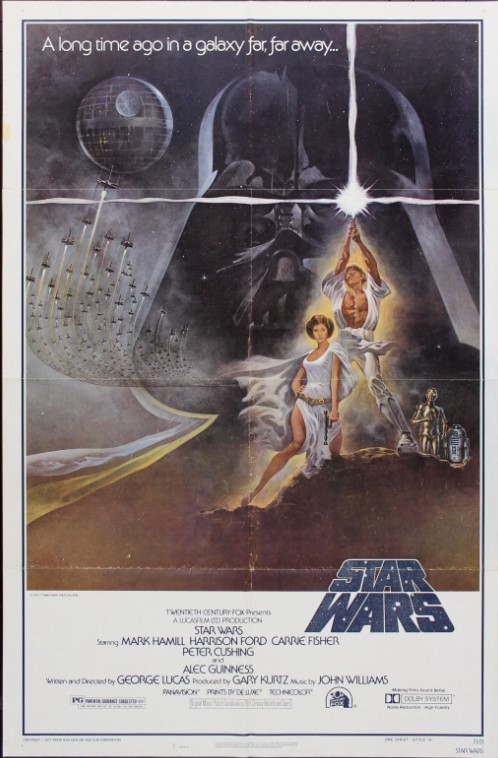
Star Wars - A New Hope Poster

May the 4th be with you, as John Harmon from Tales from the Freakboy Zone revisits where it all started, with Star Wars: A New Hope (1977). 


Hatari Poster

Emily from The Flapper Dame takes a look at Hatari! (1962). 


Casino Royale Poster

Robin Hood Poster

Cat from Thoughts All Sorts brings us a double bill of James Bond and Robin Hood, with her reviews of Casino Royale (2006) and Robin Hood (2010) 


It's a Mad, Mad, Mad, Mad World Poster

The Great Race Poster

Eric from Diary of a Movie Maniac reminds us It’s a Mad, Mad, Mad, Mad World (1963), and catches up with The Great Race (1965) 


The Blue Lagoon Poster

J-Dub from Dubsism finds another sports analogy in The Blue Lagoon (1980). 

The Princess Bride Poster

Rachel from Hamlette’s Soliloquy takes a trip down memory lane with The PrincessBride (1987). 


Sorcerer Poster

…And finally, I conure my review of the William Friedkin masterpiece, Sorcerer (1977). 


See you tomorrow…

Saturday, May 3, 2025

Sorcerer


Sorcerer Poster

(1977) Directed by William Friedkin; Written by Walon Green; Based on the novel The Wages of Fear, by Georges Arnaud; Starring: Roy Scheider, Bruno Cremer, Francisco Rabal, Amidou, Ramon Bieri, Peter Capell, Karl John and Friedrich von Ledebur; Available on Blu-ray and DVD 

Rating: *****

This post is part of the Adventure-a-Thon, hosted by Gill Jacob from Realweegiemidget Reviews and Yours Truly. Be sure to check out all the terrific posts from a talented bunch of bloggers.

Jackie Scanlon

“…the story, to me, was about the mystery of fate, the role that fate plays in the lives of all of us. And I had made a film, in The Exorcist, about the mystery of faith, and I now wanted to make a film that had no supernatural element to it, but was about the mystery of fate – the fact somebody can walk across the street, feeling in the peak of health, and get hit by a car, that we have no control over our destinies…” – William Friedkin (from 2015 interview with Nicolas Winding Refn)

“We're carrying three cases each. One is enough to blow out your fire, six cases will blow out the whole field. That means you don't think all the trucks will make it, one of us is a backup.” – Jackie Scanlon (Roy Scheider)


Truck at Night

Henri-Georges Clouzot’s landmark 1953 French film The Wages of Fear (based on the novel by Georges Arnaud), explored the timeless universal theme of desperate men taking desperate measures to achieve a common goal. Filmmaker William Friedkin, hot off two massive Hollywood hits, The French Connection (1972) and The Exorcist (1973), chose the source material as the basis for his follow-up film, Sorcerer.* Co-financed by Universal and Paramount, and filmed in the Dominican Republic and Mexico** from a script by Walon Green (The Wild Bunch), Friedkin and the studios figured they had another hit on their hands. Unfortunately for Friedkin and the studios, instead of knocking it out of the park with another win, Sorcerer died a quick death at the box office,*** failing to connect with audiences or critics. As is the case with so many films covered on this blog, time has vindicated William Friedkin’s intensely human jungle drama, which has only grown in esteem over the years. 

* Fun Fact #1: According to Friedkin, he thought of the controversial film title while listening to Miles Davis’ album, “Sorcerer.” In this case, the titular evil wizard was fate itself. 

** Not-So-Fun-Fact #1: Aside from the daunting logistics of a location shoot and budget concerns nature took its toll on the crew. Friedkin contracted malaria toward the end of the shoot, and fifty crew members had to leave the production after suffering from gangrene and other maladies. 

*** Not-So-Fun Fact #2: After its initial failure at the box office, Sorcerer was re-edited by its international distributor, CIC, and re-released under the title The Wages of Fear, ultimately resulting in a lawsuit by Friedkin to retrieve his original cut.

Oil Well Fire

We’re introduced to the four primary characters through the opening scenes: Nilo (Francisco Rabal), a ruthless assassin in Vera Cruz, Mexico; Victor Manzon (Bruno Cremer), a businessman accused of embezzlement in Paris, France; Kassem (Amidou), a terrorist in Jerusalem; and Jackie Scanlon (Roy Scheider),*/** a wheelman in the botched heist of a cathedral in New Jersey. Now on the run from various authorities, the four men end up, under assumed names, in the sleepy village of Porvenir, in an unspecified South American country, where people go when they want to fall off the face of the Earth (“It’s the kind of place nobody wants to go looking”). “Carlos,” (Friedrich von Ledebur) an escaped Nazi, tends bar in Porvenir, while corrupt police officers lord over the town. The impoverished locals rely on work from a nearby oil well, run by an American company. After a disastrous explosion at the site, resulting in the deaths of several townspeople, the company is eager to resume operations, but in order to do that they need to use dynamite to stop the resulting out-of-control fire. The dynamite in question, due to careless storage practices, is disintegrating, leaking highly volatile nitroglycerin. Although any excessive jostling or movement will set it off, it must be transported from 200 miles away, through uneven roads winding through dense jungle. Attempting to transport the dynamite is tantamount to a suicide mission, so the company must find men desperate enough to put their lives out on the line for the promise of a big paycheck. Stuck in the middle of nowhere with no means of leaving and nothing to lose, the four men rise to the challenge in two questionable vehicles (the film’s title refers to the name of one of the ramshackle trucks). 

* Fun Fact #2: The script was originally written with Steve McQueen in the lead role of Scanlon. While initially excited by the prospect of doing the film, McQueen ultimately passed on Sorcerer after Friedkin refused to meet his conditions, which included making his wife Ali McGraw executive producer. 

** Fun Fact #3: Friedkin’s only casting choice that made the cut was Moroccan actor Amidou (Kassem/Martinez). Marcello Mastroianni (as Victor Manzon) and Lino Ventura (as Nilo) backed out of the production.

The Four Drivers

The always watchable Roy Scheider hits the right notes as Scanlon, a character as far removed from the hero type as could be. As the wheelman on a failed heist and on the run from the mob, he’s done questionable things, but you can’t help but feel sympathy for his predicament. The same goes for his accidental cohorts, who are equally unsavory people, but bound together by a task with improbable odds. As Friedkin pointed out, the disparate characters are a metaphor for the troubled world. Despite their considerable differences, they need to cooperate or die. They are unquestionably antiheroic, yet their humanity shines through, conveying vulnerability, fear, and self-doubt (behind a façade of bravado).

Crossing the Unstable Bridge

Conflict is the driving force behind Sorcerer, with man against man, man against himself, and man against nature. Friedkin compels us to put ourselves in the shoes of these men, living in a place where life is cheap. We’re right with them, in one jaw-dropping scene after another, as they narrowly escape oblivion. Putting aside their petty disputes and working together towards a common goal is essential if they hope to survive. The much-touted scene where the party is forced to cross a rickety bridge over rushing waters is as tense and harrowing as its reputation suggests. Amidst heavy rain and the treacherous, churning river below, they have no alternative but to cross the swaying bridge, which threatens to collapse at any second.* In a tense scene, when an enormous fallen tree trunk blocks their progress, the team are forced to use their collective ingenuity, along with a case of dynamite, to clear the way. The music by German group Tangerine Dream** propels the action and enhances the tension, contributing to the film’s raw energy. 

* Not-So-Fun-Fact #3: While shooting the complicated scene in Tuxtepec, Mexico, four stuntmen were injured in what was then touted as “the most dangerous stunt attempt in film history,” when their 16-ton truck drove off the bridge. 

** Fun Fact #4: Tangerine Dream’s haunting, synth-heavy score was composed and recorded in an abandoned Bavarian church before the film was made. Friedkin stated that he cut the film to the music.

Carrying the Dynamite

Sorcerer is the consummate “sweaty palms” movie, with potential calamity looming around every corner, forcing the viewer to put themselves in the place of the characters. While Friedkin expressly stated that he didn’t want supernatural elements in his film, there is an almost unworldly aura surrounding everything, with people battling forces (social, political and elemental) that are entirely beyond their control. Perhaps this could be extended towards the film’s initial negative reception, as well. It’s a case of the right movie at the wrong time, with the wrong title. There are many possible reasons why Sorcerer underperformed upon its release, including a conspicuous lack of traditionally likeable characters, few recognizable names (with the exception of Scheider), and the misfortune of being released around the same time as Star Wars.* But the nail in the coffin was most likely the title, suggesting a fantasy film. All of this aside, the old Hollywood adage that “no one knows anything” still holds true. Even if the stars aligned with the perfect release date, a cast of bankable stars, and perfect title, nothing would have ensured Sorcerer’s success. Fortunately, due to home video and positive word-of-mouth, Sorcerer has enjoyed a major reassessment over the years. With the benefit of hindsight, Sorcerer was way before its time, belatedly establishing its rightful place in cinema history as a true classic 

* Fun Fact #5: Reflecting on Sorcerer’s failure at the time, Friedkin commented: “The zeitgeist was changing. It came out a week after Star Wars, and Star Wars really changed the way people think about, ‘What is a movie?’ Right to this day, and beyond. All these films about the Avengers and the Transformers, video games and comic books, that’s what, for the most part, Hollywood cinema has become. That just automatically opened the floodgates to people wanting pure entertainment that could be seen by people of all ages, basically. Would my film have worked if there was no Star Wars? I don’t know. But without “Star Wars,” I think American film would be different today.” 


Sources for this article: “William Friedkin in Conversation with Nicolas Winding Refn on Sorcerer” (2015); “Sorcerer Stunt Attempt Injures Four in Mexico,” Boxoffice, Jan. 24, 1977; “I thought I was bulletproof: William Friedkin Looks Back at the ‘70s,” New York Times, April 29, 2013; “Sorcerer Switch,” Screen International, Nov. 19, 1977; “Moxie, Not Magic, Conjured Sorcerer,” by William Friedkin, Variety, May 10, 2016


Adventure-a-Thon Banner - Prey