Showing posts with label Australia. Show all posts

Monday, September 1, 2025

Animated August Quick Picks and Pans


Harvie Krumpet Poster

Harvie Krumpet (2003) Writer/director Adam Elliot’s stop-motion-animated short film introduces us to the bittersweet world of Harvie Krumpet, a Polish immigrant with Tourette’s Syndrome living in Australia (Geoffrey Rush provides the droll narration). Like many of Elliot’s other films, it’s a celebration of the outsider and their uniquely skewed perspective. Despite his struggles connecting with others, Harvie manages to carve his own niche in society. This brief but affecting portrait pushes all the right buttons, and is well worth a look (or two or three). 

Rating: ****. Available on Blu-ray (included in The Adam Elliot Collection), DVD, Kanopy and Tubi


The Tune Poster

The Tune (1992) Bill Plympton’s musical film celebrates the creative process as it intersects and clashes with commercialism. When he experiences the songwriter’s version of writer’s block, Del journeys to the musical town of Flooby Nooby to find inspiration and learn to sing from the heart. Plympton’s unique hand-drawn animation, takes the viewer in unexpected directions, with byzantine gags that build on each other. Will Del find his inspiration in time to please his demanding boss, and win the woman of his dreams? Watch and find out. 

Rating: ****. Available on Blu-ray, DVD and Tubi 

Blood Tea and Red String Poster

Blood Tea and Red String (2006) Christiane Cegavske’s exquisitely detailed stop-motion-animated film plays like a waking dream, skirting the barriers of consciousness. A group of birdlike people clash with mice over a life-size doll, while a frog shaman works his special brand of conjuring. Blood Tea and Red String uses fairy tale tropes to tell its unique story about infatuation, greed and togetherness.   

Rating: ***½. Available on

Phantom Boy Poster

Phantom Boy (2015) Alex, an 11-year-old boy undergoing chemotherapy, becomes an unlikely partner for an injured police detective when he discovers the ability to leave his body. When a super criminal vows to take control of New York City, Alex scours the streets for clues that might break the case. Jean-Loup Felicioli and Alain Gagnol’s French-animated feature is about summoning your inner strength, even when you feel powerless. 

Rating: ***½. Available on Blu-ray, DVD and Kanopy


Hana and Alice Poster

The Murder Case of Hana and Alice (2015) After her parents’ divorce, Tetsuko Arisugawa (“Alice”) moves to a small town with her mother. As the new kid at her middle school, she arrives to a mystery, under the watchful eye of a shut-in former student, Hana. Shunji Iwai’s gentle tale of friendship separates myth from reality, as Alice contends with bullying classmates and reticent locals to learn the truth about a classmate’s alleged death.   

Rating: ***½. Available on Blu-ray, DVD and Tubi 

Bubble Bath Poster

Bubble Bath (aka: Habfürdö) (1980) In this fun, if slight, Hungarian musical oddity, Zsolt gets cold feet over his impending marriage to Klára, taking refuge in his friend Anna’s apartment. Complications ensue when Klára pays Anna a visit, and memories and feelings are brought to the surface. Will Zsolt marry the capricious Klára or run off with amiable Anna? Looking a bit like a lost sequel to Yellow Submarine, Bubble Bath features silly songs and hallucinogenic animation that makes me wonder what kind of substances they were smuggling behind the Iron Curtain during that time.   

Rating: ***. Available on Blu-ray and Tubi


Saturday, November 30, 2024

Non-Fiction November Quick Picks and Pans

Dig! Poster

Dig! (2004) Ondi Timoner’s warts and all documentary chronicles the chaotic friendship which became a rivalry between Courtney Taylor-Taylor from The Dandy Warhols and Anton Newcombe from The Brian Jonestown Massacre. Both bands emerged in the late ‘90s alternative music scene with promising word-of-mouth, but self-destructive behavior (often mixed with drug and alcohol abuse) hastened Newcombe’s downfall. It’s an unflinching look at the fickle world of the music industry and the elusive allure of fame, along with the physical and emotional toll it takes on the performers. 

Rating: ****. Available on DVD, Kanopy

The Celluloid Closet Poster

The Celluloid Closet (1995) This fascinating film, based on the book by Vito Russo and narrated by Lily Tomlin, examines the portrayal of LGBTQ+ characters in Hollywood from the silent era to the present, featuring interviews with actors, writers and other filmmakers. Using various film clips, The Celluloid Closet illustrates how the presence of queer people was often coded in early Hollywood. It also tracks the progression of queer stereotypes in cinema, which were often coded, and more-often-than-not employed for comic effect, or in later years, as convenient villains. It’s a reminder of how far we’ve progressed and how far we haven’t. 

Rating: ****. Available on DVD and Tubi

The Witch of Kings Cross Poster

The Witch of King’s Cross (2020) Documentarian Sonia Bible profiles the intriguing life and work of Rosaleen Norton – an artist who lived life on her terms. Norton raised eyebrows in conservative ‘1950s Sydney, Australia, with her provocative, sexually charged artwork (often featuring herself) and practice of pagan rituals (including sex magic), based on Aleister Crowley’s teachings. Her unorthodox creative practices (which frequently involved altered consciousness) resulted in jail time, censorship and harassment from local authorities. While being a counterculture pioneer would have been difficult for a man, the consequences were especially harsh for a free-spirited independent woman.   

Rating: ****. Available on Amazon Prime


Botero Poster

Botero (2018) Don Millar and Hard Snider take an intimate look at one of the world’s most widely recognized modern artists, Fernando Botero, known for his distinctive style of exaggerated, puffy figures. Love him or hate him, there’s no mistaking a Botero painting or sculpture. Originating from a poor family in Colombia, we hear from the artist himself, as well as family, friends and critics. The film examines Botero’s unique style in detail, delving into his creative process, and demonstrating how something viewed as playful or comic could also be subversive. It's a profile of an artist who consistently marched to the beat of his own drum. Anyone who creates, especially if they ever questioned the merit of their own work, should find something inspiring in this film.   

Rating: ****. Available on DVD and Kanopy

An Honest Liar Poster

An Honest Liar (2014) Directors Tyler Measom and Justin Weinstein take an intimate look at the life of James Randi (aka: “The Amazing Randi”), a former stage magician who embarked on a decades-long crusade to debunk self-professed faith healers, spiritualists, and others (including archrival Yuri Geller) who preyed on the desperate and gullible. By applying a scientific method to his investigations, he demonstrates how anyone, no matter how smart or educated, can be fooled. The documentary takes an unexpected turn when we learn about his confederate in investigations and long-time partner, José Alvarez, who himself perpetrated a profound deception. It’s a very human profile of a larger-than-life personality. 

Rating: ****. Available on DVD (Out of Print) and Amazon Prime 


The Silent World Poster

The Silent World (1956) This Oscar-winning documentary provides a glimpse at the mysterious, elusive world beneath the sea. Join French explorer Jacques-Yves Cousteau and his team (who supplied the inspiration for the eponymous fictional explorer in Wes Anderson’s The Life Aquatic with Steve Zissou), as they reveal a world of startling color and contrasts. Audiences at the time were treated to an unprecedented peek at an environment few had seen before. The Silent World unfortunately shows its age with its dated attitudes (such as the crew killing sharks feasting on a dead baby whale, using giant Galapagos tortoises as footstools, or dynamiting a reef to collect sea life), which wouldn’t pass muster in a David Attenborough wildlife film. Despite these missteps, it still entrances after all these years.    

Rating: ***½. Available on Blu-ray and DVD

The Dark Glow of the Mountains

The Dark Glow of the Mountains (1985) Filmmaker Werner Herzog turns his camera on mountain climbers Reinhold Messner, Hans Kammerlander, and a team of hand-picked explorers, as they attempt to conquer the treacherous and elusive summits of Gasherbrum I and II in Pakistan. Herzog attempts to ascertain why these climbers would risk frostbite and death without giving clear reasons (other than it’s there). While a little too brief at just 45 minutes, The Dark Glow of the Mountains is a meditation on the spirit of adventure, along with the accompanying dangers and loss (exemplified by a painful moment when Messner recounts having to tell his mother that his brother perished in a 1972 climbing accident). 

Rating: ***½. Available on DVD and Tubi
Journey Into the Beyond Poster

Journey Into the Beyond (1975) One of many pseudo-documentaries released in the 1970s, Journey Into the Beyond, narrated by John Carradine, takes us around the world to witness allegedly supernatural events, visiting psychic healers, weeping statues, a séance, and other unexplained phenomena. More entertainment than pure documentary, the film suffers credibility from its lack of counterpoint to the purportedly “real” occurrences depicted throughout.  the screen. While the whole thing should probably be regarded with a grain of salt, it features a fun little gimmick: auditory cues for those who are squeamish when something explicit appears and disappears onscreen. If nothing else, it’s a good companion to the Amazing Randi documentary, An Honest Liar (see above).   

Rating: ***. Available on Blu-ray, DVD and Tubi


Friday, May 31, 2024

May Quick Picks and Pans


Stone Poster

Stone (1974) For those who weren’t there at the time (and I think that covers most of us), director/co-writer/co-star Sandy Harbutt gives us a taste of the Australian biker culture of the early ‘70s. The title refers to the main character (played by Ken Shorter), an undercover cop, who infiltrates biker gang, “The Gravediggers,” to investigate a series of killings of their members. Harbutt does a nice job depicting their gritty, freewheeling lifestyle. They live by their own rules, preferring to live on the fringes of society, instead of the 9 to 5 world. Stone becomes entranced by their scene, but can never quite be one of them. The film features some very good performances, including Harbutt as Undertaker, the gang’s leader, as well as many real bikers as extras. Hugh Keays-Byrne (Mad Max and Mad Max: Fury Road) steals the show as the hedonistic Toad.   

Rating: ***½. Available on Blu-ray, DVD and Tubi

Arena Poster

Arena (1989) This low budget direct-to-video (at least in the U.S.) sci-fi action flick with big ambitions is as superficial as a bowl of sugary kids’ breakfast cereal, but diverting enough. Set on an intergalactic space station, Paul Satterfield stars as Steve Armstrong, a man who aspires to compete in what has become an aliens-only fighting match. Besides the fact that a human hasn’t competed in the ring in 50 years, he must contend with a crime boss and his toadies. Probably the film’s biggest distinction is that it featured three actors who would go on to star in two prominent ‘90s sci-fi series: Claudia Christian (Babylon 5) as Armstrong’s manager Quinn, and Armin Shimmerman and Mark Alaimo (Deep Space Nine) as the antagonists. The not-so-special effects and flimsy sets are nothing to write home about, but the unique creature designs are kind of fun. If nothing else, it’s easy to see the potential for this to be remade with a bigger budget.   

Rating: ***. Available on Prime Video and Tubi  

Ruby Poster

Ruby (1977) Piper Laurie stars as fading has-been Ruby Claire, in director Curtis Harrington’s supernatural drama. When her gangster boyfriend is shot down (shown in the opening flashback scene), he vows revenge against the men who betrayed him. Flash forward 16 years later, with Ruby reminiscing about old times and running a backwoods drive-in theater. Leslie (Janit Baldwin), her special needs daughter, becomes the conduit for her deceased father’s spirit, as he exacts revenge against those who wronged him. The bodies pile up in a hurry, although the authorities never seem to snoop around. Laurie’s slightly unhinged performance is the only reason to see this near miss that never quite coalesces. 

Rating: ***. Available on Blu-ray, DVD and Midnight Pulp


The Monster of the Opera Poster

he Monster of the Opera (1964) In director/co-writer Renato Polselli’s middling horror movie, a theater troupe is terrorized by a centuries-old vampire and his curse. He’s drawn to Giulia (Barbara Hawards), a dancer whom he believes to be his reincarnated lover (who also damned him to a life of vampirism). There’s some nice black and white cinematography, particularly with an opening dream sequence, but little else to recommend this one. It’s too bad The Monster of the Opera is mostly bark and little bite, filled with boring dance numbers, endless bickering, and more diaphanous negligees than a Jean Rollin film. 

Rating: **. Available on DVD and Midnight Pulp

The Incredible 2-Headed Transplant Poster

The Incredible 2-Headed Transplant (1971) Bruce Dern stars as Roger, an enterprising young doctor experimenting with grafting second heads on animals. He longs to find a human test subject, and sees the perfect opportunity fall in his lap – transplanting the head of an escaped serial killer on the body of a giant mentally challenged man (you can probably guess this isn’t a brilliant idea before the murderous rampage ensues). Pat Priest plays his neglected wife Linda, who passively endures her husband’s shenanigans, and Casey Kasem co-stars as Ken, a colleague who suspects something unsavory is afoot. This movie makes the thematically similar The Thing with Two Heads (1972) look like a classic by comparison. 

Rating: *½. Available on Blu-ray, DVD and Tubi


Tuesday, March 12, 2024

Turkey Shoot


Turkey Shoot Poster

(1982) Directed by Brian Trenchard-Smith; Written by Jon George and Neill D. Hicks; Story by George Schenck, R. Wayland Williams and David Lawrence; Starring: Steve Railsback, Olivia Hussey, Michael Craig, Carmen Duncan, Noel Ferrier, Lynda Stoner, Roger Ward, Michael Petrovich and Gus Mercurio; Available on Blu-ray and DVD 

Rating: *** 

“We are all part of a great society. One which is the product of many generations of thought. While it is true that in the past, mistakes have been made, we now know that society depends on the wholehearted cooperation of every one of its members. There is no room for shirkers, malcontents or deviants. And we are here to help you gain your rightful places in that great society. Freedom is obedience. Obedience is work. Work is life.” – Thatcher (Michael Craig)

Prison Sign

Turkey Shoot (aka: Escape 2000 in the U.S.) rode the wave of Ozploitation films from the ‘70s and ‘80s, which promised excessive violence, flashes of gratuitous nudity, and death-defying stunts – a combination unpopular with critics but ideal for international audiences, hungry for movies that traipsed on the wild side. Director Brian-Trenchard Smith* described his movie as “a bit of a train wreck,” with a budget that was cut in half (to $1.6 million),**/*** just before shooting commenced. The lack of funds necessitated making concessions to the script: the filmmakers cut out the first 15 pages, which would have set up the dystopian society only hinted at by the rest of the film. Another four pages, depicting a climactic helicopter chase, were trimmed from the screenplay, and the shooting schedule (on location north of Queensland) was reduced to 28 days. 

* Fun Fact #1: Trenchard Smith commented: “I make a lot of films for pubescent males, being a perpetual pubescent male, perhaps.” 

** Fun Fact #2: According to Trenchard-Smith, the film was originally set in Depression-era America, circa 1933, but that changed to sometime in the near future, presumably someplace in Australia. 

*** Fun Fact #3: The prison camp set was designed for 500 extras, but only featured 20 to 70 at most, depending on the daily demands of the shoot.

Paul Anders

The opening credit sequence attempts to bridge the gap in the script’s missing prologue, through a montage of news clips depicting civil unrest. We can infer that the resulting future society of 1995 (!) has devolved into a police state, where individual rights have taken a backseat to control of the masses. In the following scene, we’re introduced to three of the key players, as they arrive to their assigned prison camp. Paul Anders (Steve Railsback), who has the most substantial backstory, is a repeat-offender – a political dissident who runs a covert radio show.* For Chris Walters (Olivia Hussey), it’s guilt by association as the formerly law-abiding shop owner is arrested for the misfortune of having the wrong friends. It’s not entirely clear why the third prisoner, Rita (Lynda Stoner), was sentenced to prison, although one can presume it has something to do with her freewheeling attitude, which seems counter to the ultraconservative sensibilities embodied by the sadistic warden, Thatcher (Michael Craig). Accompanying the warden is a small army of guards, who cater to his whims (and some of their own). Not long after they arrive, the new convicts are granted clemency, but there’s a catch. They must survive the hunt. 

* Fun Fact #4: The policeman who whacks Anders with his truncheon is none other than Trenchard-Smith.

Thatcher

In a movie not distinguished by its subtlety, Turkey Shoot features a surprisingly understated standout performance by veteran actor Michael Craig as the empathy-challenged warden Thatcher (guess who he’s named after?). He spews government-sanctioned rhetoric about rehabilitation, while exhibiting blatant disregard for the welfare of the prisoners. Craig (who wrote much of his own dialogue) hits the right notes as a career-minded mouthpiece for the ruling class and its calculating propaganda. Steve Railsback does an admirable job as Thatcher’s nemesis, Paul Anders, who refuses to succumb to the will of the fascist government. He represents the unbroken spirit that Thatcher detests, refusing to buckle under intimidation tactics. Even if it kills him, he’s determined to send the message that no jail can hold him for long.

Paul Anders and Chris Walters Watch in Horror

Olivia Hussey reportedly didn’t enjoy the shoot,* which comes across in her visibly uncomfortable performance (when Hussey objected to a nude scene, a body double was brought in). On the other hand, her unease works fairly well for the character, who’s very much a fish out of water. It takes very little time for the once-compliant model citizen to become disillusioned when she witnesses the abuses of the people in power. 

* Fun Fact #5: According to another cast member, Hussey was terrified by the prospect of being outdoors with Australia’s native wildlife.

Ritter

Ex-pro wrestler Roger Ward creates an appropriately imposing presence as the vicious Chief Guard Ritter, who doles out punishment with a sneer. In one of the most difficult scenes to watch, Ritter beats and kicks a diminutive female prisoner to death, followed by a later sequence when he sets an escapee on fire. Similarly, Gus Mercurio chews the scenery as Red, a man who takes pleasure in ensuring the inmates’ lives are a perpetual living hell. Of course, both characters’ appalling behavior are designed to manipulate the audience, so their horrible comeuppance can supply some much-needed catharsis.

The Hunters Before the Hunt

What would a variation of The Most Dangerous Game be without a cast of cartoonishly villainous hunters? Tito (Michael Petrovich) drives a mini-bulldozer with his trusty sidekick from a sideshow, the beast-man Alph (played by wrestler Steve Rackman), who has a penchant for inflicting pain (and munching human toes). Secretary Mallory (Noel Ferrier) is the picture of excess, with his portly stature, cigar, and phallic firearm. While it certainly seemed several of the male actors were enjoying themselves with their over-the-top roles, the only actress who seemed to be having fun was Carmen Duncan as amoral Jennifer. She dresses as if she’s about to attend a posh soirée with the upper crust, instead of killing unarmed prisoners in cold blood. Her weapon of choice is a crossbow with an assortment of arrows. She enjoys inflicting pain and satisfying her insatiable libido with equal gusto. Both appetites are intertwined as she sets her eyes on Rita. 

Alph

Brian Trenchard-Smith described Turkey Shoot as “1984 meets The Camp on Blood Island,” blending trashy excess with social commentary (dubious crimes and disproportionate punishment, as befits a society hellbent on controlling its citizens). Predictably, Turkey Shoot wasn’t a hit with Australian critics expecting high-minded entertainment, but that didn’t stop it from connecting with audiences to become a modest hit. Trenchard-Smith acknowledged it for what it was, a low-brow crowd pleaser with some heavy-handed satire thrown in for good measure. While the delivery is clunky in parts, Turkey Shoot reminds us that dystopian films never go out of style (we love to see the oppressed fight the oppressors). Although you might not respect yourself in the morning, it’s not a bad way to spend 90 minutes or so.


Sources for this article: Severin Blu-ray commentary by Brian Trenchard-Smith; “Turkey Shoot: Blood and Thunder Memories” documentary 


Tuesday, April 25, 2023

Spirit of ’76 Month Quick Picks and Pans


Mad Dog Morgan Poster

Mad Dog Morgan (1976) Dennis Hopper plays Daniel “Mad Dog” Morgan, an Irish immigrant turned outlaw in 1860s Australia. He roams the countryside with his trusty indigenous companion Billy (played by the always reliable David Gulpilil), robbing from the settlers. Despite a reportedly troubled production (due to a problematic Hopper), co-writer/director Philippe Mora’s outback western is a fascinating but sympathetic portrait of one of Australia’s most notorious criminals. In stark contrast to his pursuers and local lawmakers, Morgan possesses a code of honor and sense of fair play, transforming him into a cult hero of sorts. 

Rating: ***½. Available on Blu-ray, DVD and Kanopy

Who Can Kill A Child Poster

Who Can Kill a Child? (1976) Narciso Ibáñez Serrador’s Spanish horror-suspense film is a potent mixture of Lord of the Flies with Children of the Damned. English tourists Tom and Evelyn (Lewis Fiander and Prunella Ransome) decide to leave the hustle and bustle of a crowded Spanish coastal town, for the promise of peace and quiet on a nearby island. They soon discover the conspicuous absence of adults in the island village, which seems to be populated by roaming packs of sadistic children. We never learn what causes their vicious behavior (Is it a social or biological disease?), but the implication is that some sort of judgment day is at hand for the grown-ups. It’s a truly relentless, unnerving experience that will stay with you long after you’ve watched it.

One warning: The film’s only sour note (and it’s a big one) is the opening credit sequence, presenting a tasteless litany of atrocities against children (including concentration camps and famine). My recommendation: fast-forward through it. 

Rating: ***½. Available on Blu-ray and DVD

Black Magic 2 Poster

Black Magic 2 (1976) This Shaw Brothers sequel to the 1975 original promises more sex, gore and sorcery than you can shake a severed limb at. An 80-year-old practitioner of the dark arts keeps his youthful appearance by drinking the breast milk of young women under his spell. He keeps an army of zombies in his basement, who obey his every whim. When three doctors investigate the veracity of claims about him, they try to stop his reign of terror. Can they stop him, or will they join the ranks of his victims? Watch and find out. 

Rating: ***. Available on Blu-ray and DVD

Creature from Black Lake Poster

Creature from Black Lake (1976) This low-budget independent production, filmed in Louisiana, is surprisingly engaging, thanks to colorful characters and a terrifying beast.  Pahoo and Rives (Dennis Fimple and John David Carson), two grad students from Chicago, travel to bayou country in the hopes of tracking down a legendary missing link. Although the scenes with the redneck sheriff (Bill Thurman) won’t surprise anyone, it’s a notch above many of its contemporaries (I’m looking at you, Legend of Boggy Creek) thanks to better acting (featuring appearances by stalwart character actors Jack Elam and Dub Taylor) and (for once) a decent view of the enraged hominid.   

Rating: ***. Available on Blu-ray, DVD, Tubi and Amazon Prime

The Human Tornado Poster

The Human Tornado (1976) Rudy Ray Moore returns as everyone’s favorite kung fu-fighting pimp Dolemite, in his sequel to the character’s eponymous 1975 debut. Dolemite and his pals flee a trigger-happy hillbilly sheriff with an axe to grind for the glitz and glamour of Los Angeles. He runs into more trouble when he tries to rescue his pal Queen Bee (Lady Reed) from the clutches of a local kingpin. It’s cheap, with iffy acting, fake kung fu, and a scene that stops the plot cold, solely for an opportunity to showcase his routine in front of an audience. Is it good? No, but that’s not the point. The Human Tornado was made to entertain, and entertain it does, with Moore’s signature one-liners and over-the-top mayhem. 

Rating: ***. Available on Blu-ray, DVD, Amazon Prime, Kanopy, and Tubi


Death Machines Poster

Death Machines (1976) Madame Lee (Mari Honjo) manages a trio of unstoppable assassins (aka: the “Death Machines”), while the bumbling cops attempt to thwart a series of contract killings. Meanwhile, a survivor of a karate studio massacre vows revenge against the people who killed his master and left him for dead. Filled with laughable dialogue, questionable acting, and haphazard directing, Death Machines is a textbook example of a film that’s so bad it’s good. Enjoy. 

Rating: **½. Available on Blu-ray and DVD


The Town that Dreaded Sundown Poster

The Town that Dreaded Sundown (1976) This odd pseudo-documentary style thriller (and I use the term “thriller” loosely) chronicles a 1946 murder spree, by a killer with no apparent motive. The tone is wildly inconsistent, ranging from a serious police procedural to slapstick hijinks. Probably the most annoying aspect of the movie is its reliance on unnecessary narration, which either describes what already happened on screen, or provides exposition that could have been dialogue. You’ve been warned. 

Rating: **½. Available on Blu-ray and DVD

Futureworld

Futureworld (1976) This forgettable sequel to Michael Crichton’s 1973 film manages to underwhelm at every turn, lacking the novelty or suspense of its predecessor. The Delos Corporation picks up the pieces from the disaster depicted in the first film, rebuilding their resort and replacing their problematic androids with new models. In an effort to boost public relations, they invite TV reporter Tracy Ballard (Blythe Danner) and newspaper reporter Chuck Browning (Peter Fonda) to an all-access experience at the luxury theme park. All isn’t as it seems at the new, “improved” resort, as the snooping reporters discover a sinister conspiracy at work (a theme that would be beaten to death in the exasperating HBO TV series). The cut-rate Samuel Z. Arkoff production fails to impress, riding the fumes of the original (Yul Brynner revises his role as the Gunslinger, in an ill-advised dream sequence cameo). The seemingly endless scenes of Chuck and Tracy running around in the underground bowels of the resort are an apt metaphor for the film, running in circles with nowhere to go. Yawn. 

Rating: **. Available on Blu-ray, DVD and Tubi  


Saturday, April 30, 2022

April Quick Picks and Pans

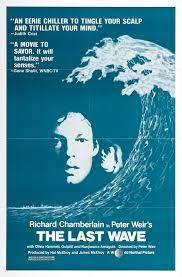
The Last Wave Poster

The Last Wave (1977) Peter Weir’s enigmatic follow-up to Picnic at Hanging Rock is almost a spiritual sequel to its cryptic predecessor, raising many questions but providing few answers. David Burton (Richard Chamberlin), a Sydney lawyer, defends a group of aboriginal men accused of murder. While the group’s nominal leader, Chris Lee (David Gulpilil), is Burton’s link to the truth, he only offers answers in riddles that ultimately lead to cataclysmic dream visions. Weir’s deliberately paced film doesn’t spoon-feed explanations. Instead, it requires our patience, as we’re left to make sense of it all. Mesmerizing.    

Rating: ****. Available on Blu-ray and DVD 

The Juniper Tree Poster

The Juniper Tree (1990) Writer/director Nietzchka Keene’s bleak, lyrical film (based on a fairy tale by the Brothers Grimm), set sometime in Iceland’s early history, exploits the Nordic country’s stark landscape with stunning black and white cinematography. Björk stars as Margit, the younger sister of Katla (Bryndis Petra Bragadóttir). Katla marries Jóhann (Valdimar Örn Flygenring), a still-grieving widower, much to the indignation of his petulant son, and things only get worse from there. The Juniper Tree entrances and beguiles, depicting a world where witchcraft and nature entwine. 

Rating: ***½. Available on Blu-ray, DVD and Kanopy

Stacy Poster

Stacy (aka: Stacy: Attack of the Schoolgirl Zombies) (2001) A worldwide pandemic affecting 15- to 17-year-old girls transforms them into mindless, flesh-eating zombies (the movie’s title references the slang term for the animated corpses). Director Naoyuki Tomomatsu’s low-budget horror/comedy (based on a novel by Kenji Ôtsuki) is scattershot in its approach, but manages to provide some commentary about isolation and human connection in modern society. Despite the cheap shot-on-video production values, the gory practical effects are surprisingly good. There are also some fun references to other zombie films, notably the paramilitary organization RRK (Romero Repeat Kill) Corps, and designer chainsaws called “Bruce Campbell’s Right Hand.” 

Rating: ***. Available on DVD

Winterbeast Poster

Winterbeast (1992) A Massachusetts park ranger (Mike Magri) investigates the disappearance of several people in his jurisdiction. Signs point to a Native American curse and a deranged resort owner. All sorts of demons, who seem to be from a different flick altogether, unleash their vengeance. Writer/director Christopher Thies’ indescribable mess, cobbled together from different footage over a span of several years, features amateurish performances, sub-par stop-motion animation, and bad rubber makeup effects. Yet despite all its deficits, it’s never boring (always a plus in my book), and the rough edges only make it more endearing. If you’re looking for a selection for bad movie night, look no further. 

Rating: ***. Available on Blu-ray (included in Home Grown Horrors Volume I), DVD (as a double feature with Nudist Colony of the Dead) and Shudder 


Wednesday, June 30, 2021

Cryptid Month Quick Picks and Pans

The Secret of Roan Inish Poster

The Secret of Roan Inish (1994) Writer/director John Sayles brings us this gentle tall tale, steeped in Irish folklore (based on the children’s book, Secret of the Ron Mor Skerry, by Rosalie K. Fry). After losing her mother, Fiona (Jeni Courtney), is sent to live with her grandparents in a quiet fishing village. She soon hears stories from the villagers about the selkie (a creature half seal and half human), and grows determined to find out why they abandoned the nearby isle of Roan Inish. A little boy on the beach may provide the answer she seeks. Sayles’ film takes its time letting the story unfold, depicting a different time and place, not too long ago, where the mythical and concrete worlds meet. Haskell Wexler’s lush cinematography provides scope and immediacy, treating the spectacular scenery and family drama with equal weight.   

Rating: ****. Available on DVD and Amazon Prime

Frog Dreaming Poster

Frog Dreaming (aka: The Quest) (1986) Henry Thomas stars as Cody, a headstrong, adventurous 14-year-old. Following the untimely death of his parents, he’s under the care of Gaza (Tony Barry) a family friend in Australia. Cody discovers a lake that’s not listed on the map, in a region known for “frog dreaming,” a sacred place for Aboriginal people. Captivated by rumors about a creature known as a Bunyip that lives in its depths, he devises a plan to learn the secret. Brian Trenchard-Smith’s family adventure film is a hit and miss affair, featuring some nice action sequences and art direction (by Paddy Reardon), but the it’s not hard to see the big twist coming a mile away. Also, it’s difficult to sympathize with Gaza’s laissez-faire foster parenting (bordering on gross negligence), in light of Cody’s daredevil antics. On the other hand, it works fairly well as a family adventure flick, reminding us that things aren’t always what they seem. 

Rating: ***. Available on Blu-ray and DVD 

The Secret of the Loch Poster

The Secret of the Loch (1934) This slight comedy/adventure finds Jimmy (Frederick Peisley), a spunky reporter from London, determined to get a scoop about the fabled creature that allegedly lives in Loch Ness. He travels to Scotland, where he hounds the gruff Professor Heggie (Seymour Hicks), who’s busy mounting his own expedition. If that wasn’t enough reason to fall on Heggie’s bad side he’s smitten by his granddaughter Angela (Nancy O'Neil), who’s indifferent at best to his advances. There are some amusing little moments throughout, but even for a 78-minute movie, the material seems to be stretched fairly thin. (Mild Spoiler Alert) To its credit, you do catch a glimpse of the monster, but you’ll wish you didn’t (I’ll just say that it doesn’t resemble the creature we’ve come to expect). The Secret of the Loch deserves some kudos, however, for likely being the first movie devoted to the aquatic cryptid, and for featuring a young David Lean as editor. 

Rating: ***. Available on DVD

Aswang Poster

Aswang (1994) The title of this independent feature, filmed in Wisconsin by Wrye Martin and Barry Poltermann, refers to a creature from Filipino folklore that feeds on the blood of unborn fetuses. After an unexpected pregnancy, 19-year-old Katrina (Tina Ona Paukstelis) signs her baby over to a wealthy couple, Peter and Claire Null (Norman Moses and Jamie Jacobs Anderson). Things get weird in a hurry, when Peter asks Katrina to pose as his wife in order to earn his inheritance. When family secrets are gradually revealed, she finds herself in a fight for her life. Despite Moses’ cartoonishly over-the-top performance, Aswang boasts some creepy scenes, enhanced by surprisingly good makeup effects. If nothing else, it’s far from the same old thing.

Rating: ***. Available on DVD (Out of Print)

The Mothman Prophecies Poster

The Mothman Prophecies (2002) After the death of his wife, John Klein (Richard Gere), a Washington, D.C. reporter, travels to the small town of Point Pleasant in West Virginia, the epicenter for strange occurrences. What ensues is a quest for meaning, as Klein interviews several residents about their encounters with a strange being, and befriends the local sheriff (Laura Linney). Whether the Mothman (shown briefly in muddy, indistinct CGI) is real or a figment of the townspeople’s imaginations is never resolved. Most of the movie is terribly dull, with poor chemistry between the leads, and a story that refuses to commit one way or the other about the myth. Instead of delving into the folklore aspects, the filmmakers unwisely decided to subject the audience to a tepid story and tedious drama.

Rating: **½. Available on Blu-ray and DVD

The Barrens Poster

The Barrens (2012) Richard Vineyard (Stephen Moyer of True Blood fame), a mentally unstable man, takes his reluctant family on a camping vacation to a national park in New Jersey. As they venture deep into the forest, he grapples with his inner demons while contending with the possibility that he’s being stalked by the Jersey Devil. Writer/director Darren Lynn Bousman’s film, filled with plot holes aplenty, borrows from better sources (including The Shining and Mosquito Coast) to depict one man’s eroding cognitive/emotional state. As he becomes increasingly delusional, it seems less believable that the rest of Richard’s family would follow him down his self-destructive path. In the end, The Barrens fails to deliver as a psychological thriller or a compelling exploration of the Jersey Devil myth. 

Rating: **. Available on Blu-ray and DVD

Sunday, December 30, 2018

Dead End Drive-In


(1986) Written by Brian Trenchard-Smith; Written by Peter Smalley; Based on the story “Crabs,” by Peter Carey; Starring: Ned Manning, Natalie McCurry, Peter Whitford and Wilbur Wilde; Available on Blu-ray and DVD

Rating: ***½

“I have a motto: If in doubt, blow it up, or at least set fire to it.” – Brian Trenchard-Smith (from the Arrow Blu-ray commentary)


Many filmmakers have celebrated the drive-in movie theater and the car culture that surrounds it, but it took director Brian Trenchard-Smith to transplant these elements into his dystopian action film, Dead End Drive-In. This adaptation of Peter Carey’s 1972 short story “Crabs,” (written for the screen by Peter Smalley), has been described by Trenchard-Smith as “part Mad Max, part Exterminating Angel.” What’s a distinctly American invention doing in an Ozploitation* flick? While the concept never caught on in most places around the globe, Canada and Australia** are notable exceptions. The film was largely shot in Sydney’s last standing drive-in on a budget of $2.3 million (presumably Australian dollars). 

* Fun Fact #1: According to Trenchard-Smith, American distributor New World Pictures wanted to dub the film with American accents, as had been done with Mad Max (1979), but wisely decided against it.

** Fun Fact #2: According to DriveInMovie.com, the U.S. leads the pack with more than 300 surviving drive-ins, 40 in Canada and 16 in Australia.


Dead End Drive-In hovers in the gray area between post-apocalyptic and dystopian movies, depicting conditions that have grown progressively worse. Although not quite at the point of civilization crumbling, it’s well on the way. After a global economic crisis, prevailing conditions have forced governments to take drastic measures to safeguard what’s left. In the opening scenes, we get a taste for everyday life in the changed world. When we’re initially introduced to our protagonist Jimmy, known as “Crabs” (Ned Manning),* he’s running for his life against a roving gang of thugs. His brother works as a tow truck driver, picking up wrecks and fighting off ruthless scavengers for auto parts.  Crabs takes a break from his less than idyllic life, bringing his girlfriend Carmen (Natalie McCurry) on a date to the Star Drive-In in his brother’s prized ’56 Chevy (you can probably guess it doesn’t remain in mint condition for long). The young lovers are unaware that this evening’s diversion is destined to be a one-way trip. After some hanky- panky in the Chevy’s back seat, Crabs discovers two of his wheels have been stolen. When confronted, the drive-in manager Thompson (Peter Whitford) feigns ignorance, but he’s in league with the cops who took the wheels. We soon learn the Star Drive-In is part of the government’s solution for containing society’s undesirables: the homeless, aimless youth, and eventually a group of immigrants. The restless detainees live out of their vehicles, forming enclaves, watching movies all night,** taking government-issued drugs and eating junk food all day.

* Fun Fact #3: Ned Manning claimed to be 24 when he auditioned for the role, but was actually 36 at the time.

** Fun Fact #4: The films shown at the drive-in are conveniently from Trenchard-Smith’s filmography, including Turkey Shoot and The Man from Hong Kong. The director remarked that he endeavored to synch the action on the drive-in screen with the action in the film.


As Crabs and Carmen bide their time in the drive-in concentration camp, their relationship progressively deteriorates. While Crabs looks for a way out and resists making friends with the local denizens, Carmen doesn’t question their internment. Like many of the people who are stuck there, she’s content to have someplace to sleep that isn’t on the street. Unfortunately, Carmen proves she’s not much more than a pretty face when she reacts adversely to the new arrivals, joining the mob mentality of anti-immigrant sentiment.  


Dead End Drive-In works on different levels, as a mindless action flick with the requisite amounts of guns, mayhem and nudity demanded by the genre, but it diverges from similar fare with an exploration of the darker side of human nature. Aside from the conspicuously ‘80s fashion and music (supposedly depicting the mid-90s), the movie’s themes hold up now. Anyone paying attention to today’s headlines will see much in common with the events in the film, when a group of Asian immigrants are brought into the drive-in community. Bigotry rears its ugly head, as they’re met with suspicion and hatred, becoming the scapegoats for everything that’s wrong in the drive-in (with the white troublemakers conveniently ignoring the fact that it was a terrible situation before the immigrants ever arrived). In his commentary, Trenchard-Smith pointed out the intentional parallels to Australia’s recent history with Vietnamese immigrants (the “White Australia Committee” at the drive-in mirrors the racist White Australia Policy from the early 1900s). He commented that the Australian distributors didn’t like the inclusion of the Asian immigrant subplot, because the controversy hit a little too close to home. It was a message the older folks didn’t appreciate, but the youth understood. This segment of the film only serves to illustrate how the terrible cycle repeats. Change the location and the ethnicity, and the same irrational fears and tired rhetoric follow.


There’s a point in the third act of many films where the situation escalates, raising the stakes for its characters. Depending on the skill of the filmmakers, the audience chooses to go with it or not. In the case of Dead End Drive-In, Trenchard-Smith injects a dose of social commentary into the action, distinguishing it from being simply another dumb youth in jeopardy movie. We never see the outcome to the drive-in’s impending race war, but it’s not too difficult to speculate how it might end. Similarly, Crabs’ fate is open-ended because it has to be. As he embarks on an uncertain future, it’s left to us to decide what sort of world we want to inherit. Are we going down the dark path to social inequality or can we overlook our differences and finger-pointing to arrive at mutually acceptable solutions? Dead End Drive-In achieves a balance between schlock and thoughtfulness without ever seeming preachy. If you like crazy stunts (including a truck making a 160-foot jump through a sign) along with an extended metaphor of the drive-in as a microcosm of society, then you’re in luck. Not bad for a simple exploitation flick with guns, boobs and car crashes.