Showing posts with label Mexico. Show all posts

Wednesday, August 26, 2026

Cronos


Cronos Poster

(1993) Written and directed by Guillermo del Toro; Starring: Federico Luppi, Ron Perlman, Claudio Brook, Margarita Isabel and Tamara Xanath; Available on Blu-ray and DVD 

Rating: ****


The Cronos Device

“The first movie articulates your universe. To me, Cronos contains the essence of what I want to do. I always was interested in the stories of familiar relationships that are either decomposing or decomposed. Even in the short, “Geometria,” [an early film school project] that’s there – the idea that the family either implodes or destroys itself, or finds union in the imperfections. It’s in every movie I do. Every one. Even the most commercial ones.” – Guillermo del Toro (from 2010 interview)

“When filming Cronos, his first big movie, Guillermo was very humble about the responsibility he was charged with. And being somebody who has a true passion and reverence for the medium, he put a lot of pressure on himself. But once he started filming, it seemed like he had been doing it his whole life. The minute I saw the imagery, I knew I was dealing with somebody in the same class as Luis Buñuel and François Truffaut.” – Ron Perman (excerpted from his essay, “Resurrection,” Guillermo del Toro – Cabinet of Curiosities)

Jesus Discovers the Cronos Device

If vampire-themed literature and films have taught us anything, the path to immortality comes at a terrible cost. The selfish pursuit of abnormally extended life is often fraught with disastrous results, at the expense of the innocent, and the forfeiture of our humanity. Sadly, in recent years, the concept of vampirism seems to have shifted from fantasy to reality among the ultra-wealthy. Filmmaker Guillermo del Toro’s debut feature film, Cronos, explores the pitfalls of such a perilous and ultimately hollow pursuit. It’s an innovative take on vampire lore, in which the word “vampire” is never used.* 

* Fun Fact #1: This was an intentional omission on the writer/director’s part, who felt that audiences already knew enough about vampires to deduce what the main character became. 

Angel and de la Guardia

In the film’s prologue, we learn about the origin of the Cronos device, created by a 16th century alchemist who fled to Mexico to escape the Spanish Inquisition. Skip to present-day Mexico City, where Jesus Gris (Federico Luppi), an elderly shopkeeper, runs an antique store. He uncovers the artifact hidden inside the base of an archangel statuette and inadvertently activates it. The gold clockwork device, resembling a giant scarab, latches onto his hand, drawing a copious amount of blood (an interior view of the mechanism reveals a series of gears and an insect trapped within). */**/*** Angel (Ron Perlman), an American living in Mexico, purchases the statuette unaware that it’s now missing the coveted device. He brings it back to his ailing industrialist uncle, de la Guardia (Claudio Brook), who’s less than elated with the absence of the artifact. The enraged de la Guardia sends his nephew back to the shop to retrieve the Cronos device.  Meanwhile, Jesus finds his body changing. Despite his initial reluctance, he’s drawn to the device – the more he uses it, the younger his appearance. But there’s a price for employing the Cronos device, a craving for blood. At his uncle’s urging, Angel will stop at nothing to retrieve the ancient alchemist’s creation, including badgering, intimidation and physical violence. But death doesn’t come so easily for someone under the influence of the Cronos device. 

* Fun Fact #2: According to del Toro, the idea for the Cronos device originated from a curious fad in 1960s/1970s Mexico, in which shiny metallic beetles were encapsulated and worn as living jewelry. 

** Fun Fact #3: The film’s producers wouldn’t approve additional funds to depict the device’s inner workings, so del Toro sold his van for money to create the VW Beetle-sized interior replica, using gears from a 19th century textile machine painted gold, and cow innards for the insect. 

*** Fun Fact #4: 13 gold-plated devices were created for the movie, with working mechanisms created by del Toro’s father-in-law. Sadly, all the originals were stolen.

Jesus and Aurora

Federico Luppi (who would later appear in del Toro’s The Devil’s Backbone) portrays a painfully believable and sympathetic lead – a kindly old man who falls into a situation far beyond his reckoning. There’s something profoundly unsettling about the device, but he uses it anyway. The promise of turning back the clock is far too enticing, becoming an addiction he can’t shake. As de la Guardia smugly points out to Jesus, there are rules (but what those rules precisely are, remain unknown). When he revives from what should have been a fatal car accident, he experiences an existential crisis, grappling with what he’s become.* There’s a refreshing tenderness to Jesus’ relationship with his granddaughter, Aurora (Tamara Xanath).**/*** When he returns from the dead, the first person he returns to is Aurora. She appears unfazed by his pallid, zombie-like appearance (somewhat resembling Christopher Lee’s creature in Curse of Frankenstein). Unlike countless other horror films, she doesn’t recoil in fear, but feels elation in seeing her grandfather again. She does what she can to make him comfortable in his compromised state,**** never once regarding him as a monster. There is something oddly endearing about how she prepares her toybox as a makeshift coffin for her beloved grandpa. 

* Fun Fact #5: The scene where Jesus reads his own obituary was based on an incident from del Toro when he was 21, in which he read an obituary in the paper for someone with the same name. 

** Fun Fact #6: Del Toro modeled the grandfather/granddaughter relationship off his own relationship with his grandmother. As indicated in the end credits, the film is dedicated to his grandmother, Josefina Camberos. 

*** Fun Fact #7: In a nod to Night of the Hunter (in which stolen money was concealed inside a little girl’s doll) Aurora hides the Cronos device in her treasured stuffed toy, a teddy bear. 

**** Fun Fact #8: The sequence where Jesus reaches inside a gash in his belly parallels a similar scene in David Cronenberg’s Videodrome.

De la Guardia Berates Angel

Del Toro referred to his villains in Cronos as “capitalist vampires.”* There’s never any doubt about who the real monsters of the story are. De la Guardia feeds off the less economically fortunate, while Angel can’t wait for him to die, so he can inherit his uncle’s vast wealth. As described by del Toro, de la Guardia is literally a “hollow man.” De la Guardia lives in a sterile chamber, surrounded by life support equipment, with his diseased organs preserved in jars.** Vampirism is a fitting metaphor for a man who lives in a state worse than death but paradoxically desires more life. Besides being del Toro’s first film, Cronos also marks the filmmaker’s first collaboration with Ron Perlman. As de la Guardia’s nephew/henchman, Perlman delivers a nuanced, idiosyncratic performance, making his character surprisingly sympathetic. We feel bad for him, enduring constant abuse from his hateful, unscrupulous uncle. Fun little quirks make him more than a mere stereotype (Angel wants to get a nose job, but can’t quite decide on the right nose). We don’t want him to succeed, but we can’t help feeling a little sorry for him at the same time.   

* Fun Fact #9: Del Toro purposely depicted them as somewhat cartoonish as payback for Hollywood’s often less-than-flattering portrayal of Mexican characters. 

** Fun Fact #10: In his commentary, del Toro revealed that he based the character of de la Guardia on a real-life case of a recluse who lived in Jalisco, Mexico. After the untimely death of his wife, the man accumulated jars of his nails, hair and various excretions over the course of 45 years.

Jesus, Addicted to the Cronos Device

Despite being an early piece of work, Cronos exhibits all the hallmarks that we have come to associate with a del Toro film, incorporating Catholic imagery and concepts, deliberate color schemes, shrouded antiquities, clockwork devices, and a wealthy antagonist with a warped sense of morality. A common thread throughout his work, clearly articulated here, is that people in positions of unchecked power often possess an elevated sense of importance and invulnerability which ultimately becomes their undoing. There’s a lovely attention to detail in the visuals and story in this multi-layered film, which rewards upon repeated viewings. Like the eponymous device, everything is more than it seems. Guillermo del Toro’s penchant for artistry and innovation with a meager $2 million budget (not a small sum for a Mexican independent film) would set the stage for bigger projects with loftier budgets, but one doesn’t need to look any further than Cronos to appreciate the depth of his talent. 


Sources for this article: Criterion Blu-ray commentary by Guillermo del Toro; Cabinet of Curiosities, by Guillermo del Toro and Marc Scott Zicree; 2010 Interview with Guillermo del Toro (Criterion Blu-ray)   

Monday, August 10, 2026

Santo vs. the Riders of Terror


Santo vs. the Riders of Terror Poster

(1970) Directed by René Cardona; Written by René Cardona and Jesús Murcielago Velázquez; Starring: Santo, Armando Silvestre, Julio Aldama, Mary Montiel, Gregorio Casal, Ivonne Govea and Carlos Agostí; Available on Blu-ray and DVD 

Rating: ***

 The Sheriff and Santo

“Being locked up in there was like being buried alive. It’s hardly a life at all. We want to die in the open air. That’s all.” – José (Gregorio Casal)

“There’s an even greater danger, doctor – mass hysteria amongst the townsfolk, those people infecting other pour souls, and not being able to do anything to stop it.” – Santo

Santo Wins the Match

Even if you know nothing about Santo, lucha libre, or professional wrestling in general, you’ve doubtlessly heard of Santo, the silver masked man. Santo (real name: Rodolfo Guzmán Huerta) enjoyed a prolific film career* outside the ring, starring in more than 50 movies from the late ‘50s to the early ‘80s. Over the years, he faced a diverse array of adversaries, including Frankenstein’s monster, vampires, werewolves, Martians, and international spies. In Santo vs. the Riders of Terror (aka: Santo Contra Los Jinetes Del Terror), our hero** faced a different kind of antagonist: ignorance and fear. There was also a spicier “international” version under the curious title Lepers and Sex (aka: Los Leprosos y el Sexo), but more on this in a moment… 

* Fun Fact #1: Although Santo was the most famous lucha libre star to make the transition from ring to screen, he was initially reluctant to appear in movies. 

** Fun Fact #2: While Santo made his mark in the wrestling arena and films as a hero (aka: “técnico”), he initially started out as a “rudo,” or villain.

Santo in the Middle of a Confrontation

Santo’s* latest adventure brings him to the old west. How did he get there? Did he invent a time machine to fight injustice in the 19th century? Or is he the original Santo, first in a long line of Santos? So many questions, so few answers (perhaps we should just move on). The peace in a small town is disrupted when several individuals suffering from leprosy escape from their hospital compound. Panic ensues amongst the townspeople, as the patients make their way through the residents' homes, searching for food and supplies. It doesn’t take long to realize that the real villain of our story is Camerino (Julio Aldama), stirring up fear and distrust within the community, setting up the escaped patients as perfect scapegoats. Camerino’s rhetoric about taking matters into their own hands doesn’t sit well with Dario, the sheriff (Armando Silvestre), who might be in over his head. Thankfully, hope has arrived in the form of our silver-masked hero Santo, who brings his own brand of frontier justice. Meanwhile, Camerino hatches a scheme to manipulate the leprosy victims for his own selfish ends. Can Santo protect the town, prevent the senseless murder of the patients,** and defeat Camerino and his gang of outlaws? Hint: If you didn’t answer “yes,” you’ve likely never seen a Santo movie. 

* Fun Fact #3: Even if you watch a Santo movie in Spanish (as nature intended), you’re not hearing his actual voice. Santo was dubbed by several different actors over the years, with Óscar Morelli providing his voice for Santo Contra Los Jinetes Del Terror. 

** Interesting Fact (Spoiler Alert): At the film’s conclusion, Santo proclaims that a cure exists for leprosy. The only problem is that a reliable treatment (requiring a combination of drugs) wasn’t discovered until the early 1980s, roughly a century after the events depicted in the movie (Perhaps my theory about Santo being a time-traveler from the future wasn’t wrong).

Camerino and Henchman

Compared to some of his other adventures, you’d think people suffering from Hansen’s disease (leprosy) might not be the most compelling adversaries, but I’d blame the misleading title. While Camerino presents the leprosy patients as a boogeyman to the already frightened townspeople, he pretends to be the patients’ ally, only to implicate them in the murders and thievery inflicted by his gang. What he didn’t count on was our hero, who relies on his ingenuity (and formidable wrestling skills) to right wrongs. Since this is a Santo movie, you can bet there will be a wrestling match or two, but this time around, Santo’s wrestling scenes appear more contrived than usual. Film historian David Wilt speculated that the film might have been originally envisioned as a stand-alone western, before Santo was shoehorned into the plot. It’s tough to disagree with this position, considering Santo’s opponents in two fight scenes likely wouldn’t be more than a mild annoyance to the seasoned luchador.

Carmen, Dario and Santo

Producer Guillermo Calderón jumped on the bandwagon for a short-lived trend in late ‘60s/early ‘70s Mexican filmmakers, who created versions exclusively for export.* Consequently, Calderón and director René Cardona added six minutes of sex scenes to the family-friendly Santo vs. the Riders of Terror, resulting in the more adult-oriented, Lepers and Sex.** Apparently fearing Santo’s status as a Mexican cultural icon wouldn’t translate to international audiences, Calderón added some enticement beyond the silver-masked man to sell movie tickets. Whether you think it’s a shrewd or cynical business move, the alternate cut indisputably exists (thanks to the deluxe Blu-ray edition from Indicator). Do these scenes help the plot, or move the story forward? No, not really, but not to “yuck” anyone’s “yum,” if you prefer your Santo movies a little more picante, this alternate version might fit the bill. Regardless of which one you prefer, after years of seeing poorly dubbed prints or versions with unwelcome snarky commentary, it’s a bit of a revelation to have not one, but two complete, unadulterated versions for your viewing pleasure. 

* Fun Fact #4: Prior to Riders of Terror, Calderón production of Santo in the Treasure of Dracula (1969) experienced a similar treatment, with a softcore export version (El Vampiro y el Sexo). 

** Fun Fact #5: The decision to create a softcore version was not without some controversy, with rumors that Santo didn’t know about what was going on behind the scenes (Santo, himself, never appears in the sex scenes), but this just doesn’t hold water. Considering that he was one of the co-producers, it’s unlikely the decision was made without his knowledge or input.

Camerino and Leprosy Patients

Don’t look for moral ambiguity in Santo vs. the Riders of Terror. As is de rigueur for the silver-masked man the heroes and villains are clearly delineated, with Santo and sheriff Dario standing for what’s good and just, and Camerino representing the evils of society. Despite the lurid, misnomer-laden title, the film takes a surprisingly even-handed approach to the unfortunate characters suffering from leprosy (perhaps a more representative title could have been Santo vs. Public Ignorance). As Santo’s only western (not to mention the aforementioned alternate cut), Santo vs. the Riders of Terror is a bit of an outlier, but an otherwise worthy entry in the luchador’s filmography.  


Sources for this article: Commentary by Film Historian David Wilt; “El Santo vs. Mystery Science Theater 3000,” by Emily Rauber Rodriguez, The Velvet Light Trap (Number 85, Spring 2020); The World of Lucha Libre, by Heather Levi


Sunday, October 1, 2023

September Quick Picks and Pans


Zurdo Poster

Zurdo (2003) In this Mexican postapocalyptic fairy tale from director/co-writer Carlos Salces, Zurdo (aka: “Lefty”) (Álex Perea) is a young boy with a prodigious talent for playing marbles. As the undisputed marble champion in his town, he’s about to be challenged by the reigning wizard from the big city. Meanwhile, he and his mother are facing eviction from a wealthy landowner who has a stranglehold on the town, and a corrupt police officer who’s betting on his opponent. While the film is geared at families, its much darker in tone, compared to anything from the States. While the story and plot aren’t groundbreaking (guess who wins the final showdown), it’s a refreshing spin on the material and a journey worth taking. 

Rating: ***½. Available on DVD 

Gemini Poster

Gemini (1999) In early 20th century Japan, a young doctor (Masahiro Motoki) married to a woman with amnesia (Ryô) discovers that he has a malevolent doppelganger (also played by Motoki). He soon finds himself at the bottom of a well, while his counterpart has assumed his life This unsettling thriller writer/director Shin'ya Tsukamoto (Tetsuo: The Iron Man, Hiruko the Goblin) based on an Edogawa Rampo (known as the Japanese Edgar Allan Poe) doesn’t rely on jump scares or gore, only a pervasive sense of unease. 

Rating: ***½. Available on Blu-ray and DVD


The Apple Poster

The Apple (1980) Nothing can prepare you for this bonkers musical directed/co-written by Menahem Golan of Cannon Films fame. Set In the near future of 1994(!), small-town Canadian singing duo Bibi (Catherine Mary Stewart) and Alphie (George Gilmour) try to find fame in a totalitarian America run by shadowy Mephistophelian figure Mr. Boogalow (Vladek Sheybal). Bibi and Alphie challenge the status quo with their out-of-step peace and love message, catching the attention of Boogalow. The plot thickens when Bibi is seduced by fame, becoming an overnight pop star. Filled to the brim with ridiculous outfits, goofy songs, and a questionable plot (culminating in an ultimate showdown between good and evil), The Apple bombards the senses like few musicals can. Although you might wonder what someone added to the filmmakers’ drinking water, it's a surprisingly entertaining mess that defies easy description. Enjoy at your own risk. 

Rating: ***. Available on Blu-ray and DVD 

The Flying Serpent Poster

The Flying Serpent (1946) In this cheapie from producer Sigmund Neufeld, archaeologist Andrew Forbes (George Zucco) stumbles upon a vast horde of treasure while studying Aztec ruins in New Mexico. He decides to keep it for himself, and as added insurance, secures the services of the ancient feathered serpent Quetzalcoatl as guardian. Anyone who gets too close incurs the wrath of Quetzalcoatl (which resembles a rejected Muppet design made out of carpet remnants), which attacks anyone foolish enough to have one of its feathers in their possession (with Forbes’ help, mwah, hah, hah!). The mysterious deaths continue until a snooping radio show host finds a way to sniff out the killer. The Flying Serpent has a similar plot to 1940’s The Devil Bat (except it’s missing Bela Lugosi’s tongue-in-cheek delivery and a credible motive), but it’s not quite as ghoulishly charming. Still, at only 58 minutes, you won’t lose that much time from your life. 

Rating: **½. Available  


Saturday, September 2, 2023

Viva Mexico Month Quick Picks and Pans


Bajo la Sal Poster

Bajo la Sal (aka: Under the Salt) (2008) This melancholic, noir-flavored crime thriller from director Mario Muñoz is based on the story "La Venganza del Valle de las Muñecas" (aka: “The Revenge of the Valley of the Dolls”). Comandante Trujillo (Humberto Zurita), a disgraced police detective, is called to a small town to help investigate a series of murders of young women in and around a vast salt harvesting facility. The common link is the victims were all expelled from the local high school. Signs point to Victor (Ricardo Polanco), a troubled young student who works at his father’s funeral parlor. In his spare time, he makes stop-motion horror films and obsesses over Isabel (Irene Azuela), a former student who’s looking for a way out. Serguei Saldívar Tanaka’s exceptional cinematography exploits the town’s unforgiving landscape, exemplified by a vast sea of salt. It’s a fascinating, unrelentingly grim movie that melds style with substance. 

Rating: ****. Available on DVD


Darker than Night Poster

Darker than Night (1975) In writer/director Carlos Enrique Taboada’s supernatural gothic thriller, Ofelia Escudero (Claudia Islas) inherits her reclusive aunt’s estate. There’s only one request: she must care for her aunt’s beloved cat. Under the watchful eye of disapproving housekeeper Sofia (Alicia Palacios), Ofelia and her pals move in to the spooky old mansion. Almost immediately, strange things begin to occur, with deadly consequences. It’s an atmospheric, unsettling slow burn, relying more on an overwhelming sense of dread, rather than gore and jump scares. 

Rating: ***½. Available on Blu-ray (included in Vinegar Syndrome’s box set, “Mexican Gothic: The Films of Carlos Enrique Taboada) and Tubi

Sombra Verde

Sombra Verde (aka: Untouched) (1954) Ricardo Montalban stars as Federico Gascón, a young professional sent by a big-city pharmaceutical company to the Mexican jungle to search for source of cortisone. When his guide is killed by a snake, Federico loses direction, eventually stumbling upon a sanctuary owned by the reclusive Don Ignacio Santos (Víctor Parra). Santos is as fiercely protective of his privacy as he is of his young daughter, Yáscara (Ariadne Welter). Sparks fly when the unhappily married Federico falls in love with free-spirited Yáscara. Featuring good performances by Parra, Welter and a young Montalban, Sombra Verde is well worth a look. They don’t make ‘em like this anymore. 

Rating: ***½. Available on DVD


The Untamed

The Untamed (2016) In this fascinating, unnerving horror film from director/co-writer Amat Escalante, a middle-aged couple in rural Mexico harbor a bizarre secret in their cottage: a multi-tentacled alien creature, which arrived in a meteorite. Escalante focuses on young mother Alejandra’s (Ruth Ramos) unhappy marriage. When her path crosses with Verónica (Simone Bucio), they find solace in the creature, but there’s a terrible price. The ambiguous extraterrestrial, which could serve as a metaphor for toxic relationship, fosters a kind of drug-like dependency among everyone that comes into contact with it, providing pleasure and pain in equal measures. The Untamed wears its influences on its sleeve (especially Andrzej Zulawski’s 1981 film, Possession and Jonathan Glazer’s Under the Skin), but it has an identity all its own. 

Rating: ***½. Available on Blu-ray, DVD and Kanopy


Cemetery of Terror Poster

Cemetery of Terror (1985) Some horny guys try to spice up their party by stealing a body from a morgue (because nothing turns women on more than a pilfered cadaver), and raising the dead through demonic incantations in an ancient book. Before you know it, zombies are running amok in a graveyard scene (with multicolored backlighting) that looks like it’s straight out of the Thriller music video (there’s even a kid with a Michael Jackson jacket). Cemetery of Terror borrows heavily from Halloween with its protagonist, Hugo Stiglitz as Dr. Cardan (a Dr. Loomis type), relentlessly pursuing an unstoppable killer. 

Rating: ***. Available on Blu-ray and DVD


Cemetery of Terror Poster

Santo in the Vengeance of the Mummy (1971) In one of the weaker Santo movies, our titular hero travels to the jungles of Mexico on a research trek* to explore the remnants of an ancient civilization. The local townspeople aren’t thrilled with the appearance of meddling outsiders, who are killed off one by one by a reanimated mummy (a surprisingly large number of people die under Santo’s watch, makings me wonder if they were better off on their own). The movie is surprisingly short on action and more talky than many other Santo movies, and the “Scooby-Doo” climax doesn’t help matters. 

* Fake Fact: From 1958 to 1974, all Mexican archaeological expeditions were legally required to include El Santo, for their own protection. 

Rating: **½. Available on Blu-ray (included in the “Santo: El Enmascarado De Plata” box set, DVD and Midnight Pulp

Santo vs. Infernal Men Poster

Santo vs. Infernal Men (1961) Santo’s second cinematic adventure (following Santo vs. Evil Brain) is a bit of a letdown, with the silver-masked wrestler as a supporting character in his own movie. The central plot deals with an undercover police detective, Joaquín (Joaquín Cordero), infiltrating a crime ring, with the help of Santo. In 1959, Joselito Rodríguez and Enrique Zambrano shot two movies back-to-back in Cuba, and compared to its predecessor, Infernal Men seems incomplete, almost as if the filmmakers only had enough footage for one entire film. Santo appears in a few scenes to flesh out the action, but it’s clearly Cordero’s movie. Santo vs. Infernal Men affords an interesting glimpse of pre-Castro Cuba, but the rest of the movie is a bore. While Santo’s first movie is far from perfect, you’re better off seeing that instead. 

Rating **½. Available on Blu-ray (available individually, or included in Indicator’s “Enter Santo” boxed set)


Monday, August 28, 2023

Poison for the Fairies


Poison for the Fairies Poster

(1986) Written and directed by Carlos Enrique Taboada; Starring: Ana Patricia Rojo, Elsa María Gutiérrez, Leonor Llausás, Carmen Stein, María Santander, Ernesto Schwartz, Rocío Lazcano and Blanca Lidia Muñoz; Available on Blu-ray and DVD 

Rating: ****½ 

“Fairies don’t get along with witches. They’re afraid of them. The witches are their enemies and they kill them. Have you seen the boiling pots that witches have? They throw in lizard tails, cemetery dirt, ashes from crosses, snakes, and lots of rubbish. You know what they make? Poison. Poison for the fairies.” – Nana (Carmen Stein)

Witch Silhouette

Childhood friendships impact us at a particularly vulnerable, formative period in our lives, creating experiences that often serve as a template for future relationships. If we’re lucky, it’s a bond that lasts a lifetime, but even if that friendship only spans a short period, the memories endure. On the flipside, our early childhood bonds frequently teach us hard lessons about the sort of people we’re better off steering away from. Writer/director Carlos Enrique Taboada (hardly a household name in the States, but remembered fondly in his native Mexico)* captures the latter sentiment in his gothic thriller, Poison for the Fairies (aka: Veneno para las Hadas). Taboada’s 14th and final film** (completed in 1984 but not released until 1986), focuses on the dysfunctional relationship between two school-age girls and its awful consequences. 

* Fun Fact #1: In 1957, hoping to witness a ghost, Taboada had himself chained to a tombstone in a graveyard. Whether or not he witnessed any supernatural occurrences is anyone’s guess. 

** Not-So-Fun Fun Fact: Taboada shot another movie (on video), Jirón de Niebla (aka: Shred of Mist), but due to lack of financing was unable to edit or release the film. The footage was reportedly lost.

Flavia and Verónica

Flavia (Elsa María Gutiérrez, in her only film role) arrives at an exclusive Mexican private school, where she quickly befriends Verónica (Ana Patricia Rojo), a strange girl the other classmates appear to shun. It doesn’t take Flavia long to learn why most of Verónica’s peers keep her at arms’ length, with her claims about being a practicing witch. Flavia initially meets her new friend’s proclamations with skepticism, which eventually gives way to an uneasy acceptance. When Flavia laments having to take her piano lessons, Verónica offers to cast a spell (with a blood oath) to make Flavia’s instructor, Madame Rickard (Blanca Lidia Muñoz), go away. Shortly afterwards, during a practice session, her teacher suffers a fatal stroke. Instead of regarding it as an unfortunate coincidence (it’s revealed, in her parents’ conversation, that her teacher had a history of illness), Flavia believes it was Verónica’s doing. Whether there was some connection, or terrible luck, it’s all the leverage Verónica requires to take control of Flavia’s life.

Flavia's Dream

Over the course of the film, the power dynamic between the two girls shifts, which Verónica exploits to embed herself in Flavia’s life. Flavia comes from an upper-class family with loving, if somewhat detached parents. Verónica, whose parents are dead, lives with her grandmother and housekeeper, Nana (Carmen Stein). Nana, who seems to be Verónica’s primary parental figure, is fond of telling stories about witches and casting spells. In turn, Verónica takes the stories to heart, professing to Flavia that she’s not really a 10-year-old girl, but an ancient witch. The film takes an ambiguous stance about whether Verónica truly believes she’s a witch, or Nana’s supernatural tales are simply co-opted to deceive and control her impressionable friend. Verónica, envious of what she perceives to be Flavia’s idyllic existence (and using the piano teacher’s death as leverage), covets her possessions and connives to accompany her on a family vacation to their country estate. Flavia, fearing some sort of retaliation, submits to her friend’s increasingly unreasonable demands, culminating in collecting the raw materials to create a witch’s potion. Verónica’s unyielding behavior, coupled with Flavia’s belief in her friend’s powers, becomes a volatile combination, leading to a horrific conclusion.

Verónica and Flavia in Trouble

The exceptional cinematography by veteran cinematographer Lupe García contributes immensely to the film’s perspective, told from the children’s point of view. García expertly captures a child’s eye view of the world, inhabited by authority figures who dwell in the periphery. While Flavia, Verónica, and their schoolmates remain in full view, adults are often shot in silhouette, from behind, or from a low angle. We’re never in doubt that this is the kids’ story. Being a witch and yielding black magic (or at least the prospect of said magic) becomes a potent drug for Verónica, as a means of exerting power at an age when children often think of themselves as powerless.

Verónica

Poison for the Fairies is a gothic thriller that leans into horror, subverting some of the latter genre’s tropes (such as Flavia’s visions of witches) for the narrative. Carlos Enrique Taboada depicts the darker side of childhood friendship and the loss of innocence. Flavia becomes embroiled in a toxic relationship because the alternative, being alone, is unbearable. Under the guise of friendship, Verónica manipulates her to do things she otherwise wouldn’t do on her own. Flavia’s belief in her friend’s supernatural powers overshadows her sense of reason, until fiction becomes fact. With its timeless themes, intense performance by Ana Patricia Rojo (channeling The Bad Seed), and thread of ambiguity (leaving the film open to almost as many interpretations as there are filmgoers), Poison for the Fairies deserves to be experienced and appreciated by a whole new generation of filmgoers. 

* Fun Fact #2: Although the film was not a box-office success, it won the hearts of critics, earning five Ariel Awards (the Mexican equivalent of the Academy Awards) in 1986, including Best Picture and Best Director.


Source for this article: “Behold the Duke of Mexican Horror Cinema,” by Abraham Castillo Flores (essay in Vinegar Syndrome set, “Mexican Gothic: The Films of Carlos Enrique Taboada)

Sunday, August 13, 2023

Short Take – Alucarda


Alucarda Poster

(1977) Directed by Juan López Moctezuma; Written by Juan López Moctezuma and Alexis Arroyo; Starring: Claudio Brook, David Silva, Tina Romero, Susana Kamini, Lili Garza and Tina French; Available on DVD 

Rating: ***

Alucarda and Justine

“…the film draws on the vampire tradition, and in a way the protagonist is a female vampire… but not in the sense of a blood drinker. In fact, she has all the powers and attributes of the classic vampire. Except that she doesn’t have to drink blood. I’ve given Alucarda all the vampiric powers Bram Stoker mentions that never get shown in films, as well as the ones you’d expect.” –  Juan López Moctezuma (excerpted from 1977 interview)

The Convent

Juan López Moctezuma was a filmmaker who followed his passions, which didn’t translate to making movies that were commercially popular. While Alucarda* was not a critical or box office hit at the time, Moctezuma’s film has won over many fans, including Guillermo del Toro. Alucarda owes as much to Dracula and Carmilla as it does to the glut of demonic possession movies that proliferated throughout the 1970s, and experimental European horror films. As a nod to his mentor, Alejandro Jodorowsky, Moctezuma employed many surreal touches, including imaginative set design, costumes, and characters depicted in broad strokes. The film’s centerpiece, a convent/orphanage, doesn’t resemble anything based in reality, with its primeval appearance, seemingly carved out of rock. Likewise, the nuns that populate the convent are clad from head to toe in blood-stained bandages, rather than the expected habits.   

* Fun Fact #1: Moctezuma planned a sequel called Alucarda Rises from the Tomb, but sadly it never materialized.

Dr. Oszek and Alucarda

Orphaned teenager Justine (Susana Kamini) arrives at a convent, where she meets fellow orphan Alucarda (Tina Romero, who also plays her own mother, Lucy Westenra – a direct reference to Dracula)*, who’s obviously not on the same wavelength as the other residents (Hmm, could it be… Satan?). As Justine becomes corrupted by her charms, they make a blood pact, sealing their fates. Father Lázaro (David Silva) and nuns, however, aren’t about to let demonic forces run wild during their watch. They are joined by the initially skeptical Dr. Oszek (Claudio Brook) to combat the evil scourge threatening their convent. 

* Fun Fact #2: Although Alucarda was supposedly 15, Romero was 28 at the time of shooting. Although Kamini’s age has not been officially published, it’s obvious she was well out of her teens.

Alucarda

Tina Romero shines in the title role of Alucarda, embodying equal doses of mischief, menace, and seductive charisma. With her intense gaze and impish smile, it’s easy to see why Justine and the doctor’s daughter, Daniela (Lili Garza) fall under her spell. Claudio Brook stands out as the self-righteous, hypocritical Dr. Oszek, who openly criticizes the convent and their barbaric practices. Perhaps it only fitting that he also plays a satyr-like hunchback,* who tempts Alucarda and Justine into shunning their religious baggage and embracing more hedonistic pursuits. 

* Forgive the momentary digression, but it’s interesting to note that the well-worn hunchbacked assistant trope (a staple of many genre films from the silent age to the 1970s) thrived for decades before fizzling out by the ‘80s. Then again, it was arguably a trope that had long outstayed its welcome.

Justine Possessed

Alucarda’s depiction of demonic possession represents a post-modern take on the material, with the film’s purposefully ambiguous sympathies. While the world of the orphanage seems hellish and oppressive, the alternative, represented by Alucarda, seems favorable. Being bad has never seemed so good, and being good has never seemed so awful. Alucarda succeeds visually with its imaginative set design, lighting, and themes that blur the delineation between good and evil. The characters are never quite fleshed out (Justine, outside of her relationship with Alucarda, doesn’t have much of a personality) and the incessant screaming that proliferates throughout the soundtrack becomes tiresome (you might want to lower the volume on your TV). Although Alucarda might not quite live up to the weight of its lofty ambitions, it’s an important addition to the horror genre.

Wednesday, December 28, 2022

Documentary December Quick Picks and Pans


Night and Fog Poster

Night and Fog (1956) 10 years after the liberation of Auschwitz, French filmmaker Alain Resnais revisited the grounds of the infamous concentration camp. The bucolic, tranquil surroundings (filmed in color), belie the fact that this was once the backdrop for some of the greatest atrocities perpetrated in the 20th century. The buildings are dilapidated and covered in overgrown foliage, but the stories remain, like a wound that refuses to heal. Through archival footage and stills, Resnais illustrates through visuals and narration (written by concentration camp survivor Jean Cayrol) how the Nazis set out to systematically extinguish the people they deemed undesirable. The film’s scant 30-minute length tells a sobering, heart-wrenching true-life horror story that no imaginary tale could ever match. It’s a difficult, but all-too-necessary watch, filled with imagery that will remain burned into my cerebral cortex forever. 

Rating: *****. Available on Blu-ray and DVD

Paris is Burning_Poster1a

Paris is Burning (1990) Director Jennie Livingston’s film about the drag pageant scene in 1980s New York is joyous and depressing in equal parts. Amidst poverty, abuse, and bigotry, there’s one place where the African American and Latino LGBTQ+ community can live out their fantasies. We meet the members of several “houses,” getting acquainted with their differing styles and philosophies. Despite the myriad conflicts and personal tragedies, the overarching message is a positive one, depicting people embracing their true selves. While it’s a snapshot of a different era, the issues and themes are still just as salient now. Although fashions change, hate and discrimination, unfortunately, never seem to go out of style. In an era of increasing divisiveness and diminishing compassion, this should be required viewing for high school students (and anyone who wants to expand their consciousness). 

Rating: ****½. Available on Blu-ray and DVD


Anvil! The Story of Anvil Poster

Anvil! The Story of Anvil (2008) Steve “Lips” Kudlow and Robb Reiner (no relation to that Rob Reiner) started a heavy metal band as teenagers and toured with some of the biggest names in the business in the late ‘70s and early ‘80s. Fame, however, has always eluded them. Now in their early fifties, they’re desperately trying to gather the cash necessary to produce another album, and hopefully another shot at the big time. Their disastrous European tour and squabbles in the recording studio beg inevitable comparisons to This is Spinal Tap, but their story rises above mere self-parody. Above all else it’s about persistence in the face of numerous setbacks and personal hardship; sticking with their childhood dreams, when common sense dictates they should have quit long ago. Director Sacha Gervasi hits all the right buttons in this surprisingly nuanced, sympathetic profile. While it might not make you a fan of their music, it’ll make you a believer in never abandoning your ideals. 

Rating: ****. Available on Blu-ray and DVD


The Howlin' Wolf Story Poster

The Howlin’ Wolf Story: The Secret History of Rock ‘n Roll (2003) This low-key, informative documentary covers the life and career of blues legend Chester Burnett, best known as “Howlin’ Wolf,” told through interviews with the people who knew him best. The film chronicles his humble childhood beginnings in the South, followed by his rise to fame in Chicago. One thing that sets this documentary apart from many others is that it doesn’t just play snippets of his music, but complete songs, allowing his work to speak for itself. 

Rating: ***½. Available on DVD and Amazon Prime (Freevee)

Sickies Making Films Poster

Sickies Making Films (2018) This film’s eye-catching title comes from a quote by Mary Avara, who led the locally appointed Maryland State Board of Censors (the last state in the U.S. to have such a committee). We hear recollections from scholars and filmmakers (including Baltimore-based filmmaker John Waters) about some of the struggles with the board’s decisions, many of which were often arbitrary. It’s a fascinating examination of artistic expression versus artistic hindrance.

Rating: ***½. Available on DVD and Kanopy


Lucha Mexico Poster

Lucha Mexico (2016) Documentarians Alex Hammond and Ian Markiewicz follow the colorful world of Lucha Libre, the professional wrestling circuit in Mexico. We learn the good, the bad, and the ugly about the wrestling scene, through interviews with some of the heavy hitters, including Shocker (aka: 1000% Guapo), Blue Demon Jr., and Sexy Star. It’s a profession that many pursue, but few succeed, exacting a tremendous mental and physical toll. If you thought everything in the ring was fake, this might change your mind. 

Rating: ***½. Available on DVD, Tubi and Kino Cult 


Diving Into the Unknown Poster

Diving into the Unknown (2016) Director Juan Reina provides an exclusive glimpse into a hidden part of our world that most of us will probably never see. We meet a Finnish group of divers who participate in one of the most hazardous sports on the planet: exploring underwater caverns. After a tragic incident in Norway that left two of their friends dead, the remaining team of divers embark on a perilous (and illegal) mission to recover the bodies. Diving Into the Unknown benefits from some claustrophobic cinematography, giving us a taste of what it must be like to enter these dark, foreboding, underwater crevices. 

Rating: ***½. Available on DVD and Tubi

Filmed in Supermarionation Poster

Filmed in Supermarionation (2014) Lady Penelope and her faithful butler Parker host an affectionate look at Gerry and Sylvia Anderson’s puppetry process, dubbed “Supermarionation.” From the late ‘50s to the late ‘60s, their television shows (including Thunderbirds and Captain Scarlet), became a ubiquitous fixture on British television, featuring increasingly innovative and elaborate effects. Gerry and Sylvia (along with several of the cast and crew members who collaborated with them) share their memories about the numerous challenges of their productions. As an officially sanctioned documentary, Filmed in Supermarionation glosses over some of the behind-the-scenes drama, but it’s an amusing, informative tour for casual and die-hard fans alike. 

Rating: ***½. Available on Blu-ray, DVD and Tubi

Heavy Petting Poster

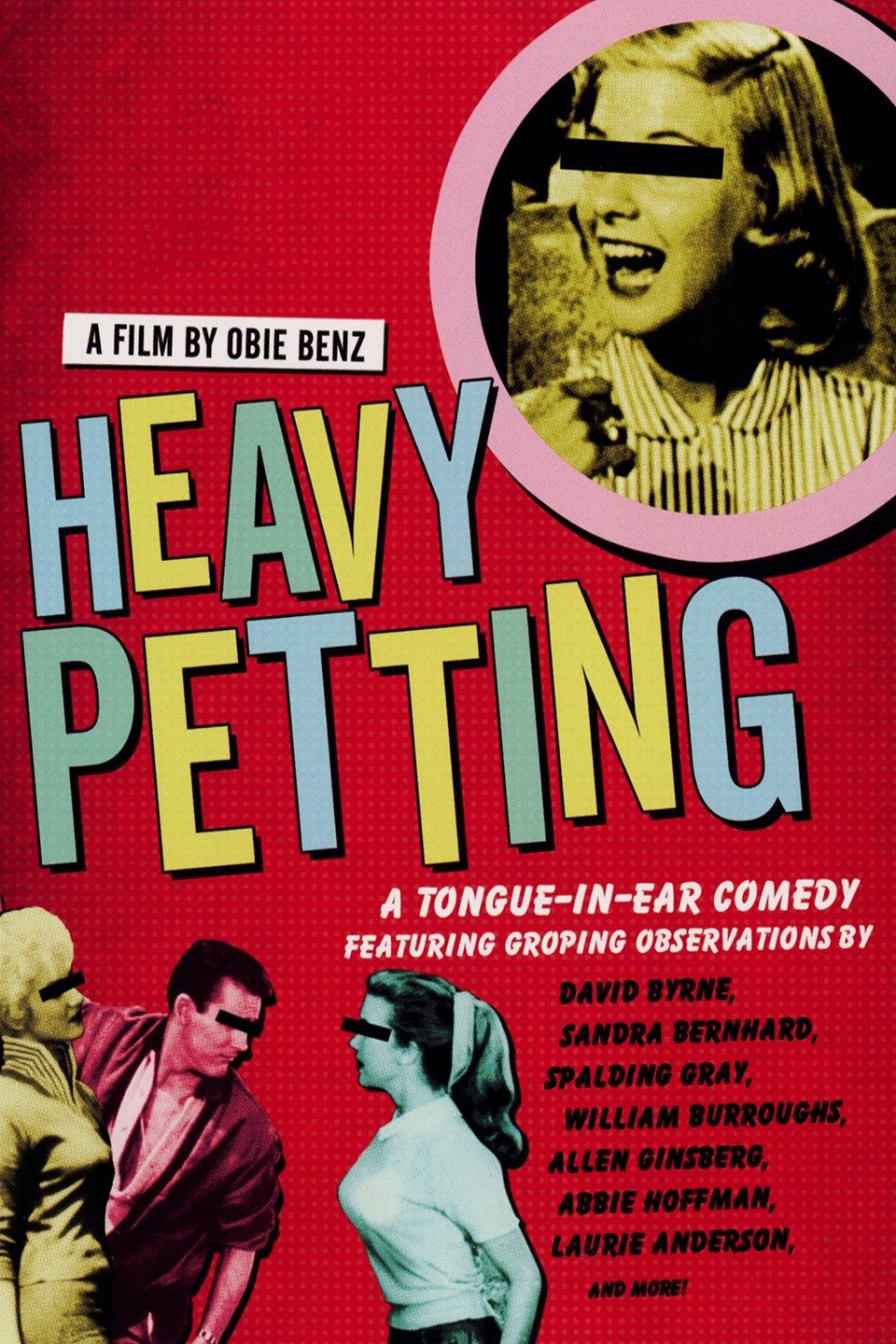
Heavy Petting (1989) Obie Benz and Joshua Waletzky piece together attitudes and recollections about sex from children of the ‘50s. David Byrne, Sandra Bernhard, Abbie Hoffman, and others recollect their early (and frequently awkward) sexual experiences, contrasting the “wholesome” Hollywood image of the era. Interspersed between the interviews are clips from several vintage instructional films that reinforce the push-pull between antiquated morality and the exploration of sexual boundaries. 

Rating: ***½. Available on Amazon Prime 


Project Grizzly Poster

Project Grizzly (1996) This is the story of one-of-a-kind Canadian eccentric Troy Hurtubise,* on a quest to build the perfect grizzly-proof suit. At great personal expense (and physical risk), he puts the latest iteration, the “Ursus Mark VI,” through its paces. Sporting a stylized mullet, red beret, and buckskin jacket, the fast-talking Hurtubise comes across as something between a shyster and a shaman. If you crossed a goofy inventor with a would-be commando, and a used car salesman, you might get something like him. Whether he succeeds or fails is less relevant than getting the chance to spend 90 minutes with this one-of-a-kind crackpot. 

* Not-So-Fun-Fact: Hurtubise survived the death-defying exploits with various versions of the Ursus suit (including a confrontation with a grizzly in 2001), only to meet his demise in a car crash in 2018. 

Rating: ***½. Available on DVD