Tuesday, January 31, 2023

Short Take: Along with Ghosts


Along with Ghosts Poster

(1969) Directed by Yoshiyuki Kuroda and Kimiyoshi Yasuda; Written by Tetsurô Yoshida; Starring: Kôjirô Hongô, Pepe Hozumi, Masami Burukido, Mutsuhiro and Yoshindo Yamaji; Available on Blu-ray and DVD 

Rating: ***½ 

“I’m the guardian of this place, the Onizuka. Those who do not heed the warnings will be cursed by the Onizuka spirits and meet a swift end. In addition, tonight is the night when once a year, not only will there be the usual apparitions, but also the ones from deep in the mountains, and the ones from the swamps will gather. There’s an old saying which states Onizuka is a spiritual land, where apparitions from all over Japan gather, because it is connected to the world where the apparitions live.” – Jinbei (Bokuzen Hidari)

An Assortment of Yokai

It’s tough being third. If the second movie in a trilogy is bad, the next film might redeem the series. Conversely, the third movie in a trilogy could be (and frequently is) the weakest link. In this case, the bar was set impossibly high. The previous two films of the Daiei Film’s* Yōkai Monsters trilogy, 100 Monsters and Spook Warfare (aka: Big Monster War), were solid pieces of entertainment, featuring an almost encyclopedic listing of the quirky Japanese spirits. Compared to its predecessors, Along with Ghosts is decidedly lighter on the yōkai, but more character and plot-driven. 

* Fun Fact: In Japan, Along with Ghosts appeared on a double bill with Gamera vs. Guiron.

Ambushed by Higuruma's Men

A group of Yakuza, led by their boss Higuruma (Yoshindo Yamaji) are waiting to ambush two samurai carrying an incriminating document (what’s precisely on the document is never made clear). Jinbei (Bokuzen Hidari), an old man, warns them that they’re on sacred ground, and any violence on their part will unleash a curse. In the tradition of cinema, where no one believes old men and ancient curses, the Yakuza thugs go about their dastardly plot, fatally wounding Jinbei when he steps in the way. His seven-year-old granddaughter, Miyo (Masami Burukido) happens to witness the event, and now she’s marked for death as a witness. Before he perishes, he instructs her to seek out her father, in the town of Lui, four leagues away.* Miyo sets off alone, while, meeting a helpful boy and a ronin (masterless samurai) named Hyakasuro (Kôjirô Hongô). Higuruma takes on the role of bodyguard, after he offers to accompany her on the way to Lui. The odds are against Miyo and Hyakasuro, with Higuruma’s thugs on their tail, but help comes in the form of vengeful yōkai with an axe to grind. 

* Approximately 14 miles away.

Miyo and Hyakasuro

Miyo and Hyakasuro’s endearing relationship provides a good argument for finding your own extended family. Hyakasuro is a kind and virtuous man, who will stop at nothing to protect her from harm. (SPOILER WARNING) We soon discover he provides a stark contrast to her real father, Sakiichi (Mutsuhiro), the capricious lapdog of the same Yakuza clan they’re evading. He’s ready to beat a confession out of Miyo until he discovers a pair of dice in her possession, proving that she’s his daughter. To make matters worse, in the previous scene, he suggested to the Yakuza that they could use her as a human shield against Hyakasuro. All seems well when Sakiichi eventually turns on his employers, reuniting him with his daughter, but letting the aforementioned slide requires more than a little cognitive dissonance on the viewer’s part.

Tsuchikorobi

While Along with Ghosts may not have the abundance of yōkai of the previous two films, they’re there, albeit in more ancillary roles. You’ll find Nopperabo (faceless spirits impersonating humans), the cyclopean Dorotabo, a Wanyudo (“Wheel Priest”), a Tsuchikorobi (another cyclops, resembling a huge hairy mound), and a Konaki-Jiji (masquerading as Miyo for a piggyback ride). If this had been the first, rather than the last, in the trilogy, it would be regarded as a nice preview of the movies that were to follow, whetting our appetites for all things yokai. But don’t sell this one short. Boasting an engaging storyline and distinct characters (who are arguably more three-dimensional than the ones in the other installments), it’s the humans who take the driver’s seat. Think of it as an Edo-period samurai drama with yōkai cameos.


Sources for this article: Yokai Attack! The Japanese Monster Survival Guide, by Hiroko Yoda and Matt Alt; Yokai.com 


Wednesday, January 25, 2023

Japan-uary XII Quick Picks and Pans

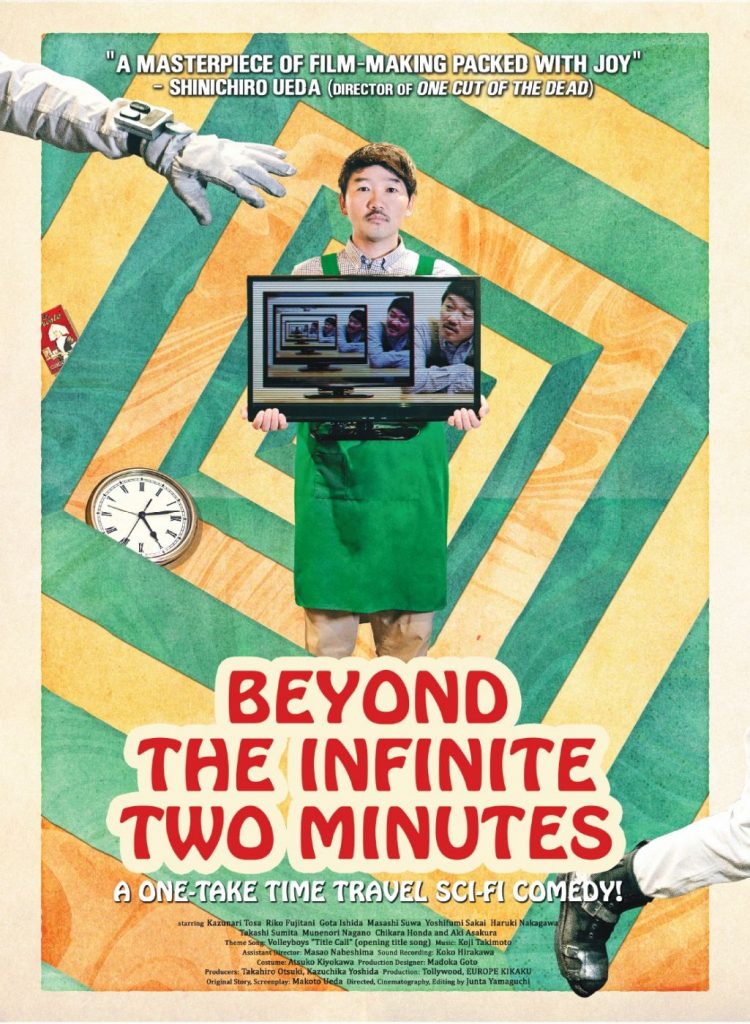
Beyond the Infinite Two Minutes Poster

Beyond the Infinite Two Minutes (2020) In this clever sci-fi/comedy, Kato (Kazunari Tosa), a coffee shop owner, inadvertently discovers the means to see events two minutes in the future via his home computer. Soon, his friends and plucky co-worker attempt to   delve further into the mysteries of accidental time travel. But as they continue to monkey around with the new experience, events begin to cascade, and they’re sucked into a loop of correlation and causality, replete with paradoxes. Director Junta Yamaguchi confines the action to one building, but this limitation never seems restrictive or redundant, in a story that milks the concept for all its worth.   

Rating: ****. Available on Blu-ray, DVD, Amazon Prime and Tubi


The Legend of the Stardust Brothers Poster

The Legend of the Stardust Brothers (1985) Writer/director Macoto Tezuka’s lively musical/comedy ponders the ephemeral nature of fame and the fickleness of fandom. Rival musicians Shingo (Shingo Kubota) and Kan (Kan Takagi) strike a Faustian bargain with a shadowy producer to become the manufactured pop duo, the Stardust Brothers. Their chaotic rise and fall is told through a string of music videos. The results are an inspired combination of The Monkees, Get Crazy, and Phantom of the Paradise (in case you missed the copious references, the film is dedicated to Winslow Leach). It’s at once a pastiche of music star movies and a self-aware parody of pop music, but even that description is selling it short. You almost need a license to appreciate this much fun. 

Rating: ****. Available on Blu-ray, DVD and Tubi


Passing Fancy Poster

Passing Fancy (1933) In this charming silent comedy/drama from Yasujirō Ozu, middle-aged layabout Kihachi (Takeshi Sakamoto) helps Harue (Nobuko Fushimi) a young woman down on her luck get a job at a local tavern. Although Kihachi is smitten by her charms, it’s clear that Harue prefers his younger, cynical companion Jiro (Den Ôhinata).  Passing Fancy features nuanced performances by its talented cast, including Tomio Aoki as Kihachi’s crafty son Tomio, and Chôko Iida as the cheery but world-weary tavern owner Otome. It’s a bittersweet study of humanity during trying times, as only Ozu can present it.   

Rating: ****. Available on DVD (part of the Eclipse Silent Ozu collection)

The Ghost of Yotsuya Poster

The Ghost of Yotsuya (1959) Iemon (Shigeru Amachi) is a brash rōnin, who lusts after Oiwa (Katsuko Wakasugi), the daughter of a nobleman. After he’s denied Oiwa’s hand in marriage, Iemon kills her father in a fit of rage. It all goes downhill from there, when he murders Oiwa so he can marry another woman. Iomen soon discovers, however, that what goes around comes around when Oiwa’s bloody ghost exacts her terrible revenge. Director Nobuo Nakagawa‘s (Jigoku) Edo-period supernatural film provides ample thrills, with oodles of atmosphere and genuinely chilling imagery. 

Rating: ****. Available on DVD (Region 2)

Black Cat Mansion Poster

Black Cat Mansion (1958) In another excellent horror fantasy from director Nobuo Nakagawa (based on a novel by Sotoo Tachibana), Yoriko (Yuriko Ejima), a woman suffering from tuberculosis, is brought to her ancestral mansion to convalesce. She starts experiencing a number of disturbing occurrences, including a strange old woman who seems committed to her destruction. Things are complicated by her husband (and physician), Dr. Kuzumi (Toshio Hosokawa), who thinks it’s all in her imagination. In a flashback, we learn the mansion is the site of an old curse, targeted against the cruel samurai who once lived there. There are some nice creepy moments, as a cat spirit takes revenge on the samurai’s descendents (including Yoriko), although the film’s conclusion is a bit too abrupt. 

Rating: ***½. Available on DVD (Region 2)


Nightmare Detective Poster

Nightmare Detective (2006) Kyoichi (Ryûhei Matsuda) is a deeply troubled man with the ability to enter people’s dreams. He reluctantly assists Keiko (Hitomi), a young police detective, to help solve a case involving people who have suddenly been driven to suicide. The deaths are linked to a mysterious phone message by someone named “O.” In her quest for the truth, Keiko enters a dangerous game of cat and mouse with the suspect, in the twisted world of her dreams. Director/co-writer Shin'ya Tsukamoto’s supernatural horror film drags a bit in the middle, but the slow build-up leads to an energetic finale.   

Rating: ***½. Available on DVD

Bright Future Poster
Bright Future (2002) Yuji (Joe Odagiri) and Mamoru (Tadanobu Asano) are factory workers/friends with a relationship not unlike George and Lenny from Of Mice and Men. Emotionally stilted Yuji is unable to pick up on social cues, while his friend guides him through the complexities of human interaction. One day, Mamoru is arrested for the vicious murder of their employer, leaving his pet jellyfish to Yuji. The venomous jellyfish serves as a metaphor for Yuji’s emancipation from his codependence – like the creature, he’s suddenly out in the world on his own, opening himself to harm and harming others. Writer/director Kiyoshi Kurosawa’s film works best as a character study with poetic flourishes, rather than a linear narrative with a redemptive character arc.  

Rating: ***½. Available on DVD

Ocean Waves Poster

Ocean Waves (1993) Tadanobu Asano’s coming-of-age drama (based on a novel by Saeko Himuro) follows two high school friends, Taku and Yutaka who gradually drift apart over a new girl in town, Rikako. While the film takes pains to illustrate Rikako’s fractured home life, it does little to engender much sympathy for her character, who comes across as shamelessly manipulative and self-centered. It’s also hard to feel sorry for Taku, who continues to go along with her schemes. This Studio Ghibli television production is a step down from its theatrical releases, lacking the meticulous attention to detail and enjoyable characters we’ve come to expect from the animation house. It might be worth a look if you’re a Ghibli completist, but compared to the studio’s best, it rings hollow. 

Rating: ***. Available on Blu-ray and DVD


Killer Car Poster

Killer Car (aka: Ju-on Car) (2008) A more accurate title for this derivative horror flick would probably be Cursed Minivan, but that doesn’t quite have the same ring to it. A group of 20-somethings take a road trip to a secluded waterfall in a second-hand Nissan Elgrand. Unfortunately for the new owner and his passengers, the vehicle once belonged to a serial killer (established in an unnecessarily grisly prelude), and one of the victims now haunts the car. None of it makes a lot of sense, but Killer Car’s worst flaw is that the ensuing attacks seem completely pointless (why would the victim’s ghost attack innocent people instead of the man responsible for her death?). There’s a quick nod to The Texas Chainsaw Massacre, but that’s about the extent of what passes for inspiration in this movie. 

Rating: *½. Available on Tubi  


Thursday, January 19, 2023

Hiruko the Goblin


Hiruko the Goblin Poster

(1991) Written and directed by Shin'ya Tsukamoto; Story by Koji Tsutsumi; Based on the manga by Daijirô Morohoshi; Starring: Kenji Sawada, Masaki Kudou, Hideo Murota, Naoto Takenaka, Megumi Ueno and Chika Asamoto; Available on Blu-ray and DVD 

Rating: ***½  

“…Light and darkness are the fundamental themes for all of my films. There’s not much darkness in my world right now. Everywhere I go has lights, so it’s getting harder for ghosts and monsters to hide. When I was little, there were more dark spaces, even in Tokyo the corners of the room would be dark, and you feel like you might see a ghost there… I miss those times, and I wish I could live in those times. When I thought about ‘dark space,’ I couldn’t think of anywhere in Tokyo. But in (the) countryside, there’s still dark places, where monsters would hide. That’s why Hiruko takes place in a small village. And the school at night is very scary.” – Shin'ya Tsukamoto (excerpt from 2000 interview)

Reiko on a Bike

Ah…summertime. A time to relax in the sun, hang out with your friends, and fight demons. Writer/director Shin'ya Tsukamoto’s follow-up to Tetsuo: The Iron Man (1989) changes the setting/theme from urban cyberpunk to rural horror, where the peace and quiet is merely a prelude to the chaos that follows. Hiruko the Goblin (aka: Yôkai hantâ: Hiruko) seems almost conventional in comparison to its predecessor, but that’s selling it far too short. Hiruko is full of surreal imagery, frenetic pacing, and a pair of unlikely protagonists. Based on the “Black Investigator” and “Red Lips” stories from Daijirô Morohoshi’s Yokai Hunter series, Tsukamoto’s relatively big-budget second film seems almost lavish in contrast to the independently produced Tetsuo. The movie was filmed at Toho Studios,*/** and on location in the Japanese countryside (Toyoma prefecture), with a combination of veteran and novice crewmembers. 

* Fun Fact #1: The pond used for the floating face scene (you’ll know it when you see it) was the same pool used for Godzilla

** Fun Fact #2: Hiruko was filmed adjacent to the area where Akira Kurosawa was simultaneously shooting Rhapsody in August.

Masao and Reijirou Look for Clues

Hiruko opens with a bucolic scene of high school student Tsukishima Reiko (Megumi Ueno) riding her bike on a country road. It’s a deceptive moment of calm, however, before the tawagato hits the fan. She joins her teacher Takashi Yabe (Naoto Takenaka) in an archaeological site near the school, where they’re promptly overwhelmed by an unseen terror. Their sudden disappearance prompts Yabe’s son Masao (Masaki Kudou) and his buddies to investigate the school grounds. When his friends succumb to the same terrible fate as Reiko and Yabe, Masao is forced to team up with his bumbling uncle Hieda Reijirou (Kenji Sawada).* They soon discover they’re in over their heads (quite literally), with an evil spirit named Hiruko with a nasty penchant for decapitations. Somehow, they must find a way to stop the ancient demon before he and his minions open a portal to hell and immerse the world in eternal darkness. 

* Fun Fact #3: Sawada rose to fame as a big music star in the ‘60s, before he caught the acting bug. He has appeared in several films, including The Man Who Stole the Sun (1979) and Takashi Miike’s bonkers but loveable The Happiness of the Katakuris (2001).

Watanabe Threatens Masao

Kenji Sawada amuses as Reijirou, a discredited archaeologist (who wants to be Indiana Jones, but he’s more like Abbott & Costello, combined) who’s convinced that a hive of goblins resides directly beneath a local high school. His initially skeptical nephew seems inextricably linked to the supernatural goings-on, with a strange affliction that causes him to run extremely hot, and break out in huge boils on his back that resemble stone faces. Unfortunately for Reijirou and Masao their actions are further thwarted by the irascible school caretaker Watanabe (Hideo Murota, in a delightfully quirky performance), who roams the grounds on his own mission to combat the demon scourge. Watanabe straddles the line between friend and foe – we’re never quite sure if he regards them as friends, foes, or collateral losses.

Masao and Reijirou Survey the Area

Is or isn’t Hiruko a Yokai? Based on a 2021 interview with Tsukamoto, signs point to no. While he didn’t precisely commit to labeling Hiruko, he alluded to something more ancient – a throwback from Japan’s ancient mythological origins.* In the film it’s a nightmarish being that lives by decapitating its victims and taking on their appearance (In one simultaneously ethereal and horrifying scene, we see Reiko’s face floating in a pond, singing a siren song, before it walks out on a hideous set of crab legs). In the context of the film, a more accurate interpretation would probably be a demon. 

* Fun Fact #4: The mythology implies something far less sinister than the goblin depicted in the film. Hiruko (roughly translated as “leech child”) was the deformed offspring of the gods Izanagi and Izanami, cast adrift into the ocean. The child was rescued by the Ainu people of Hokkaido, where he assumed his final form, as the benevolent god Ebisu.

Hiruko with Reiko's Head

Hiruko’s imagery recalls several American genre films from the time. Reijirou’s homemade goblin-hunting gadgets resemble something out of Ghostbusters. Hiruko, with its crab/spider-like appearance, immediately evokes comparison to John Carpenter’s The Thing (although Tsukamoto denied that the film was a conscious influence). The way Hiruko attaches itself to its victims is not unlike the facehugger in Alien, and the POV shots of Hiruko racing through the school corridors are an obvious homage to similar shots in the Evil Dead movies. Likewise, a huge silvery tentacle with a face recalls the “water weenie” from James Cameron’s The Abyss. The visual call-backs are not restricted to American movies, but Japanese cinema as well, as noted by author Tom Mes (in his Blu-ray commentary). One notable sequence was clearly inspired by Nobuo Nakagawa’s Edo-period film, Ghost Story of Kasane Swamp (aka: Kaidan Kasane-ga-fuchi), while numerous images are likely homages to the cinematic adaptations of Lafcadio Hearn’s works.

Reijirou Fights Hiruko

Hiruko the Goblin owes much to the American genre films that served as inspiration, but it’s much more than mere imitation, weaving a thread of Japanese folklore throughout. While the stakes are high, it never takes itself too seriously. There’s a playful mix of gore-drenched horror with slapstick comedy that wouldn’t be out of place in an early Sam Raimi or Peter Jackson movie. As Tsukamoto noted, it’s not an anomalous entry in his filmography, as some fans and critics might attest, but much closer in spirit to the sort of no-budget short films he was making prior to Tetsuo: The Iron Man. Although Hiruko wasn’t a commercial success, like so many other genre films, it’s stood the test of time to become a cult favorite. Here's hoping that Tsukamoto revisits this fun horror hybrid style someday.

Sources for this article: Mondo Macabro Blu-ray commentary by Tom Mes; 2000 and 2021 interviews with Shin'ya Tsukamoto, Mythopedia entry on Ebisu, by Gregory Wright 


Sunday, January 8, 2023

Short Take: The Invisible Man vs. The Human Fly


The Invisible Man vs. the Human Fly Poster

(1957) Directed by Mitsuo Murayama; Written by Hajime Takaiwa; Starring: Ryûji Shinagawa, Yoshirô Kitahara, Junko Kanô, Yoshihiro Hamaguchi, Ikuko Môri, Ichirô Izawa and Shizuo Chûjô; Available on Blu-ray 

Rating: *** 

“Light has a fixed wavelength. The human eye is the same. The human eye can only perceive light inside that wavelength. Conversely, if an object doesn’t overlap with that spectrum, visible to the human eye, the object cannot be seen. I think ‘imperceptible’ would be a more accurate description.” – Dr. Tsukioka (Ryûji Shinagawa)

Invisible Man with Banana

Daiei Studio’s first foray into H.G. Wells’ territory,* The Invisible Man Appears (1949), is essentially a caper film with a sci-fi twist. Police track a kidnapped scientist and his stolen formula, which enables an invisible jewel thief to act with impunity. Although not a direct sequel, Daiei’s 1957 follow-up, The Invisible Man vs. the Human Fly (Okay, really two invisible men and a woman, versus two human flies, but who’s counting?), ups the ante with a more outlandish premise that pits the transparent against the tiny. Both films were unavailable outside of Japan for years, but thanks to Arrow’s Blu-ray set,** we can finally enjoy them, more-or-less, as the filmmakers intended. 

* Fun Fact #1: In-between Daiei’s flirtation with the invisible man, rival studio Toho threw its hat in the ring, with The Invisible Avenger (1954). 

** Fun Fact #2: The only surviving prints were 16 mm that were slightly worse for wear, but considering the less-than-pristine source materials, the presentation looks pretty decent.

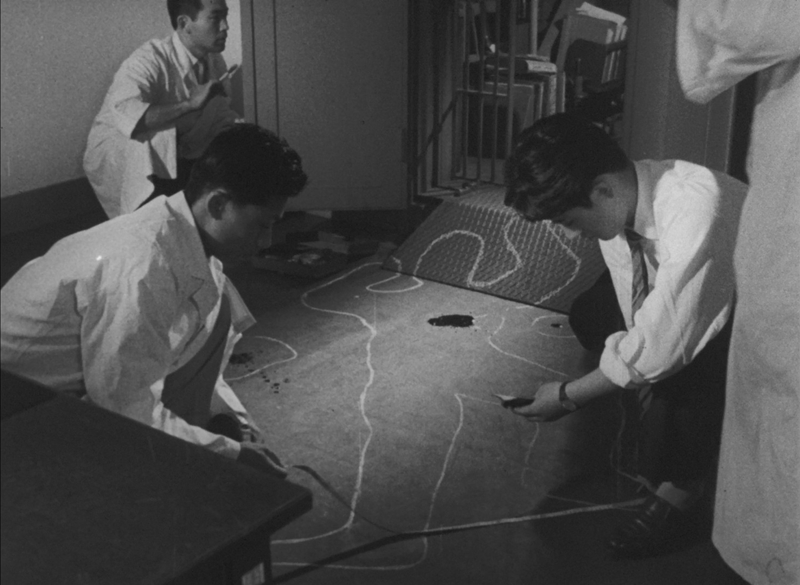
Crime Scene

In the pre-credits sequence (set on an airliner), an industrialist is murdered by an invisible assailant. All the passengers are suspects, but none seem to have committed the crime. After a series of several inexplicable murders, the police are understandably baffled, with few leads, except for a couple of seemingly unrelated clues: the male victims served together during WW II, and reportedly each murder is preceded by a buzzing sound, like a fly. While the police initially think the assailant is invisible, signs point to something else – something much smaller. Naturally, it takes an invisible person to take down the miniaturized menace.

Invisibility Ray

Police captain Hayama (Yoshihiro Hamaguchi) is provided a tour of his friend Dr. Tsukioka’s (Ryûji Shinagawa) secret laboratory, where he conducts experiments with a ray that generates wavelengths outside the visible spectrum. Anything that’s subjected to the ray (as opposed to a drug in the first film) renders the subject imperceptible to the human eye. Although human experimentation is forbidden, it doesn’t take long before an eager lab assistant uses the ray on himself, to become an invisible man (because calling him “The Imperceptible Man” doesn’t quite have the same panache).

Yamada

The antagonist is businessman Kusunoki (Ichirô Izawa). After serving a prison term following the war, he plans to settle the score against his fellow colleagues, using a top-secret  compound, which had been developed in a lab to shrink soldiers. The drug temporarily miniaturizes the user, enabling them to enter locations undetected. The term “human fly” is a misnomer, since the drug shrinks the subject, but doesn’t transform them into an insect (despite misleading shots of a housefly). Instead, the user becomes so small, they float around, riding the air currents (how this would work is anyone’s guess). Through this substance, Kusunoki’s psychopathic lackey, Yamada (Shizuo Chûjô), carries out his dirty work, as an unstoppable assassin. But each subsequent use of the drug leaves him wanting more and more. Is it the substance or the process of getting small that’s addictive? I don’t know, ask Steve Martin.  

The Invisible Man vs. the Human Fly benefits from moody, noir-tinged cinematography by Hiroshi Murai, full of ample shadows and low-angle shots, giving the viewer a constant sense of mystery and unease. The “human fly” effects are not quite as convincing, as he appears semi-transparent in some shots, and his scale varies constantly. On the other hand, the invisibility effects are serviceable enough, and it’s refreshing to see (pun unintended) that the invisible man isn’t the antagonist here. The final scene of the movie seems to suggest the further crime-fighting adventures with an invisible man/woman duo, but unfortunately for us, it wasn’t meant to be. It’s regrettable that Daiei’s first Invisible Man movie and its eventual (and decidedly more fun) semi-sequel didn’t spawn a franchise of films. Universal, however, did its own successful reboot of The Invisible Man a few years ago, so maybe we’re overdue for his Japanese counterpart.


Wednesday, December 28, 2022

Documentary December Quick Picks and Pans


Night and Fog Poster

Night and Fog (1956) 10 years after the liberation of Auschwitz, French filmmaker Alain Resnais revisited the grounds of the infamous concentration camp. The bucolic, tranquil surroundings (filmed in color), belie the fact that this was once the backdrop for some of the greatest atrocities perpetrated in the 20th century. The buildings are dilapidated and covered in overgrown foliage, but the stories remain, like a wound that refuses to heal. Through archival footage and stills, Resnais illustrates through visuals and narration (written by concentration camp survivor Jean Cayrol) how the Nazis set out to systematically extinguish the people they deemed undesirable. The film’s scant 30-minute length tells a sobering, heart-wrenching true-life horror story that no imaginary tale could ever match. It’s a difficult, but all-too-necessary watch, filled with imagery that will remain burned into my cerebral cortex forever. 

Rating: *****. Available on Blu-ray and DVD

Paris is Burning_Poster1a

Paris is Burning (1990) Director Jennie Livingston’s film about the drag pageant scene in 1980s New York is joyous and depressing in equal parts. Amidst poverty, abuse, and bigotry, there’s one place where the African American and Latino LGBTQ+ community can live out their fantasies. We meet the members of several “houses,” getting acquainted with their differing styles and philosophies. Despite the myriad conflicts and personal tragedies, the overarching message is a positive one, depicting people embracing their true selves. While it’s a snapshot of a different era, the issues and themes are still just as salient now. Although fashions change, hate and discrimination, unfortunately, never seem to go out of style. In an era of increasing divisiveness and diminishing compassion, this should be required viewing for high school students (and anyone who wants to expand their consciousness). 

Rating: ****½. Available on Blu-ray and DVD


Anvil! The Story of Anvil Poster

Anvil! The Story of Anvil (2008) Steve “Lips” Kudlow and Robb Reiner (no relation to that Rob Reiner) started a heavy metal band as teenagers and toured with some of the biggest names in the business in the late ‘70s and early ‘80s. Fame, however, has always eluded them. Now in their early fifties, they’re desperately trying to gather the cash necessary to produce another album, and hopefully another shot at the big time. Their disastrous European tour and squabbles in the recording studio beg inevitable comparisons to This is Spinal Tap, but their story rises above mere self-parody. Above all else it’s about persistence in the face of numerous setbacks and personal hardship; sticking with their childhood dreams, when common sense dictates they should have quit long ago. Director Sacha Gervasi hits all the right buttons in this surprisingly nuanced, sympathetic profile. While it might not make you a fan of their music, it’ll make you a believer in never abandoning your ideals. 

Rating: ****. Available on Blu-ray and DVD


The Howlin' Wolf Story Poster

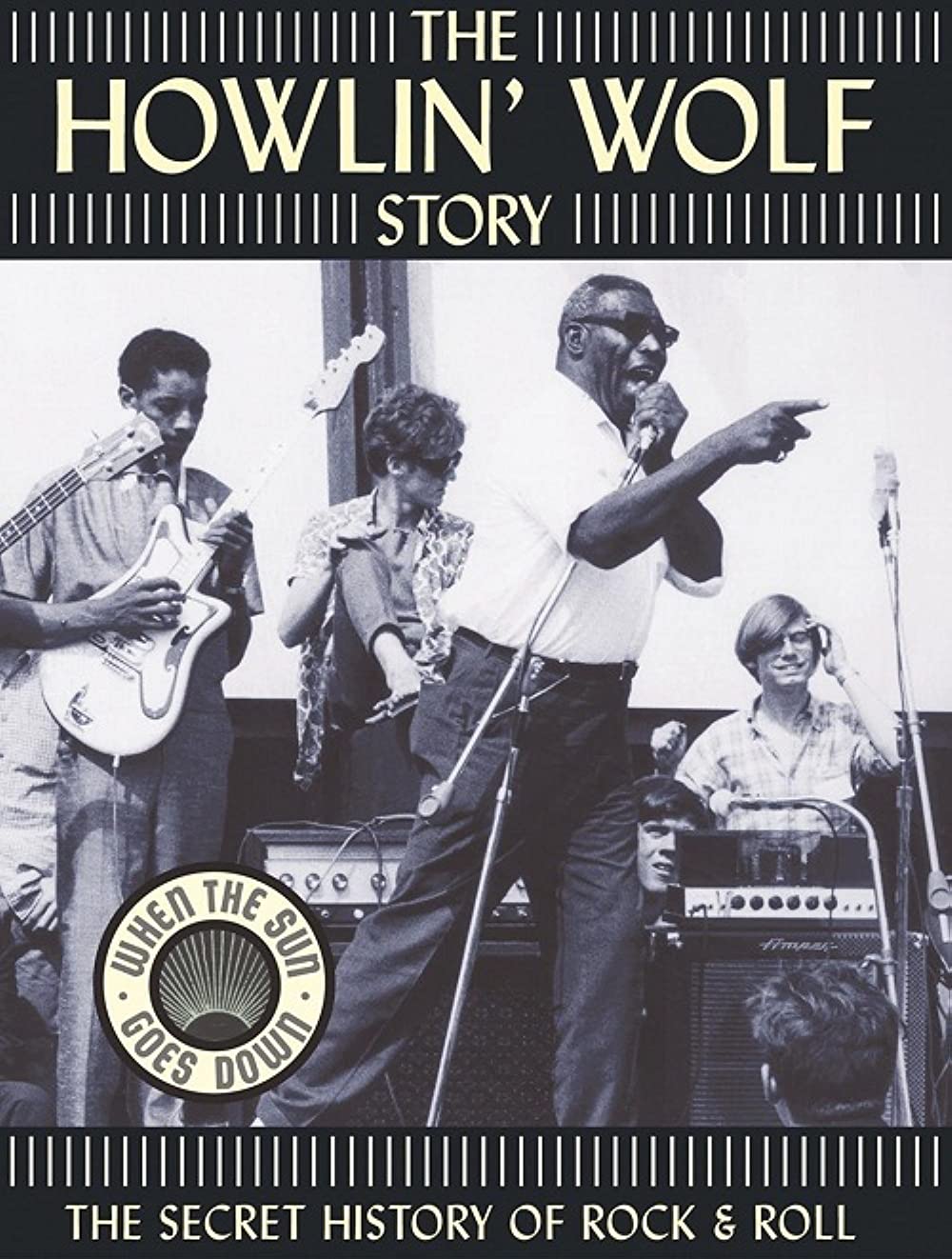
The Howlin’ Wolf Story: The Secret History of Rock ‘n Roll (2003) This low-key, informative documentary covers the life and career of blues legend Chester Burnett, best known as “Howlin’ Wolf,” told through interviews with the people who knew him best. The film chronicles his humble childhood beginnings in the South, followed by his rise to fame in Chicago. One thing that sets this documentary apart from many others is that it doesn’t just play snippets of his music, but complete songs, allowing his work to speak for itself. 

Rating: ***½. Available on DVD and Amazon Prime (Freevee)

Sickies Making Films Poster

Sickies Making Films (2018) This film’s eye-catching title comes from a quote by Mary Avara, who led the locally appointed Maryland State Board of Censors (the last state in the U.S. to have such a committee). We hear recollections from scholars and filmmakers (including Baltimore-based filmmaker John Waters) about some of the struggles with the board’s decisions, many of which were often arbitrary. It’s a fascinating examination of artistic expression versus artistic hindrance.

Rating: ***½. Available on DVD and Kanopy


Lucha Mexico Poster

Lucha Mexico (2016) Documentarians Alex Hammond and Ian Markiewicz follow the colorful world of Lucha Libre, the professional wrestling circuit in Mexico. We learn the good, the bad, and the ugly about the wrestling scene, through interviews with some of the heavy hitters, including Shocker (aka: 1000% Guapo), Blue Demon Jr., and Sexy Star. It’s a profession that many pursue, but few succeed, exacting a tremendous mental and physical toll. If you thought everything in the ring was fake, this might change your mind. 

Rating: ***½. Available on DVD, Tubi and Kino Cult 


Diving Into the Unknown Poster

Diving into the Unknown (2016) Director Juan Reina provides an exclusive glimpse into a hidden part of our world that most of us will probably never see. We meet a Finnish group of divers who participate in one of the most hazardous sports on the planet: exploring underwater caverns. After a tragic incident in Norway that left two of their friends dead, the remaining team of divers embark on a perilous (and illegal) mission to recover the bodies. Diving Into the Unknown benefits from some claustrophobic cinematography, giving us a taste of what it must be like to enter these dark, foreboding, underwater crevices. 

Rating: ***½. Available on DVD and Tubi

Filmed in Supermarionation Poster

Filmed in Supermarionation (2014) Lady Penelope and her faithful butler Parker host an affectionate look at Gerry and Sylvia Anderson’s puppetry process, dubbed “Supermarionation.” From the late ‘50s to the late ‘60s, their television shows (including Thunderbirds and Captain Scarlet), became a ubiquitous fixture on British television, featuring increasingly innovative and elaborate effects. Gerry and Sylvia (along with several of the cast and crew members who collaborated with them) share their memories about the numerous challenges of their productions. As an officially sanctioned documentary, Filmed in Supermarionation glosses over some of the behind-the-scenes drama, but it’s an amusing, informative tour for casual and die-hard fans alike. 

Rating: ***½. Available on Blu-ray, DVD and Tubi

Heavy Petting Poster

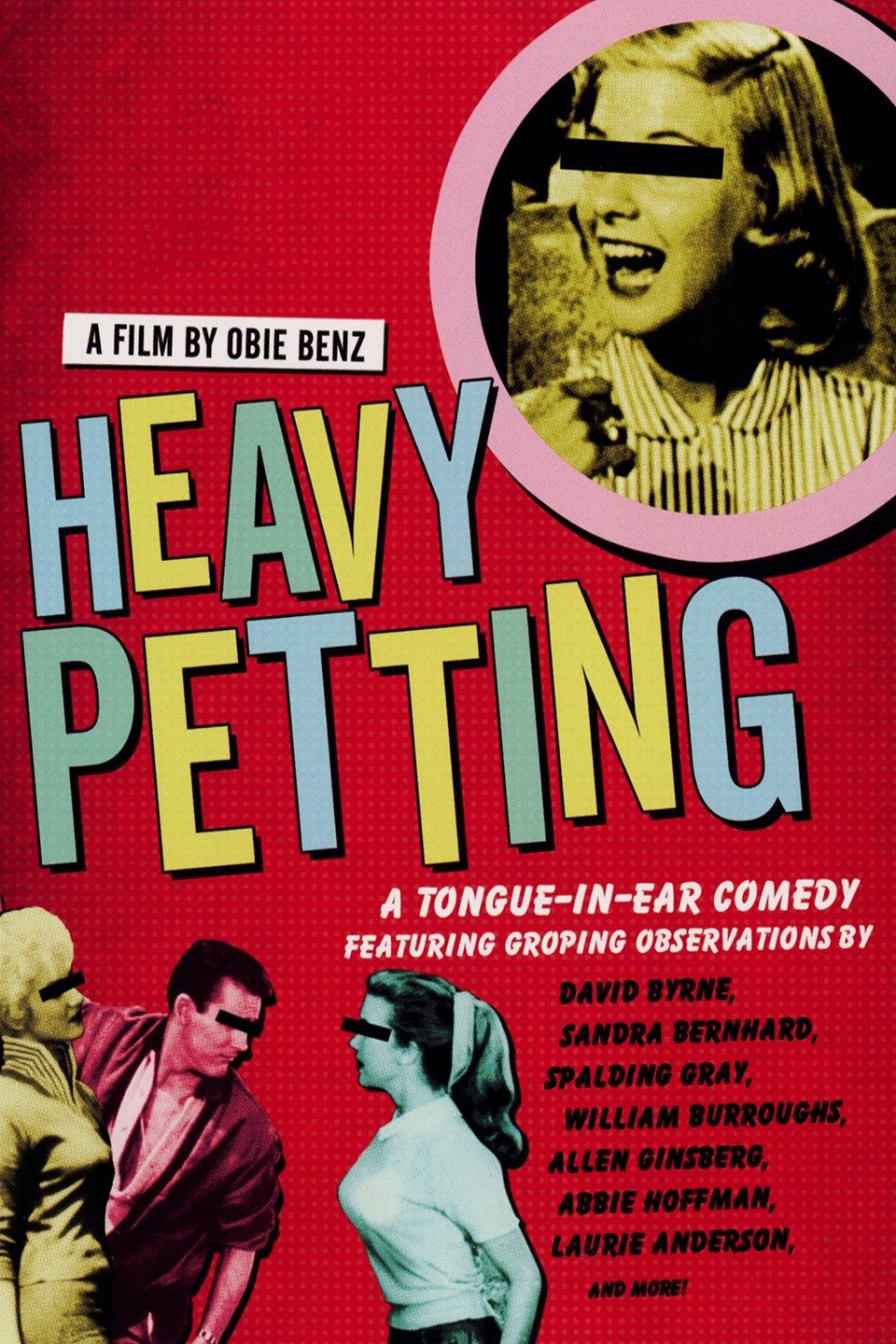
Heavy Petting (1989) Obie Benz and Joshua Waletzky piece together attitudes and recollections about sex from children of the ‘50s. David Byrne, Sandra Bernhard, Abbie Hoffman, and others recollect their early (and frequently awkward) sexual experiences, contrasting the “wholesome” Hollywood image of the era. Interspersed between the interviews are clips from several vintage instructional films that reinforce the push-pull between antiquated morality and the exploration of sexual boundaries. 

Rating: ***½. Available on Amazon Prime 


Project Grizzly Poster

Project Grizzly (1996) This is the story of one-of-a-kind Canadian eccentric Troy Hurtubise,* on a quest to build the perfect grizzly-proof suit. At great personal expense (and physical risk), he puts the latest iteration, the “Ursus Mark VI,” through its paces. Sporting a stylized mullet, red beret, and buckskin jacket, the fast-talking Hurtubise comes across as something between a shyster and a shaman. If you crossed a goofy inventor with a would-be commando, and a used car salesman, you might get something like him. Whether he succeeds or fails is less relevant than getting the chance to spend 90 minutes with this one-of-a-kind crackpot. 

* Not-So-Fun-Fact: Hurtubise survived the death-defying exploits with various versions of the Ursus suit (including a confrontation with a grizzly in 2001), only to meet his demise in a car crash in 2018. 

Rating: ***½. Available on DVD


Thursday, December 15, 2022

Burden of Dreams


Burden of Dreams Poster

(1982) Directed by Les Blank; Written by Michael Goodwin (Narration); Narrated by Candace Laughlin; Starring: Werner Herzog, Klaus Kinski, Claudia Cardinale, Jason Robards, Mick Jagger; Available on DVD 

Rating: ****½ 


Werner Herzog

“When I came back to Germany, and I had to hold all the investors together, they said to me, ‘Well, how can you continue? Do you have the strength or the will or the enthusiasm?’ And I said, ‘How can you ask this question? If I abandoned this project, I would be a man without dreams, and I don’t want to live like that. I live my life or I end my life with this project.’” – Werner Herzog (on continuing with the film after production came to a halt) 

There are times when the story behind the film eclipses the film itself. Les Blank’s remarkable documentary Burden of Dreams is such an example. Much more than a “making of” feature, Burden of Dreams chronicles the arduous journey that Werner Herzog’s Fitzcarraldo (1982) took, from pre-production to shooting. It’s a tale of obsession, hubris and persistence, as Herzog faces every imaginable conflict along the way: man against the elements, man against man, and man against himself

Mick Jagger and Jason Robards

Fitzcarraldo was plagued with problems from the start, with the filmmaker setting up camp in the wrong place at the wrong time, amidst a tribal land dispute in Peru. Tensions reached a critical point, due to mistrust by the indigenous population of Aguaruna people, which fueled baseless rumors of atrocities committed by Herzog and crew. Fearing for their safety if they remained in the region, the team of filmmakers were forced to flee, and their camp was burned to the ground by the tribe. But the problems didn’t end there. Production eventually resumed in another Peruvian location, with Jason Robards* in the title role of Brian Sweeney Fitzgerald (aka: “Fitzcarraldo”), and Mick Jagger as his sidekick Wilbur. With 40 percent of shooting completed, Robards contracted amoebic dysentery, again, forcing everything to a screeching halt. Jagger, due to other professional obligations (i.e., The “Tattoo You” album and tour), left the project. Herzog and crew returned to the Amazon for another attempt to film his story, now with Klaus Kinski*/**/*** in the lead (his fourth collaboration with Herzog). 

* Fun Fact #1: At one point, Herzog considered Jack Nicholson for the main character, but considered other options after 20th Century Fox made too many demands (including shooting in a studio and using a model for Fitzcarraldo’s ship). 

** Fun Fact #2: According to the film’s editor, Maureen Gosling, the ever-mercurial, self-centered Kinski, became jealous over the attention given to his co-star, José Lewgoy, and sequestered himself in his hut. 

*** Fun Fact #3: As a last resort, Herzog considered casting himself as Fitzcarraldo.


Herzog and Ship

A new camp was constructed when production eventually resumed two years later in northeastern Peru. Members of the Machiguenga and Ashaninka (or Campa) tribes provided labor, while many served as extras. Filming in a remote jungle location, far from the vestiges of urban life, presented many logistical challenges. Supplies were flown in by small airplanes, and on-site medics provided first aid – a necessity when two indigenous extras were hit by arrows fired by members of a rival tribe. By far, however, the biggest hurdle was Herzog’s insistence on pulling a real steamship up a mountain (which Herzog asserted was the central metaphor of his film).* Two vintage turn-of-the-century ships stood in for the SS Molly Aida – one would endure the treacherous Amazonian rapids, while the other was slated to be dragged uphill. Convinced that the attempt to drag a 100-plus-ton ship up a mountain would end in tragedy, the Brazilian engineer left the project, and was subsequently replaced by a Peruvian engineer (Mini spoiler: Thankfully, the feat was accomplished without serious injury or loss of life). 

* Fun Fact #4: Herzog wanted audiences to be able to “trust their eyes again,” rather than be fooled by effects trickery.

Worker with Travolta Shirt

Unlike the film’s colorful subject, Herzog (who often placed himself front-and-center in his own documentaries), Les Blank chose a more unobtrusive style, preferring to stay out of the frame. Suiting his more introverted nature, Blank tried to keep interference to a minimum, allowing the behind-the-scenes drama to unfold, rather than forcing conflict. According to Herzog, Blank seemed to intuitively recognize when a significant, filmable moment would emerge.

Woman with Knife

Considering the mental and physical toll on Fitzcarraldo’s cast and crew, one might wonder if any movie is worth the strife. Seven people died during the production, although none of those deaths (including a plane crash and a drowning) were directly related to filming. As three months turned into six months, spirits soured among the indigenous laborers and cast members,* many of whom were away from their families, and unfamiliar with living in such close quarters over a protracted amount of time. All the while, living conditions, with regard to food and sanitation continued to erode. In a 2005 interview Herzog lamented being vilified by some human rights groups and critics for exploiting the indigenous people.** He attested that he paid three times the going rate for indigenous workers in Peru (which was undoubtedly a pittance, compared to workers performing the same jobs in the U.S. and Europe). In the end, it’s open to debate whether he provided gainful employment or just wanted to benefit from cheap labor. 

* Fun Fact #5: As most of the indigenous extras/workers were male, the filmmakers hired female prostitutes to (ahem) elevate the morale in the camp. 

** Fun Fact #6: To Herzog’s credit, he was instrumental in helping the Machiguengas secure a land title.

Ship Pulled Up a Mountain

Werner Herzog’s excellent 1999 documentary My Best Fiend (which incorporated some footage from Burden of Dreams), covered his often tumultuous professional relationship with actor Klaus Kinski, and clearly paints the director as a victim. Blank took a more balanced approach, with Herzog’s endeavors as the central focus, but there are many other factors at play. Burden of Dreams at once paints a nuanced portrait of a filmmaker bordering on megalomania and a man going to great lengths to realize his vision (much like the character, Fitzcarraldo). Whether you consider Herzog schlepping a ship up a mountain an engineering marvel or folly, it crystallizes the Sisyphean struggle that most creative people face to some extent. Similarly, negotiating the Amazonian rapids (the “Pongo de los Muertos”), symbolizes an uncompromising artist navigating his way through a world of meddling studio executives, Hollywood sycophants and diminished expectations. Herzog asserts that we need to embrace our dreams to make ourselves whole. Without them, we are merely shadows of ourselves.


Sources for this article: Criterion DVD commentary by Les Blank, Maureen Gosling and Werner Herzog; “Dreams and Burdens,” 2005 interview with Werner Herzog 


Sunday, December 4, 2022

The Third Man

The Third Man Poster

(1949) Directed by Carol Reed; Screenplay by Graham Greene; Based on a novella by Graham Greene; Starring: Joseph Cotten, Alida Valli, Orson Welles, Trevor Howard, Paul Hörbiger, Ernst Deutsch, Erich Ponto; Available on Blu-ray and DVD 

Rating: ***** 

“Carol Reed is the kind of director who’ll use any ideas – anything that’s going. I had notions for the dialogue, and Carol liked them. Except for my rather minor contribution, the story, of course, was by the matchless Graham Greene. And the basic idea – though he took no credit for it – was Alex Korda’s.” – Orson Welles (excerpted from This Is Orson Welles, by Orson Welles & Peter Bogdanovich)

Harry Lime

Not every monster has sharp teeth and claws, or glowing red eyes, yet they’re monsters all the same. The Third Man features a monster of a different sort – Harry Lime. As portrayed by the incomparable Orson Welles, man and monster are inseparable. While Lime doesn’t even make his appearance until an hour into the film, his presence is felt throughout. As preparation for his novella and subsequent screenplay adaptation, Graham Greene visited Vienna for a first-hand view of the city’s people, culture and nightclubs. Director Carol Reed shot the film mainly on location,*/** except for a sewer set*** that was built in Shepperton Studios. 

* Fun Fact #1: Shooting was divided into three units, day, night and sewer, which ran nearly 24 hours a day, six days a week. Reed insisted on directing all three, and would spend Sundays catching up on sleep. His secret? Benzedrine. Maybe it’s just me, but wouldn’t “Carol Reed on Speed” make a terrific band name?   

** Fun Fact #2: James Bond fans, take note: Bernard Lee (Q) co-stars as Sergeant Paine, and Assistant Director Guy Hamilton went on to direct several films featuring Agent 007. 

*** Fun Fact #3: Welles was reputedly so disgusted after a day of shooting in Vienna’s sewers, that he refused to return to the damp (and rank-smelling) location, necessitating the construction of an elaborate set in England.  

Holly Martins

Holly Martins (Joseph Cotten),* an American writer of pulp novels, arrives amidst the ruins and rubble of postwar Vienna (a city under the shared jurisdiction of American, British, French and Russian troops) to meet his friend, Harry Lime, who promised him a job. Unfortunately for the penniless Martins, he’s arrived a day too late, as he learns that Lime was killed in a freak pedestrian accident – Or was he? Plagued by doubt, and fueled by Lime’s evasive friends and business associates, he sets out to find the truth. One palpable link is Lime’s girlfriend, Anna Schmidt (Alida Valli), who seems to know more than she’s telling. The more he learns about Lime’s shady dealings (thanks to the unflappable Major Calloway, who oversees the British sector of the city), the less allegiance he feels toward his old chum. As the weight of his conscience bears down, Matins is faced with the unenviable task of helping to turn in his best friend to the authorities. 

* Fun Fact #4: Reed reportedly wanted James Stewart to play the role of Holly Martins.


Harry Lime

Although The Third Man is arguably Joseph Cotten’s movie, it’s impossible to downplay Orson Welles’ significance in the film. Outside of the role of Charles Foster Kane, Harry Lime is among Welles’ most memorable performances. When Lime finally appears in the film, what an entrance it is, as he emerges from the shadows, with a roguish gleam in his eye, grinning like a cat who devoured a canary. Behind that amiable façade, however, is an amoral, calculating profiteer who ghoulishly preys on the city’s most vulnerable residents (dealing in diluted penicillin). When Martins confronts Lime about the ramifications of his business dealings, Lime (in the film’s most chilling speech) glibly defends his actions. From their vantage point atop the city’s giant Ferris wheel,* Lime casually gestures toward the people below, wandering the amusement park’s macadam. To him, they’re insignificant “dots,” who signify money and nothing else. It’s only fitting that he trades his lofty position for the sewers **/*** in the film’s climactic chase scene, emblematic of the depths that he’s sunk. 

* Fun Fact #5: The historic 212-foot Wiener Reisenrad Ferris wheel was built in 1897, and refurbished in 1947. The enduring Vienna landmark is still operating today.  

** Fun Fact #6: One of the most popular (and unlikely) tourist attractions in Vienna is the guided tour of the sewers, appropriately called, “The Third ManTour.”  

*** Fun Fact #7: In the famous shot of Lime’s fingers poking out of the sewer grate, the writhing digits belonged to director Reed, not Welles.

Anna and Holly

Anton Karas’ infectious zither score is arguably just as iconic as Welles’ famous entrance. Discovered in a Vienna heuriger (wine tavern),* the diminutive musician and his instrument captivated Carol Reed. Despite studio objections, the director insisted on ditching the conventional symphonic score, in favor of Karas’ music. The results bring an immediacy to the story, evoking aural imagery of old, pre-war Vienna. At the same time, the score, alternately mournful and joyous, captures the flavor of a present-day city divided physically, ideologically and morally. 

* Fun Fact #8: The formerly unknown zither artist rose to the top of the charts in the U.K. and U.S. with his “The Third Man Theme.” He used some of his newfound riches to open up his own wine tavern, appropriately named Zum Dritten Mann (aka: “The Third Man.”).

Major Calloway and Holly Martins

Ambivalence is a driving theme that runs throughout The Third Man. Not only Lime, but all the principal characters operate in shades of gray, tipping the balance between selfishness and altruism. The people of postwar Vienna act out of desperation and necessity, with many residents resorting to all sorts of schemes and petty larceny to get by. Lime’s friends embody this prevailing cynicism, with no one’s motives entirely pure. It’s easier to look away than get involved. But some crimes are far from victimless. Martins is presented with a grim reminder of the stakes he’s playing by initially defending Lime. En route to the airport, Major Calloway (Trevor Howard) takes him on a detour to visit a ward full of children dying from meningitis – collateral damage from Harry Lime’s scheme. In this heart-wrenching scene, the children are never seen, but their pain and suffering are felt through the dour expressions of Martins and Calloway. A pile of discarded teddy bears drives the message home.

Harry Lime, on the run

So, who is Harry Lime? He’s a profiteer – no, an entrepreneur. He’s a loyal friend – no, your worst enemy. He has all the answers – no, he has none of them. He’s cold-hearted – no, he’s a realist. But let’s not belabor the point. Above all, he’s a charmer. The thing that makes him so appalling is that he’s so appealing. His friends and acquaintances are ready to accept whatever he says as fact. His casual air of authority provides no time to question the veracity of his claims. Perhaps the most monstrous thing about him is that he makes it too easy to see a little bit of ourselves, at our darkest. While you won’t likely find The Third Man on any lists of monster movies, perhaps it should be.


Sources for this article: Who Was the Third Man? (2000 documentary), “Insider Information,” Criterion DVD supplement; This Is Orson Welles, by Orson Welles & Peter Bogdanovich (1992); The Amusement Park, by Stephen M. Silverman (2019)