Sunday, March 13, 2022

Short Take: Boxing Helena


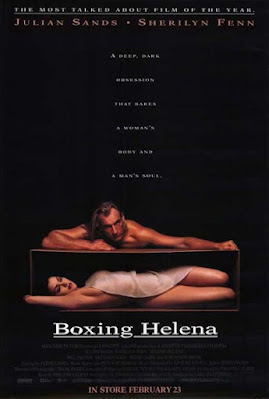
Boxin g Helena Poster

(1993) Written and directed by Jennifer Lynch; Story by Philippe Caland; Starring: Julian Sands, Sherilyn Fenn, Bill Paxton, Art Garfunkel, Betsy Clark, and Kurtwood Smith; Available on DVD 

Rating: ** 

Nick and Helena

Helena (Sherilyn Fenn): “I’ll never need you.”

Nick (Julian Sands): “You need me now. None of those other men ever cared for you, but I always loved you, and I’ll take care of you, no matter what.” 

Helena: “You don’t love me. You think you can’t be a man without me.” 

Nick: “But I have you.” 

The controversy surrounding some films makes a bigger splash than the movie itself. Such is the dilemma with Boxing Helena, written and directed by then 24-year-old Jennifer Lynch (daughter of David Lynch). It’s probably best remembered for the controversy surrounding the production: three weeks before shooting was slated to commence, Kim Basinger walked out on the film, and a $3 million paycheck. She was later successfully sued, and Sherilyn Fenn (of Twin Peaks fame) was brought on. Considering Boxing Helena’s twisted premise and the filmmaker’s lineage, one might expect something truly unconventional. Oh, if only that were the case…   

* Fun Fact: Prior to Basinger leaving, Madonna was slated to star in the role, but she also decided to bow out.

Nick Performing Surgery

Dr. Nick Cavanaugh (Julian Sands) is a gifted surgeon, skilled (presumably) in the reattachment of severed limbs. Despite the admonitions of his pal Dr. Augustine (Art Garfunkel), Nick can’t seem to get his ex-girlfriend, Helena (Sherilyn Fenn) out of his mind. Soon, he’s trying everything to win her back, which alienates him from his current partner Anne (Betsy Clark). I’m unsure if it was intentional, but Anne is so vanilla that anyone else might be an improvement. The friction comes to a head when Helena appears at Nick’s party (which was intended to celebrate Anne and Nick’s engagement), and he follows her around like a lost puppy. In the following scene, Nick finagles a way to get Helena back to his sprawling estate, where an unfortunate accident forces her to be his patient and prisoner.  

Ray and Helena

The over-the-top performances in this would-be erotic thriller border on camp. Instead of being intimidating and sinister, Sands portrays Nick as whiney and sniveling. Fenn does the best she can with an underwritten role, as the largely unsympathetic Helena. She doesn’t deserve the hand she’s dealt, but it’s hard to feel much sympathy for her either way. The normally reliable Bill Paxton (sporting a terrible wig) is terribly miscast as Ray O’Malley, Helena’s narcissistic boyfriend. We’re supposed to accept him as a modern-day Lothario, but he comes across as a cartoon character.
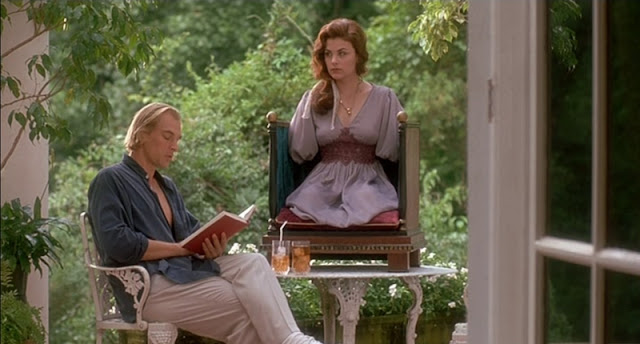
Nick Reads to Helena

Watching Boxing Helena, it’s hard to see what all the fuss was about (including a threatened NC-17 rating). While there are a few borderline slow-motion sex scenes, there’s nothing that wouldn’t pass muster on ‘90s-era Cinemax (aka: Skinemax). Besides its tedious pacing, however, the movie’s biggest fault is pulling its punches with the subject matter. Lynch had an opportunity to show something truly grotesque, but what remains onscreen is a largely bloodless affair. The surgical procedures that render Helena limbless are left offscreen. Instead, we’re left with a common magician’s trick, presenting the illusion that there’s nothing underneath the table supporting her (I spent half of the movie wondering how they hid Fenn’s legs when she sat on a bed or in a wheelchair). If nothing else, Boxing Helena serves as a textbook illustration of how arbitrary the MPAA can be. I can only conclude that the ratings board people were so fixated on the unsavory premise, they neglected to pay attention to what was actually depicted.

Nick and Helena in the Rain

(Spoiler Alert) It somehow seems fitting that the icing on this under-baked cake is the big reveal (Gasp!) that it was only a dream. Jennifer Lynch’s tale of obsession and control is a ham-handed, unsubtle metaphor for the level of control that some men would like to exert against their wives or significant others. What we’re left with is a movie that’s all hype and no show. Anyone expecting something that overwhelms our senses or stretches the boundaries of our endurance should likely search elsewhere.


Sources: “Fenn Loses Limbs as Lawyers Grill Kim,” by Michael Fleming, Variety (April 27, 1992); “Lynch: Basinger Not Deceived,” by Donna Parker, The Hollywood Reporter (March 1, 1993); “Lynch: Basinger Loved Script,” by Donna Parker, The Hollywood Reporter (February 26, 1993) 

Sunday, March 6, 2022

Matinee


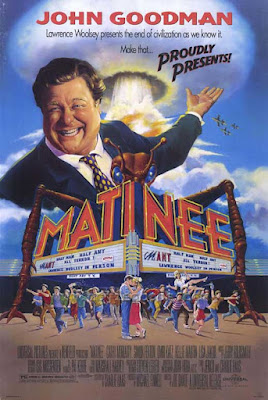
Matinee Poster

(1993) Directed by Joe Dante; Written by Charles S. Haas; Story by Jerico Stone and Charles S. Haas; Starring: John Goodman, Cathy Moriarty, Simon Fenton, Omri Katz, Lisa Jakub, Kellie Martin, Dick Miller and Robert Picardo; Available on Blu-ray and DVD 

Rating: ****½

"Atomo Vision, Rumble Rama… It takes a lot more to scare people these days. Too much competition… Now they’ve got bombs that’ll kill half a million people, nobody’s had a good night’s sleep in years, so you gotta have a gimmick, you know? Something a little extra.” – Lawrence Woolsey (John Goodman) 

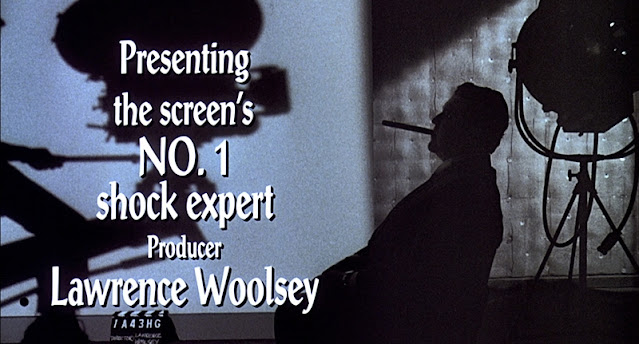
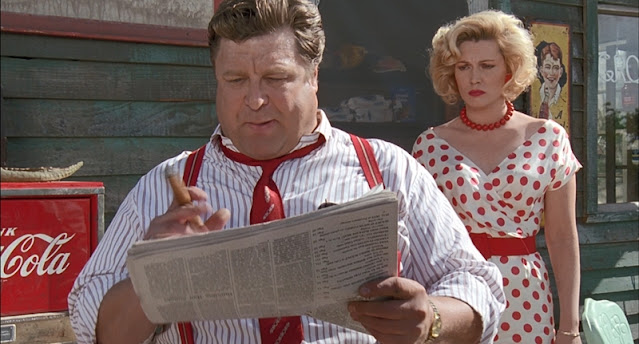
Lawrence Woolsey

A huge thanks (or should I say, “Scream Out”?) to Gill from Realweegiemidget Reviews for inviting me to join the Wilhelm Scream Blogathon, looking at one of the most ubiquitous sounds from Hollywood movies. Today’s offering, Matinee, qualifies for the blogathon and this month’s theme (Body Horror), thanks to the marvelous film-within-a-film, Mant (more on this in a moment).

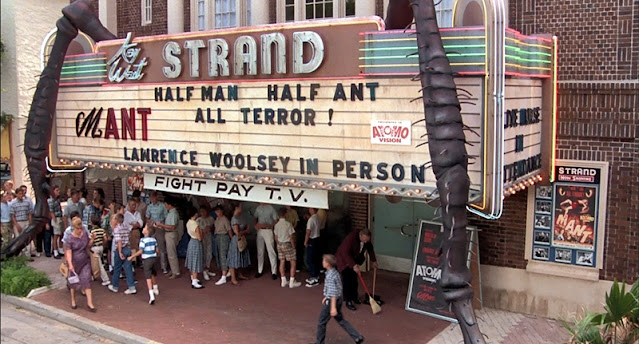
Theater Marquee

Matinee is Joe Dante’s love letter to the genre movies he grew up with, and the unique theater experience from his adolescence. Dante originally envisioned Matinee as a fantasy (with a vampire projectionist and monster theater manager), but eventually eschewed these elements when he couldn’t find a studio that was interested in the concept. The final product, however, reflects his affection for B-movie cinema, told amidst the backdrop of real-life events, circa 1962 (i.e., the Cuban Missile Crisis). The relatively low-budget production was originally slated to be funded overseas, with Universal to distribute, but when the money fell through, Universal took over the bill. Filming took place on location in Key West, Florida, where the story takes place.

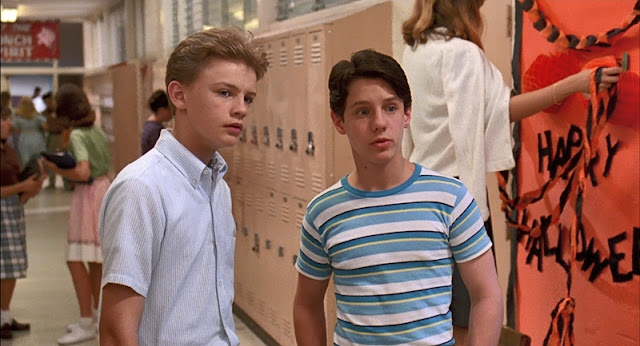
Gene and Stan

Gene Loomis (Simon Fenton) is a typical all-American kid who lives on a military base with his mother Anne (Lucinda Jenney) and younger brother Dennis (Jesse Lee Soffer). As if adjusting to a new town and a new high school aren’t enough to cause anxiety, he’s faced with the uncertainty surrounding his father’s latest post, on one of the Navy vessels engaged in the U.S. blockade around Cuban waters. Gene’s only common thread, hopping from base to base, is his love of sci-fi and horror movies.* His new friend Stan (played by Omri Katz. best known for the beloved but short-lived series, Eerie Indiana) introduces him to another pastime – girls. While Stan pursues Sherry (Kellie Martin), Gene sets his sight on non-conformist proto-hippie Sandra (Lisa Jakub). But things are about to get more complicated when tensions between the U.S. and Soviet Union come to a head, just as B-movie showman extraordinaire Lawrence Woolsey rolls into town to promote his new movie, Mant

* Fun Fact #1: Gene’s room is decorated with various memorabilia, which came from Dante’s personal collection.

Lawrence Woolsey and Ruth Corday

John Goodman (whom Dante envisioned for the role) impresses as cigar-chomping filmmaker Lawrence Woolsey, an amalgamation of a special breed of mid-century self-promoting genre filmmakers,* with an obvious nod to William Castle. Woolsey, who’s part con-man, all showman, knows a mark when he sees one. He delights in pushing an audience’s buttons, inside and outside the theater, promoting his latest gimmicks, “Atomo Vision” and “Rumble Rama.” If there isn’t controversy about his movies, he creates it. One of his ploys involves a staged protest outside the theater where Mant is set to premiere. His shills, Herb and Bob (Dick Miller and John Sayles) stir up outrage for his movie, under the auspices of phony organization “Citizens for Decent Entertainment.” Inside, he wires theater seats to zap the posteriors of select patrons (in a direct nod to Castle’s The Tingler), sets up an elaborate sound and light display, and hires juvenile delinquent Harvey Starkweather (James Villemaire) to terrorize the audience in a giant ant suit. He’s a big kid at heart, much to the chagrin of his sarcastic, long-suffering girlfriend Ruth Corday (Cathy Moriarty). She’s at the end of her rope; never a bride, always a bridesmaid to Woolsey’s cockamamie schemes. 

* Fun Fact#2: In addition to Castle, Dante cited Bert I. Gordon and Jack Arnold as influences for the character.

Mant and Carole

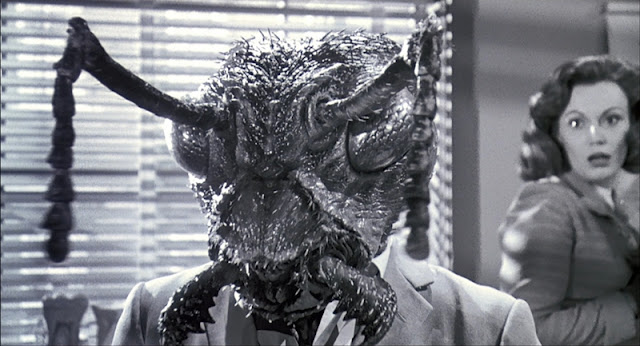
Among Matinee’s many highlights are excerpts from Mant (tagline: “Half man. Half ant. All terror.”), a spot-on parody of ’50s monster movies (particularly The Fly and Them), presented in glorious black and white. The cautionary tale, in which Bill (Mark McCracken), an ordinary man, transforms into a deadly human/ant hybrid, features genre staples William Schallert and Kevin McCarthy. Mant captures the style and tone (including over-the-top performances) of the films from that era, including an expert who dumbs down his explanations for Bill’s beleaguered wife Carole (played by Cathy Moriarty as Ruth Corday). The Wilhelm Scream is right at home with the monster-related mayhem when a giant ant tears through the city. Another clever parody* pokes fun at a special brand of Disney pablum from the 1960s (frequently starring Dean Jones or Fred MacMurray), in which a sentient shopping cart foils some would-be burglars. 

* Fun Fact #3: Matinee marks Naomi Watts’ first American performance, appearing in “The Shook Up Shopping Cart.”

Cuban Missile Crisis

Matinee provides sober reminder that real life is infinitely more frightening than anything that could be depicted on the silver screen. Life in 1962 was anything but carefree, when the threat of nuclear annihilation loomed, with the Cuban Missile Crisis. The bomb shelter maintained by the jittery theater manager (Robert Picardo) and routine “duck and cover” drills at school, at once reflect the public’s hypervigilance at the height of the Cold War, and the futility of surviving a nuclear blast. Dante’s film illustrates how humanity could be brought to the brink of extinction, yet somehow carried on with their daily lives. Woolsey offered an escape from the horrors of reality, providing thrills without consequences. His monologue at the end of the film encapsulates the public’s raison d'ĂȘtre for movie-going, and specifically why many of us enjoy horror so much.  

Lawrence Woolsey

Matinee failed to connect with audiences and critics at the time, possibly as a result of Universal’s uncertainty about how to market the film. It’s unfortunate, because many missed out on a deceptively intelligent movie, with excellent ensemble work by a combination of new faces and old veterans (including a who’s who of Dante regulars and B-movie actors). Filled with an abundance of humor and heart, Matinee re-creates an experience from a bygone era when it actually looked fun to go to the movies. Dante manages to strike the perfect balance between comedy and drama, without seeming saccharine or heavy handed. His inclusion of autobiographical elements makes this his most personal film, and (to date) his best one. 

Sunday, February 27, 2022

Blood Feast

Blood Feast Poster

(1963) Directed by Herschell Gordon Lewis; Written by Louise Downe; Story by David F. Friedman and Herschell Gordon Lewis; Starring: William Kerwin, Mal Arnold, Connie Mason, Lyn Bolton and Scott H. Hall; Available on Blu-ray and DVD
Rating: *** 

“When I shot Blood Feast and we started making money with it, I said, ‘Wow! Look how rotten this picture is. What if we made a good one?’” – Herschell Gordon Lewis (excerpted from interview with Boyd Rice, Incredibly Strange Films)

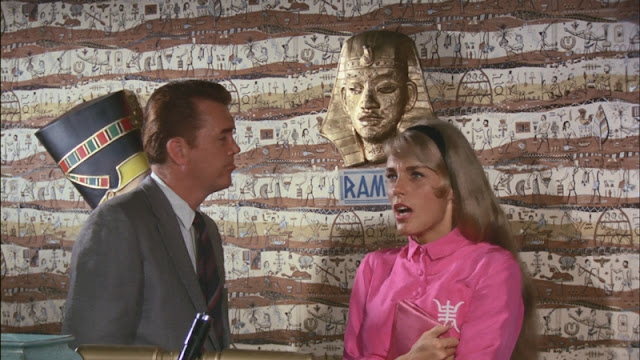
Fuad Ramses

First and foremost, thanks to Rebecca from Taking Up Room for hosting the So Bad It’s Good Blogathon, celebrating the best of the worst. Today, I have a doozy for your consideration, the notorious Blood Feast directed by the so-called “Godfather of Gore,” Herschell Gordon Lewis. 

Blood Feast has been touted in some circles as the “first” gore movie (or alternately, the “first” slasher film). I don’t really buy it, although I’ll concede that perhaps no one prior to H.G. Lewis and producer David F. Friedman exploited blood and guts onscreen the way they did. As anyone who’s seen Eyes Without a Face (1960) can attest, Blood Feast* was far from the first movie to delve into stomach-turning imagery. Arguably, Eyes Without a Face had loftier ambitions, whereas Blood Feast simply aimed to gross people out. Nevertheless, Blood Feast does enjoy the distinction of being the first in Lewis and Friedman’s so-called “Blood” trilogy, which also includes Two Thousand Maniacs (1964) and Color Me Blood Red (1965). 

* Fun Fact #1: The film was edited by Bob Sinise, father of actor Gary Sinise. 

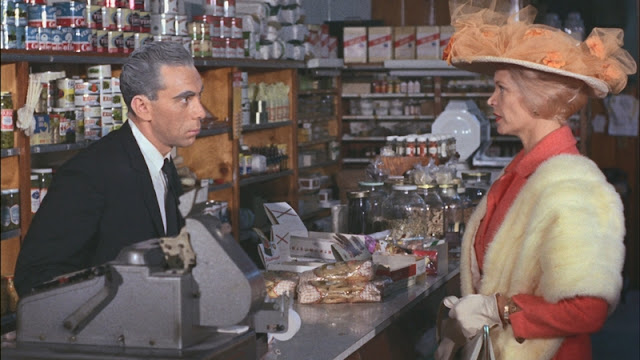
Newspaper Headline

According to producer Friedman, his production philosophy was, “We don’t want it good; we want it Thursday.” This slap-dash approach, mostly born out of necessity, considering the paltry budget, likely spawned from Lewis and Friedman’s days as carnival showmen. Besides their official roles, the director and producer wore a number of other hats. Lewis shot the film, composed the score, and tweaked the script, while Friedman handled the sound, and appeared in the movie as a Cadillac convertible-driving sugar daddy to one of the movie’s victims. While some actors and actresses were recruited from local theater, the filmmakers employed many non-actors* to fill in the roles (and likely justify lower wages).  

* Fun Fact #2: What was Lewis’ direction to Scott H. Hall, who played a police captain, and never acted before? “Just shout your lines.”

Fuad Ramses and Dorothy Fremont

Dorothy Fremont (Lyn Bolton) is planning a birthday party for her daughter Suzette (Connie Mason), but wants “something unusual.” She finds the solution with Fuad Ramses (Mal Arnold),* who runs a catering business. Ramses offers (with a maniacal stare), “Have you ever had an Egyptian feast?” At this point, you’d almost expect some diabolical laughter to punctuate the scene, but alas, there’s only some exaggerated hand-wringing. As we soon discover, Ramses’ business is merely a front for his scheme to revive the ancient Egyptian goddess Ishtar, which involves finding fresh body parts for a ceremonial banquet. Ramses embarks on a killing spree to collect said parts from several unfortunate young women, with Suzette’s party the culmination of his bloody endeavors. 

Fun Fact #3: The gray in Arnold’s hair varied from day to day, depending on how much hair color the filmmakers had to work with.


Ishtar Statue

"Don’t ask me, I just work here."

Blood Feast is chock-full of unintentional comic moments. In the back room of Ramses’ store sits a shrine/sacrificial altar, with a department store mannequin spray-painted gold, standing in for the goddess Ishtar. Her puzzled expression seems to mirror our collective befuddlement. Unfortunately, the living actors don’t fare much better than the inanimate object. Playboy Playmate Connie Mason speaks each line with the conviction of someone reciting their shopping list. The bumbling police work by two clueless detectives Pete Thornton (William Kerwin) and Frank (Scott Hall), will likely leave you shouting at your TV screen. The answer is smacking them in the face, yet somehow eludes them. Despite attending a lecture about ancient Egyptian sacrificial rituals, Thornton fails to find a link between a book found at the scene of the crime (titled “Ancient Weird Religious Rites”) (including disconcerting close-ups of Arnold’s face) and Ramses. Speaking of Ramses, we’re expected to believe that a 30-something actor is an old man, sporting fake gray hair and an exaggerated limp. The limp appears in some scenes, disappearing in other parts of the movie. Despite being elderly and disabled, he’s surprisingly spry, managing to carry one of his victims over his shoulder, and keeping several paces ahead of the cops chasing him in the final scene. 


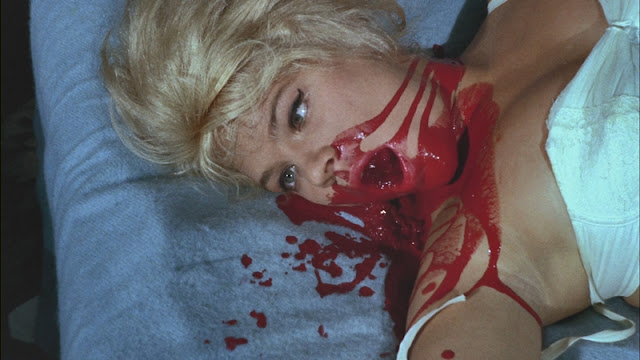
Victim of Fuad Ramses

Blood Feast subscribes to Stephen King’s maxim (from Danse Macabre): “…if I find I cannot horrify, go for the gross-out.” Lewis described his approach to gore */**/*** as “intensive” rather than “extensive.” Lacking the budget for elaborate makeup effects, he decided to linger on shots of blood and viscera. Although many of these scenes seem fairly tame or even quaint by today’s standards, it’s easy to imagine how this made an impact on audiences accustomed to off-screen or implied gore.  

* Fun Fact #4: As another money-saving measure, the filmmakers made their own stage blood. Lewis revealed that the key ingredient was diarrhea medicine, Kaopectate (presumably for the viscosity of the final product). 

** Fun Fact #5: Depending on where patrons viewed Blood Feast, they had wildly different experiences. The flick’s gory scenes were cut from the prints that played at indoor theaters, while the numerous depictions of blood and guts were retained for drive-ins. 

*** Fun Fact #6: The filmmakers used a sheep’s tongue from a Tampa butcher shop for the infamous scene where Ramses pulls out a woman’s tongue. Unfortunately for everyone involved, the refrigeration failed while the tongue was in storage, creating a terrible stench during the shoot.

Pete Thornton and Suzette Fremont

Unlike many of the films featured on this blog, Blood Feast was a runaway success, bringing in an estimated $4 million (not too shabby for an investment of $24,500). Lewis’ recipe for success: Simmer a large pot of stage blood, add a heaping portion of gore, stir in a generous splash of good old-fashioned xenophobia, let it simmer for 67 minutes, and there you have it – horror movie history. I’m not inclined to believe that a movie should be considered “critic proof,” but examining Blood Feast by the same criteria that you might evaluate something from Cocteau or Kurosawa seems irrelevant. Chances are, you’ll know in the first five minutes whether or not this is the right movie for you. It manages to underwhelm on nearly every level, but if you’re in the mood for atrocious acting, unintentional comedy, and Grand Guignol-style effects, you’ve come to the right place. On a different note, it’s hard not to admire such a calculated business move. Lewis and Friedman had their fingers on the pulse of what the American public wanted, before the public consciously knew what they wanted. Blood Feast was designed to fill the drive-ins and splash the screen with blood, and by those standards, it succeeds admirably.  


Sources for this article: Herschell Gordon Lewis interview with Boyd Rice, Incredibly Strange Films; Something Weird DVD commentary by Herschell Gordon Lewis, David F. Friedman, and Mike Vraney 

Monday, February 21, 2022

February Quick Picks and Pans


Tiny Tim - King for a Day Poster

Tiny Tim: King for a Day (2020) Swedish filmmaker Johan von Sydow’s illuminating, bittersweet documentary about eccentric singer/performance artist Tiny Tim (born Herbert Butros Khaury), sheds some light on the enigmatic personality, probably best remembered for the song, “Tiptoe Through the Tulips.” Distinguished by his androgynous appearance and signature falsetto singing voice, Tiny Tim stood apart from his contemporaries as an anomaly. The film argues that he was much more than a novelty act, however, paving the way for future performers. Tiny Tim’s story is told through interviews with some of the people who knew him best, as well as excerpts from his diary, read by “Weird Al” Yankovic. It paints a complex portrait of a misunderstood, deeply introspective man who had difficulty connecting with individuals, but found meaning through his myriad stage appearances. 

Rating: ****. Kanopy (Currently unavailable on Blu-ray or DVD)

Little Otik Poster

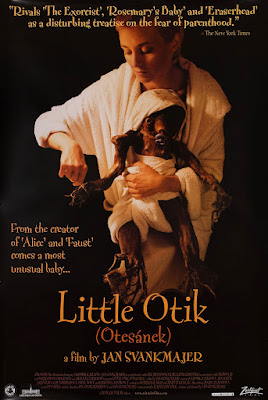
Little Otik (2000) Filmmaker Jan Ć vankmajer’s cautionary fable (based on a Czech fairy tale by Karel JaromĂ­r Erben) is an unnerving story about fertility and food, reminding us to be careful what we wish for. Despite their best efforts, Karel and Bozena (Jan Hartl and Veronika ZilkovĂĄ) are incapable of conceiving a child. Karel carves a crude baby out of a tree stump to appease his distraught wife, only to see the inanimate object spring to life and grow to monstrous proportions (with an appetite to match). Ć vankmajer employs a mixture of live action, stop-motion and two-dimensional animation to tell his disturbingly surreal tale of excess. 

Rating: ****. Available on DVD

The Medusa Touch Poster

The Medusa Touch (1978) Richard Burton stars as tortured writer John Morlar, a man inextricably linked to disasters. Brunel (Lino Ventura), a French police detective on an officer exchange program, conducts an investigation to determine who attempted to murder Morlar. Lee Grant co-stars as psychiatrist, Dr. Zonfeld, who might be able to provide some insight into the case. The fascinating story (based on a novel by Peter Van Greenaway) unfolds gradually in a slow-burn narrative, as Brunel uncovers the events that led to Morlar’s current condition. Despite some good performances and a suspenseful ending, the film is hampered somewhat by Jack Gold’s lackluster direction and visually flat style, which seem better suited for television. Quibbles aside, it’s well worth sticking around for this gripping character study. 

Rating: ***½. Available on Blu-ray, DVD and Tubi


Tales from the Gimli Hospital Poster

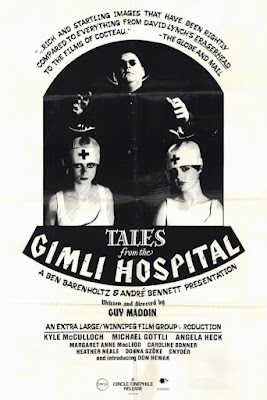
Tales from the Gimli Hospital (1988) Writer/director Guy Maddin’s fascinating debut film establishes the filmmaker’s unique style, incorporating techniques from the dawn of cinema. It recounts the tale of Icelandic immigrants Einar the Lonely and Gunnar (Kyle McCulloch and Michael Gottli), who are patients in a turn-of-the-century isolation ward, vying for the attention of the nurses while they convalesce from a mystery illness. Despite the film’s budgetary limitations, Maddin convincingly conveys the story’s mythic atmosphere with its larger-than-life characters and absurd situations.   

Rating: ***½. Available on DVD 


Monday, January 31, 2022

Japan-uary XI Quick Picks and Pans

The Night is Short, Walk On Girl Poster

The Night is Short. Walk On, Girl (2017) Masaaki Yuasa’s delightful animated film (based on the novel by Tomihiko Morimi) is a surefire cure for what ails you. Over the course of one night, we follow the exploits of unflappable coed Kƍhai (meaning “Junior”), as she enters a drinking competition with a group of retirees, foils a middle-aged pervert, and searches for a cherished lost book from her childhood. Throughout the night, she’s pursued by Senpai (an upperclassmen), who hopes to win her affections. The film’s style is as colorful and fanciful as its ebullient protagonist, possessing an irresistible energy. Don’t look for any profound messages, except perhaps to refute George Bernard Shaw’s proclamation that youth was wasted on the young. It’s nothing more or less than a celebration of the joys of being alive – something we could all use right now. 

Rating: ****. Available on Blu-ray and DVD 

Wool 100% Poster

Wool 100% (2006) Writer/director Mai Tominaga’s modern fairy tale concerns two elderly sisters, Ume and Kame (played by Kyƍko Kishida and Kazuko Yoshiyuki, respectively) who live alone in a big house, filled with junk. Ume and Kame collect more junk on their daily rounds, meticulously cataloguing their discoveries in scrapbooks. Their life takes an odd turn when a strange young girl (Ayu Kitaura) with a compulsion for knitting red yarn appears in their home. Tominaga’s often whimsical, visually playful film (complemented by a wonderfully eclectic score) examines the prisons we construct for ourselves, through the comfort and trap of ritual. 

Rating: ****. Available on DVD.

Blind Beast Poster

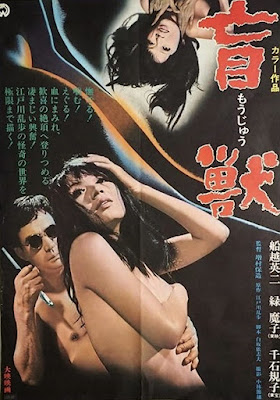
Blind Beast (1969) With the help of his mother (Noriko Sengoku), blind sculptor Michio (Eiji Funakoshi) kidnaps an artist’s model Aki (Mako Midori), so he can create his latest form of expression. As Aki descends into Michio’s world, she begins to come around to his way of thinking, where pleasure and pain are intertwined. It’s frequently difficult to watch, but more difficult to look away from this twisted tale of obsession by director YasuzĂŽ Masumura’s (Giants and Toys, Black Test Car), based on a story by Rampo Edogawa. One of the highlights is Michio’s studio, populated with oversized sculptures, representing various parts of the human anatomy. The unforgettable conclusion is at once inevitable and tragic.    

Rating: ***½. Available on Blu-ray and DVD

Intimidation Poster

Intimidation (1960) Two childhood friends, Matakichi and Kyosuke (KĂŽ Nishimura and Nobuio Kaneko), work for the same bank, but their careers have followed divergent paths. While the clever, sweet-talking Kyosuke has followed an upward trajectory, with a promotion to assistant director, his meek colleague has languished as a lowly clerk (much to the ire of his sister, who was dumped by Kyosuke). All is not as rosy as it seems for Kyosuke, who owes a small fortune from fraudulent loans (he must pay a would-be blackmailer 3 million yen, or suffer the consequences). This briskly paced neo-noir from director Koreyoshi Kurahara packs a lot in 65 minutes, with excellent performances by the leads, and a series of surprising plot twists. 

Rating: ***½. Available on DVD (part of the Criterion Eclipse Series The Warped World of Koreyoshi Kurahara)

Seance Poster

SĂ©ance (2000) Director/co-writer Kiyushi Kurosawa’s (no relation to Akira) slow-burn supernatural thriller (based on Mark McShane’s novel, SĂ©ance on a Wet Afternoon) creeps under your skin, with its meditation on the nature of guilt. KĂŽji Yakusho and Jun Fubuki play emotionally distant married couple Sato and Junko. When a little girl disappears, Junko views this as a perfect opportunity to apply her clairvoyant skills. When their plans go awry, Sato and Junko conspire to retain a semblance of normalcy, but the truth gnaws away at their conscience. SĂ©ance is a sobering look at the darkest depths of the human soul, painfully illustrating the disastrous consequences of compromising responsibility for selfishness.   

Rating: ***½. Available on DVD

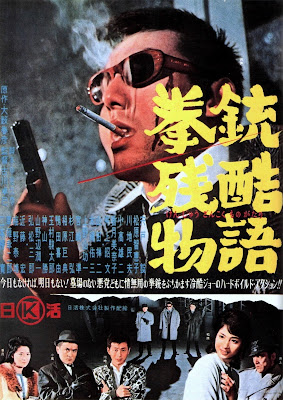
Cruel Gun Story Poster

Cruel Gun Story (1964) Takumi Furukawa’s fast-paced noir thriller features JĂŽ Shisido as Joji Togawa, a career criminal freshly sprung from prison. Against his better judgment, he accepts a challenge to lead a small team to rob an armored car carrying 120 million yen. When he’s betrayed by the mob boss who hired him, he plots his revenge. Joji approaches his work with ice-cold precision, but has a soft spot for his disabled sister. Shisido is perfect as a criminal with a strict code of honor, maintaining his integrity in a world typified by double crosses and other dirty dealings. 

Rating: ***½. Available on DVD (part of the Criterion Eclipse series Nikkatsu Noir)

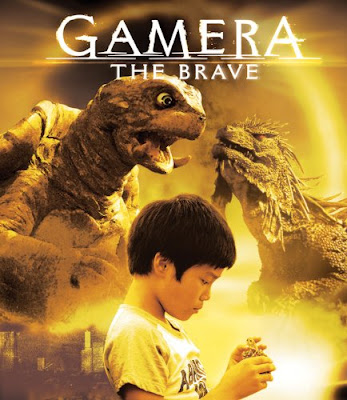
Gamera the Brave Poster

Gamera the Brave (2005) The latest Gamera flick to date might irritate some hardcore fans accustomed to the exceptional ‘90s trilogy, but I enjoyed this intentionally lower-key, kid-friendly outing. Instead of picking up where the trilogy left off, it’s a reboot of sorts harkening back, in spirit, to the original series of films with the giant turtle, when he was the friend of all children. A young boy, Toru (RyĂŽ Tomioka) discovers an egg sitting atop a glowing red crystal, and takes it home (you can probably guess the rest). This version of Gamera is a smaller, gentler (And dare I say, cuter?) version of the eponymous kaiju hero. It’s somewhat of a letdown that he fights a rather generic enemy, but the human characters (particularly Toru’s father, Kousuke) are fairly well fleshed out. While it’s not exactly the sequel most of us wanted, it’s diverting enough.           

Rating: ***. Available on Blu-ray, DVD and Amazon Prime

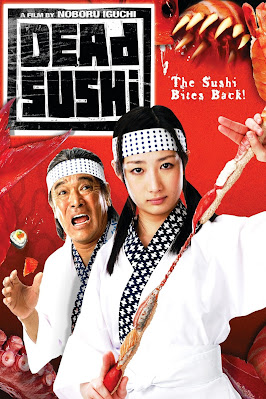
Dead Sushi Poster

Dead Sushi (2012) Keiko (Rina Takeda), a budding young sushi chef, runs away from home after she tires of her father’s criticism. She takes a job as a server at an inn, which is hosting a company retreat. Unbeknownst to Keiko, the deposed company founder, seeking revenge against his former teammates, turns his experimental serum on their sushi, with deadly consequences. Writer/director Noboru Iguchi keeps everything suitably over the top (if you’re familiar with some of his other work, including Machine Girl and Robogeisha, then you likely know what you’re in for). Expect lots of tasteless sight gags (with an occasionally clever joke thrown in, for good measure) and a surprising amount of heart. You might never look at sashimi the same way again. 

Rating: ***. Available on Blu-ray, DVD and Tubi

Monster Seafood Wars Poster

Monster Seafood Wars (2020) A young biochemist develops a substance that will make animals grow to gargantuan proportions, resulting in an ordinary octopus, squid and crab transforming into kaiju. While they threaten the population of Japan, they have an unintended side effect – they’re also delicious. Writer/director Minoru Kawasaki’s (The Calamari Wrestler, Executive Koala) applies his signature goofy, no-budget approach to his kaiju tale. It’s a couple of notches below his best, but it’s not without its moments. It never takes itself too seriously, gently poking fun at tokusatsu movies, while embracing them. The pacing, however is inconsistent, and the story (which is probably a bit too deadpan for its own good) could have used a few more jokes. 

Rating: **½. Available on Blu-ray, DVD and Amazon Prime


Saturday, January 22, 2022

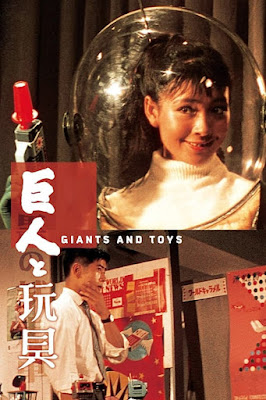
Giants and Toys

Giants and Toys Poster

(1958) Directed by YasuzĂŽ Masumura; Written by Yoshio Shirasaka; Based on the novel by Takeshi KaikĂŽ; Starring: Hiroshi Kawaguchi, Hitomi Nozoe, Hideo Takamatsu, Michiko Ono; Available on Blu-ray and DVD

Rating: **** 

“You’re behind the times. You don’t understand the age of media. Listen, modern people are worse than babies. Worse than dogs. Why? Because they don’t think. They work like slaves in the day, get drunk and play pachinko at night. Or they listen to the radio, or watch TV. When do they have time to think? Their heads are empty. That’s where we come in. We’ll hammer our message into their heads over and over again, ‘Delicious caramel, World Caramel. World, World, World!’ Then every time they see a pack, they’ll automatically buy it. Do you get it now? We can control them with radio, TV and movies. We can make the masses think and feel whatever we want. The media is the dictator, the emperor of the modern age!” – RyĂ»ji GĂŽda (Hideo Takamatsu)

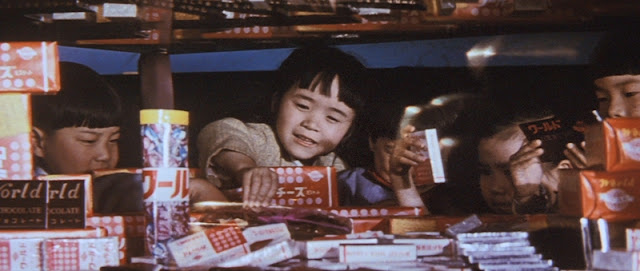
Kids and candy

When most people think of the most significant and influential names in Japanese cinema, the usual suspects are bandied about. One overlooked filmmaker who merits more attention is YasuzĂŽ Masumura.* Despite his prolific creative output throughout the ‘50s, ‘60s, and ‘70s, many of his films (with a few notable exceptions) remain unseen in the West. Masumura established himself as a formidable creative force with his vicious satire, Giants and Toys (aka: Kyojin to Gangu), skewering Japan’s changing landscape in the realm of business, and as an emerging economic superpower. 

* Fun Fact #1: Masumura’s educational background in Law, Literature and Philosophy informed his unique vision. He further honed his craft, studying film in Italy at the prestigious Centro Sperimentale di Cinematografia.

Masami and Nishi

Eager young college graduate YĂŽsuke Nishi (Hiroshi Kawaguchi) lands a publicity job for World Confectionary, which is embroiled in a fierce competition between rivals Giant Chocolate and Apollo Drops.* He wants to impress his boss RyĂ»ji GĂŽda (Hideo Takamatsu) at any cost, which includes grooming a young, rough-around-the-edges woman to be the company’s new spokesmodel. Meanwhile, he takes a romantic interest in Masami Kurahashi (Michiko Ono), who works for Apollo, but his intentions are less than sincere. Likewise, Masami proves to be just as capricious as her boyfriend. Between whispering sweet nothings, they press each other for details about the latest marketing campaigns in their respective companies. The rivalry carries over to his friendship with college buddy Tadao Yokoyama (KĂŽichi Fujiyama), who shills confections for Giant. 

* Fun Fact #2: In Takeshi KaikĂŽ’s original story, the company names were, respectively: Samson, Hercules, and Apollo.

Goda and Nishi

At the age of 38, GĂŽda (Hideo Takamatsu) is an ambitious, upwardly mobile executive, who’s old before his time. He runs himself ragged, neglecting sleep in favor of his work, and popping pills to keep himself going. He neglects his wife Suzue (Hiroko Machida), the daughter of his superior, whom he married for strategic reasons, rather than matters of the heart. As his career continues its upward trajectory, his health spirals down to the point where he coughs up blood on his promotion letter. He purveys an ethos of success at any cost, which trickles down to his subordinate, Nishi.

Kyoko

Hitomi Nozoe plays the bubbly ingenue KyĂŽko Shima, who seems an unlikely poster girl for a candy company, with her rotten teeth. Her cute, unpolished exuberance catches the eye of GĂŽda, however, who sees her potential. Thus begins her Pygmalion-like transformation, as she quickly becomes an overnight celebrity. Along with her rapid ascension in the public’s consciousness, her entire tone changes, as she transitions from an amiable, unpretentious girl from the slums, to a self-absorbed, quasi-sophisticate. Nishi doesn’t buy her instant celebrity status, aware of the half-life of a fickle public and the ephemeral nature of fame. He tells Nozoe it’s only a matter of time before someone takes her place, but she’s self-aware, enjoying the ride while it lasts (“So what? I don’t mind being a puppet or a toy. As long as I’m having fun, that’s enough.”). 

* Fun Fact #3: While their onscreen characters shared a contentious relationship, co-stars Kawaguchi and Nozoe married in 1960.

Goda

Giants and Toys playfully equates modern business to feudal Japan. One sequence hammers home the metaphor, with shots of the three candy company banners waving high. Their employees go into battle, developing strategies of attack and defense, with spies around every corner. When the main factory of a rival company burns down, an older World executive calls for bushido, the ancient samurai spirit of honor among adversaries. He’s summarily dismissed by his colleagues as naĂŻve and old fashioned. No one in the film is entirely trustworthy or above compromising their integrity. Honesty only brings you so far, everyone has an ulterior motive, and no one is above selling out. Lies, betrayal, and subterfuge are simply part of the game. GĂŽda’s speech about how easily the general public are manipulated is downright prophetic. Advertising is all about creating a need for something that didn’t exist before, doing the thinking for people. Choice is an illusion. Giants and Toys also takes a cynical stance toward relationships in the context of the film, which appear solely transactional in nature – rather than what you can do for someone else, it’s about what you can get from them.

Kyoko

Cinematographer Hiroshi Murai’s candy-colored presentation is only appropriate for a story about rival confectionary companies. The garish, saturated colors underscore the exaggerated onscreen antics. Amidst the humor, Giants and Toys has a serious message about the new disposable culture. In KyĂŽko’s case, she’s nothing more than the flavor of the month, pre-packaged and rammed down the public’s collective throat, like the candy her company sells – sweet on the surface, and just as insubstantial. Cutthroat business tactics are an accepted fact. Masumura applied similar themes, adopting a darker tone with his Black Test Car (1962). Compared to the later film, Giants and Toys tells its story in broader, breezier strokes, making the themes more accessible (not to mention a lot more fun). With its breakneck pace and rapid-fire dialogue, Giants and Toys deserves to be re-discovered. The film’s strikingly contemporary commentary on fame, consumer culture and business remains as relevant today as it was in 1958, making this a true classic. 


Sources for this article: Arrow Blu-ray commentary by Irene GonzĂĄlez-LĂłpez; “In the Realm of the Publicists,” video essay by Earl Jackson, Jr.; YasuzĂŽ Masumura biography on Fantomas Blind Beast DVD, by Earl Jackson, Jr.

Tuesday, January 11, 2022

The H-Man

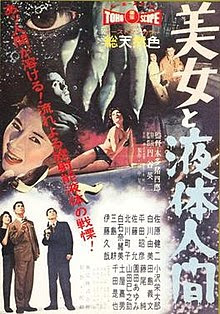
The H-Man Poster

(1958) Directed by IshirĂŽ Honda; Written by Takeshi Kimura; Story by Hideo Unagami; Starring: Yumi Shirakawa, Kenji Sahara, Akihiko Hirata, EitarĂŽ Ozawa Koreya Senda and Makoto SatĂŽ; Available on Blu-ray and DVD 

Rating ***½  

“Take a look at this logbook from the ship Ryujinmaru. First, six men on deck fell victim to the radiation. The remaining men on the ship fell, hopelessly, before their transformed shipmates. If any of the victim’s psyches are preserved, it’s very possible that they tried to come to Tokyo. A liquid organism created by an H-bomb test with the mind of a human. I suppose you could call it an H-Man.” – Dr. Maki (Koreya Senda)

H-Man

Although most film fans likely associate IshirĂŽ Honda with his Showa era kaiju flicks, there’s a number of stand-alone titles in his filmography worthy of your attention. Upon its release in the U.S., The H-Man was unfairly maligned as a rip-off of The Blob. While both films debuted in 1958, Honda’s film actually predated the American movie by several months, and beyond some superficial similarities, differs widely in story and tone. Honda skillfully blends two strange bedfellows, film noir and science fiction, to create a unique experience.* Following the heels of Gojira (1954), The H-Man continues exploring the deleterious effects of radiation on humankind. Only 13 years after the catastrophic events in Hiroshima and Nagasaki, and with American atomic testing in the South Pacific in full swing, the threat of nuclear annihilation was fresh on the minds of the Japanese public. 

* Fun Fact #1: the realistic street sets were recycled from Akira Kurosawa’s Drunken Angel (1948)

Tominaga and Masada

When small-time criminal Misaki (Hisaya ItĂŽ) vanishes in the middle of a drug deal, he leaves behind a pile of empty clothes and a big mystery. While police inspector Tominaga (played by Akihiko Hirata, who appeared as Dr. Serizawa in Gojira) takes a prosaic approach to the evidence, professor Masada (Kenji Sahara) pursues a more fantastical explanation for the disappearance. Both men are at odds with each other, as the eager young Masada and the skeptical police official butt heads. Masada suspects that there could be a link between Misaki and a fishing vessel that strayed into a nuclear testing zone in the South Pacific. Tominaga and Masada seek out Misaki’s girlfriend, nightclub singer Chikako Arai (Yumi Shirakawa), who might hold the key to solving the puzzle.

Chikako

Chikako serves as the film’s nominal femme fatale, although her character seems to promise more smolder than she delivers. She performs two English-language numbers at the nightclub, frequented by cops and criminals alike, but spends most of the movie badgered by the police, slapped around by two-bit hoods, or at the mercy of Masada and his lab team. Other times, she’s reduced to fainting at the appropriate moments (four times, by my count), although one could argue it’s a physiological reaction to radiation exposure. Chikako doesn’t share a lot of chemistry with Masada (okay, pun intentional), and Masada doesn’t really seem to be her type, but we’ll just take it on faith that their attraction transcends any preconceptions of compatibility.   

Sailors Onboard Derelict Vessel

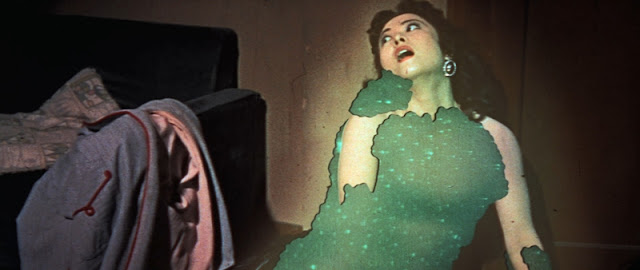
Honda’s secret weapon in The H-Man was lighting technician TsuruzĂŽ Nishikawa, whose bold lighting solutions contributed to the moody, shadow-filled look of the film. In the film’s best scene, told in flashback, a pair of hospitalized sailors recall their experience, exploring a seemingly abandoned fishing vessel. As they probe the eerie darkened corridors, illuminated by a solitary lantern, it gradually dawns on them that they’re not quite as alone as they once thought. The filmmakers are careful not to reveal too much all at once, letting our minds fill in the blanks about what lurks in the shadows. We’re left with one of the most memorable images, as the sailors gaze upon the decks of the derelict ship one last time, with its remaining occupants emitting a spectral green glow.

Victim of the H-Man

The H-Man is eye-opening in several respects, offering more for the viewer’s senses, compared to the rather chaste American genre output of the time. This is especially evident in the nightclub scenes, where dancers in skimpy outfits gyrate to jazz riffs. The film includes some suitably icky Grand Guignol flourishes, graphically depicting the unfortunate humans that come into contact with liquid entities. The effects are simple but effective, as bodies crumple and dissolve while they’re absorbed by green goo.* Another brief scene features a gunshot victim, replete with visible bloody bullet holes. 

* Fun Fact #2: To create the goopy green slime, the filmmakers employed a compound that was commonly used for cosmetic applications, made from blue-green seaweed.

Dancer Victim

The H-Man* is best appreciated as an exercise in mood and style, rather than a full-blown crime movie. The mechanics of the plot prove to be little more than a red herring, designed to distract us from the film’s radioactive menace. The theme of body transformation and concept of an abandoned ship concealing a terrible secret would be explored (and arguably improved upon) several years later, with 1963’s Matango (also written by Takeshi Kimura), but H-Man’s slimy glowing adversaries stand out as a unique addition to the Toho sci-fi canon. 

* Random thought: Considering the film’s drug-trafficking subplot, I suppose “H-Man” could also refer to heroin. 


Source for this review: Ishiro Honda: A Life in Film, From Godzilla to Kurosawa, by Steve Ryfle and Ed Godziszewski, with Yuuko Honda-Yun