(1977) Directed by Michael Winner; Written by Michael Winner
and Jeffrey Konvitz; Based on the novel by Jeffrey Konvitz; Starring: Christina
Raines, Chris Sarandon, Burgess Meredith, Ava Gardner, Martin Balsam, Arthur
Kennedy, Sylvia Miles, John Carradine, José Ferrer, Eli Wallach, Christopher
Walken, Beverly D'Angelo and Jeff Goldblum; Available on Blu-ray and DVD
Rating: ***½
“The angel Uriel was stationed at the entrance to Eden to
guard it from the devil. Since that time a long line of guardians... sentinels,
have guarded the world against evil. Right now, it's Father Halliran upstairs.
But tonight, you become the next sentinel. All the people you saw here, the old
man, the lesbians... all of them are reincarnations. Devils. The only way they
can stop the new sentinel is to make you commit suicide. That's what they were
trying to do.” – Michael Lerman (Chris Sarandon)
We’ve
all visited someplace we’re convinced is the portal to hell. For me, it’s any discount
Mecca flocked by hundreds of bargain-seekers, such as Costco or Walmart. But in
the case of Michael Winner’s The Sentinel (based on the novel by Jeffrey
Konvitz),* an unassuming Brooklyn, New York brownstone is the literal entrance
to the nether realm. As our protagonist, Alison Parker (Christina Raines)**
eventually discovers, her apartment building is ground zero for an eternal
tug-o-war between good and evil (and you thought your next-door neighbors’
lives were filled with drama). Instead of filming on Hollywood sets, Winner***
chose real-life locations to depict his uncanny horror film.
*
Fun Fact #1: Konvitz cited Dante’s Inferno and Paradise Lost as
two literary works that influenced his novel.
**
Fun Fact #2: According to Konvitz, the studio originally considered Diana Ross
for the role.
***
Fun Fact #3: Other directors considered for the film were Don Siegel (who also
wrote a previous draft of the script), Gil Cates, and Fred Zinnemann.
On
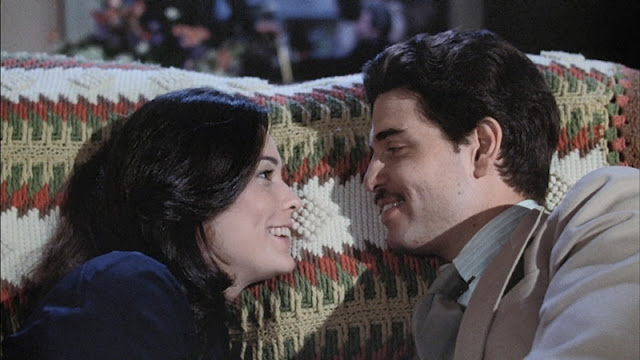
the surface, Alison Parker seems to have it all: a lucrative career as a model,
good friends, and an affectionate (and well-to-do) attorney boyfriend, Michael
Lerman (Chris Sarandon).* As we soon see, all is not rosy in Alison’s life.
Besides grappling with unresolved teenage trauma (including a suicide attempt)
and ambivalence about her father’s death, she begins to experience sudden
lapses, resulting in fainting spells. She gently rebukes Lerman’s offer of
marriage, citing a need to live on her own and assert her independence. Thus
begins her quest to find affordable housing in New York, employing the services
of Miss Logan (Ava Gardner), a plucky real estate agent. She finds an apartment
in a none-the-worse-for-wear Brooklyn Heights brownstone,** populated by a
bunch of eccentric tenants. But strange things are afoot in her new digs, starting
with her enthusiastic neighbor Charles (Burgess Meredith, in one of the film’s
best performances), who wastes no time ingratiating himself to her, introducing
his cat and canary, and leaving a portrait of himself in her apartment. And
something seems more than a little off about Alison’s downstairs neighbors Gerde
(Sylvia Miles) and Sandra (Beverly D’Angelo, in her first feature film), who
seem to enjoy toying with her. On the top floor resides a blind shut-in priest
(John Carradine), who sits at the window for hours on end, staring blankly at
presumably nothing. Things get (to borrow a phrase from Lewis Carroll)
curiouser and curiouser, when she learns, much to her dismay, that aside from
the priest, she’s the building’s only tenant. Who are these people, and are
they merely figments of an overactive imagination? The answer will change
Alison’s life forever.
*
Fun Fact #4: According to separate commentaries by Winner and Konvitz, they
originally wanted Martin Sheen to play Michael Lerman, but the studio nixed
their choice because he was considered a television actor, and not cinematic
material.
**
Fun Fact #5: While $500 (which she talks down to $400) wasn’t unrealistic for a
roomy apartment in Brooklyn Heights during the ‘70s, consider that the average monthly rental price now hovers around $4160. How times have changed.
The
Sentinel
boasts an impressive cast of veteran and novice actors. Aside from Gardner, Meredith
and Carradine, look for Arthur Kennedy as a monsignor, José Ferrer as his Vatican-based
superior, Martin Balsam as a professor, Eli Wallach as an tenacious police
detective, Jerry Orbach as a gruff commercial director, and William Hickey as a
wily lockpicker.* Besides the voluminous list of well-known performers, the
film featured an equally formidable roster of up-and-coming actors, including
Beverly D’Angelo (in her first feature film appearance), Jeff Goldblum as a
fashion photographer, Christopher Walken as an assistant police detective, and
Tom Berenger and Nana Visitor as prospective tenants.
*
Fun Fact #6: If Sarandon and Hickey sound oddly familiar together, no, your
ears aren’t deceiving you. Both lent their voices, years later, in The
Nightmare Before Christmas (1993) as Jack Skellington and Dr. Finkelstein,
respectively.
The
production was not without its share of behind-the scenes conflicts, many
between Winner and Konvitz. While Konvitz wasn’t impressed with Winner’s script,
Winner contended that the studio wasn’t happy with Konvitz’s adaptation. Konvitz
wrote a 15-page memorandum to Universal executives, cataloguing the problems he
had with the film, but his suggestions* went unheeded by studio and director (In
his commentary, Konvitz described Winner as “difficult” and an “egomaniac.”). Christina
Raines, by her account, found working with Winner to be a miserable experience.
In his commentary, Winner also claimed to have had a one-night stand with one
of the models in the film, and had propositioned at least one other actress.
*
Fun Fact #7: Konvitz wanted all unknowns in the roles, but Universal (in a move
that Konvitz equated with their approach to the Airport movies) insisted
on an all-star supporting cast).

Many
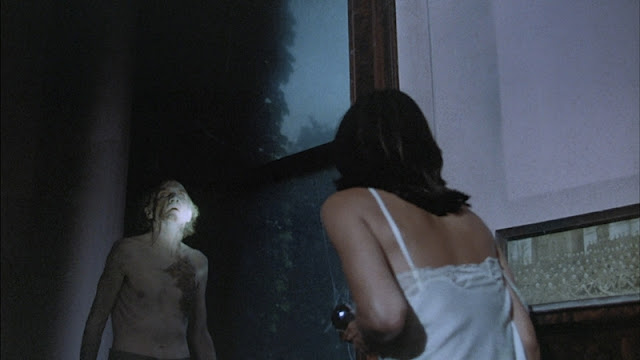
elements of the film hold up (especially the scene where Alison confronts her
dead father), but one that doesn’t pass muster is the unfortunate exploitation
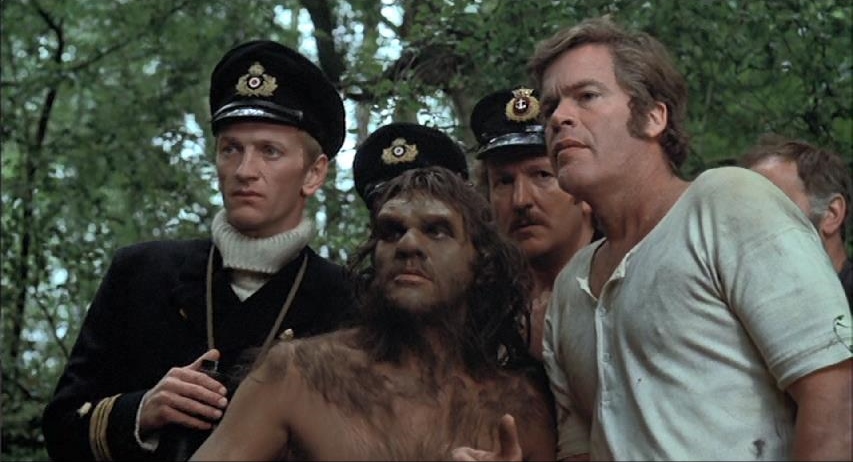
of people with real deformities* as the denizens of hell (some of whom worked
the sideshow circuit), reminiscent of the final scene in Tod Browning’s Freaks
(1932). To add insult to injury, none of the disabled performers were credited,
but among them were Bob Melvin (“The Man with Two Faces”) and Esther Blackmon (“The
Alligator Girl”). On a different note, the lesbian couple played by Miles and D’Angelo
are depicted in a less than flattering light. (Minor Spoiler Ahead). In its
defense, the film’s intention wasn’t that they were condemned to hell because
of their orientation, but because they were murderers. It would be easy,
however, for viewers to get the wrong impression.
*
Not-So-Fun-Fact: Mirroring the behind-the-scenes events of more than four
decades ago in Freaks, Winner recalled the film crew refusing to have
lunch with the disabled actors.
Despite
the behind-the-scenes friction and shaky ethics, The Sentinel remains a genuinely
creepy experience, with its pervasive atmosphere of unease and slow build to an
explosive climax. Not unlike Rosemary’s Baby, it utilizes the theme of friendly
faces harboring a terrible secret, amidst the backdrop of a New York tenement house.
Aside from a few unsettling Dick Smith makeup sequences, The Sentinel achieves
its chills without elaborate special effects or an over-reliance on gore. There
have been murmurs of a remake in recent years (which considering the
aforementioned issues might be a way to right some wrongs), but any prospective
filmmaker would be wise to adopt the same less-is-more approach.
Sources
for this article: Shout Factory Blu-ray commentary by Michael Winner; Shout
Factory Blu-ray commentary by Jeffrey Konvitz; https://www.rentcafe.com/; https://www.phreeque.com/


.JPG)