Sunday, February 26, 2023

Something Weird

Something Weird Poster

(1967) Directed by Herschell Gordon Lewis; Written by James F. Hurley; Starring: Tony McCabe, Elizabeth Lee, William Brooker, Mudite Arums, Ted Heil and Lawrence J. Aberwood; Available on DVD 

Rating: *** 

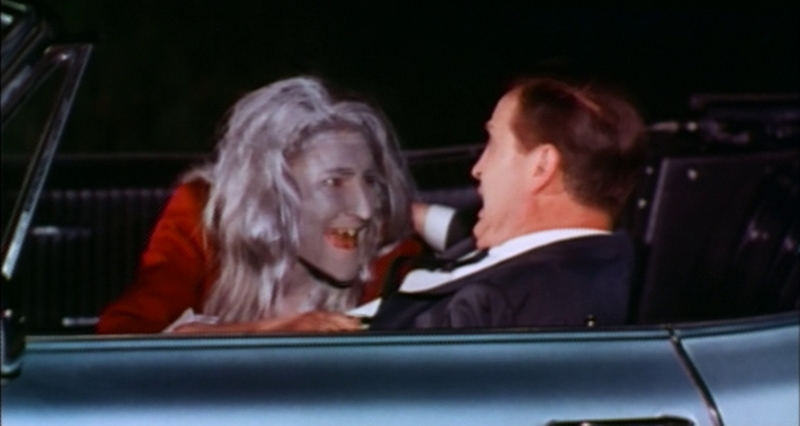
“The witch has a painting on her leg, which is a mouth. There are areas in here where we truly intended to keep the audience a little off-balance as to what was happening.” – Herschell Gordon Lewis (from DVD commentary) 

Many thanks to Rebecca from Taking Up Room for hosting another round of the So Bad It’s Good Blogathon, celebrating the best of the worst. After reviewing Blood Feast for last year’s blogathon, I’m back with a look at another Herschell Gordon Lewis movie that truly lives up to its title. 

The Hag

Hey, do you wanna see Something Weird? Well, yes, I often cover the weird side of cinema on this blog, but this time, it’s literally the movie, Something Weird.*/** H.G. Lewis *** was a showman first, with filmmaking a distant second priority, which informed his quick and cheap approach. His aptly named movie, with its ESP-meets-LSD theme, was shot in Chicago in under two weeks for a budget of roughly $35,000. As with H.G. Lewis’ other productions, don’t expect great acting, story, cinematography, or anything profound – but that’s not the point. The film was purposely designed to be part of a double bill (most likely at second-rate grindhouses and drive-ins), and in his words, “It didn’t detract” (High praise, indeed). Typical of H.G. Lewis casting, you can expect doughy middle-aged men that recite their lines like they’re perusing a cafeteria menu, and young women that are easy on the eyes, but have all the personality of a sea slug. The filmmaker admitted that he especially looked for actors that showed up and knew their lines, so there you have it. 

* Fun Fact #1: The movie started out with the Jim Hurley script, The Eerie World of Dr. Jordan. Lewis didn’t think it had box office potential, as written, so he made multiple changes. 

** Fun Fact #2: According to Lewis, the original title of Blood Feast was Something Weird. Several years later, when he made today’s film in question, he couldn’t pass up the opportunity to repurpose the title.  

*** A Word to the Wise: Unless you need a cure for insomnia, I strongly recommend skipping the Something Weird DVD commentary. Mr. Lewis only appears in the first 5-10 minutes, while for most of the film’s run time, it’s about the origins of Something Weird Video, as recollected by its late founder Mike Vraney. I’m sure there’s a fascinating story there somewhere, but you won’t find it here.


Mitchell's Ruined Face

After a mishap with a downed power line, Cronin Mitchell (Tony McCabe) gains the gift of second sight, but his face is horribly disfigured. A hideous witch (Mudite Arums) seemingly appears out of nowhere, promising to restore his appearance if he becomes her lover (think of every stereotypical portrayal of a cackling, warty-faced old crone, minus the pointy hat, and you have a pretty good idea). To everyone else, she appears as Ellen Parker (Elizabeth Lee), a blonde bombshell. He reluctantly accepts the witch’s offer, taking on a partnership of sorts. Mitchell’s ability to predict people’s futures becomes a more lucrative business than his former profession (whatever that was), and he’s soon enlisted by the local police department to help solve a serial murder case. Enter kung-fu-kicking federal agent Dr. Alex Jordan (William Brooker) who’s interested in Mitchell’s extraordinary talent. Thinking it might enhance Mitchell’s extrasensory abilities, Jordan provides a vial of LSD, and trippy hijinks ensue.  

Church Ghost

Something Weird is filled with moments that will likely have you questioning if someone spiked your morning coffee with something more potent than caffeine. The top highlight is the cartoonishly over-the-top performance by the aforementioned Arums,* who deserved her own origin movie. There’s also the requisite LSD hallucination scene** tinted orange (where Mitchell learns the identity of the killer) and a wayward ghost in a church. But the biggest “what did I just watch” moment belongs to Dr. Jordan, when he settles down for a good night’s sleep, only to find himself battling a blanket with malevolent intentions (No, really!). 

* Fun Fact #3: Searching several databases for Mudite Arums yielded nothing, other than the fact that this film was her sole acting credit, leading me to wonder if her unusual name was an anagram. If anyone has insight into the mystery, let me know. 

** Fun Fact #4: 1967 was a banner year for movies about lysergic acid diethylamide, including The Trip, LSD Flesh of Devil, The Love-Ins, The Weird World of LSD, and The Acid Eaters (produced by former H.G. Lewis business partner David F. Friedman).

Dr. Jordan Tricked by the Hag

Of course, none of this exactly adds up to a cohesive whole. Arguably, Something Weird has first, second and third acts, but I’d wager no one would ever describe the plot as tightly constructed or more than marginally coherent. Instead, think of the movie as a mĂ©lange of different elements shoehorned into an 80-minute package. If remembered at all, it’s best recalled for its individual moments, rather than a whole. If you’re anything like me (not that I’m wishing that on anyone else, mind you), however, you’ll appreciate these moments, recognizing the fact that schlock needs love too. At the end of the day, the question remains, does Something Weird live up to its title? Why, yes it does. So, watch it with the libation of your choice, turn off your brain, and tune into the psychedelic vibes. 


Sources for this article: Something Weird DVD commentary by H.G. Lewis, David F. Friedman and Mike Vraney; Herschell Gordon Lewis interview with Boyd Rice, Incredibly Strange Films 


Tuesday, February 21, 2023

Double Take: The Stepford Wives


Stepford Wives at the Supermarket

The times, they were a-changing. Ira Levin’s 1972 novel The Stepford Wives,* reflected the evolving sociopolitical climate of the turbulent late ‘60s and early ‘70s, when many women, tired of being regarded as second-class citizens, and shackled by domestic life, demanded more. At the same time, they faced a backlash from those who wanted to preserve the status quo and keep them in the kitchens. Although Levin didn’t consciously intend to write a story with overt social commentary, his novel astutely captured the growing war between the sexes, through a satirical lens. Another layer of Levin’s novel (underscored in the 1975 film), was the “white flight” of upwardly mobile (predominately Caucasian) families from the densely populated, racially/ethnically diverse cities to the more vanilla, WASP-centric suburbs. Levin used his experience living in the suburban Connecticut town of Wilton as a template for his picture-postcard, Norman Rockwell-esque town of Stepford. 

* Fun Fact: The Stepford Wives started as a play, which eventually evolved into a novel.

Joanna Eberhart

Enter our protagonist, Joanna Eberhart, a smart, independent woman with aspirations of becoming a professional photographer. She begrudgingly acquiesces to her husband Walter’s desire to transplant their family to Stepford, and its quaintly manufactured trappings. With a couple of notable exceptions, she fails to connect with the women of Stepford, and their single-minded obsession with housekeeping. The move only exacerbates the divide between Joanna and Walter, when he spends more and more time away from the house, working long hours in the office or cavorting with his new chums at the shadowy Stepford Men’s Association. But beneath the “boys will be boys” veneer lies something much more sinister.
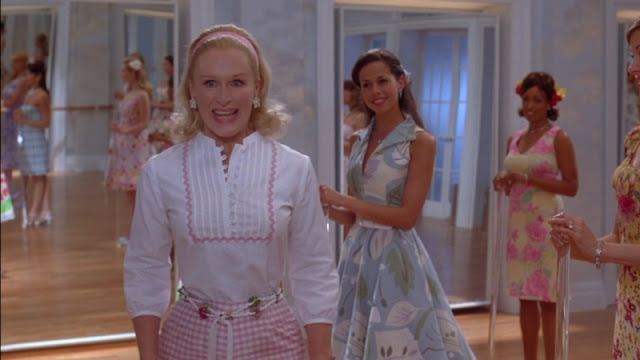
Stepford Wives_2004 Version

Levin’s novel endures, not only because it’s a taut, well-crafted thriller, but because its core implications are just as relevant today. “Stepford” and “Stepford Wife” have entered our general lexicon, to describe something (or someone) as bland, pre-programmed, or homogenous. The current climate is equally ripe for satire, with the alarming rise of groups that would prefer to return to a mythical, “great” time in America’s past, when (predominately white, heterosexual) men were men and women knew their place. An entire generation separated the 1975 and 2004 film versions, which took wildly divergent approaches. How successful was each respective film, in relation to the source material? Let’s take a look…

The Stepford Wives_1975 Poster

The Stepford Wives (1975) Directed by Bryan Forbes; Screenplay by William Goldman; Based on the novel by Ira Levin; Starring: Katherine Ross, Paula Prentiss, Peter Masterson, Nanette Newman and Tina Louise; Available on DVD 

Rating: **** 

 "A lot of horror movies are dark and gloomy and sinister, but this was a horror that was in sunlight with beautiful surroundings and beautiful people. It made it so it lulled you along until it finally terrified you." – Nanette Newman (who appeared as Carol Van Sant in The Stepford Wives)   

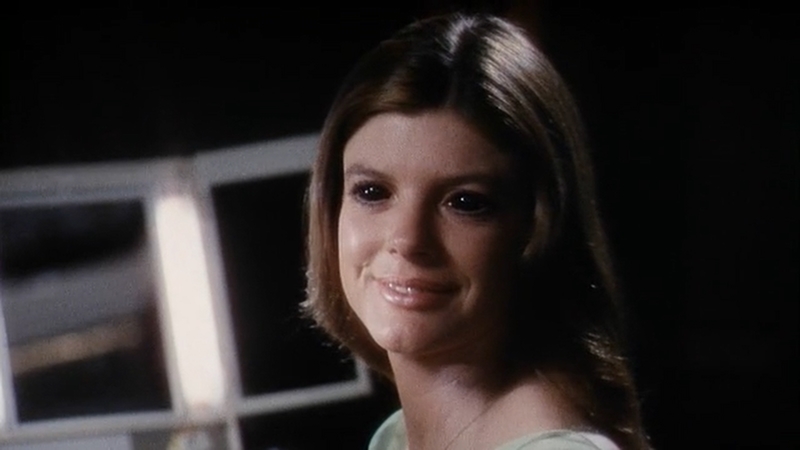
Joanna and Bobby

Joanna and Walter Eberhart (Katharine Ross and Peter Masterson) leave the hustle and bustle of New York City to suburban Connecticut, where life is simpler and the pace is slower. Something, however, isn’t quite right in the seemingly idyllic domestic world of Stepford (filmed in Darien and Fairfield, CT). Joanna* immediately feels alienated by the cleaning-obsessed housewives and their selfless devotion, catering to their husbands’ every whim.** But as Joanna is repelled by Stepford, Walter seems immediately at home, joining the exclusive Stepford Men’s Association. They carry out their meetings, sequestered in a 19th century mansion, away from the eyes of their spouses, who dress like they belong in Leave it to Beaver. Joanna finds comradeship in two other independent spirits, Bobby Markowe (Paula Prentiss) and Charmaine Wimpiris (Tina Louise), but their alliance proves to be short-lived when both friends seemingly transform into mindless housewives overnight.*** Soon, it’s Joanna against the rest of the town.  

* Fun Fact #1: Before Ross landed the role, Jeanne Seberg, Diane Keaton, and Tuesday Weld were considered for Joanna Eberhart. 

** Fun Fact #2: Levin, himself, wasn’t terribly pleased with the results, asserting the filmmakers missed the point: “In Stepford, the women would have been in hot pants and the men would have been at a softball game with the women bringing them cold beer.” (from 2002 Los Angeles Times interview) 

*** Fun Fact #3: In the scene where Joanna stabs her friend Bobbie’s doppelgänger, it’s not Ross’ hand but director Forbes.


Incident at the Pool

The Stepford Wives lays bare the awful truth about the “boys club” mentality, with the Men’s Association an antiquated rationalization for misogynistic behavior. The men in the film, galvanized by association leader Dale Coba (Patrick O’Neal), exert their considerable peer pressure on Walter to fall in line. Through the dynamics of the group, the men perpetrate what would be unthinkable as an individual. The Stepford men fear women as equals, so they must keep them subordinated. In a brief moment of vulnerability, Walter’s tearfully confesses his love to Joanna, but it’s not as much an admission of spousal devotion as a resignation that he’s already sold out. As Joanna gets closer to the truth behind Stepford’s patriarchal conspiracy, her husband gaslights her at every step. The disturbing climax, reinforced by the chilling final scene, suggests that suburbia has no place for diversity or outliers.* In the town’s push for absolute conformity, there is no escape. 

* Fun Fact #4: Jordan Peele cited The Stepford Wives as an inspiration for his own suburban nightmare film, Get Out.

Joanne's Doppleganger

In the world of The Stepford Wives, plausibility takes a backseat to building a satire of Swiftian proportions (instead of eating babies, they’re killing their wives). The women of Stepford are only good as servants and sex objects – a terribly dull existence for life partners. But the men of Stepford are equally vapid – they don’t want significant others that are intellectual equals or display independence, they only desire subordinates. And what about their children (as my wife pointed out)? It wouldn’t take very long for the kids to notice something’s wrong with mom. But exaggeration and contrast (tempered with a healthy suspension of disbelief) are cornerstones of satire. While the film version makes some necessary omissions and changes from book to screen, it remains largely faithful to the novel, underscoring the wide chasm between the men and women of Stepford. The Stepford Wives wasn’t met with unanimous praise upon its release, with some feminists decrying it as anti-woman, but it’s since withstood the test of time. If nothing else, it’s forced many to re-examine what a partnership means. 
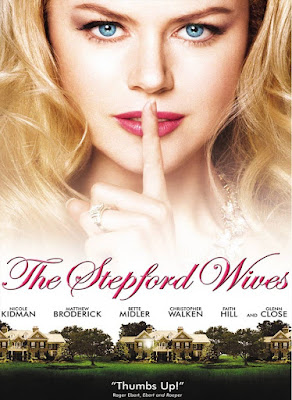
 

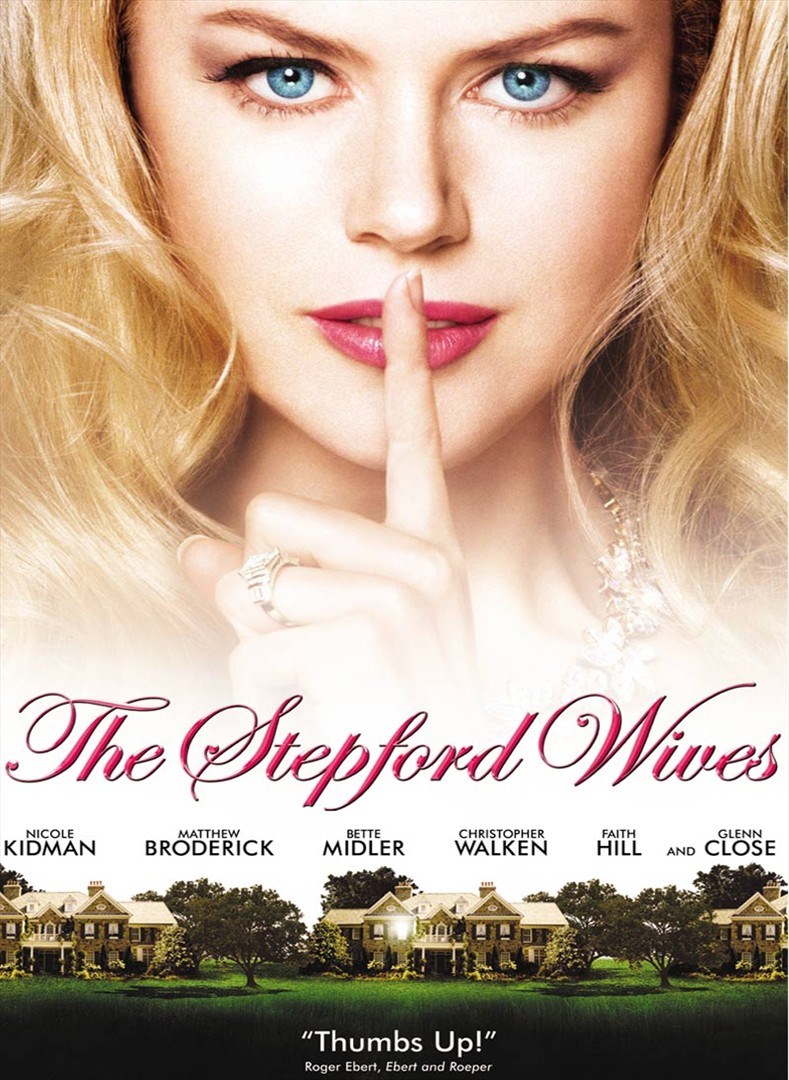
The Stepford Wives 2004 Poster

The Stepford Wives (2004) Directed by Frank Oz; Screenplay by Paul Rudnick; Based on the novel by Ira Levin; Starring: Nicole Kidman, Bette Midler, Matthew Broderick, Glenn Close, Christopher Walken, Roger Bart and Jon Lovitz; Available on Blu-ray and DVD 

Rating: **

“The Stepford Wives was too big and it was unsatisfying to do. Not that it was unsatisfying to do, but it was unsatisfying as a result, because as much as I loved parts of it, and I'm really proud of so much of it, the entire movie wasn't what I wanted it to be. It's my own fault, I didn't follow my instincts.” – Frank Oz (from 2007 AV Club interview with Nathan Rabin) 
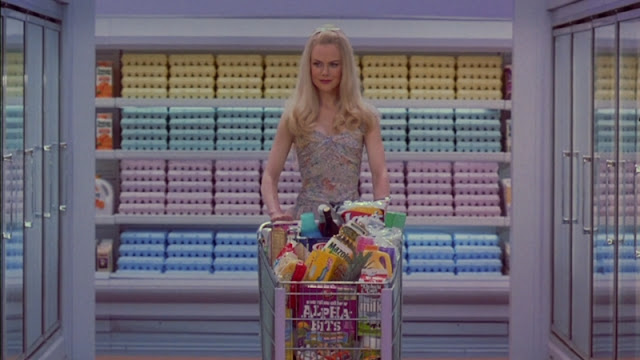
Joanne at the Supermarket

If the 1975 film version utilized Levin’s novel as a template, the remake used the story as a springboard. But what should have been a refreshing update proved to be a glaring weakness. Compared to the relatively low budget of the original film, the $90 million remake seems bloated (other than the sheen of Hollywood schmaltz and A-list actors, you’d be hard pressed to find where the money went). Instead of depicting a modest, bucolic neighborhood, the 2004 version goes one louder, making Stepford an exclusive gated community filled with gaudy, soulless McMansions. This could have been a good launching point for commentary about mass consumerism and America’s “bigger is better” mentality, but the satirical elements never go beyond the superficial.

Joanna at Awards Show

A successful book adaptation doesn’t require slavish devotion to the minutiae of the source material, but it should, at the very least, capture its spirit. Somehow, the filmmakers made the wrong choices about what to change every step of the way, starting with Joanna Eberhart (played by the usually reliable Nicole Kidman). This version of Joanna (a producer of a mean-spirited reality TV show) comes across as self-centered and unsympathetic. Likewise, it’s difficult to buy Matthew Broderick as her would-be alpha male husband. His character seems too wishy-washy to comply with the Stepford conspiracy. When he ultimately musters the courage to stand up to the town’s male leadership, it’s more of a plot contrivance than a natural progression of the character. But one of the film’s greatest mistakes is showing its hand far too soon. One of the wives begins to malfunction (sped up for “comic” effect) at a barn dance, leaving no ambiguity about Stepford’s secret. Compare this to an early scene in the 1975 version, in which one of the Stepford wives (following a seemingly minor car accident in a supermarket parking lot) appears to be experiencing a nervous breakdown. While her reaction seemed somewhat abnormal, given the context, it was entirely plausible.

Joanna and Bobbie

One bright spot in the remake is Bette Midler’s performance as Joanna’s nonconformist neighbor Bobbie Markowitz,* who seems to be the only character that could have been transplanted from the original film. Midler is obviously having fun with the role, and delivers some of the best lines. Unfortunately, Midler and Kidman don’t have nearly the same chemistry as Ross and Prentiss in the original film. We’re forced to take their friendship at face value, when in reality they’d probably never move in the same circles. 

* Fun Fact #5: According to a 2002 Hollywood Reporter article, Joan Cusack was originally cast to play Bobbie.

Microchip Implants

If the original film required suspension of disbelief, the remake stretches our resilience to the breaking point. We’re never entirely clear on where the film stands, with the transformation of the eponymous wives. Instead of employing android duplicates, the Men’s Association uses computerized brain implants to make the wives compliant. But when one of the wives pays out like a cash machine, it’s clear there’s more than microchips in the mix. When we learn that the effect of the neural implants is a reversible process, it takes the horror out of the original premise. 

Explaining the Process

(MAJOR SPOILER ALERT) Perhaps the greatest betrayal of Levin’s story is that the source of the wifely switcheroo isn’t a male-led conspiracy, but the brainchild of welcome wagon lady Claire Wellington (Glenn Close), who only wanted to preserve the status quo. Instead of co-conspirators, the Stepford men (including her husband, the Men’s Association leader) are nothing more than pawns. When we see the Stepford husbands bumbling around in a supermarket towards the end of the film, it’s an obvious nod to the original’s final scene, but it isn’t as much a tribute as it’s a mockery. This is not to say that there couldn’t (or shouldn’t) be a comic reimagining of The Stepford Wives, but the 2004 version lacks the sardonic edge the material requires. Better luck next time?  


Sources: “The Art of Darkness” (2002), The Los Angeles Times, by Mary McNamara; “Cultural Studies; Stepping Out in Stepford Style,” (2002), The New York Times, by Ginia Bellafante; “The Stepford Wives: Inside the Making of the 1975 Feminist Horror Classic,” Entertainment Weekly, by Devan Coggan (2022); Hollywood Reporter (Nov. 25, 2002); Frank Oz Interview (2007), AV Club, by Nathan Rabin  


Tuesday, February 7, 2023

Announcing The Futurethon


“Greetings, my friend. We are all interested in the future, for that is where you and I are going to spend the rest of our lives. And remember my friend, future events such as these will affect you in the future…” – Criswell (Plan 9 from Outer Space)

Things to Come

Oh, the future… What secrets lie in store for us? Will we eventually reach a utopian paradise, or will it be a dystopian nightmare? Since the dawn of movies, conjecture about what kind of world our descendants will inherit has long fascinated filmmakers. With this in mind, Gill Jacob of RealweegiemidgetReviews and Yours Truly, are excited to present a new blogathon for the 21st century, the Futurethon. It’s a three-day exploration of what might be (or what never was).

2001: A Space Odyssey

If a significant portion of the movie or TV show takes place in the future, it’s fair game… let your imagination run wild. Not sure what to write? Here are some suggested topics to get your creative juices flowing: 

·       What movies about the future got right – and especially, what they got wrong.

·       Post-Apocalyptic Films (the Mad Max series, Waterworld, A Boy and His Dog)

·       Retro Future (Things to Come, The Jetsons, Metropolis)

·       Comedies (Bill and Ted’s Excellent Adventure, Idiocracy)

·       Time Travel (The Time Machine, Back to the Future II)

·       Hopeful Futures (Star Trek, Forbidden Planet)

·       Bleak Futures (Cowboy Bebop, Blade Runner, The 10th Victim, Gattaca) 

As we’ve mentioned in the past, don’t let the “blog” in blogathon scare you. We will happily accept submissions from your podcast, YouTube channel, Facebook/Instagram post, or interpretive dance performance. Let your imagination soar! Still unsure about a topic? Don’t be afraid to reach out and bounce your idea off us. More likely than not, we’ll say, “Go for it.”


Terminator 2


What: The Futurethon 

Who: Hosted by Gill Jacob and Yours Truly (Barry P.) 

Where: Realweegiemidget Reviews and Cinematic Catharsis 

When: April 28-30, 2023 

How: Please read the rules below, and send us your post request (review, podcast, etc…) via email (barry_cinematic@yahoo.com), Twitter (@barry_cinematic), or by commenting below. You may contact Gill by commenting on her post, or through her blog’s Contact Me page (Be sure to include your preferred name, along with your blog’s title). Please Note: Since Gill and I will be taking our respective vacations (Or “On holiday” to those from across the pond) in February and March, respectively, plus the fact that we reside in completely different time zones, we humbly suggest that you send all post requests to both blog hosts – Don’t miss out on the chance to stake your claim.

The Time Machine

Here are the rules… 

1.     You may review any films or TV shows set in the future (in whole or part).

2.     Due to the vast number of potential subjects for this blogathon, ABSOLUTELY NO DUPLICATE TITLES WILL BE ACCEPTED, unless it’s part of a career retrospective, or a series of films or shows.

3.     Choices are first-come, first served. Consider sending us your top two choices, just in case your first choice has been claimed.

4.     Claim your blogathon topic by entering a comment on this page and/or through the methods listed above (see note).

5.     Add your Twitter username (if you have one) so we can promote your post.

6.     A full list of blogs and review choices will be posted on a separate page, and updated regularly.

7.     Only original, never-before-published posts will be accepted.

8.     Send a link of your finished post to Gill or me on one of the days of the blogathon.

9.     Note: We will be publishing all links on both blogs, each day of the blogathon.

10.  Please also note: Gill and I have already claimed the following titles below:

Barry at Cinematic Catharsis – Logan’s Run (1976)

Gill at Realweegiemidget Reviews – Buck Rogers in the 25th Century (Pilot) (1979)


The Black Hole

One more thing... 

If you plan to participate, or just want to show your support, please grab one of the following banners to display on your blog:


Futurethon_Forbidden Planet

Futurethon_Logan's Run


Futurethon_Metropolis


Futurethon_Star Trek IV


We can’t wait to see your submissions. Have fun, and we’ll see you in the future!


Tuesday, January 31, 2023

Short Take: Along with Ghosts


Along with Ghosts Poster

(1969) Directed by Yoshiyuki Kuroda and Kimiyoshi Yasuda; Written by TetsurĂ´ Yoshida; Starring: KĂ´jirĂ´ HongĂ´, Pepe Hozumi, Masami Burukido, Mutsuhiro and Yoshindo Yamaji; Available on Blu-ray and DVD 

Rating: ***½ 

“I’m the guardian of this place, the Onizuka. Those who do not heed the warnings will be cursed by the Onizuka spirits and meet a swift end. In addition, tonight is the night when once a year, not only will there be the usual apparitions, but also the ones from deep in the mountains, and the ones from the swamps will gather. There’s an old saying which states Onizuka is a spiritual land, where apparitions from all over Japan gather, because it is connected to the world where the apparitions live.” – Jinbei (Bokuzen Hidari)

An Assortment of Yokai

It’s tough being third. If the second movie in a trilogy is bad, the next film might redeem the series. Conversely, the third movie in a trilogy could be (and frequently is) the weakest link. In this case, the bar was set impossibly high. The previous two films of the Daiei Film’s* YĹŤkai Monsters trilogy, 100 Monsters and Spook Warfare (aka: Big Monster War), were solid pieces of entertainment, featuring an almost encyclopedic listing of the quirky Japanese spirits. Compared to its predecessors, Along with Ghosts is decidedly lighter on the yĹŤkai, but more character and plot-driven. 

* Fun Fact: In Japan, Along with Ghosts appeared on a double bill with Gamera vs. Guiron.

Ambushed by Higuruma's Men

A group of Yakuza, led by their boss Higuruma (Yoshindo Yamaji) are waiting to ambush two samurai carrying an incriminating document (what’s precisely on the document is never made clear). Jinbei (Bokuzen Hidari), an old man, warns them that they’re on sacred ground, and any violence on their part will unleash a curse. In the tradition of cinema, where no one believes old men and ancient curses, the Yakuza thugs go about their dastardly plot, fatally wounding Jinbei when he steps in the way. His seven-year-old granddaughter, Miyo (Masami Burukido) happens to witness the event, and now she’s marked for death as a witness. Before he perishes, he instructs her to seek out her father, in the town of Lui, four leagues away.* Miyo sets off alone, while, meeting a helpful boy and a ronin (masterless samurai) named Hyakasuro (KĂ´jirĂ´ HongĂ´). Higuruma takes on the role of bodyguard, after he offers to accompany her on the way to Lui. The odds are against Miyo and Hyakasuro, with Higuruma’s thugs on their tail, but help comes in the form of vengeful yĹŤkai with an axe to grind. 

* Approximately 14 miles away.

Miyo and Hyakasuro

Miyo and Hyakasuro’s endearing relationship provides a good argument for finding your own extended family. Hyakasuro is a kind and virtuous man, who will stop at nothing to protect her from harm. (SPOILER WARNING) We soon discover he provides a stark contrast to her real father, Sakiichi (Mutsuhiro), the capricious lapdog of the same Yakuza clan they’re evading. He’s ready to beat a confession out of Miyo until he discovers a pair of dice in her possession, proving that she’s his daughter. To make matters worse, in the previous scene, he suggested to the Yakuza that they could use her as a human shield against Hyakasuro. All seems well when Sakiichi eventually turns on his employers, reuniting him with his daughter, but letting the aforementioned slide requires more than a little cognitive dissonance on the viewer’s part.

Tsuchikorobi

While Along with Ghosts may not have the abundance of yĹŤkai of the previous two films, they’re there, albeit in more ancillary roles. You’ll find Nopperabo (faceless spirits impersonating humans), the cyclopean Dorotabo, a Wanyudo (“Wheel Priest”), a Tsuchikorobi (another cyclops, resembling a huge hairy mound), and a Konaki-Jiji (masquerading as Miyo for a piggyback ride). If this had been the first, rather than the last, in the trilogy, it would be regarded as a nice preview of the movies that were to follow, whetting our appetites for all things yokai. But don’t sell this one short. Boasting an engaging storyline and distinct characters (who are arguably more three-dimensional than the ones in the other installments), it’s the humans who take the driver’s seat. Think of it as an Edo-period samurai drama with yĹŤkai cameos.


Sources for this article: Yokai Attack! The Japanese Monster Survival Guide, by Hiroko Yoda and Matt Alt; Yokai.com 


Wednesday, January 25, 2023

Japan-uary XII Quick Picks and Pans

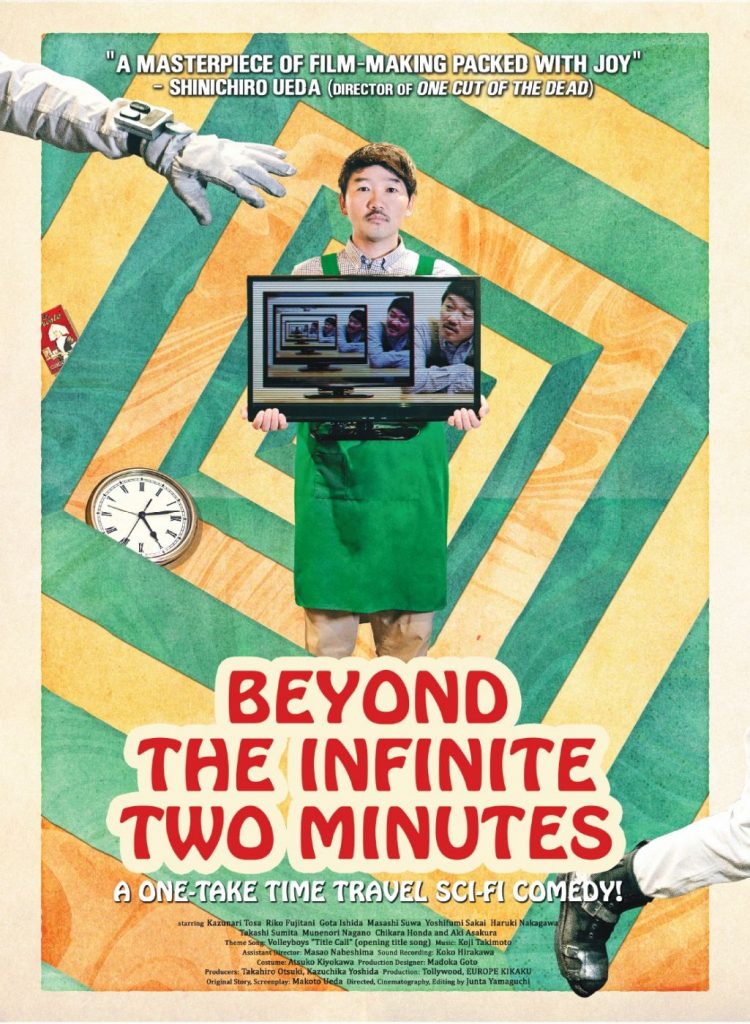
Beyond the Infinite Two Minutes Poster

Beyond the Infinite Two Minutes (2020) In this clever sci-fi/comedy, Kato (Kazunari Tosa), a coffee shop owner, inadvertently discovers the means to see events two minutes in the future via his home computer. Soon, his friends and plucky co-worker attempt to   delve further into the mysteries of accidental time travel. But as they continue to monkey around with the new experience, events begin to cascade, and they’re sucked into a loop of correlation and causality, replete with paradoxes. Director Junta Yamaguchi confines the action to one building, but this limitation never seems restrictive or redundant, in a story that milks the concept for all its worth.   

Rating: ****. Available on Blu-ray, DVD, Amazon Prime and Tubi


The Legend of the Stardust Brothers Poster

The Legend of the Stardust Brothers (1985) Writer/director Macoto Tezuka’s lively musical/comedy ponders the ephemeral nature of fame and the fickleness of fandom. Rival musicians Shingo (Shingo Kubota) and Kan (Kan Takagi) strike a Faustian bargain with a shadowy producer to become the manufactured pop duo, the Stardust Brothers. Their chaotic rise and fall is told through a string of music videos. The results are an inspired combination of The Monkees, Get Crazy, and Phantom of the Paradise (in case you missed the copious references, the film is dedicated to Winslow Leach). It’s at once a pastiche of music star movies and a self-aware parody of pop music, but even that description is selling it short. You almost need a license to appreciate this much fun. 

Rating: ****. Available on Blu-ray, DVD and Tubi


Passing Fancy Poster

Passing Fancy (1933) In this charming silent comedy/drama from YasujirĹŤ Ozu, middle-aged layabout Kihachi (Takeshi Sakamoto) helps Harue (Nobuko Fushimi) a young woman down on her luck get a job at a local tavern. Although Kihachi is smitten by her charms, it’s clear that Harue prefers his younger, cynical companion Jiro (Den Ă”hinata).  Passing Fancy features nuanced performances by its talented cast, including Tomio Aoki as Kihachi’s crafty son Tomio, and ChĂ´ko Iida as the cheery but world-weary tavern owner Otome. It’s a bittersweet study of humanity during trying times, as only Ozu can present it.   

Rating: ****. Available on DVD (part of the Eclipse Silent Ozu collection)

The Ghost of Yotsuya Poster

The Ghost of Yotsuya (1959) Iemon (Shigeru Amachi) is a brash rĹŤnin, who lusts after Oiwa (Katsuko Wakasugi), the daughter of a nobleman. After he’s denied Oiwa’s hand in marriage, Iemon kills her father in a fit of rage. It all goes downhill from there, when he murders Oiwa so he can marry another woman. Iomen soon discovers, however, that what goes around comes around when Oiwa’s bloody ghost exacts her terrible revenge. Director Nobuo Nakagawa‘s (Jigoku) Edo-period supernatural film provides ample thrills, with oodles of atmosphere and genuinely chilling imagery. 

Rating: ****. Available on DVD (Region 2)

Black Cat Mansion Poster

Black Cat Mansion (1958) In another excellent horror fantasy from director Nobuo Nakagawa (based on a novel by Sotoo Tachibana), Yoriko (Yuriko Ejima), a woman suffering from tuberculosis, is brought to her ancestral mansion to convalesce. She starts experiencing a number of disturbing occurrences, including a strange old woman who seems committed to her destruction. Things are complicated by her husband (and physician), Dr. Kuzumi (Toshio Hosokawa), who thinks it’s all in her imagination. In a flashback, we learn the mansion is the site of an old curse, targeted against the cruel samurai who once lived there. There are some nice creepy moments, as a cat spirit takes revenge on the samurai’s descendents (including Yoriko), although the film’s conclusion is a bit too abrupt. 

Rating: ***½. Available on DVD (Region 2)


Nightmare Detective Poster

Nightmare Detective (2006) Kyoichi (RyĂ»hei Matsuda) is a deeply troubled man with the ability to enter people’s dreams. He reluctantly assists Keiko (Hitomi), a young police detective, to help solve a case involving people who have suddenly been driven to suicide. The deaths are linked to a mysterious phone message by someone named “O.” In her quest for the truth, Keiko enters a dangerous game of cat and mouse with the suspect, in the twisted world of her dreams. Director/co-writer Shin'ya Tsukamoto’s supernatural horror film drags a bit in the middle, but the slow build-up leads to an energetic finale.   

Rating: ***½. Available on DVD

Bright Future Poster
Bright Future (2002) Yuji (Joe Odagiri) and Mamoru (Tadanobu Asano) are factory workers/friends with a relationship not unlike George and Lenny from Of Mice and Men. Emotionally stilted Yuji is unable to pick up on social cues, while his friend guides him through the complexities of human interaction. One day, Mamoru is arrested for the vicious murder of their employer, leaving his pet jellyfish to Yuji. The venomous jellyfish serves as a metaphor for Yuji’s emancipation from his codependence – like the creature, he’s suddenly out in the world on his own, opening himself to harm and harming others. Writer/director Kiyoshi Kurosawa’s film works best as a character study with poetic flourishes, rather than a linear narrative with a redemptive character arc.  

Rating: ***½. Available on DVD

Ocean Waves Poster

Ocean Waves (1993) Tadanobu Asano’s coming-of-age drama (based on a novel by Saeko Himuro) follows two high school friends, Taku and Yutaka who gradually drift apart over a new girl in town, Rikako. While the film takes pains to illustrate Rikako’s fractured home life, it does little to engender much sympathy for her character, who comes across as shamelessly manipulative and self-centered. It’s also hard to feel sorry for Taku, who continues to go along with her schemes. This Studio Ghibli television production is a step down from its theatrical releases, lacking the meticulous attention to detail and enjoyable characters we’ve come to expect from the animation house. It might be worth a look if you’re a Ghibli completist, but compared to the studio’s best, it rings hollow. 

Rating: ***. Available on Blu-ray and DVD


Killer Car Poster

Killer Car (aka: Ju-on Car) (2008) A more accurate title for this derivative horror flick would probably be Cursed Minivan, but that doesn’t quite have the same ring to it. A group of 20-somethings take a road trip to a secluded waterfall in a second-hand Nissan Elgrand. Unfortunately for the new owner and his passengers, the vehicle once belonged to a serial killer (established in an unnecessarily grisly prelude), and one of the victims now haunts the car. None of it makes a lot of sense, but Killer Car’s worst flaw is that the ensuing attacks seem completely pointless (why would the victim’s ghost attack innocent people instead of the man responsible for her death?). There’s a quick nod to The Texas Chainsaw Massacre, but that’s about the extent of what passes for inspiration in this movie. 

Rating: *½. Available on Tubi  


Thursday, January 19, 2023

Hiruko the Goblin


Hiruko the Goblin Poster

(1991) Written and directed by Shin'ya Tsukamoto; Story by Koji Tsutsumi; Based on the manga by DaijirĂ´ Morohoshi; Starring: Kenji Sawada, Masaki Kudou, Hideo Murota, Naoto Takenaka, Megumi Ueno and Chika Asamoto; Available on Blu-ray and DVD 

Rating: ***½  

“…Light and darkness are the fundamental themes for all of my films. There’s not much darkness in my world right now. Everywhere I go has lights, so it’s getting harder for ghosts and monsters to hide. When I was little, there were more dark spaces, even in Tokyo the corners of the room would be dark, and you feel like you might see a ghost there… I miss those times, and I wish I could live in those times. When I thought about ‘dark space,’ I couldn’t think of anywhere in Tokyo. But in (the) countryside, there’s still dark places, where monsters would hide. That’s why Hiruko takes place in a small village. And the school at night is very scary.” – Shin'ya Tsukamoto (excerpt from 2000 interview)

Reiko on a Bike

Ah…summertime. A time to relax in the sun, hang out with your friends, and fight demons. Writer/director Shin'ya Tsukamoto’s follow-up to Tetsuo: The Iron Man (1989) changes the setting/theme from urban cyberpunk to rural horror, where the peace and quiet is merely a prelude to the chaos that follows. Hiruko the Goblin (aka: YĂ´kai hantâ: Hiruko) seems almost conventional in comparison to its predecessor, but that’s selling it far too short. Hiruko is full of surreal imagery, frenetic pacing, and a pair of unlikely protagonists. Based on the “Black Investigator” and “Red Lips” stories from DaijirĂ´ Morohoshi’s Yokai Hunter series, Tsukamoto’s relatively big-budget second film seems almost lavish in contrast to the independently produced Tetsuo. The movie was filmed at Toho Studios,*/** and on location in the Japanese countryside (Toyoma prefecture), with a combination of veteran and novice crewmembers. 

* Fun Fact #1: The pond used for the floating face scene (you’ll know it when you see it) was the same pool used for Godzilla. 

** Fun Fact #2: Hiruko was filmed adjacent to the area where Akira Kurosawa was simultaneously shooting Rhapsody in August.

Masao and Reijirou Look for Clues

Hiruko opens with a bucolic scene of high school student Tsukishima Reiko (Megumi Ueno) riding her bike on a country road. It’s a deceptive moment of calm, however, before the tawagato hits the fan. She joins her teacher Takashi Yabe (Naoto Takenaka) in an archaeological site near the school, where they’re promptly overwhelmed by an unseen terror. Their sudden disappearance prompts Yabe’s son Masao (Masaki Kudou) and his buddies to investigate the school grounds. When his friends succumb to the same terrible fate as Reiko and Yabe, Masao is forced to team up with his bumbling uncle Hieda Reijirou (Kenji Sawada).* They soon discover they’re in over their heads (quite literally), with an evil spirit named Hiruko with a nasty penchant for decapitations. Somehow, they must find a way to stop the ancient demon before he and his minions open a portal to hell and immerse the world in eternal darkness. 

* Fun Fact #3: Sawada rose to fame as a big music star in the ‘60s, before he caught the acting bug. He has appeared in several films, including The Man Who Stole the Sun (1979) and Takashi Miike’s bonkers but loveable The Happiness of the Katakuris (2001).

Watanabe Threatens Masao

Kenji Sawada amuses as Reijirou, a discredited archaeologist (who wants to be Indiana Jones, but he’s more like Abbott & Costello, combined) who’s convinced that a hive of goblins resides directly beneath a local high school. His initially skeptical nephew seems inextricably linked to the supernatural goings-on, with a strange affliction that causes him to run extremely hot, and break out in huge boils on his back that resemble stone faces. Unfortunately for Reijirou and Masao their actions are further thwarted by the irascible school caretaker Watanabe (Hideo Murota, in a delightfully quirky performance), who roams the grounds on his own mission to combat the demon scourge. Watanabe straddles the line between friend and foe – we’re never quite sure if he regards them as friends, foes, or collateral losses.

Masao and Reijirou Survey the Area

Is or isn’t Hiruko a Yokai? Based on a 2021 interview with Tsukamoto, signs point to no. While he didn’t precisely commit to labeling Hiruko, he alluded to something more ancient – a throwback from Japan’s ancient mythological origins.* In the film it’s a nightmarish being that lives by decapitating its victims and taking on their appearance (In one simultaneously ethereal and horrifying scene, we see Reiko’s face floating in a pond, singing a siren song, before it walks out on a hideous set of crab legs). In the context of the film, a more accurate interpretation would probably be a demon. 

* Fun Fact #4: The mythology implies something far less sinister than the goblin depicted in the film. Hiruko (roughly translated as “leech child”) was the deformed offspring of the gods Izanagi and Izanami, cast adrift into the ocean. The child was rescued by the Ainu people of Hokkaido, where he assumed his final form, as the benevolent god Ebisu.

Hiruko with Reiko's Head

Hiruko’s imagery recalls several American genre films from the time. Reijirou’s homemade goblin-hunting gadgets resemble something out of Ghostbusters. Hiruko, with its crab/spider-like appearance, immediately evokes comparison to John Carpenter’s The Thing (although Tsukamoto denied that the film was a conscious influence). The way Hiruko attaches itself to its victims is not unlike the facehugger in Alien, and the POV shots of Hiruko racing through the school corridors are an obvious homage to similar shots in the Evil Dead movies. Likewise, a huge silvery tentacle with a face recalls the “water weenie” from James Cameron’s The Abyss. The visual call-backs are not restricted to American movies, but Japanese cinema as well, as noted by author Tom Mes (in his Blu-ray commentary). One notable sequence was clearly inspired by Nobuo Nakagawa’s Edo-period film, Ghost Story of Kasane Swamp (aka: Kaidan Kasane-ga-fuchi), while numerous images are likely homages to the cinematic adaptations of Lafcadio Hearn’s works.

Reijirou Fights Hiruko

Hiruko the Goblin owes much to the American genre films that served as inspiration, but it’s much more than mere imitation, weaving a thread of Japanese folklore throughout. While the stakes are high, it never takes itself too seriously. There’s a playful mix of gore-drenched horror with slapstick comedy that wouldn’t be out of place in an early Sam Raimi or Peter Jackson movie. As Tsukamoto noted, it’s not an anomalous entry in his filmography, as some fans and critics might attest, but much closer in spirit to the sort of no-budget short films he was making prior to Tetsuo: The Iron Man. Although Hiruko wasn’t a commercial success, like so many other genre films, it’s stood the test of time to become a cult favorite. Here's hoping that Tsukamoto revisits this fun horror hybrid style someday.

Sources for this article: Mondo Macabro Blu-ray commentary by Tom Mes; 2000 and 2021 interviews with Shin'ya Tsukamoto, Mythopedia entry on Ebisu, by Gregory Wright