Showing posts with label Italy. Show all posts

Sunday, September 20, 2026

Planet of the Vampires

Planet of the Vampires Poster

(1965) Directed by Mario Bava; Written by Ib Melchior, Alberto Bevilacqua, Callisto Cosulich, Mario Bava, Antonio Roman, Rafael J. Salvia, and Louis M. Heyward (English version); Screen Story by Ib Melchior Based on the short story “One Night of 21 Hours”: by Renato Pestriniero; Starring: Barry Sullivan, Norma Bengell, Ángel Aranda, Evi Marandi, Franco Andrei and Federico Boiso; Available on Blu-ray and DVD 

Rating: ***½

Exploring the Planet's Surface

“Do you know what that mysterious planet in Terrore nello Spazio was made of? … A couple of plastic rocks – and I mean ‘two’: one and one! – that were left over from some mythological picture made at Cinecittà. To assist the illusion, I had to fill the set with fog!” – Mario Bava 

“I'll tell you this, if there are any intelligent creatures on this planet... they're our enemies.” – Captain Mark Markary (Barry Sullivan)

The Crew of the Argos

Mario Bava had a knack for making low-budget movies look much more expensive than they really were. Undoubtedly, his prior experience as a cinematographer informed his directorial decisions, regarding the film’s appearance with a critical eye. Planet of the Vampires (aka: Terrore nello Spazio), a co-production with American International Films, is no exception, with imagery that could have been in a multi-million-dollar Hollywood production, instead of a movie made for a scant $200,000. Reflecting the international flavor of the production, Planet of the Vampires* boasted an international cast, including American actor Barry Sullivan,** his Brazilian co-star Norma Bengell, Spanish actor Ángel Aranda, and a host of Italian performers. The title (imposed by American International) is a misnomer, since there are no vampires in the film. As many have pointed out, a more accurate title would have been Planet of the Zombies, although in all fairness, either title indicates the sci-fi/horror hybrid that we’re about to see. 

* Fun Fact #1: Before it was known as Planet of the Vampires (or its Italian moniker, Terrore nello Spazio), the film’s title went through multiple iterations, including: Planet of Terror, The Shadow World (Bava’s preferred title), The Haunted World, The Outlaw Planet, The Warlords of the Outlaw Planet, and The Warlords of Planet 7. 

** Fun Fact #2: Mario Bava was reportedly unhappy with AIP’s insistence on casting 53-year-old Barry Sullivan, whom he considered too old for the lead role.

The Argos Sets Down on the Planet's Surface

Two spaceships, the Argos and Galliot, answer a distress call from an alien planet. After Captain Markary (Barry Sullivan) loses contact with the Galliot, he and his crew land on the fog-shrouded planet.* But from the moment Markary and his team touch down on the barren, mist-covered wasteland, there seems to be a malevolent intelligence guiding their actions, prompting fear, anger and belligerence between the astronauts. The crew members manage to rein in their impulses long enough to investigate the condition of the Galliot and its occupants, only to discover that their counterparts are dead, including Markary’s brother. The corpses are buried, but to Argos crew’s horror they begin to reanimate, propelled by an unseen force. Before too long, the Argos crew begin to experience the fate of their sister ship, with confusion, violence, and death. Looking for answers, Markary launches an investigation of a nearby ancient alien spacecraft. They explore the derelict spaceship, discovering its fossilized pilot within, along with a voice recording from countless centuries ago.** Markary soon learns about the invisible alien intelligence that first lured the abandoned ship, along with the Gallion – a dying race known as the Aurans. Living on a different plane of existence, they embed their consciousness in the living or dead. Led by Markary, the dwindling crew of the Argos attempt to fend off their zombie comrades and Aurans long enough to escape the planet. 

* Fun Fact #3: The landing scene was shot in an aquarium filled with water. Colored chemicals were added to the water to simulate dust clouds. 

** Fun Fact #4: Bava and crew cobbled together many of the set pieces from found objects. One piece of “alien” equipment in the derelict spacecraft was the taillight from a 1956 Clipper (Packard). 

Inside the Derelict Spacecraft

Over the ensuing decades, there’s been debate ad nauseam about how Planet of the Vampires inspired Alien,* but little agreement about how much was lifted from the original film. After years of dancing around the subject, Alien scribe Dan O’Bannon later confessed that the derelict spacecraft and its skeletal pilot provided the idea for the latter film’s “space jockey” sequence. Director Ridley Scott, on the other hand, adamantly denied he ever saw Bava’s film. Whatever extent was copied or who allegedly saw what, it’s safe to say that Planet of the Vampires’ DNA is in Alien. But that doesn’t necessarily imply that Alien is a “rip-off,” if we look at the history of movies (especially genre films) as a continuum, consciously and unconsciously recycling specific themes and imagery. Both Planet of the Vampires and Alien differ significantly enough in most respects to ensure that seeing one doesn’t guarantee you’ve already watched the other. 

* Fun Fact #5: While there’s much open to debate, there is one indisputable link between the two films. The 20-inch model ship (used for both Argos and Galliot) was fabricated for the shoot by effects maestro Carlo Rambaldi, also responsible for constructing the xenomorph for Alien (1979). 

Dead Crew Members Rise from the Grave

Although few would attest that Planet of the Vampires is a paragon of performances, plotting, or story, few would deny it’s a great looking film. The costume design for the Argos crew is particularly memorable, with their black, high-collared uniforms that exude a cold, authoritarian appearance. The spacecraft are filled with cavernous gothic spaces – impractical where room would be at a premium, but effective from an artistic standpoint (if you think of the Argos and Galliot as flying castles, not scientifically accurate spaceship designs). Likewise, the surface of the planet takes on an unworldly aura, with its tentacle-shaped rock formations on the surface of the planet appear to have been alive at one time. The pervasive unsettling atmosphere running throughout the film reaches its apex in a scene when the reanimated corpses of several crew members rise from their graves, covered in ghostly plastic shrouds. 

Sanya Uses Her Ray Gun

The restored print is lovely to behold, with its saturated colors and noirish shadows (red and green gels create an eerie, atmospheric look). It’s easy to appreciate Mario Bava’s eye for aesthetics and endless ingenuity, making Planet of the Vampires look like an expensive production, despite using mostly in-camera effects. It’s unfortunate that the same attention wasn’t applied to other aspects of the production. Considering the number of screenwriters associated with the movie, the film is noticeably thin in the characterization and dialogue. Characters exist to move the plot along, but accomplish little else, with few standouts in the performances. Barry Sullivan looks suitably authoritative as the commander, however, and co-star Norma Bengell manages to bring glamour and gravitas to her somewhat underwritten role. Ultimately, I admire the film more than love it, but in the same breath can’t deny its impact on the genre. Faults be damned, it just looks cool, and few have done it as well as Mario Bava. Planet of the Vampires is a master class on doing more with less, and one of the most notable Italian sci-fi films of all time. 


Sources for this article: Radiance Blu-ray commentary by Tim Lucas; “Mario Bava’s Chthulucene - Terrore nello Spazio (Planet of the Vampires) from H.P. Lovecraft to Donna Haraway,” by Alessandro Brunazzo, Science Fiction Film and Television (Volume 16, Issues1-2, 2023)


Wednesday, May 28, 2025

May Quick Picks and Pans


Schizoid

Schizoid (1980) Klaus Kinski stars as Dr. Fales, a therapist with some serious boundary issues, whose clients are being killed off one by one. Meanwhile, his patient/girlfriend Julie (Marianna Hill) keeps getting threatening letters at her work, but no one, including her soon-to-be-ex-husband Doug (Craig Wasson) appears to take her seriously. Although filled with red herrings galore, the big reveal of the killer isn’t much of a surprise (Spoiler: Surprisingly, it’s not Kinski). Watch for Christopher Lloyd in a small role as a handyman/therapy group patient. 

Rating: ***. Available on Blu-ray and Tubi


The Sister of Ursula

The Sister of Ursula (1978) In this would-be giallo by writer/director Enzo Millioni, two sisters travel to Italy to clear their heads after their father’s death. While Dagmar (Stefania D’Amario) tries to make the best of things, her younger sister Ursula (Barbara Magnolfi) remains withdrawn and reclusive, overwhelmed by grief and paranoia. The film compensates for its threadbare plot with copious nudity and a handful of underwhelming murder scenes, culminating in a less-than-thrilling climax (I guessed the killer in the first reel). There are a few stunning shots of the beautiful Amalfi coastline, but if that’s your bag, you’re better off watching a travel show. 

Rating: **. Available on DVD and Tubi 


Revolt of the Zombies

Revolt of the Zombies (1936) Archeologists in World War I-era Cambodia make a terrifying discovery: a stone tablet depicting an ancient ritual to turn men into zombies. Seeing the potential military benefit of a mindless, unstoppable army, a devious general (Roy D’Arcy) steals the tablet. His possession of the artifact proves to be short-lived, however, when it’s appropriated by Armand Louque (Dean Jagger) for his own nefarious purposes. Rather than focusing on the inherent horrors of a zombie hoard, the movie spends an inordinate amount of time with a bland love triangle, comprised of Louque, his former colleague Clifford Grayson (Robert Nolan), and Grayson’s capricious fiancée Claire (Dorothy Stone). Filled with unappealing cardboard characters, a confusing plot, and a generous helping of racism (“This might mean the end of the white race!”), Revolt of the Zombies is a must-miss. 

Rating: **. Available on DVD and Prime Video

Spontaneous Combustion

Spontaneous Combustion (1989) Tobe Hooper made some of the most memorable horror films of his generation. This is not one of them. The usually reliable Brad Dourif (who seems to be phoning in his performance) plays Sam, whose parents were part of a top secret ‘50s hydrogen bomb experiment gone awry. As a consequence of the experiment, he possesses the power to make people spontaneously combust at will (at least when the plot demands it). The plot is a confusing mess, with underdeveloped characters and hazy motivations. Skip it. 

Rating: **. Available on Blu-ray, DVD and Tubi


Friday, December 13, 2024

Danger: Diabolik


Danger: Diabolik Poster

(1968) Directed by Mario Bava; Written by Dino Maiuri, Brian Degas, Tudor Gates and Mario Bava; Based on the comic by Angela Giussani and Luciana Giussani; Starring: John Phillip Law, Marisa Mell, Michel Piccoli, Adolfo Celi, Claudio Gora and Terry Thomas; Available on Blu-ray and DVD 

Rating: **** 

Special thanks to Rebecca from Taking Up Room, for hosting the On the Spot Blogathon, an eclectic event dedicated to the first title participants can think of. So, what movie popped up in my head? Read on…

Diabolik

“San Francisco dropped you out of the medical register, but if you’re lying, I’ll drop you out of the human register.” – Ralph Valmont (Adolfo Celi)

Everyone remembers that annoying meme “You may be cool, but you’re not [fill in the blank] cool.” The thing is, I know I’m not cool, but Diabolik (John Phillip Law) is the textbook definition of cool. Starting in 1962, Diabolik appeared in an immensely popular fumetti neri (Italian “black comics”) series, created by two sisters, Angela and Luciana Giussani. An attempt was made to bring Diabolik to the big screen a few years before the 1968 version, with a different cast and crew, but it never materialized. Finally, under producer Dino De Laurentiis* and director Mario Bava, the titular character made it to the big screen as Danger: Diabolik (the word “Danger” was added to the title for the English language market). 

* Fun Fact #1: Although budgeted for $3 million, cost-conscious Bava finished the film for approximately $400,000.

Diabolik and Eva

In the opening scene, Diabolik (John Phillip Law),* our (anti)hero, pulls off a daring heist of $10 million in cash, much to the dismay of Inspector Ginko (Michel Piccoli). Diabolik hastily retreats, along with his shapely companion, Eva (Marisa Mell),**/*** to celebrate in his underground lair (by making love on a rotating bed covered in a heap of stolen cash). This is merely child’s play, however, for a master thief, as he sets his sights on a priceless emerald necklace owned by the wife of a British dignitary. As the authorities are thwarted at every turn by the elusive criminal, they resort to more unorthodox measures to bring Diabolik to justice. Knowing “It takes a thief to catch a thief,” the police enlist the aid of notorious crime boss Ralph Valmont (Adolfo Celi) to even the playing field. But for Diabolik, an even greater challenge lies ahead. 

* Fun Fact #2: Law was under contract from producer Dino de Laurentiis to appear in Barbarella. He was cast as the lead in Diabolik after producer Dino de Laurentiis brought the actor into Bava’s office.

** Fun Fact #3: Diabolik’s distinctive, face-conforming rubber mask was created by practical effects wizard Carlo Rambaldi.

*** Fun Fact #4: Catherine Deneuve was originally cast as Eva, but was replaced by Marisa Mell early in the production.

Diabolik Framed by Eva's Legs

Diabolik, as portrayed by John Phillip Law, is almost a supernatural force, always one step ahead of the authorities, and impossible to contain – for long. Brazen, suave, and armed with a sly sense of humor, he flaunts his ability to give the cops the slip at every turn. Bava biographer Tim Lucas referred to Diabolik as a terrorist, but that doesn’t quite fit the character. If anything, he’s an anarchist, not aligned with any specific ideology or anyone but himself. We get the impression that while he enjoys the fruits of his labors, it’s the thrill of his dangerous endeavors, as well as his love for Eva, that keeps him going. Compared to Robin Hood, he doesn’t give directly to the poor, but I would opine that his undermining of the foundations of an oppressive government is his way of giving back to the common people. Besides, it’s tough to find sympathy for a government run by inept bureaucrats who couldn’t be trusted to find sand on a beach. His lover and partner in crime Eva is the yin to Diabolik’s yang.* Much more than a damsel in distress or a pretty accessory (like the dimwitted floosies that hang around with Valmont), she’s always there to get him out of a jam. Eva enjoys the chase nearly as much as he does, using her feminine wiles to manipulate naïve men. 

* Fun Fact #5: The filmmakers followed the comic’s color scheme, with black for Diabolik (including his Jaguar E-Type) and white for Eva (and matching car).

Valmont Snags Eva

Husky actor Adolfo Celi is perfectly cast as Diabolik’s underworld rival, Ralph Valmont. He says everything with a sneer, barking orders to his underlings whom he regards as nothing more than a means to an end. He uses his private airplane to conduct meetings and conveniently drop his enemies out of a trapdoor.* When he kidnaps Eva as leverage to get what he wants from Diabolik, we just know his days are numbered.   

* Fun Fact #6: Bava used a G.I. Joe doll as a stand-in for the actor being dropped out of Valmont’s plane.

The Finance Minister

British comic actor Terry Thomas amuses as the bumbling Minister of Finance. In a scene that wouldn’t be out of place in the ‘60s Batman TV series, he holds a press conference, to discuss the government’s new hardline policies against criminals. Fortunately for our protagonists but unfortunately for the official, Diabolik and Eva are one step ahead, administering “exhilarating gas” to everyone (Good thing Diabolik happened to have his trusty “anti-exhilarating gas” capsules. No, really!). Predictably, the whole event turns into a circus, with everyone in the room, sans criminals, succumbing to fits of hysterics. After Diabolik bombs the government tax office, the beleaguered Minister of Finance holds another press conference, bemoaning the lost records, where he innocently appeals to the citizens’ honesty to send in the taxes they owe.  

Scaling the Castle Wall

While Diabolik has been compared to James Bond by some, he seems more closely aligned with the gentleman thief Lupin III. I can’t confirm that Hayao Miyazaki ever saw Bava’s film as inspiration for his Lupin III: The Castle of Cagliostro, but parallels with the two characters give one pause. A scene depicting Diabolik scaling a precarious castle wall with suction cups seems to mirror a similar sequence in Castle of Cagliostro (Perhaps it’s simply a case of great minds thinking alike?).

Diabolik and Eva Lounging Around

Ennio Morricone’s infectious score is a driving force in the movie, combining experimental electronic sounds, jazz riffs and electric guitar with more traditional instruments to create a breezy, fun-filled mood. Morricone’s score elevates the action scenes and enhances the more lighthearted sequences. I challenge you not to have the song “Deep Down” (sung by Maria Cristina Bancucci) rattling around inside your skull for days after watching this. 

* Not-So-Fun-Fact: According to Tim Lucas, Morricone’s stellar score was never released in any format, and the original tapes are now presumed lost.

Diabolik's Lair

While the cinematography is officially credited to Antonio Rinaldi, it’s widely accepted that the camerawork was done by Bava, himself. Bava also created the impressive matte paintings, including Diabolik’s futuristic underground complex, which still impresses today. Utilizing every camera trick in the book, Danger: Diabolik appears to be a much more expensive film. Instead of straying from the movie’s origins, Bava embraces them, replicating the comic book aesthetic at every turn.

Anti-Exhilarating Gas Capsules

When I think of a comic book movie, this fits the bill. Unlike many modern deconstructionist interpretations of the format, there’s no brooding superheroes or scenes so shadowy you’ll question whether you have cataracts. Danger: Diabolik proves that comic book films don’t always need to be Oscar bait to be a worthwhile viewing experience. Sometimes, it’s refreshing to watch a movie that knows what it is, and never takes itself too seriously (if a film could wink at the audience, this would be it). Danger: Diabolik is gleefully over the top from start to finish, reminding us how fun comic book films can be.


Source for this article: Blu-ray commentary by Tim Lucas


Sunday, December 8, 2024

The John Saxon Blogathon Is Here – Day 3 Recap


John Saxon Blogathon

Whew! It’s already Day 3 of the John Saxon Blogathon, hosted by Yours Truly and Gill Jacob of Realweegiemidget Reviews. I don’t know about you, but these past three days have flown by too quickly. Today’s batch is the biggest yet, with seven new posts!

John Saxon - Tenebrae

Note: Since Gill and I are posting our Wrap-Up post on Tuesday, please send any late posts to both of us. If your post isn’t quite ready, we’ll post your link on Tuesday’s Wrap Up post. Post a comment below, email me at barry_cinematic@yahoo.com, or reach me on Bluesky (@barrycinematic.bsky.social), Instagram (@barry_cinematic), or Twitter (@barry_cinematic). You may also contact Gill by commenting on her post, through her blog’s Contact Me page, or on Bluesky (@realweegiemidge.bsky.social).


Be sure to visit the recaps from days One and Two: 

Day 1 

Day 2  

… And now, on with Day 3’s submissions (and stay tuned for Tuesday’s wrap up):

A Nightmare on Elm Street

Terence from A Shroud of Thoughts reviews A Nightmare on Elm Street (1984). Sweet dreams!


The Rockford Files 

Catch Dubsism’s look at The Rockford Files episode, “Portrait of Elizabeth” (1976). 

The Swiss Conspiracy
Cross Shot

Kristina brings us our third double-feature of the blogathon, The Swiss Conspiracy (1976) and Cross Shot (1976). 


Cannibals in the Streets 

Hey, what’s eating you? Don’t forget to check out John’s (at Tales from the Freakboy Zone) review of Cannibals in the Streets (1980). 


The Glove

Frank from Smoke in the Library tries The Glove (1979) on for size.

The Cardinal

Eric Binford from Diary of a Movie Maniac is back for a review of The Cardinal (1963). 

Tenebrae

… And Yours Truly presents a look at Dario Argento’s stylish giallo, Tenebrae (1982).


See you Tuesday!


Tenebrae

Tenebrae Poster

(1982) Written and directed by Dario Argento; Starring: Anthony Franciosa, Giuliano Gemma, John Saxon, Christian Borromeo, Mirella D’Angelo and Daria Nicolodi; Available on Blu-ray and DVD

Rating: ***½

This post is part of the John Saxon Blogathon, hosted by Gill Jacob from Realweegiemidget Reviews and Yours Truly, shining the spotlight on one of cinema’s most versatile and recognizable character actors. Be sure to check out all the great posts about this singular talent.

First Victim in Book Store

Peter Neal: “Well, I’ve made charts. I tried building a plot the same way you have, tried to figure it out, but I just have this hunch that something is missing, a tiny piece of the jigsaw. Somebody who should be dead is alive, or somebody who should be alive is already dead.” 

Captain Germani: “Explain that.” 

Peter Neal: “You know, there’s a sentence in a Conan Doyle book: ‘When you have eliminated the impossible, whatever remains, however improbable, must be the truth.’”

Jane - Neal's fiancée

Giallo (or the plural, Gialli) films, named after a popular type of Italian pulp novel, are curious murder mysteries, famous for their labyrinthine plots, spectacular death scenes and wild titles. There are several giants of the genre, but few have earned the praise that Dario Argento has garnered. Argento didn’t invent the giallo movie, but considering some of the classics he’s created, including The Bird with the Crystal Plumage, Four Flies on Gray Velvet, and Deep Red (no, Suspiria isn’t a giallo), it would be easy to make that oversight. Argento returned in top form with Tenebrae (Italian for “darkness”),*  displaying his usual panache for creating suitably over-the-top imagery to match the grand themes of his stories. 

* Fun Fact #1: The film’s title was changed to Unsane in the U.S.

Bullmer and Peter Neal

Successful American mystery writer Peter Neal (Anthony Franciosa)* arrives in Rome to a controversy. Someone** seems to be emulating his latest novel, Tenebrae, perpetrating a series of violent murders based on his work (one victim is found slashed to death, with pages of the book stuffed in her mouth). He’s immediately questioned by police detective Germani (Giuliano Gemma), who’s a big fan of his books, and familiar with the various modus operandi he employs. His dedicated secretary Anne (played by Argento’s frequent collaborator and former partner, Daria Nicolodi)*** tries her best to make him comfortable throughout the ordeal, while his agent Bullmer (John Saxon) endeavors to keep the police and press at bay. He’s grilled by Tilde (Mirella D'Angelo), a critic, about the alleged misogyny in his books (a little self-reflexive moment for Argento, regarding criticisms of his own movies). Little does she suspect, however, that she and her lesbian lover Marion (Mirella Banti) will be the next victims. As bodies continue stacking up, Neal initiates his own amateur investigation, while confronting repressed memories of an incident in his younger years. The film flashes back to Rhode Island, where he witnessed the murder of a mysterious woman in white with red shoes (Eva Robins). By becoming entwined in the case, he discovers the truth could be fatal. 

* Fun Fact #2: Argento’s first choice for Peter Neal was Christopher Walken. 

** Fun Fact #3: The killer’s black-gloved hands belong to none other than Dario Argento, who often stood in for the murderer in his movies. 

*** Fun Fact #4: For the English version, Nicolodi’s voice was dubbed by American actress Theresa Russell.

An Unfortunate End

Of course, Tenebrae wouldn’t be a self-respecting giallo without ample splashes of blood and flashes of skin. One of the most memorable murder scenes involves Marion as she relentlessly pursued by the crazed killer while clad in only a towel that seems in danger of flying off at any moment.* One of Argento’s hallmarks is the almost fetishistic presentation of broken glass, with shards flying everywhere in slow motion – all the better to cut the unfortunate victims to ribbons. Another component that makes an Argento movie special is the unmistakable, synth-heavy music of Goblin. While not officially credited to the band, for all intents and purposes it’s a Goblin score, featuring band members Massimo Morante, Fabio Pignatelli and Claudio Simonetti (who are credited separately). 

* In the preceding scene, when Marion seduces a young man in front of Tilde, she wears an ensemble that leaves little to the imagination, bringing to mind something my mother would often say: “That’s a nice outfit she’s almost wearing.”

Bullmer

The role of Bullmer is a nice change of pace for John Saxon, who’s often relegated to detective roles (or similar), in movies such as this. As Neal’s upbeat literary agent, it’s a relatively minor role, but Saxon milks it for all its worth. If nothing else, it illustrates how Saxon had a comic side, something rarely displayed on screen. When Neal questions Bullmer whether his favorite hat would stay on, he bobs his head in exaggerated movements, resembling a pigeon on acid. I don’t normally associate Saxon with “silly,” but this is a fun exception. Bullmer deflects the police and snooping reporters, but still has time for a little sugar on the side, having an affair with Neal’s mentally unstable fiancée Jane (Veronica Lario). Sadly, this plot thread is never quite fleshed out, but it adds another wrinkle to the list of suspects.

Killer's Gloved Hand

Although a slight step beneath his very best, only because the novelty of the genre’s conventions had worn a bit thin by the ‘80s, Tenebrae has a lot going for it. It’s artfully shot (thanks to cinematographer Luciano Tovoli), and the story keeps you guessing until the end. In her insightful commentary, critic/film scholar Maitland McDonagh observed that Tenebrae isn’t like an Agatha Christie story, where the plot is meticulously constructed in a way that you can logically deduce who the killer is. Instead, Tenebrae, like many of Argento’s films, relies on imagery and actions that frequently defy logic, colorful characters, and a cockamamie explanation for the killer’s motive. Considering the identity of the killer is a bit of a cheat, don’t strain your brain trying to figure it out. Like many giallo films (especially one by Argento), it’s best to sit back and enjoy the wild ride. 


Sources for this article: Blu-ray commentary by Maitland McDonagh


John Saxon Blogathon Banner 


Friday, December 6, 2024

The John Saxon Blogathon Is Here – Day 1 Recap


The John Saxon Blogathon

Welcome to Day One of the John Saxon Blogathon! When my excellent co-host Gill Jacob of Realweegiemidget Reviews suggested Mr. Saxon as the subject of a blogathon, my ears perked up, since he’s been on my radar for years as one of my favorite character actors. Whether he’s the hero or the villain, his performances always command our attention. Gill and I are proud to present the first batch of posts, showcasing the talents of this talented and versatile performer.

John Saxon - Tenebrae 

If you’ve signed up, but your post isn’t ready, fret not. We’ll post your link on Day Two or Three (as well as Tuesday’s Wrap Up post.). And of course, latecomers are also welcome. Post a comment below, email me at barry_cinematic@yahoo.com, or reach me on Bluesky (@barrycinematic.bsky.social), Instagram (@barry_cinematic), or Twitter (@barry_cinematic). You may also contact Gill by commenting on her post, through her blog’s Contact Me page, or on Bluesky (@realweegiemidge.bsky.social).

John Saxon - Battle Beyond the Stars

Here are Day One’s submissions below, and remember to drop by Saturday and Sunday for recaps of Days Two and Three, along with a final recap on Tuesday.

The Unguarded Moment

The great and powerful Stately Wayne Manor from On Manor’s Mind and Manor on Movies brings us his personal recollections of meeting John Saxon, along with a review of Saxon’s stunning debut, The Unguarded Moment (1956).

The Plunderers

Ginny from The Wonderful World of Cinema raids the treasure of motion pictures from yesteryear to bring us her review of The Plunderers (1960)

A Special Cop in Action

Eddie from The Film Authority reviews A Special Cop in Action (1976).

Don’t be too afraid to check out The Craggus’ take on Wes Craven’s New Nightmare (1994)

Violent Naples

Goregirl from Goregirl’s Dungeon takes a peek at Violent Naples (1976) 

Planet Earth

Black Cats and Poppies visits Planet Earth (1974),

The Electric Horseman

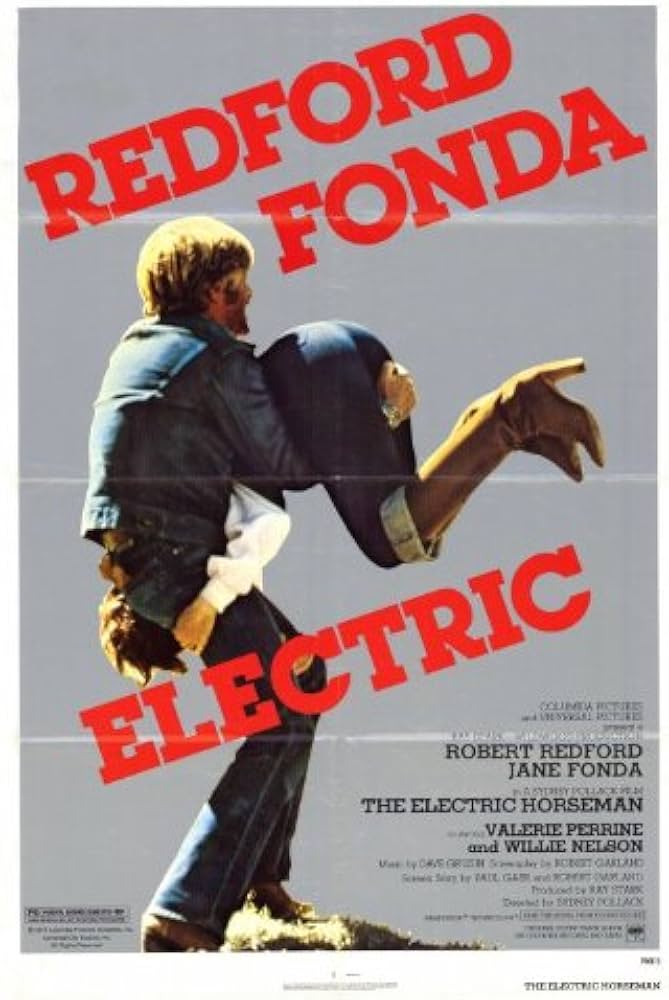
… And last but not never least, you’re sure to get a charge from reading Gill’s (from Realweegiemidget Reviews) illuminating look at The Electric Horseman (1979).


See you tomorrow, folks!

Friday, May 31, 2024

May Quick Picks and Pans


Stone Poster

Stone (1974) For those who weren’t there at the time (and I think that covers most of us), director/co-writer/co-star Sandy Harbutt gives us a taste of the Australian biker culture of the early ‘70s. The title refers to the main character (played by Ken Shorter), an undercover cop, who infiltrates biker gang, “The Gravediggers,” to investigate a series of killings of their members. Harbutt does a nice job depicting their gritty, freewheeling lifestyle. They live by their own rules, preferring to live on the fringes of society, instead of the 9 to 5 world. Stone becomes entranced by their scene, but can never quite be one of them. The film features some very good performances, including Harbutt as Undertaker, the gang’s leader, as well as many real bikers as extras. Hugh Keays-Byrne (Mad Max and Mad Max: Fury Road) steals the show as the hedonistic Toad.   

Rating: ***½. Available on Blu-ray, DVD and Tubi

Arena Poster

Arena (1989) This low budget direct-to-video (at least in the U.S.) sci-fi action flick with big ambitions is as superficial as a bowl of sugary kids’ breakfast cereal, but diverting enough. Set on an intergalactic space station, Paul Satterfield stars as Steve Armstrong, a man who aspires to compete in what has become an aliens-only fighting match. Besides the fact that a human hasn’t competed in the ring in 50 years, he must contend with a crime boss and his toadies. Probably the film’s biggest distinction is that it featured three actors who would go on to star in two prominent ‘90s sci-fi series: Claudia Christian (Babylon 5) as Armstrong’s manager Quinn, and Armin Shimmerman and Mark Alaimo (Deep Space Nine) as the antagonists. The not-so-special effects and flimsy sets are nothing to write home about, but the unique creature designs are kind of fun. If nothing else, it’s easy to see the potential for this to be remade with a bigger budget.   

Rating: ***. Available on Prime Video and Tubi  

Ruby Poster

Ruby (1977) Piper Laurie stars as fading has-been Ruby Claire, in director Curtis Harrington’s supernatural drama. When her gangster boyfriend is shot down (shown in the opening flashback scene), he vows revenge against the men who betrayed him. Flash forward 16 years later, with Ruby reminiscing about old times and running a backwoods drive-in theater. Leslie (Janit Baldwin), her special needs daughter, becomes the conduit for her deceased father’s spirit, as he exacts revenge against those who wronged him. The bodies pile up in a hurry, although the authorities never seem to snoop around. Laurie’s slightly unhinged performance is the only reason to see this near miss that never quite coalesces. 

Rating: ***. Available on Blu-ray, DVD and Midnight Pulp


The Monster of the Opera Poster

he Monster of the Opera (1964) In director/co-writer Renato Polselli’s middling horror movie, a theater troupe is terrorized by a centuries-old vampire and his curse. He’s drawn to Giulia (Barbara Hawards), a dancer whom he believes to be his reincarnated lover (who also damned him to a life of vampirism). There’s some nice black and white cinematography, particularly with an opening dream sequence, but little else to recommend this one. It’s too bad The Monster of the Opera is mostly bark and little bite, filled with boring dance numbers, endless bickering, and more diaphanous negligees than a Jean Rollin film. 

Rating: **. Available on DVD and Midnight Pulp

The Incredible 2-Headed Transplant Poster

The Incredible 2-Headed Transplant (1971) Bruce Dern stars as Roger, an enterprising young doctor experimenting with grafting second heads on animals. He longs to find a human test subject, and sees the perfect opportunity fall in his lap – transplanting the head of an escaped serial killer on the body of a giant mentally challenged man (you can probably guess this isn’t a brilliant idea before the murderous rampage ensues). Pat Priest plays his neglected wife Linda, who passively endures her husband’s shenanigans, and Casey Kasem co-stars as Ken, a colleague who suspects something unsavory is afoot. This movie makes the thematically similar The Thing with Two Heads (1972) look like a classic by comparison. 

Rating: *½. Available on Blu-ray, DVD and Tubi