Showing posts with label Fantasy. Show all posts

Sunday, May 31, 2026

Musical May Quick Picks and Pans


True Stories Poster

True Stories (1986) Writer/director David Byrne is our guide to the fictional town of Virgil, Texas, where they’re about to hold their sesquicentennial celebration. He introduces us to an assortment of Virgil’s eccentric residents, including: Kay and Earl Culver (Annie McEnroe and Spalding Gray), a husband and wife who haven’t spoken to each other in years, a pathological liar (Jo Harvey Allen), Louis Fyne (John Goodman), a good-natured bachelor who just wants a wife, and a woman so lazy she never leaves her bed (Swoosie Kurtz). The actors perform the Talking Heads songs, placing their unique spin on the material. It’s a skewed little slice of Americana, as only David Byrne can show us. 

Rating: ****. Available on Blu-ray and DVD 


Reefer Madness - The Movie Musical Poster

Reefer Madness: The Movie Musical (2005) This Showtime-produced film, based on the off-Broadway musical by Kevin Murphy and Dan Studney (who also adapted it for the feature), uses the sensationalistic 1936 anti-marijuana scare film as a launching point.  Alan Cumming (who plays multiple roles) is our guide through a world of sin and depravity, as only the devil’s lettuce can take us (allegedly). Watch as ordinary American “teen” couple Mary Lane (Kristen Bell) and Jimmy Harper (Christian Campbell) fall under the spell of the illicit substance, after Jimmy falls in with a bad crowd. The musical numbers are a lot of fun (especially the one taking place in heaven), along with the satirical lambasting of "wholesome” 1930s society. 

Rating: ****. Available on Blu-ray, DVD, Tubi and Prime Video

Lisztomania Poster

Lisztomania (1975) The same year he graced us with Tommy, writer/director Ken Russell shot this audacious oddball of a movie, suggesting composer/pianist Franz Liszt (Roger Daltrey) was the rock star of his day. It’s a delirious cocktail of bizarre imagery, sex, and music, like Russell’s greatest hits, distilled into one movie. Don’t look for historical accuracy – just let it flow through your brain as you try to make sense of it all. Paul Nicholas co-stars as Liszt’s friend/rival composer Richard Wagner (who happens to be a vampire), Ringo Starr makes a memorable cameo as the Pope. I can’t say I understood it, but I enjoyed the ride. 

Rating: ***½. Available on Blu-ray and DVD 

Alice in Wonderland Poster

Alice in Wonderland: An X-Rated Musical Fantasy (1976) Chances are, you’ve probably never seen a version of Alice in Wonderland like this before. Thanks to the filmmakers of the anything-goes ‘70s, Alice was only one of several adult parodies of beloved (aka: public domain) stories. Alice (Kristine DeBell) is at a crossroads with her frustrated boyfriend, whose advances are constantly thwarted. After another argument over sex (or lack thereof), Alice has a moment of reflection, and decides to learn what all the fuss is about. Thus begins, her trippy quest of self-discovery in Wonderland, where she meets the usual suspects, including the White Rabbit, Tweedledum and Tweedledee, and the Mad Hatter (guess what the 9-3/4 on his hat refers to). Sure, the jokes are corny, and there are too many unnecessary insert shots, but it’s hard not to appreciate the effort that went into making this a genuine musical. The songs (written by Bucky Searles and Jack Stern) are decent, with some highlights being: “Guess I Was Just Too Busy Growing Up,” “Alice Helps Humpty Dumpty Up,” and “What’s a Nice Girl Doing on a Knight Like This?”. Give it a try, if you dare. 

Rating: ***. Available on DVD 

The First Nudie Musical Poster

The First Nudie Musical (1976) A struggling independent studio owner (Stephen Nathan) experiences a flash of inspiration to save his livelihood: produce a porn musical. He secures the funding, with the catch that he needs to complete the film within two weeks, or ownership of the studio will transfer to his debtors. Despite a series of setbacks involving casting, songwriting, and working with a rookie director (played by Bruce Kimmel, who wrote and co-directed), the somehow manages to get the production off the ground. The songs are mostly forgettable, and the majority of the jokes fall flat, but it’s harmless enough. Perhaps the premise could be worked into a better movie someday.   

Rating: **½. Available on DVD, Tubi and Prime Video 

Pennies from Heaven Poster

Pennies from Heaven (1981) It’s the feel-bad musical sensation of 1981, folks. Herbert Ross’ lavish musical, set in the middle of the Great Depression, is nice to look at, but relentlessly grim from beginning to end. Steve Martin (in what could be his most unlikeable role to date) stars as Arthur Parker, a struggling music salesman prone to flights of fancy. He abandons his wife Joan (Jessica Harper), setting his sights on mild-mannered schoolteacher, Eileen (Bernadette Peters). He effectively ruins her life, as she becomes pregnant, loses her job, and is eventually forced into prostitution to make ends meet. Pennies from Heaven is an exercise in cynicism that ignores what made those ‘30s musicals special. 

Rating: **. Available on DVD


Tuesday, March 31, 2026

Puppet Month Quick Picks and Pans


Shari Lewis and Lamb Chop Poster

Shari and Lamb Chop (2023) Lisa D'Apolito’s documentary is an affectionate ode to the career of pioneering children’s television host and ventriloquist Shari Lewis from her early days through her twilight years. Encouraged at a young age by her magician father and musician mother, Lewis developed her own act, eventually leading to a live television show, featuring Lamb Chop and her other puppet pals. D’Apolito delves into Lewis’ personal life, albeit not too deeply, choosing instead to focus on her many talents and decades-long career. We learn more about Lewis herself, through archival footage, as well as interviews with some of the individuals who knew her best, including her daughter Mallory. It’s an affecting portrait of a consummate performer who persisted through ups and downs, to entertain generations of children and adults. 

Rating: ***½. Available on DVD and Kanopy 

Devil Doll Poster

Devil Doll (1964) Ace journalist Marianne Horn (Yvonne Romain) and her editor/boyfriend Mark English (William Sylvester) investigate mesmerist The Great Vorelli (Bryant Haliday), who possesses an uncanny ability to hypnotize audience members. Part of Vorelli’s act involves a ventriloquist routine with his creepy dummy Hugo (particularly disturbing is a scene when he makes the inanimate puppet stand up on its own). Things go from bad to worse when she falls under Vorelli’s control, much to the dismay of Mark. The film is filled with unnerving moments, with palpable tension between ventriloquist and dummy. Will Hugo obey his master, or is the master a slave to Hugo? The film succeeds, largely due to Haliday’s excellent performance as the deranged Vorelli, incapable of having a relationship with a woman that doesn’t involve some form of coercion.

Rating: ***½. Available on Blu-ray, Prime Video and Tubi

Legend of the Sacred Stone Poster

Legend of the Sacred Stone (2000) In this fast-paced Taiwanese movie by writer/director Chris Huang, martial arts masters from around the region are recruited to keep a mystical stone from falling into the wrong hands. The fight scenes are surprisingly believable, thanks to a skillful combination of puppetry, swift editing, and CGI enhancement. Huang’s visually stunning film is hindered only by the thin story and expressionless puppet faces. These are minor quibbles, however, when the film looks this good.

Rating: ***. Available on DVD (Import)

Head Poster

Head (2015) Not to be confused with the trippy 1968 Monkees movie with the same name, this mildly amusing slasher/comedy might be worth a look. Stop me if you’ve heard this one before: a group of aimless, horny 20-somethings go camping in the same woods where a series of grisly murders took place. Now they’re struggling to survive as their friends are picked off, one-by-one. But here’s the twist: They’re all puppets. Filled with loads of puppet sex and gore, you can’t blame director/co-writer Jon Bristol from trying to keep us entertained. Despite the cheap production values and hackneyed script, it’s hard not to admire the effort on a certain level. 

Rating **½ stars. Available on DVD and Tubi

Let My Puppets Come Poster

Let My Puppets Come (1976) Hoo-boy… Where to start with this one? Perhaps no other movie from the ‘70s so thoroughly embodied that weird and wonderful decade’s try-anything approach. Of course (to paraphrase a line from Jurassic Park), just because they could doesn’t mean they should have attempted a softcore porn film filled with puppets. If you can’t resist the urge to see this (hey, I’m not stopping you), be aware that there are two versions floating around: the original 75-minute cut, and the heavily edited 45-minute version. 

Fun Fact: Among the composers who contributed to the soundtrack is the multi-Academy Award-nominated Alan Silvestri (Who Framed Roger Rabbit, Back to the Future, The Abyss, and many more), who’d probably prefer if you didn’t know about his involvement with this movie. 

Rating: **. Available on Blu-ray (Out of Print) and other, less-reputable sources (Don’t ask).

Black Devil Doll from Hell

Black Devil Doll from Hell (1984) Not to be confused with 1964’s Devil Doll (see review above), this shot-on-video wonder from producer/writer/director/composer Chester N. Turner is a head-scratcher. While poking around a second-hand shop, Helen Black (Shirley L. Jones), a devout young woman, discovers a ventriloquist’s dummy with dreadlocks. She inexplicably takes it home, despite a warning from the shopkeeper that it always finds its way back to the store. According to the backstory, the doll, which originated from the West Indies, could grant someone’s deepest desire. Of course, the last bit is just an excuse to make the dummy a sex maniac. Now, the once-virginal Helen can’t get enough of his special kind of lovin.’ Black Devil Doll from Hell is cheap, lewd, and unpleasant. Is it so bad it’s good, or just plain bad? I’ll let you be the judge, but if you decide to see it, don’t say I didn’t warn you. 

Rating *½. Available on DVD (Out of Print) and Internet Archive


Sunday, March 22, 2026

Meet the Feebles

Meet the Feebles Poster

(1989) Directed by Peter Jackson; Written by: Fran Walsh, Stephen Sinclair, Danny Mulheron, and Peter Jackson; Starring: Danny Mulheron, Donna Akersten, Stuart Devenie Mark Hadlow and Ross Jolly. Available on DVD.

Rating: ***½

Note: Back in 2018, Peter Jackson announced that he was supervising the 4K transfers of his early works, including Meet the Feebles. Sadly, we have yet to enjoy the fruits of his labor in UHD (as nature intended) or HD. As a result, I hope you’ll excuse the shoddy quality of the screenshots below, taken from a (presumably) gray market DVD.     

Meet the Feebles Intro

“If we’re satirizing anything it’s the squeamishness of people, breaking taboos – but just for fun. Using puppets allowed us to do a lot of things I never would have tried with humans, we got away with murder, and made a lot of people blind to the film’s subversivness. But some found it sacrilegious to make an adult puppet film with sex and splatter violence.” – Peter Jackson (excerpt from 1992 Film Threat interview)

“I had a phone call recently from a couple of people in Los Angeles who had seen the film the night before and they were talking about the fly: ‘We were just assuming it was some really nice blue-screen work and motion control,’ and I said, ‘No, we just dragged it on the end of a piece of string.”’ – Peter Jackson (excerpt from 1990 interview)

Trevor the Rat and Blech the Walrus

If you ever watched The Muppet Show and wondered why it didn’t have more sex, scatological humor, and general nastiness, my first question would be, what’s wrong with you? On second thought, I might have exactly what you’re seeking. How do you follow up a debut called Bad Taste (1987), which suitably lived up to its title? With something even more objectionable, of course. Director/co-writer/camera operator Peter Jackson’s sophomore effort, Meet the Feebles*/** was promoted with the tagline: “The adult puppet movie with something to offend everybody!” In this case, it’s not an idle boast, featuring every imaginable form of effluvia (Yes, even THAT) leaking from every orifice for your stomach-turning pleasure. Filmed over 12 weeks for an estimated $750,000 (NZD),*** Jackson and crew used an abandoned railway shed in Wellington as their base of operations. When production went over-budget and over-schedule, the crew were pressed to complete the film with deferred salaries. 

* Fun Fact #1: Meet the Feebles wasn’t originally intended to be a feature film, but a 30-minute (or 20-minute according to another article) short for a proposed New Zealand television show, Uncle Herman’s Bedtime Whoppers. 

** Fun Fact #2: Meet the Feebles marks the first of many collaborations with Jackson’s longtime creative and life partner, Fran Walsh (who met Jackson during a screening of Bad Taste). 

*** Fun Fact #3: Although partially funded by a Japanese distribution company, it was mostly paid for with money from the New Zealand Film Commission. When the Commission reviewed a copy of the script, they subsequently pulled funding for Jackson’s movie (which they later reconsidered).

Robert the Hedgehog

Meet the Feebles chronicles a day in the life of a troupe of performers in a variety show, leading up to their big TV debut. As with all good backstage dramas, it provides a warts-and-all peek behind the curtains, with a collection of scandals that would make Kenneth Anger blush. The show’s producer, an unscrupulous walrus named Bletch, has his fingers in several pies, including cheating on his slightly over-the-hill girlfriend Heidi the Hippo with a petite feline ingenue, while running a drug ring on the side. He’s accompanied by his sleazy henchman/enforcer Trevor (a rat who sounds like Peter Lorre), who has a side-business of his own, making porn and snuff films. Meanwhile, star performer Harry the Hare has contracted a deadly STD (aka: “The Big One”),* with his doctor (appropriately named Dr. Quack) informing him he only has several hours left to live. Add to the mix Sid the Elephant, who’s slapped with a paternity lawsuit by his chicken ex-girlfriend (Guess what the baby looks like?). Basking in the glow of all these trespasses and tragedies is a muckraker journalist fly,** gleefully compiling material for his tabloid. The only character in this frenzied, backstabbing soap opera who appears to be innocent of any wrongdoing is naïve young performer, Robert the Hedgehog,*** who serves as our guide to the ensuing insanity. 

* Fun Fact #4: According to a couple of articles, Harry is suffering from an acute form of myxomatosis, a potentially fatal disease that affects rabbits. 

** Fun Fact #5: According to Jackson, “The way I try to deflate that scene with humour is that he’s eating the shit with a nice silver spoon and he has this really funny line of dialogue. Ninety-nine per cent of people won’t hear that line because they’ll be far too busy freaking out.” 

*** Fun Fact #6: The Robert puppet required up to five operators for body movement as well as facial expressions.

Heidi the Hippo

Although Jackson insisted none of the puppets were intended to be direct parodies of specific Muppets (something he probably said to keep Jim Henson’s lawyers appeased), it’s impossible not to see the multiple parallels in the chaotic behind-the-scenes drama. Heidi the Hippo is analogous to Miss Piggy, down to her flair for diva antics. The knife-throwing Wynard the Frog, a chronic PTSD sufferer and heroin addict, seems to be an amalgamation of Muppets Signor Baffi and Lew Zealand (we learn more about his traumatic past, with a flashback parody of The Deer Hunter, containing some ill-advised Asian stereotype rodents). Another famous Muppet makes a stealth appearance when Harry the Hare (hoping to make it through the night’s performance) prays to a frog on a cross. Another unmistakable nod to The Muppet Show are the film’s various musical numbers, including the jaunty title track, Heidi’s schmaltzy “Garden of Love,” and Blech’s stage director Sebastian’s would be show-stopper, “Sodomy” (Did I mention this film is anything but subtle?).

Harry the Hare

It’s hard to believe that the road to Jackson’s runaway commercial success with the Lord of the Rings and Hobbit franchises was paved with such early works as Meet the Feebles, when a “try anything” approach ruled the day (and try anything, he did). If Jackson had never experimented with throwing stuff at the wall to see what stuck, it’s questionable that he would have adequately refined his filmmaking skills. Given the time, resources and budget, it’s a minor miracle that Jackson and company were able to create such an impressive array of Mup- (Ahem!) Feebles. As strange as it may seem, the film’s numerous creations* were a dress rehearsal for the many wondrous Wētā Workshop** creatures and effects that would follow. Compared to his considerably more polished later films, Meet the Feebles is crude, tasteless, and scattershot. It’s also quite funny, forcing audiences to laugh despite their better nature. We may never see anything like it again, which is, perhaps, at once a shame and a relief. 

* Fun Fact #7: Cameron Chittock led the construction of various puppets, ranging in size from tiny fly puppet to the appropriately named whale Mr. Big, which was approximately 20 feet long. 

** Fun Fact #8: Future Wētā Workshop founders Richard Taylor and Tania Rodger cut their teeth on the film’s production, as model maker and puppet coordinator/maker, respectively. 


Sources for this article: “Spluppet on a Shoestring,” by Steve Menzies, Onfilm (1989); “Jackson’s Movies: Meet the Feebles,” Film Review Special. 2005, Issue 60, p50-51; “Just the Feebles,” by Sheldon Teitelbaum, Cinefantastique, 1990, volume 20; Braindead: An Interview with Peter Jackson,” by David E. Williams, Film Threat (February 17, 1992); “Meet Your Creature Feature,” by Ian Prior, Illusions (Issue 13, 1990); “Braindead: An Interview with Peter Jackson,” by David E. Williams, Film Threat (February 17, 1992); “Sex, Drugs and Soft Toys,” TVNZ (1989) 

Tuesday, January 27, 2026

Japan-uary XV Quick Picks and Pans


The Red Angel Poster

The Red Angel (1966) Set during the second Sino-Japanese War in 1939, The Red Angel follows Sakura (Ayako Wakao), a young Japanese army nurse stationed in China. The soldiers who end up in the military hospital are regarded as nothing but expendable components of the machinery of war, while nurses are told to look the other way and not become attached to the sick and dying. In spite of everything, she does her best to keep the injured troops happy before they die or return to the front lines. Ultimately, she falls in love with a disillusioned, morphine-addicted doctor (Shinsuke Ashida), who spends most of his time deciding who lives and who dies. While Yasuzō Masumura’s bleak, unflinching film isn’t an easy watch, it’s superbly acted, and its theme of retaining one’s humanity in the most inhumane of circumstances resonates just as strongly today. 

Rating: ****. Available on Blu-ray, DVD and Kanopy

Tokyo Chorus Poster

Tokyo Chorus (1931) When salaryman Shinji Okajima (Tokihiko Okada) stands up for a fired co-worker, he’s let go as well. Thus begins his search for a new job in a time when work is scarce. Contending with various financial setbacks (including a sick daughter and a son who wants a new bike), he struggles to keep his chin up. Shinji finds renewed purpose when he has a chance encounter with an old college professor, forcing him to reassess what’s most important. This early silent film by Yasujirô Ozu hits all the right notes, with moments of drama tempered by gentle humor - a bittersweet, albeit life-affirming portrait of family life in pre-war Japan. 

Rating: ****. Available on DVD (Included in Eclipse Series 10: Silent Ozu - Three Family Comedies)

Daimajin Poster

Daimajin (1966) The first in a trilogy by Daiei (followed by Return of Daimajin and Wrath of Daimajin), set in ancient Japan, is a bit of an anomaly in the world of kaiju that somehow got lost in the shuffle over the years. A benevolent feudal lord is murdered by an outsider who covets his position. When the new despot takes over, enslaving the villagers, he endeavors to wipe out any remaining heirs to the former leader. Still loyal to the Hanabusa clan, Kogenta (Jun Fujimaki) takes the surviving son and daughter (Tadafumi and Kozasa) for refuge in an enchanted mountain nearby. Ten years later, they’re back to recapture the village, with the help of a giant statue/god, Daimajin. The movie takes a while to get going, but it’s worth the wait for the ensuing kaiju mayhem. The Daimajin itself is a sight to behold, with its stern face and all-too-human eyes, making it a unique and terrifying creation. 

Rating: ***½. Available on Blu-ray (The Daimajin Trilogy Arrow box set) 

Inflatable Sex Doll of the Wastelands Poster

Inflatable Sex Doll of the Wastelands (1967) Don’t let the lurid title (the eponymous doll only has a cameo) mislead you. Writer/director Atsushi Yamatoya’s surreal neo noir about Shô, a hitman (Yûichi Minato) seeking revenge against those who murdered his girlfriend, is full of surprises. This unconventional film switches between reality and fantasy, depicting the hitman’s imagined revenge, versus the reality of the situation. Minato does a great job as the diminutive and unassuming cold-blooded killer Shô, who’s no better than his nemesis, Kô (Shôhei Yamamoto).   

Rating: ***½. Available on Blu-ray and Kanopy

Undertaker Poster

Undertaker (2012) Writer/director Naoyoshi Kawamatsu’s low-budget, shot-on-video flick is set in an unspecified number of years after a zombie outbreak has devastated Japan. Ryouichi (Yoshito Kobashigawa) performs a service for family members grieving over their loved ones who have turned into zombies. He hunts down and dispatches the infected, so the families can experience a modicum of closure. His latest clients are parents whose grown daughter has succumbed to the zombie-creating virus. Undertaker makes the most of its brief running time, with animated butterflies representing the souls of those who have passed on (I think), and some appropriately gruesome practical effects. 

Rating ***. Available on Blu-ray and DVD

A Haunted Turkish Bathhouse Poster

A Haunted Turkish Bathhouse (1975) In 1958 when brothels were officially outlawed in Japan, sex workers resorted to a workaround, the so-called Turkish bathhouse. One such worker, Yukino (Naomi Tani), is eager to leave her former life behind, with the promise of marriage to her boyfriend, Yûzô (Hideo Murota). Unfortunately for Yukino, her fiancé owes a large sum of money to a group of gangsters, forcing her to return to her previous profession. To add insult to injury, Yûzô’s not who he seems to be, running with criminals and scheming with the bathhouse madame. When deception turns to murder, Yukino’s younger sister, Mayumi (Misa Ohara) seeks revenge with the help of a cat demon. This (very) loose re-telling of Edgar Allan Poe’s “The Black Cat,” told through a traditional bakeneko mono (monster cat) lens features an entertaining mix of sex and violence with a supernatural twist. It’s probably not to everyone’s taste, but I’ll leave that to you to decide. 

Rating: ***. Available on Blu-ray

The Box Man Poster

The Box Man (2024) A reclusive man known only as “Myself” (Masatoshi Nagase) experiences the world from the perspective of his cardboard box. He photographs the people who pass by, logging notes and observing, but never interacting. He’s under surveillance by a doctor (Tadanobu Asano) who’s not really a doctor, and is assisted by a nurse (Ayana Shiramoto) who’s not really a nurse. As we eventually discover, whoever obsesses about the Box Man becomes the Box Man. The film might have worked better if it had been more succinct (it’s probably 30 minutes too long for its own good), starting off on a promising note, but becoming more muddled as it ambles on. 

Rating: **½. Available on Prime Video and Midnight Pulp

Tuesday, August 26, 2025

Felidae


Felidae Poster

(1994) Directed by Michael Schaack; Written by Martin Kluger and Akif Pirinçci; Based on the novel by Akif Pirinçci; Starring: Ulrich Tukur, Mario Adorf, Helge Schneider, Wolfgang Hess, Gerhard Garbers and Klaus Maria Brandauer; Available on Blu ray and DVD 

Rating: ****

Francis and Bluebeard meet Kong

“…the book gives you the answer, because it’s a dark mystery story, and of course we didn’t want to make a film like Aristocats, because Aristocats is great and fine, but this must be something different. And with our abilities and budget, we couldn’t compete with the big-budget movies, and so we are forced to be different, and if you’re different in style, this must have been our way, and all the artists were fascinated and loved to do this.” – Michael Schaack (excerpted from 2023 interview by Dennis Bartok)

Electric Shock

In the United States, animation is unjustly regarded by many as a children’s medium. While dark themes certainly abound in Disney’s classic films (think Snow White and the Seven Dwarfs, Bambi, or Pinocchio), it’s always been clear whom the intended audience is. Meanwhile some independent American animators (Ralph Bakshi, Bill Plympton, etc…) have reinforced their more adult visions on the unsuspecting public. Although animators in Europe and Japan have also created fare suitable for all ages, it seems to be common knowledge there are many stories to tell that aren’t particularly family friendly. Falling into that latter category is Michael Schaack’s Felidae* (based on a novel by Akif Pirinçci). The most expensive German animated feature to date, at 15 DM ($9 million), may have seemed a drop in the inkwell for Disney, but a monumental undertaking for Senator films. Under Schaack’s direction, the collaborative effort employed 150 animators in Hamburg, Germany, Toronto, Canada, and Dublin, Ireland. 

* Fun Fact: #1 Despite the fact that an English dub was recorded for the film, Felidae never received an official release in the United States.

Francis and Bluebeard

In the cat-centered world of Felidae, the feline characters exist in their own realm, parallel to but separate from the human world. The cats of Felidae refer to humans as “can openers,” which tells you all you need to know about how we rate with our companions (I think most fellow cat owners would back me up). Our protagonist, Francis, arrives in a new town with his layabout human companion Gustav, but unlike his sedentary two-legged friend, he roams the neighborhood as an amateur sleuth (like a feline Philip Marlowe). He befriends Bluebeard, a grizzled old cat missing an eye and a stump for a tail, who turns him on to a grisly mystery. Several cats have turned up dead, with their bodies horribly mutilated. He stumbles upon a cult dedicated to the martyr Claudandus (victim of experimentation by human scientists Preterius and Ziebald), led by the zealot Joker, who uses old lab equipment to shock his loyal followers. Haunted by the mystery of Claudandus and the ever-increasing cat deaths, he crosses paths with an assortment of friends, foes, and everything in-between, including the blind Felicity, ambivalent Kong, and enigmatic Pascal, who’s somehow linked to all the strange goings-on. As he gets closer to the sinister truth, he unravels a twisted web of sex, deception, and murder.

Jesaja, Guardian of the Dead

Michael Schaack created a library of moving cats as a guide, so the characters in the film moved like real cats (not “cartoony”). Indeed, their movement looks so fluid, one might easily confuse the film for something from Don Bluth or Disney (adult content aside). Of course, Felidae goes in a much darker direction* than either of those studios would dare. The animators also took pains to give each of the primary players distinct appearances and personalities, as befitting a mystery filled with a colorful cast of characters. The few humans depicted in the film occupy the background, while low and high-angle shots simulate the cats’ perspectives. Felidae also features an excellent score by Anne Dudley (one of the principal members of the ‘80s pop group, The Art of Noise), which contributes greatly to the films 

* Fun Fact #2: According to Schaack, the visual style was influenced by classic horror movies, particularly those from Universal.

Hermann & Hermann, Francis and Kong

At its heart Felidae is a noir-tinged detective story (“Cat Noir”?), filled with labyrinthine twists and turns, red herrings a-plenty, and a femme fatale. The rest might be a hard sell for some. Even those accustomed to more adult subject matter might be taken aback by the graphic depictions of feline sex, torture, vivisection and eviscerated cat corpses – all in service to the story, but it may give some viewers pause. It’s not a big surprise that Felidae underperformed at the box office in its native Germany – audiences looking for a cute escapist movie about cats likely weren’t prepared for its themes of animal experimentation and eugenics. While the film has enjoyed a second wind with an ardent cult following, the recent controversy from author Pirinçci* probably only hastened its descent into relative obscurity. Thanks to the good folks at distributor Deaf Crocodile, Felidae may yet receive its due (just a year or two ago, I never thought I’d have a UHD Blu-ray in my eager hands, but here we are), with its stunning restoration.** Superficially, it begs comparison with Watership Down (1978) or The Plague Dogs (1982), but unlike those relentlessly grim films Felidae softens the blows with a keen sense of humor (thanks to Francis’ droll observations). If you can stomach some of the more sordid aspects, it rewards upon repeat viewing, with its timeless story, relevant themes, and affable characters. 

* Not-So-Fun Fact: Despite the story’s dark themes, not-so-subtly evoking the atrocities of Nazi Germany, Akif Pirinçci irreparably undermined his career, speaking out at a 2015 far-right assembly in Dresden, with xenophobic and Islamophobic statements. 

** Fun Fact #3: According to Deaf Crocodile’s Dennis Bartok, the 4K scan of the 30-year-old original negative couldn’t have come at a better time, since it was showing signs of wear and tear, including the dreaded “vinegar syndrome.” 


Sources for this article: Interview with director Michael Schaack (by Dennis Bartok of Deaf Crocodile); “Teuton Fine-Tooning,” by David Molner, Variety (December 4, 1994);


Monday, August 11, 2025

Wizards


Wizards Poster

(1977) Written and directed by Ralph Bakshi; Starring: Bob Holt, Jesse Welles, Richard Romanus, David Proval, Jim Connell, and Steve Gravers; Available on Blu-ray and DVD 

Rating: ***½

Ready for Battle

“…Unless democracies keep their eyes open, fascism is always ready to come back, in any generation… Dictatorships rise when democracies get weak.” – Ralph Bakshi (from DVD commentary) 

Maverick animator Ralph Bakshi, best known for his X-rated Fritz the Cat (1972), along with the controversial satirical urban comedy/dramas Heavy Traffic (1973) and Streetfight (1974), isn’t exactly the first name you would associate with family entertainment. Nevertheless, he’s been no stranger to more family-oriented fare throughout the years, having directed multiple episodes of Spider-Man (1968-1970) and several other notable TV projects. If we’re only considering his theatrical output, however, Wizards represented a significant departure from Bakshi’s previous work.

Avatar and Blackwolf as Babies

The movie starts with a brief prologue* to get the audience up to speed. Set in the far distant future, millions of years after a worldwide nuclear apocalypse wiped out life as we knew it, the Earth is healing. Although parts remain uninhabitable, new species have emerged, while society has banned science and technology for fear of repeating history. Magic is effectively the new science. Powerful wizard twins Avatar and Blackwolf, one good, one evil, represent opposing forces on the revitalized planet. Their differences lead to an inevitable clash resulting in Blackwolf’s defeat, but 3,000 years later, Blackwolf is up for a rematch. From his castle in the dark land of Scortch (think Mordor),** he orders his minions to scavenge for any remnants from Earth’s ancient, technological past, adopting the iconography and ruthless ideology of the Nazis as a template for his own campaign of shock and awe. Blackwolf sends a robot assassin to eliminate his brother, which doesn’t go as planned when it’s captured by Avatar and re-named “Peace.” Against incalculable odds, Avatar sets out with the half-fairy princess Elinore, elf warrior Weehawk, and Peace, to confront Blackwolf and his formidable army. 

* Fun Fact #1: Susan Tyrell, who provided the film’s narration (and also narrated the first trailer) requested to have her name removed from the credits. She later regretted the decision after seeing how the film helped, rather than hindered her career. 

** Fun Fact #2: J.R.R. Tolkien’s daughter, Priscilla, enjoyed Bakshi’s film, proving in her mind that he was capable of successfully animating a fantasy story, thus opening the door for his adaptation The Lord of the Rings.


Weehawk, Elinore, Avatar and Peace

While his brother Blackwolf ticks all the usual boxes for a villain, Avatar (voiced by Bob Holt, who modeled his characterization after Peter Falk’s Columbo) isn’t your typical stereotype of a “good” wizard. He’s depicted as a cuddly, cigar-chomping, absent-minded little man, with a bit of a lecherous streak. Unlike his brother, he’s a lover, not a fighter. In contrast, Blackwolf, with his skeletal arms, harsh facial features and piercing eyes, creates no doubt about his malevolent intent. The curvaceous half-fairy Elinore (voiced by Jesse Welles, and named after Bakshi’s ex-girlfriend) who looks like a cross between Betty Boop and Mae West, spends most of the film running around in a skimpy bikini – not the most practical clothing if you’re planning to fight evil, but she provides some much-needed moments of levity. Most of the vocal performances are fine,*/** except for the elf warrior Weehawk (Richard Romanus), who sounds more like he belongs in the cast of Warriors (1979) or West Side Story (1961) than a fantasy film. In his commentary, Bakshi confided that he wasn’t entirely happy with Weehawk’s design as it appeared in the film, and would probably cast a different actor in the sequel (which remains unmade). 

* Fun Fact #3: At about the halfway point, watch out for the fairy character Sean, voiced by Mark Hamill, fresh from filming Star Wars (1977). 

** Fun Fact #4: Bakshi himself voiced two characters, the hapless soldier Fritz, and a peace-loving (albeit dimwitted) stormtrooper. Bakshi’s wife and daughter, Liz and Victoria, lent their vocal talent as a Fairy Mother and child, respectively.

Scortch

Wizards utilized traditional cell animation, augmented by different styles, for artistic as well as budgetary reasons. Artist Michael G. Ploog illustrated the stills in the prologue and ending, which otherwise would have been too expensive to animate, while British illustrator Ian Miller created the highly detailed industrial nightmare backgrounds of Scortch. Bakshi incorporated clips from live-action Nazi propaganda films, including Leni Riefenstahl’s notorious Triumph of the Will (1935), providing an instantly recognizable link to humanity’s sordid past. To depict Blackwolf’s marching hordes, Bakshi employed rotoscoping of live-action stock footage from other films. The blending of disparate visual styles makes every scene look fresh, rather than something that was churned out by a committee.

Avatar and Elinore

Bakshi pushed the envelope of what could be considered a “family” film in 1977 with the PG-rated Wizards. As he noted in his commentary, he wasn’t aiming for something that resembled a Disney production. The house that Walt built would never have allowed characters with overt sexuality, revealing outfits, or graphic depictions of violence. While Disney’s animated films routinely receive a PG rating nowadays, they seem sanitized by comparison, lacking the street smarts, anatomically-endowed characters, and innuendos of Baskshi’s film. Many of these elements wouldn’t seem out of place in a Japanese or European-animated production, but it might raise an eyebrow or two with audiences primarily accustomed to Disney’s way of doing things. Beyond the stylistic choices, Wizards dares to go where few other films intended for a broader audience dare to tread. Its themes about authoritarianism and absolute power corrupting everything it touches are ideal launching points for a family discussion.

Blackwolf

Despite the challenges of creating a low-budget fantasy epic within a scant 80-minute running time, Ralph Bakshi convincingly depicts a world that’s far removed from our own, yet oddly relatable. It’s at once an amusing speculative glimpse at the far-flung future, as well as a grim reminder that the sins of the past only remain in the past if we choose not to repeat them. Although it was released nearly a half-century ago, Wizards continues to evoke parallels to recent political developments – war and fascism never seem to go out of style.


Sources for this article: DVD commentary by Ralph Bakshi

Sunday, May 4, 2025

The Adventure-a-Thon is Here – Day 3 Recap and Contest Reminder

Adventure-a-Thon Banner - The Rocketeer

Whew! We’ve finally reached Day 3 of the Adventure-a-Thon, hosted by Yours Truly and Gill from Realweegiemidget Reviews, and what a batch of posts we have in store for you. We’d like to extend a big thanks to everyone who’s joined us, so far. We couldn’t have done it without all of you! Be sure to return tomorrow for the Wrap-up post, including my announcement of the winner of the Seventh Voyage of Sinbad Blu-ray! Psst… There’s still time to enter the contest (see rules below). If you’d like to enter the contest, please respond no later than 8 am (Pacific Time), Monday, May 5th.

20,000 Leagues Under the Sea

Contest Reminder: As an added “thank you” to those who have contributed posts to the Adventure-a-Thon, I will be hosting a contest in which one lucky blogathon participant will be randomly selected to win a brand-new, all-region Blu-ray copy of the Ray Harryhausen’s timeless adventure classic, The Seventh Voyage of Sinbad (1957). Please read the following contest rules, if you would like to be considered for the giveaway: 

1.     Please email me if you wish to be considered, at: barry_cinematic@yahoo.com, with the following info:

·       Your Name, Blog Name

·       Your answer to the following question: “What’s your favorite Ray Harryhausen movie?” Note: Although an answer is required for eligibility purposes, stating a Harryhausen title different from The Seventh Voyage of Sinbad will not increase or decrease your chances of winning. Responses will be compiled and posted when the winner is announced during Monday’s wrap-up post.

2.     Eligibility is limited to blogathon participants only (you must have submitted a blog post to win).

3.     Sorry, the contest is only open to blogathon participants in the U.S.A, Canada, and Mexico.

4.     Good luck! 


On Her Majesty's Secret Service

In addition to today’s links, be sure to visit the Day 1 and Day 2 Recaps:

Day 1

Day 2


The Rocketeer Poster

Blast off with Terence Towles Canote (from A Shroud of Thoughts) and The Rocketeer (1991).

Journey to the Center of the Earth Poster

Debra Vega from Moon in Gemini takes a Journey to the Center of the Earth (1959).


The Assassination Bureau Poster

John Williams from Film Hydra returns to face The Assassination Bureau (1969). 


The Mystery of Thug Island Poster

Black Cats & Poppies uncovers The Mystery of Thug Island (1964).


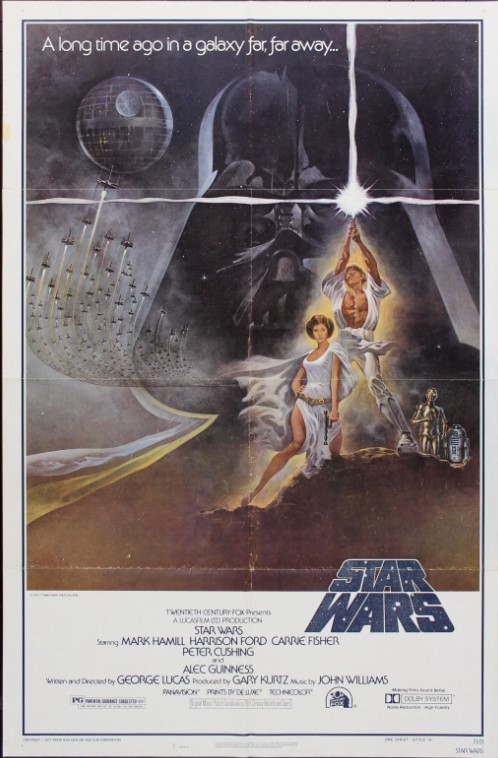
Star Wars - A New Hope Poster

May the 4th be with you, as John Harmon from Tales from the Freakboy Zone revisits where it all started, with Star Wars: A New Hope (1977). 


Hatari Poster

Emily from The Flapper Dame takes a look at Hatari! (1962). 


Casino Royale Poster

Robin Hood Poster

Cat from Thoughts All Sorts brings us a double bill of James Bond and Robin Hood, with her reviews of Casino Royale (2006) and Robin Hood (2010).  


It's a Mad, Mad, Mad, Mad World Poster

The Great Race Poster

Eric from Diary of a Movie Maniac reminds us It’s a Mad, Mad, Mad, Mad World (1963), and catches up with The Great Race (1965) 


The Blue Lagoon Poster

J-Dub from Dubsism finds another sports analogy in The Blue Lagoon (1980). 

The Princess Bride Poster

Rachel from Hamlette’s Soliloquy takes a trip down memory lane with The PrincessBride (1987). 


Sorcerer Poster

…And finally, I conure my review of the William Friedkin masterpiece, Sorcerer (1977). 


See you tomorrow…