Showing posts with label Favorites. Show all posts

Tuesday, April 30, 2024

Strange Invaders


Strange Invaders Poster

(1983) Directed by: Michael Laughlin; Written by Michael Laughlin and Bill Condon; Story by Michael Laughlin, Bill Condon and Walter Halsey Davis; Starring: Paul Le Mat, Nancy Allen, Diana Scarwid, Louise Fletcher, Michael Lerner, Kenneth Tobey, and June Lockhart; Available on Blu ray and DVD 

Rating: ***½

Suspicious Townspeople

“I think my teachers and my friends always struck me as being alien, and of course growing up in the Midwest, I felt that the towns I knew and grew up in were inhabited by aliens.” – Michael Laughlin

“All right, I will tell you one thing. We have an agreement with them. We’ve known about them for a long time. They provide us with certain advantages, and we provide them a place to live. But it hasn’t been easy. We haven’t had much choice at all…” – Mrs. Benjamin (Louise Fletcher)

One of the great mysteries is whether or not we’re alone in the cosmos. Is Earth truly “a grand oasis to the big vastness of space,” as astronaut Jim Lovell once stated, or is it nothing special – just one of many planets in the universe where intelligent life has flourished? Depending on which side of the coin you favor, Drake’s Equation estimates there’s anywhere between one (the Earth) and one million planets capable of supporting intelligent life (quite a substantial range), whereas Fermi’s paradox takes a less optimistic stance about why we haven’t heard from intelligent life. Of course, there could be a third option: maybe they’re really good at hiding. Depending on whom you ask, however, they may already be here. Strange Invaders* was director/co-writer Michael Laughlin’s second collaboration with screenwriter Bill Condon, after Strange Behavior (1981).** Filmed mostly around Toronto and the surrounding suburbs (standing in for Midwestern America), Strange Invaders presents a post-modern spin on the ‘50s alien invasion template. 

* Fun Fact #1: Strange Invaders started off as Cat People (not to be confused with the 1942 original with the same name or the 1982 remake) featuring catlike creatures disguised as humans. By the time the film reached production, the filmmakers replaced cats with aliens. 

** Fun Fact #2: Laughlin and screenwriter Bill Condon planned a series of movies with “Strange” in the title. Sadly, the third film, The Adventures of Phillip Strange (also penned by Condon), never reached production.

Mothership and Flying Saucer

In the prologue, set in 1958, extraterrestrials descend upon the ordinary small town of Centerville, Illinois, replacing the residents with their own. Paul Le Mat plays entomologist Charles Bigelow,* who teaches at Columbia University in New York City.** Things get weird in a hurry after his ex-wife Margaret (Diana Scarwid) drops in unexpectedly with their daughter, Elizabeth,*** leaving him in charge of her care. Margaret declares she must make a trek to her home town of (you guessed it) Centerville, but her solemn demeanor implies it’s more than a short trip. When she seemingly vanishes without a trace, Bigelow decides to investigate for himself. Centerville appears to be isolated in time, with its vintage cars and townspeople who dress as if the ‘50s never ended. If the suspicious town folk weren’t enough, it becomes painfully clear that he’s unwelcome when his dog goes missing and his car suddenly explodes. Upon his return to New York, he tries to convince a skeptical government official Mrs. Benjamin (Louise Fletcher) that aliens have arrived. He teams up with tabloid reporter Betty Walker (Nancy Allen) and an institutionalized former Centerville resident, Willie Collins (Michael Lerner), to uncover the truth about Centerville.   

* Fun Fact #3: The role was originally created for Strange Behavior’s star, Michael Murphy, but when the producers at Orion came onboard, they considered Michael Keaton before finally hiring Le Mat. 

** Fun Fact #4: The campus exteriors were shot at the real Columbia University, which was Condon’s alma mater. 

*** Fun Fact #5: Elizabeth was played by Laughlin’s real-life stepdaughter, Lulu Sylbert.
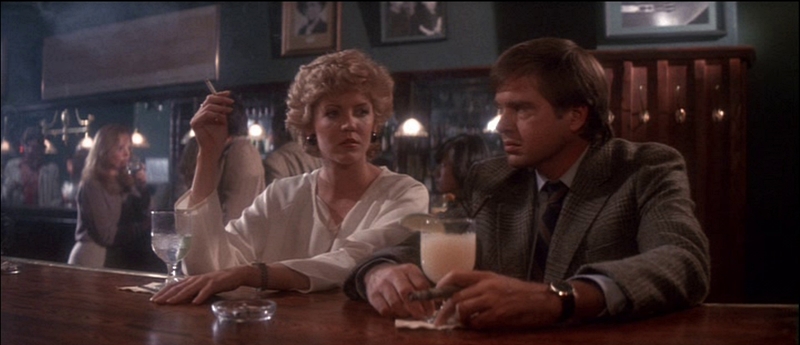
Betty and Bigelow

Paul Le Mat* is a good choice to play the film’s everyman protagonist. His natural acting style sets the right tone, not showy, but entirely believable – the audience can relate to his growing bafflement over the increasingly odd occurrences. As a scientist, he’s searching for a rational explanation, but as a person, he can’t ignore what he’s witnessed. There’s a nice little endearing moment between father and daughter (with both occupying opposite sides of the frame) in which Elizabeth calls out the scientific names of her father’s specimens, and he identifies them with their common names. It’s a short scene that at once establishes their unique relationship and Bigelow’s passion for his chosen profession. Speaking of relationships, Nancy Allen hits the right notes as much more than the requisite love interest. Smart, charming and cynical, Betty confesses she made up the story for entertainment value, although there’s a figment of intrigue surrounding the photo that accompanied her story. She humors Bigelow, but in the same breath, she’s attracted to him and his sincerity. She’s forced to re-evaluate her grip on reality when she faces the prospect of experiencing first-hand a situation that sprung from one of her headlines. 

 "Inconceivable!"

It's fun to play “spot the character actor” in a cast full of character actors, many from genre favorites. In a direct nod to the film’s ‘50s B-movie heritage Kenneth Tobey co-stars as a boarding house proprietor with a sinister aura. Bobby “Boris” Pickett (of “Monster Mash” fame) appears briefly as Betty’s editor. And Lost in Space fans, rejoice: Strange Invaders features two alumni from Irwin Allen’s landmark, albeit goofy sci-fi series – June Lockhart, as Bigelow’s mother, and Mark Goddard as a police detective. Also watch for actor/playwright/New York fixture Wallace Shawn as Betty’s landlord, an unfortunate victim of the aliens.

Alien Orbs

From her first appearance, it’s apparent that something’s a bit awry with Biglow’s ex-wife, Margaret. Things are made abundantly clear (Minor Spoiler) when we learn that Centerville might be her home town, but her birthplace is somewhere among the stars. Naturally, this begs the question: she must have had a really convincing disguise, considering she and her human husband conceived a child together. Or was this part of their experiment, to determine if humans and the alien species were biologically compatible? Biological suitability issues aside, their dissolved marriage is a fitting metaphor for couples that fail to communicate properly. It sometimes seems that many couples are from different planets (the whole Venus and Mars thing), but in this case it’s quite literal.

Alien Removes Disguise

Despite a budget of only $5 million the filmmakers made the most of it, with practical makeup effects that continue to impress, 40 years later. The aliens’ disguises appear to be an organic extension of their faces, instead of a lifeless mask that falls away. Their stretchy, goopy ersatz visages add an uncanny element to the film. Likewise, the sparingly employed optical effects enhance the story. In the opening scene, a shot of a cigar-shaped alien mothership emerging from the clouds is suitably dreamlike and almost painterly. Some of the budgetary concessions are less effective, requiring an elevated suspension of disbelief. Similar to Earth vs. the Flying Saucers (1956), the labyrinthine assortment of pipes and other industrial equipment in Toronto’s underground waterworks stand in for the aliens’ laboratory complex, and an ordinary observatory serves as the interior of the alien spacecraft.

Newspaper Headline

The aliens’ 25-year mission to evaluate Earth (presumably as a as a base for colonization or worthiness as a fledgling member of some galactic alliance) is decidedly murky. Your guess about their ultimate purpose is as good as mine. (More Spoilers) Their true intentions are never ascertained, since no sequel ever surfaced, leaving us with an open-ended conclusion in which they return to whatever planet they came from (Perhaps Earth wasn’t worth the trouble?). There are so many unanswered questions we’ll never resolve, but a little mystery isn’t necessarily a bad thing. Strange Invaders is a clever film that successfully walks the line between loving tribute to the B-genre films of the ‘50s and a post-modern response to Cold War paranoia. While critical response was generally positive, it didn’t make any waves at the box office, and despite being a staple on cable in the ‘80s, seems to have fallen by the wayside in recent years. What better time then, to rediscover and enjoy another hidden little treasure that takes a novel spin on an old formula?


Sources for this article: DVD commentary by Michael Laughlin and Bill Condon; “All of You On the Good Earth,” by Michael Carlowicz, NASA Earth Observatory, “Are We Alone? The Search for Intelligent Life in the Universe,” by Laurence Tognetti, Astronomy 


Saturday, December 2, 2023

The Reptile

The Reptile Poster

(1966) Directed by John Gilling; Written by John Elder; Starring: Noel Willman, Ray Barrett, Michael Ripper, Jennifer Daniel, Jacqueline Pearce, John Laurie and Marne Maitland; Available on Blu-ray and DVD. 

Rating: ***½ 

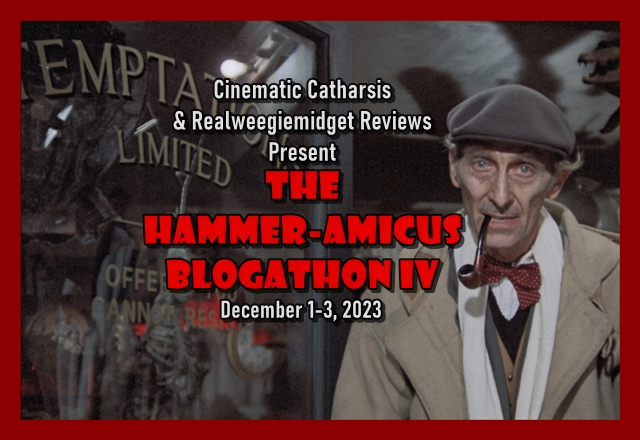
First of all, congratulations are in order for my superb co-host, Gill Jacob from Realweegiemidget Reviews, for co-hosting a fourth (!) edition of the Hammer-Amicus Blogathon, delving further into the wealth of cinematic delights from both esteemed production companies. Be sure to check out all the wonderful posts! 

The Reptile Lurks in the Shadows

“Mr. Spalding, I was a professional seaman, and I too, have knocked around the world a bit, but I’ve seen things that your logic could not explain away.” – Tom Bailey (Michael Ripper) 

“It was hell… I spent a couple of hours in makeup every morning. I could only shoot every other day because taking it off would leave my skin so raw. I wasn’t comfortable in that at all.” – Jacqueline Pearce (excerpted from Hammer Glamour, by Marcus Hearn)

Charles Spalding

As any music enthusiast would likely attest, the B-side can be just as intriguing, if not more so, veering in directions that would be unthinkable for a potential hit single. Intended to be the second film on a double bill with Rasputin the Mad Monk (1966), The Reptile is a second feature that’s anything but secondary. It was the last in a series of four films that were shot back-to-back (preceded by Dracula: Prince of Darkness, Rasputin the Mad Monk, and Plague of the Zombies), as part of producer Anthony Nelson Keys’ cost-cutting experiment.* Production started only a week after shooting for Plague of the Zombies ceased. Bernard Robinson’s lavish set design (employed on a shoestring) cleverly concealed the film’s low-budget origins.*** Director John Gilling claimed to have rewritten John Elder’s** script “…more or less as I went along,” but the Shout Factory Blu-ray commentary seems to suggest otherwise, stating there has been no proof of Gilling’s reworking of the original script.

* Fun Fact #1: Of the four films, only The Reptile finished under budget, for the paltry sum of £100,599. 

** Fun Fact #2: John Elder’s story was originally pitched to Universal in 1963 as The Curse of the Reptiles. When it finally reached production in 1965 under Hammer, budgetary constraints necessitated paring things down to one monster. 

*** Fun Fact #3: The gothic country house Oakley Court (built in 1859) stood in for Dr. Franklyn’s mansion. If you’re feeling a sense of déjà vu, your brain isn’t deceiving you. It’s been featured in several other productions over the years, including The Curse of Frankenstein (1957), The Vampyres (1974), and The Rocky Horror Picture Show (1975). 

Valerie and Harry Spalding

After the untimely death of his brother Charles (David Baron), Captain Harry Spalding (Ray Barrett) and his wife Valerie (Jennifer Daniel) inherit the elder Spalding’s modest estate, Larkrise. They arrive in the village to an icy reception from the suspicious residents, who fear “the black death,” which has claimed a handful of other lives. Only barkeep Tom Bailey (Michael Ripper) extends a hand of friendship to the perplexed couple. They soon encounter theologian Dr. Franklyn, who’s settled in the sleepy Cornish village after traveling in the Far East. He lives with his reclusive daughter Anna (Jacqueline Pearce), holding dominion over her… but why? The answer could be Captain Spalding’s undoing.

Tom Bailey

Our main protagonists, Harry and Valerie, are about as vanilla as you can get. If you want any spice, look no further than the exemplary supporting performances, especially by Hammer’s Swiss Army Knife in residence, Michael Ripper, as pub owner Tom Bailey.* In most other movies, it would be a thankless, insubstantial role, but Ripper imbues the part with depth, warmth and unexpected humor – a testament to his formidable talent. Tom shows Spalding and his wife compassion when most of the villagers turn their backs, and becomes the hero Spalding couldn’t be. To her credit, Valerie (Jennifer Daniel) is a stronger female character, compared to most other Hammer heroines of the period. Instead of shrieking in hysterics, she remains calm in the face of adversity. Despite the danger, she rises to the challenge on multiple occasions. When her husband is envenomated, she promptly treats his wound, and ventures in his place to the perilous Franklyn residence. 

* Fun Fact #4: Ripper biographer Derk Pykett commented, “It’s a role that could have easily been overplayed, or gone by hardly unnoticed. But the Rip plays the role perfectly, with just the right amount of humor and dread that makes barkeep Tom Bailey a memorable character.”

Mad Peter

John Laurie provides another noteworthy supporting performance as “Mad” Peter,* the town eccentric. He’s at once beloved by the townsfolk but written off because he’s a nonconformist (seeing and hearing what others ignore). While he provides some much-needed levity to the film, he much more than comic relief. It’s too bad he’s afforded so little screen time, because he almost deserved his own movie. 

* Side Note: I couldn’t help but speculate if Mad Peter was the ancestor of another cinematic doomsayer, Crazy Ralph from the first two installments of the Friday the 13th Franchise.

Dr. Franklyn

Dr. Franklyn (Noel Willman) is the most enigmatic character, initially unlikeable but ultimately sympathetic. We eventually come to learn what a terrible burden he carries, with no means of righting the wrongs he’s committed. Haunted by his indiscretion after traveling to Borneo to pursue the mysteries of an elusive cult, the Ourang Sancto, Franklyn, now a puppet of the mysterious Malay (Marne Maitland), is responsible for his daughter’s present condition,

Anna Franklyn

Jacqueline Pearce, probably best known today for her role as the scheming villainess Servalan in the TV show Blake’s 7, will likely surprise some viewers, playing such a sensitive, tragic figure as Anna Franklyn. She endures a seemingly uncurable affliction: undergoing a transformation into a deadly snake woman. Kept in isolation by her father, she longs for companionship, keeping a room full of small animals as “pets.”* Her relationship with Dr. Franklyn is best described as contentious. In one scene, she plays the sitar for her guests, Captain Spalding and Valerie, only to have it unceremoniously smashed over the fireplace by her father. 

* Fun Fact #5 (MINOR SPOILER): Pet lovers will be relieved to know that Valerie’s adorable kitten featured in the beginning of the film does not become reptile food, but survives the (literally) fiery conclusion.

Anna as The Reptile

Roy Ashton used care when applying Pearce’s reptile makeup, which she didn’t tolerate well (he claimed the actress was claustrophobic). The makeup might appear crude* by today’s standards, but it does the job. Anna, in reptile form,** is genuinely scary as depicted, emerging from the shadows or in quick cuts, compensating for the limitations of the makeup. The dreadful effects of the Reptile’s venom are manifested in three progressively hideous stages, with the skin of the victims turning black and green, blood running from their eyes, and froth foaming at the mouth. 

* Fun Fact #6: Ashton used papier mâché for the shed skin Dr. Franklyn discovers in his daughter’s bed. 

** Fun Fact #7: After being unimpressed by some of the rushes (raw, unedited footage) of Jacqueline Pearce in makeup, Hammer ordered re-shoots (something almost unheard of for the thrifty production company).


Dr. Franklyn and The Malay

The Reptile’s theme about a threat from the East, is undeniably steeped in xenophobia, with a curse by an Eastern shaman, known only as “The Malay” (Marne Maitland). While the film sets up Dr. Franklyn as the victim, he imposed himself on a culture that didn’t want him there (“…my research into the primitive religions of the East”), unfortunately resulting in his daughter paying an unfathomable price. The filmmakers were sure to keep The Malay as one-dimensional as possible, so he appeared unsympathetic and more monstrous than the creature he helped create. He poses as Franklyn’s servant, but the reverse is true, with Franklyn inextricably indebted to the strange man. It’s only a smoke screen, however, to distract us from a greater truth. Franklyn, a colonial, was an interloper in an indigenous society he didn’t respect and knew little about.

Valerie, Capt Spalding and Tom

The Reptile transcends its second-billing leanings, ingeniously obscuring its low-budget origins, and veering in unexpected directions (such as Tom Bailey’s heroism). It also stands apart from many other Hammer horror films, featuring an original creature that was created for the movie, and not a retread of a Universal property. One of the Blu-ray commenters asserted that it wasn’t much of a mystery who the eponymous creature was, but I don’t think that was ever the point. It’s simply an entertaining, and frequently scary yarn, perfect for Saturday matinees and rainy days.


Sources for this article: The Hammer Story, by Marcus Hearn and Alan Barnes; The Hammer Vault, by Marcus Hearn; Hammer Glamour, by Marcus Hearn; Hammer Films: The Unsung Heroes, by Wayne Kinsey; Micheal Ripper: Unmasked, by Derek Pykett, Shout Factory Blu-ray Commentary by Steve Haberman, Ted Newsom, and Constantine Nasr

The Hammer-Amicus Blogathon IV Banner


Monday, July 3, 2023

Pontypool


Pontypool Poster

(2008) Directed by Bruce McDonald; Written by Tony Burgess; Based on the novel Pontypool Changes Everything, by Tony Burgess; Starring: Stephen McHattie, Lisa Houle, Georgina Reilly and Hrant Alianak; Available on Blu-ray and DVD 

Rating: **** 

Grant Mazzy

“I think that you want to start from a ridiculous place… You start from an enormous set of restrictions that are just impossible to deal with, and if you can make that succeed, then it’s only a matter of how big do you want to make it for that experience to be satisfying… The challenge is, we have to make everything work, a siege, the end of the world, enormous countries involved, and levels of media, all work in a six-by-six-inch space. If you can do that, from a writing perspective, and make it sort of have all these rhythms and paces and action… How much bigger do you have to go before an audience buys it – and don’t go bigger, because you’re gonna lose the tight knots of the original principle.” – Bruce McDonald (from DVD commentary)

Can words be weaponized? In elementary school we’re all taught that “sticks and stones will break my bones, but names will never hurt me.” Carrying that mindset to the fractious world of internet discourse, some individuals claim words only have power if we give them power (which seems a convenient excuse for oppressors to continue their verbal onslaught, while eschewing any semblance of accountability). But what if words could kill? Such is the premise of Pontypool, a zombie film like no other.

Grant Mazzy in Radio Studio

It’s a particularly miserable, blustery winter morning in the normally quiet rural community of Pontypool, Ontario. As talk radio DJ Grant Mazzy (Stephen McHattie) prepares for his shift at CLSY, something is awry during his morning drive. He stops to exchange words with a woman wandering in the snow, behaving erratically and gibbering, but she disappears almost as soon as she appears. It soon dawns on Mazzy that her behavior isn’t as anomalous as he suspected, but a symptom of a much larger problem. He begins the morning show amidst news reports of strange occurrences around town. While Mazzy and his co-workers try to make sense out of the senselessness, the situation outside the confines of their radio station becomes explosive, with reports of people turning into zombies compelled to kill. Their worst fears are confirmed when impromptu guest Dr. Mendez (Hrant Alianak), at once fascinated and terrified by the sudden progression of events, describes the epidemic as a disease.

Mazzy, Briar, and Dr. Mendez

Screenwriter Tony Burgess (who adapted his own novel) thought of the film’s title after driving through the unincorporated area of Pontypool. Intrigued with semiotics (how words symbolized abstractions and objects), Burgess latched onto the concept that the name “Pontypool” lent itself to distortion, with the word “typo” in the middle. The film’s disease is transmitted through specific words (or a specific combination), which carry a virus of sorts.* The infected brain sends the afflicted individual into endless loops, “seeking” the solace of others, in a misguided effort to purge the semantic demons inside. Unlike the mindless, half-dead, brain-eating sort of monsters depicted in most zombie movies, Pontypool’s zombies are emotional creatures – their distorted speech is a desperate cry for help. 

* Fun Fact #1: Director Bruce McDonald described three components of distorted communication, as it relates to a character in the film: 1) The thing she meant to say, 2) What she actually said, followed by 3) How she reacted to the things she said.

Sydney Briar and Grant Mazzy

McHattie is perfectly cast as shock jock Mazzy,* who, with his grizzled appearance, looks like he just crawled out of a honkytonk bar. He’s been around the block a few too many times, bumped around from several stations in the process (we get a clue to his past, as he prepares for the morning ahead with a shot of booze in his morning coffee). His current stint could be the end of the road for his career, but he’s still something of a diva, accustomed to big city audiences (He bristles at hosting a low-rent musical comedy act, chock-full of unfortunate Middle-Eastern stereotypes). Mazzy employs his self-professed “take no prisoners” approach, which involves inciting his listeners into debate, much to the irritation of station manager Sydney Briar (Lisa Houle).** Briar, who’s not amused by his antics, acts more like a zoo keeper than his boss, attempting to rein in his bad behavior, before he alienates the rural community where everyone knows everyone else. They become unlikely allies when their co-worker, technical assistant/gulf war veteran Laurel-Ann Drummond (Georgina Reilly), succumbs to the disease. 

* Fun Fact #2: McDonald’s original vision was to make Mazzy’s face the center of the film, with all other characters off-screen. 

** Fun Fact #3: In real life, Houle is married to McHattie.


Laurel-Ann Drummond

McDonald described Pontypool as an “action film in a six-inch space.” Because of the small cast, largely confined to the radio studio, Pontypool is much more intimate than most other films in this genre, exploiting its low-budget trappings to its advantage. We don’t have the big picture, or the luxury of wide-angle vistas, with hordes of the infected storming the snowy landscape and overwhelming unsuspecting victims. Instead, we’re right there with a few frightened individuals as the event rapidly unfolds. Pontypool takes the tired zombie genre and sets it askew, bringing something almost miraculous to the well-worn subgenre, an ingeniously original concept. It’s a uniquely unsettling experience that might leave you unconsciously watching your words.  

Sunday, April 30, 2023

Logan’s Run


Logan's Run Poster

(1976) Directed by Michael Anderson; Written by David Zelag Goodman; Based on the novel by William F. Nolan and George Clayton Johnson; Starring: Michael York, Jenny Agutter, Richard Jordan, Roscoe Lee Browne, Farrah Fawcett and Peter Ustinov; Available on Blu-ray and DVD 

Rating: ****

The City in Logan's Run

“At the beginning, you see that Logan is very much a creature of his society. He goes along with the accepted mores and standards, and this is the way life is lived. It’s when the idea that there was an alternative way of life, a much more humanistic way of living – When this germ is planted, I think it comes as a revelation to him that there is another way of living life, and he gets into this secret society, and of course it changes his life, and of course, the direction of the story.” – Michael York (from 2009 DVD commentary)

Logan and Jessica are Trapped

A million thanks to my co-host-with-the-most, Gill Jacob from Realweegiemidget Reviews, for entertaining my cockamamie idea to hold the Futurethon. I’m thrilled to see so many talented bloggers hopping aboard, and hope you’ll check out all the terrific posts!

Let’s face it, utopias are dullsville. They represent an ideal world, where everyone lives in harmony, and conflict is a thing of the past. But if everything works perfectly, and everyone’s happy, where’s the drama? Dystopias, on the other hand, are where it’s at., Logan’s Run was loosely based on the novel of the same name by William F. Nolan and George Clayton Johnson. For reasons of practicality, the mandatory age limit was bumped up from the original story’s 21 to 30. Filming took place in Dallas and Fort Worth, Texas,* using available structures, and in Los Angeles utilizing some of MGM Studios’ massive sound stages.**/*** Special mechanical effects expert Glen Robinson, who worked on the classic MGM sci-fi film, Forbidden Planet (1956), created the various vehicles and mechanical devices, while Bill Thomas designed the many polyester and spandex costumes.

* Fun Fact #1: One of the largest shooting locations employed for the futuristic city was the 5-million-square-foot Dallas Market Center. The Fort Worth Water Gardens stood in for the terraced area outside the domes. 

** Fun Fact #2: An abandoned sewage treatment plant near LAX stood in for the watery subterranean complex beneath the city. 

*** Fun Fact #3: For the underwater scenes, the filmmakers used the same pool where Esther Williams performed her aquatic antics.

When the light blinks red, you’re dead.

It’s the year 2274, long after a worldwide cataclysm (or several), and the youthful population (if you ignore the suspicious absence of people of color) resides in an enormous domed city, sealed off from the outside, free to indulge in their hedonistic fantasies (I’m assuming STDs have been eradicated), without the burden of responsibilities or money. The automated environment takes care of their every need, so work (for most) is an unnecessary evil. There is a downside, however, to this idyllic existence – everyone possesses a color-changing “lifeclock,”* implanted on their hand at birth, which marks the inevitable countdown to age 30 (think of it in ‘70s terms, as a sinister mood ring). What passes for religion in this society is a belief in “renewal,” which I presume is a kind of reincarnation or rebirth. For most, their final duty is to participate in the ritual of “Carousel,” a ghoulish spectator sport (inspired by the Roman circus, according to Director Michael Anderson) where people can watch their peers undergo their morbid rite of passage. Participants float around a rotating platform, encouraged with shouts of “Renew!” from the fervent audience, before being snuffed out of existence. I couldn’t help but wonder what the attendance rate was. Considering the fact that the outcome of Carousel never changes, you’d think this would get boring after a while (So many questions, so few answers.). For those relative few who decide Carousel isn’t their thing, they become “Runners,” who frantically search for a means of reaching a refuge known as “Sanctuary.” But there are only so many places to run in a sealed city, and the city has ways of dealing with dissenters. 

* Fun Fact #4: According to costume designer Bill Thomas, the majority of the costumes for the city-state’s residents were color-coded to the characters’ crystals, which in turn corresponded to their ages: At birth, the crystal was clear, shortly afterwards to age 12, yellow; from 12 to 24, green, and 24 to 30, red.

Logan Meets Jessica

Logan 6 (Michael York)* is part of an elite subset of the population, called “Sandmen,” who enforce the age limit, hunting down and terminating runners. Logan and fellow sandman Francis (Richard Jordan) take a sadistic glee in carrying out their work, enjoying the thrill of the chase. But Logan, at least, is beginning to experience an existential crisis, wondering about his role in society and whether renewal is a real prospect. His pal, Francis, cautions that it’s better not to question anything. An anticipated night of casual sex turns into a moment of self-doubt, which becomes the seed of something much more perplexing. While searching for an anonymous lover on the “circuit,” he meets Jessica 7 (Jenny Agutter), who isn’t exactly a fan of sandmen (when challenged about his job, Logan replies, “I’ve never killed anyone.”). After recovering a chrome symbol from a terminated runner, he approaches the city’s computer,** seeking the meaning of the item. The computer changes his red crystal to blinking status, effectively wiping away four more years of life, and making him a runner. His new mission: find and destroy Sanctuary. Jessica is understandably skeptical about Logan’s sudden change of heart, torn between potentially betraying her underground group and helping someone in need. 

* Fun Fact #5: According to Anderson, the original casting choices (who either declined or were reconsidered) included John Voight for Logan, Lindsay Wagner for Jessica, William Devane for Francis, and James Cagney (who was semi-retired at the time) for Old Man. 

* Fun Fact #6: The computer’s authoritative, vaguely seductive voice was provided by producer Saul David’s assistant, Lara Lindsay, who also played a runner terminated by Francis.

Box in His Frozen Domain

Their quest for Sanctuary is fraught with peril at every corner, especially from Box (Roscoe Lee Browne),* a menacing robotic man (although Box attests that he’s something else: “I am more than machine. More than man. More than a fusion of the two.”). One swift kick would probably topple the clunky robot/cyborg, but Browne’s deep, mellifluous voice demands our attention. As a kid, Box terrified me, and it’s not difficult to see why, considering the chilling (pun intended) prospect that he saw no difference between freezing seafood and freezing humans. Where did he come from, and who put him there in the first place? Why was he compelled to carry out his obsolete, programmed imperative from possibly centuries ago? The answers are lost in the past. 

* Fun Fact #7: The top-heavy self-propelled Box costume (powered by drill motors) was piloted by actor Roscoe Lee Browne, who controlled the speed with his foot, and could change directions using his knees.

Logan and Jessica Meet the Old Man

When Logan and Jessica meet the Old Man (Peter Ustinov),* the sole human survivor in the outside world, they’re shaken to their very core, confronting love, relationships and mortality. He lives amidst the ruins of Washington D.C. and the dilapidated Senate chambers,** now populated by an assortment of cats.*** As opposed to the serious characters we’ve met, so far, he’s a breath of fresh air with his largely comic role (Ustinov improvised much of his dialogue), spouting random passages from T.S. Eliot’s “Old Possum’s Book of Practical Cats.” (Long before Andrew Lloyd Weber got his mitts on the poem for his musical).    

* The most distressing thing, revisiting Logan’s Run, so many years later, is that I’m now the same age that Ustinov was during filming. Sigh. 

* Fun Fact #8: In a deleted scene, described by Anderson, Logan and the Old Man sift through a stack of presidential portraits, only to find one of Richard Nixon. While the Old Man doesn’t recall his name, he comments that he was supposed to be “Tricky.” 

** Fun Fact #9: More than 150 cats from the Cat Care Shelter in West Los Angeles were employed for the scenes. Because they were constantly in motion, maintaining continuity with so many felines, was tantamount to (ahem), herding cats.


Jessica 7

It’s safe to say that Logan’s Run would never get a “PG” rating (typically reserved for more family-oriented material) today, but hey, it was the ‘70s, right? Despite the greater latitude afforded to PG films in the ‘70s, Director Michael Anderson fought with the censors on several scenes, notably the Love Shop sequence (depicting a continuous orgy), which was cut by about two-thirds (more is implied than shown). Another scene that likely raised an eyebrow then features Box’s gallery of frozen victims (played by nearly naked actors/actresses standing motionless). What specifically struck my then pre-adolescent eyes, was my first cinematic crush, Jenny Agutter, as Jessica. Why Agutter, and not Farrah Fawcett (who plays Holly, a doctor’s assistant, at the “New You” face-changing clinic)? While Ms. Fawcett looked undeniably fetching in her form-fitting glittery green dress (and in high school was probably voted “Most Likely to Adorn Horny Adolescents’ Bedroom Walls in Poster Form”), she always seemed out of my league, something to be admired from afar, like the Mona Lisa or a six-figure automobile, but not exactly girlfriend material. Ms. Agutter, on the other hand, was the archetypal “girl next door,” attractive, yet refreshingly down to earth. I could see myself sitting down and having a conversation about anything, ranging from philosophy to the existence of werewolves (okay, maybe I should steer clear of that subject). Of course, what really caught my attention, as an impressionable 8-year-old, was Jessica’s outfit that left little to the imagination,* and a later scene (when she changes out of her tattered costume and into a fur rug) that helped fill in the blanks (um… excuse me while I dump a bucket of cold water on my head). 

* As my mom was fond of saying, “Nice outfit she’s almost wearing.”  

Logan is Interrogated

The dystopian world depicted in Logan’s Run implies that civilization has hit a dead end. No one makes any new discoveries, and there’s no desire to go outside the cushy confines of the domed city. The society works, in part, because no one questions anything or openly criticizes the establishment. Former friends Logan and Francis represent opposite ends of the spectrum. Francis has embodied the doctrine fed to him from day one, seeing his work as a Sandman to be a civic duty. Perhaps because Logan’s life is on the line, he can’t afford not to ponder what lies beyond the city’s rules. As he soon discovers, Sanctuary is an abstract concept, less of a place and more of a state of mind.


The Lincoln Memorial

Jerry Goldsmith, who always had a knack for making a good movie even better, delivers yet another knockout score, elevating Logan’s Run to epic proportions. The diverse score demonstrates a range that reflects the story’s changing settings, with synth-heavy music in the sealed city (evocative of the tech-controlled habitat). Once Logan and Jessica are outside the domes, the score shifts to a more traditional orchestral sound.


Holly

The problem with depicting any future society is that we’re bound by our present-day expectations. What you end up with is a future that resembles the present of 1976,* with cathode ray tubes, and feathered hair (as modeled by Ms. Fawcett, herself). And there’s that time-worn old trope that was stale a decade before in Star Trek: Confuse the giant computer until giant computer goes boom! Amidst these dated trappings are some universal themes that continue to be relevant: the unsavory implication of eugenics as a means of controlling populations, along with the theme of “out with the old, in with the new” as older generations feel pushed out by their younger counterparts. In the overall scheme of things, everyone has an expiration date – the curse of being human is that you are aware of your mortality. Thankfully, however, we don’t know when that expiration date is… yet. As long as you don’t ask too many questions (Accepting Logan’s eventual shift asks us to overlook his murderous past), Logan’s Run is still a blast after all these years. 

* Fun Fact #10: To date, there have been at least two ill-fated cinematic attempts to “renew” Logan’s Run, in 2000 (by writer/director Skip Woods)  and 2010 (by Alex Garland).


Sources for this article: DVD commentary by Michael Anderson, Michael York, and Bill Thomas (2009); “150 Cats Make Film Debut in MGM's 'Logan's Run',” Boxoffice (Aug. 11, 1975, 107); “Mechanical Effects for Logan’s Run” and “Logan’s Run and How it Was Filmed,” American Cinematographer (June, 1976); The Hollywood Reporter (April 19, 2000); The Hollywood Reporter (June 17, 2010);

Futurethon Banner - Logan's Run


Sunday, November 20, 2022

Favorites from 1978

Invasion of the Body Snatchers

Several months ago, I was challenged by Gill from Realweegiemidget Reviews to discuss my top five favorite movies from 1978. As many film fans know, it was such an exceptional year for movies. The plethora of choices made it difficult to narrow down my picks – so difficult, in fact, that I decided to cheat a little and list my top eight, plus a few honorable mentions. So, without further preamble, here they are, in no particular order… 

Superman - The Movie Poster

Superman: The Movie – It’s hard to top Christopher Reeve’s bravura portrayal as the Man of Steel, balancing his performance with equal measures of gravitas and “gee whiz” optimism. John Williams’ rousing score matches the scope of the lofty visuals. It’s a minor miracle that this profoundly cynical post-Watergate/Vietnam era birthed such an earnest picture, told with an abundance of heart. Superman: The Movie was just the salve that generation needed, and ours could certainly benefit from. In an era when superhero movies have become increasingly darker and grittier, current filmmakers would be wise to learn from Richard Donner’s landmark movie. No offense intended towards gritty, post-modern interpretations of beloved superheroes, but there’s room for something that purposely goes in the opposite direction.  

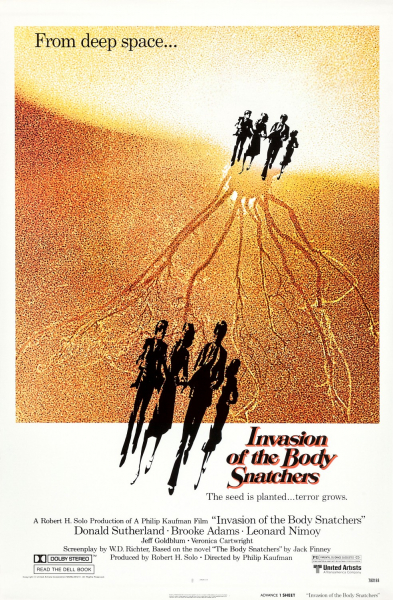
Invasion of the Body Snatchers Poster

Invasion of the Body Snatchers – 1978 was a banner year for scary movies, and one of the most terrifying of this or any year was Philip Kaufman’s paranoid remake of the exceptional 1956 film (based on Jack Finney’s novel). Donald Sutherland shines as San Francisco public health inspector Matthew Bennell, who along with his colleague Elizabeth Driscoll (Brooke Adams), suspect that not all is copacetic with the city’s residents. Kaufman’s chilling exploration of urban angst and isolation features excellent supporting performances by Leonard Nimoy as pop psychologist Dr. David Kibner, and Angela Cartwright and Jeff Goldblum as Nancy and Jack Bellicec. Who can you trust when the world’s gone to the pod people?

Patrick Poster

Patrick – This tasty slice of Ozsploitation from director (and unabashed Hitchcock disciple) Richard Franklin and writer Everett De Roche, keeps you on edge until the final scene. Susan Penhaligon plays Kathy Jacquard, a nurse assigned to monitor Patrick (Robert Thompson), a comatose patient. As Kathy soon discovers, her patient proves that still waters run deep. This little thriller (that deserves to be better known) ratchets up the tension, despite the fact the title character remains motionless for the bulk of the film. What’s Patrick’s secret? I’ll never tell. 


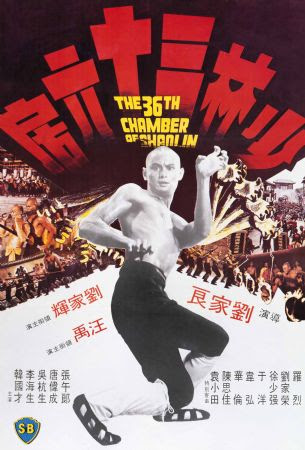
The 36th Chamber of Shaolin Poster

The 36th Chamber of Shaolin – Gordon Liu stars in the role of a lifetime, as San Te. After his father is killed by a ruthless general’s henchmen, and he’s forced to flee his home, San Te is intent on revenge. He joins a Shaolin monastery, and must endure one grueling trial (“chamber”) after another on his quest to become a Kung Fu master. Each trial demands a different combination of physical and mental discipline, and with each chamber comes a new philosophical spin. The 36th Chamber of Shaolin rises above the pack, thanks to Liu’s intensity, the ingenious  trials, and expert fight choreography by a cast of performers well-versed in the martial arts. They don’t get better than this, folks.


Dawn of the Dead Poster 

Dawn of the Dead – Ten years after his game-changing film, Night of the Living Dead, George A. Romero returned for more social commentary (this time, the spotlight is on mass consumerism). A helicopter pilot, his news anchor girlfriend, and two members of a SWAT team hole up against hordes of the undead in a huge, soulless Pennsylvania mall. Their little oasis is about to be disrupted, however, when an army of bikers (led by Tom Savini) stake their claim. Amidst the bleak story are moments of dark humor which help cushion the blow a bit. As with his previous Dead film, Romero proves to have a keen eye for observing the darker side of human nature, demonstrating there’s not as much that separates us from the zombies as we’d care to believe.


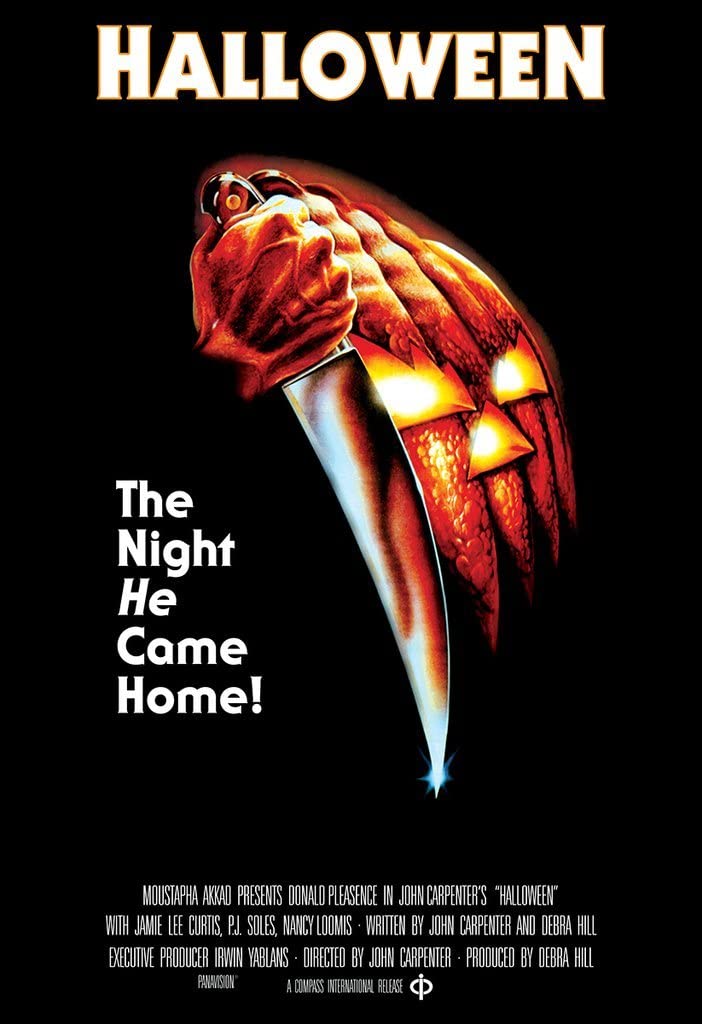
Halloween Poster

Halloween – No list of favorites from 1978 would be complete without John Carpenter’s suspenseful slasher that started it all. The years haven’t diluted Halloween’s impact, nor has it been surpassed by the myriad sequels, remakes and imitations. The simple story, with its seemingly unstoppable antagonist and reluctant hero Laurie Strode (played by then 19-year-old Jamie Lee Curtis), works due to Carpenter’s assured direction, Dean Cundey’s atmospheric cinematography, and a cast of believable, three-dimensional characters. Donald Pleasence shines as the determined Dr. Loomis, who in his own way, is as singularly minded as his escaped patient, Michael Myers.


Coma Poster

Coma – One of the movies that scared the pants off me as an impressionable youngster still holds up remarkably well today. Writer/director Michael Crichton’s (yes, that Michael Crichton) taut adaptation of Robin Cook’s novel provides an abundance of chilling moments. This paranoid medical thriller with a science fiction twist seems all too plausible today, with its depiction of a healthcare system more interested in profits than the common good. Geneviève Bujold stars as Dr. Susan Wheeler, an upstart young doctor with a predilection toward sticking her nose where it doesn’t belong. Despite being gaslit by hospital administrator Dr. Harris (Richard Widmark) and doubted by her ladder-climbing boyfriend, Dr. Mark Bellows (Michael Douglas), she persists in her personal investigation of a series of operating room incidents. When Wheeler discovers the horrible truth behind these events, she’s running for her life, as the woman who knew too much.

The Boys from Brazil Poster

The Boys from Brazil – Franklin J. Schaffner’s science fiction thriller (adapted from an Ira Levin novel) takes its loopy premise which wouldn’t seem out of place as a Weekly World News article, and milks it for all it’s worth. Under the guidance of Joseph Mengele (Gregory Peck), an army of Hitler clones are created, with the hope that one will eventually usher in the Fourth Reich as the new führer. Nazi hunter Ezra Lieberman (Laurence Olivier) becomes wise to the doctor’s evil scheme. Is it nature or nurture that decides who becomes a monster? The Boys from Brazil will make you wonder. 


Honorable Mentions

The Shout Poster

The Shout (1978) I only discovered this one a couple of years ago, but it’s stuck with me.  Alan Bates stars as a mysterious visitor to a small English village, who wedges his way into a married couple’s lives (John Hurt and Susannah York), turning everything upside down. He brings with him a supposed Aboriginal technique (learned in the Australian Outback), with a shout that can kill. Polish director Jerzy Skolimowski (who made the equally intriguing Deep End), has created a purposely ambiguous and obtuse but endlessly engrossing film that’s unlike anything else I’ve ever seen.

Animal House Poster

National Lampoon’s Animal House – No list of 1978 favorites would be complete without director John Landis’ boisterous comedy about a bunch of misfits residing in Delta House, Faber College’s least prestigious fraternity.  John Belushi (in quite possibly his finest moment) stars as the lovable oaf Bluto. The terrific cast features Tom Hulce, Karen Allen, Donald Sutherland, Stephen Furst, and John Vernon as the man you love to hate, Dean Wormer. Although some elements have not aged well (such as a misguided scene in a blues club), many of the gags have held up. Countless filmmakers have tried to copy the formula of the slobs versus the snobs, and most have failed. “May I have 10,000 marbles, please?” will never not be funny.

Piranha Poster 

Piranha – It’s the Jaws rip-off that even Spielberg couldn’t ignore. Sure, Piranha is rough around the edges, and it may not be Joe Dante’s best, but it wears its B-movie sensibilities on its tattered sleeve. Its secret weapon is that it never takes itself too seriously, with ample doses of humor and over-the-top thrills. Its fun, skewed sensibilities are exemplified by this exchange alone: “What about the goddamn piranhas?” “They’re eating the guests, sir.”


Because this challenge is all about passing the baton, I’m providing some new challenges for a few of my fellow bloggers, should they choose to accept: 

Gill from Realweegiemidget Reviews: Top Five Supernatural TV Movies from the 1970s or Top Five Favorite Joan Collins roles. 

John from Tales from the Freakboy Zone: Review The Greasy Strangler (2016) or Sometimes Aunt Martha Does Dreadful Things (1971) 

Brian from Movies from Beyond the Time Barrier: Top Five underrated/overlooked 1950s science fiction movies or Top Five underrated/overlooked 1970s science fiction TV movies