Sunday, October 15, 2023

Introducing The Hammer-Amicus Blogathon IV


Hammer-Amicus Banner_Torture Garden

If the third time’s a charm, the fourth time can only get better, right? After a two-year hiatus, I, along with my excellent blogging partner in crime Gill from Realweegiemidget Reviews, proudly present the fourth edition of the Hammer-Amicus Blogathon! Through this series of blogathons, we hope to keep the spirit of these legendary film production companies alive, but this isn’t merely about nostalgia, it’s also a great time for fans of both labels, with the recent release of Hammer’s Dr. Jekyll (2023) and news of Amicus’ impending revival.


The Curse of Frankenstein - Peter Cushing

If you’ve participated in either of the past Hammer-Amicus Blogathons, welcome back. If this is your first time joining us, we’re glad to have you aboard. Either way, be sure to read our rules below, as a few items have changed. We would also like to emphasize this blogathon is not strictly for bloggers (No blog? No problem!). In addition to blog posts, participants may submit a link to their Instagram or Facebook post, podcast, YouTube video, or whatever. As long as it’s original content and covers some facet of Hammer or Amicus productions, you’re good to go.
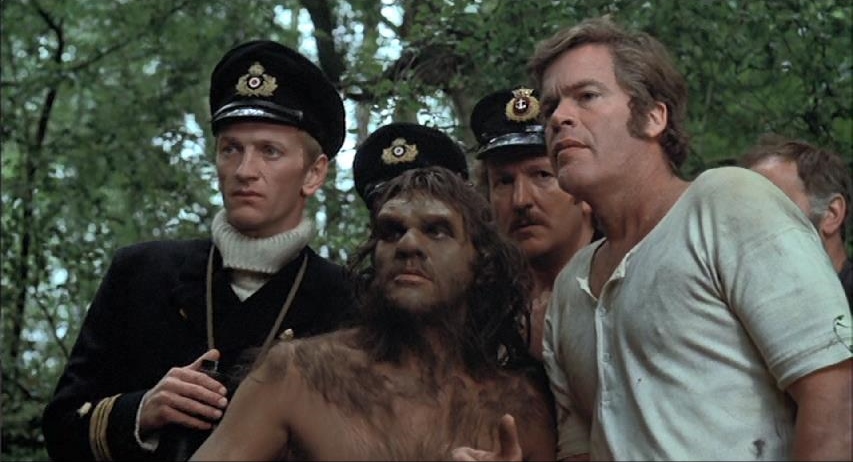
The Land that Time Forgot

And now, time for my occasional public service message, reminding you that Hammer and Amicus productions are much more than horror. In their respective catalogs, you’ll find adventures, dramas, noir, sci-fi, comedies, psychological thrillers, and other genre permutations. With all those choices, there’s virtually a Hammer or Amicus movie for every mood and preference. We encourage you to peruse the titles found in the links below (we’re always happy to provide suggestions, too).

Hammer Films

You can find a complete list of Hammer films here.

Amicus Productions
…and a list of Amicus films here.


Scream of Fear

While the rules are essentially the same, notice that the contact information has changed. When it comes to social media, we’ve got ya covered. I’m on the platform previously known as Twitter, as well as Instagram. Gill, on the other hand, is available through Facebook, Mastodon, and Pintrest (Please Note: Gill has requested that participants NOT provide their choices on her social media platforms, but through her blog instead.).
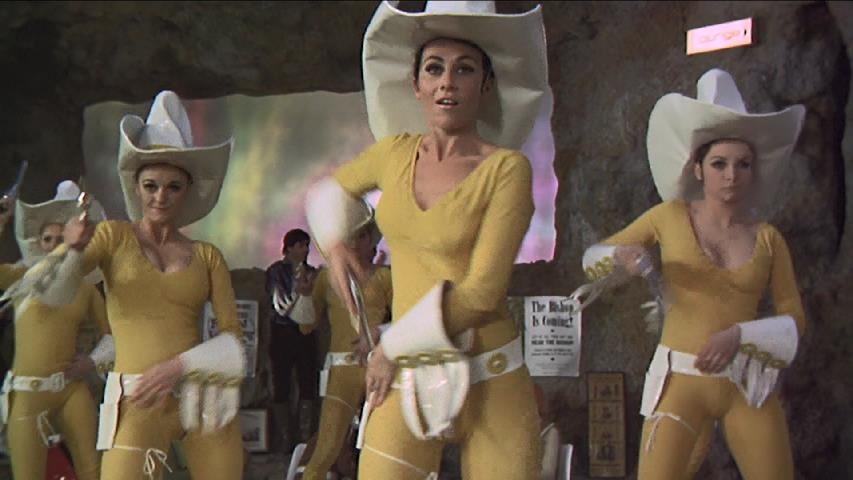

Moon Zero Two


What: The Hammer-Amicus Blogathon IV 

Who: Hosted by Yours Truly (Barry P.) and Gill Jacob 

Where: Cinematic Catharsis and Realweegiemidget Reviews 

When: December 1-3, 2023 

How: Please read the rules below, and send me your post request (review, podcast, etc…) via email (barry_cinematic@yahoo.com), Twitter (@barry_cinematic), Instagram (barry_cinematic), or by commenting below. You may also contact Gill by commenting on her post, or through her blog’s Contact Me page . (Be sure to include a link to your blog, your blog’s title, and your preferred name).

From Beyond the Grave - Donald & Angela Pleasence

 THE RULES… 

1.     You may review ANY Hammer or Amicus film or TV show. Hammer and Amicus-related book reviews are fine.

2.     We will not allow duplicate film titles, UNLESS you are covering a series of films or a retrospective of an actor/filmmaker’s work.

3.     A maximum of TWO entries will be permitted. (You may choose one post from Hammer and one from Amicus …or both can be Hammer or Amicus. The choice is yours!)

4.     When responding with your choice, be sure to add your Twitter/Instagram/Mastodon handle or a link to your Facebook page so we can promote your post.

5.     Please choose one of the banners below to display on your blog.

6.     A full list of blogs, podcasters and review choices will be posted on a separate page and updated regularly.

7.     Only original, never-before-published posts will be accepted.

8.     Send a link to your post/podcast/video to Gill and me during one of the days of the blogathon.

9.     Note: we will publish all the links on both blogs, with daily updates on December 1st, 2nd and 3rd. If you plan to participate, but you’re running late, please let us know as soon as possible, so we can post a last-minute update.

10.  Please also note: Gill and I have already claimed the following the titles below, so they are off the table, unless they’re included in a larger retrospective (see Rule 2 above). 

Barry at Cinematic Catharsis – Hammer: The Reptile (1966) 

Gill at Realweegiemidget Reviews –Hammer: Taste the Blood of Dracula (1970)


Pick a banner and fire up your laptops. We can’t wait to see your posts!


Hammer-Amicus Blogathon_Captain Kronos

Hammer-Amicus Blogathon_From Beyond the Grave

Hammer-Amicus Blogathon_Torture Garden

Hammer-Amicus Blogathon_Twins of Evil


Monday, October 9, 2023

The Sentinel


The Sentinel Poster

(1977) Directed by Michael Winner; Written by Michael Winner and Jeffrey Konvitz; Based on the novel by Jeffrey Konvitz; Starring: Christina Raines, Chris Sarandon, Burgess Meredith, Ava Gardner, Martin Balsam, Arthur Kennedy, Sylvia Miles, John Carradine, José Ferrer, Eli Wallach, Christopher Walken, Beverly D'Angelo and Jeff Goldblum; Available on Blu-ray and DVD

Rating: ***½  

Party Guests

“The angel Uriel was stationed at the entrance to Eden to guard it from the devil. Since that time a long line of guardians... sentinels, have guarded the world against evil. Right now, it's Father Halliran upstairs. But tonight, you become the next sentinel. All the people you saw here, the old man, the lesbians... all of them are reincarnations. Devils. The only way they can stop the new sentinel is to make you commit suicide. That's what they were trying to do.” – Michael Lerman (Chris Sarandon)

Upstairs Horror

We’ve all visited someplace we’re convinced is the portal to hell. For me, it’s any discount Mecca flocked by hundreds of bargain-seekers, such as Costco or Walmart. But in the case of Michael Winner’s The Sentinel (based on the novel by Jeffrey Konvitz),* an unassuming Brooklyn, New York brownstone is the literal entrance to the nether realm. As our protagonist, Alison Parker (Christina Raines)** eventually discovers, her apartment building is ground zero for an eternal tug-o-war between good and evil (and you thought your next-door neighbors’ lives were filled with drama). Instead of filming on Hollywood sets, Winner*** chose real-life locations to depict his uncanny horror film. 

* Fun Fact #1: Konvitz cited Dante’s Inferno and Paradise Lost as two literary works that influenced his novel. 

** Fun Fact #2: According to Konvitz, the studio originally considered Diana Ross for the role. 

*** Fun Fact #3: Other directors considered for the film were Don Siegel (who also wrote a previous draft of the script), Gil Cates, and Fred Zinnemann.

Alison and Michael

On the surface, Alison Parker seems to have it all: a lucrative career as a model, good friends, and an affectionate (and well-to-do) attorney boyfriend, Michael Lerman (Chris Sarandon).* As we soon see, all is not rosy in Alison’s life. Besides grappling with unresolved teenage trauma (including a suicide attempt) and ambivalence about her father’s death, she begins to experience sudden lapses, resulting in fainting spells. She gently rebukes Lerman’s offer of marriage, citing a need to live on her own and assert her independence. Thus begins her quest to find affordable housing in New York, employing the services of Miss Logan (Ava Gardner), a plucky real estate agent. She finds an apartment in a none-the-worse-for-wear Brooklyn Heights brownstone,** populated by a bunch of eccentric tenants. But strange things are afoot in her new digs, starting with her enthusiastic neighbor Charles (Burgess Meredith, in one of the film’s best performances), who wastes no time ingratiating himself to her, introducing his cat and canary, and leaving a portrait of himself in her apartment. And something seems more than a little off about Alison’s downstairs neighbors Gerde (Sylvia Miles) and Sandra (Beverly D’Angelo, in her first feature film), who seem to enjoy toying with her. On the top floor resides a blind shut-in priest (John Carradine), who sits at the window for hours on end, staring blankly at presumably nothing. Things get (to borrow a phrase from Lewis Carroll) curiouser and curiouser, when she learns, much to her dismay, that aside from the priest, she’s the building’s only tenant. Who are these people, and are they merely figments of an overactive imagination? The answer will change Alison’s life forever. 

* Fun Fact #4: According to separate commentaries by Winner and Konvitz, they originally wanted Martin Sheen to play Michael Lerman, but the studio nixed their choice because he was considered a television actor, and not cinematic material. 

** Fun Fact #5: While $500 (which she talks down to $400) wasn’t unrealistic for a roomy apartment in Brooklyn Heights during the ‘70s, consider that the average monthly rental price now hovers around $4160. How times have changed. 

Charles with Cat

The Sentinel boasts an impressive cast of veteran and novice actors. Aside from Gardner, Meredith and Carradine, look for Arthur Kennedy as a monsignor, José Ferrer as his Vatican-based superior, Martin Balsam as a professor, Eli Wallach as an tenacious police detective, Jerry Orbach as a gruff commercial director, and William Hickey as a wily lockpicker.* Besides the voluminous list of well-known performers, the film featured an equally formidable roster of up-and-coming actors, including Beverly D’Angelo (in her first feature film appearance), Jeff Goldblum as a fashion photographer, Christopher Walken as an assistant police detective, and Tom Berenger and Nana Visitor as prospective tenants. 

* Fun Fact #6: If Sarandon and Hickey sound oddly familiar together, no, your ears aren’t deceiving you. Both lent their voices, years later, in The Nightmare Before Christmas (1993) as Jack Skellington and Dr. Finkelstein, respectively.

Alison with Photographer

The production was not without its share of behind-the scenes conflicts, many between Winner and Konvitz. While Konvitz wasn’t impressed with Winner’s script, Winner contended that the studio wasn’t happy with Konvitz’s adaptation. Konvitz wrote a 15-page memorandum to Universal executives, cataloguing the problems he had with the film, but his suggestions* went unheeded by studio and director (In his commentary, Konvitz described Winner as “difficult” and an “egomaniac.”). Christina Raines, by her account, found working with Winner to be a miserable experience. In his commentary, Winner also claimed to have had a one-night stand with one of the models in the film, and had propositioned at least one other actress. 

* Fun Fact #7: Konvitz wanted all unknowns in the roles, but Universal (in a move that Konvitz equated with their approach to the Airport movies) insisted on an all-star supporting cast). 

Monsignor Franchino and Father Halliran

Many elements of the film hold up (especially the scene where Alison confronts her dead father), but one that doesn’t pass muster is the unfortunate exploitation of people with real deformities* as the denizens of hell (some of whom worked the sideshow circuit), reminiscent of the final scene in Tod Browning’s Freaks (1932). To add insult to injury, none of the disabled performers were credited, but among them were Bob Melvin (“The Man with Two Faces”) and Esther Blackmon (“The Alligator Girl”). On a different note, the lesbian couple played by Miles and D’Angelo are depicted in a less than flattering light. (Minor Spoiler Ahead). In its defense, the film’s intention wasn’t that they were condemned to hell because of their orientation, but because they were murderers. It would be easy, however, for viewers to get the wrong impression. 

* Not-So-Fun-Fact: Mirroring the behind-the-scenes events of more than four decades ago in Freaks, Winner recalled the film crew refusing to have lunch with the disabled actors.

A Strange Discovery

Despite the behind-the-scenes friction and shaky ethics, The Sentinel remains a genuinely creepy experience, with its pervasive atmosphere of unease and slow build to an explosive climax. Not unlike Rosemary’s Baby, it utilizes the theme of friendly faces harboring a terrible secret, amidst the backdrop of a New York tenement house. Aside from a few unsettling Dick Smith makeup sequences, The Sentinel achieves its chills without elaborate special effects or an over-reliance on gore. There have been murmurs of a remake in recent years (which considering the aforementioned issues might be a way to right some wrongs), but any prospective filmmaker would be wise to adopt the same less-is-more approach. 


Sources for this article: Shout Factory Blu-ray commentary by Michael Winner; Shout Factory Blu-ray commentary by Jeffrey Konvitz; https://www.rentcafe.com/; https://www.phreeque.com/ 


Sunday, October 1, 2023

September Quick Picks and Pans


Zurdo Poster

Zurdo (2003) In this Mexican postapocalyptic fairy tale from director/co-writer Carlos Salces, Zurdo (aka: “Lefty”) (Álex Perea) is a young boy with a prodigious talent for playing marbles. As the undisputed marble champion in his town, he’s about to be challenged by the reigning wizard from the big city. Meanwhile, he and his mother are facing eviction from a wealthy landowner who has a stranglehold on the town, and a corrupt police officer who’s betting on his opponent. While the film is geared at families, its much darker in tone, compared to anything from the States. While the story and plot aren’t groundbreaking (guess who wins the final showdown), it’s a refreshing spin on the material and a journey worth taking. 

Rating: ***½. Available on DVD 

Gemini Poster

Gemini (1999) In early 20th century Japan, a young doctor (Masahiro Motoki) married to a woman with amnesia (Ryô) discovers that he has a malevolent doppelganger (also played by Motoki). He soon finds himself at the bottom of a well, while his counterpart has assumed his life This unsettling thriller writer/director Shin'ya Tsukamoto (Tetsuo: The Iron Man, Hiruko the Goblin) based on an Edogawa Rampo (known as the Japanese Edgar Allan Poe) doesn’t rely on jump scares or gore, only a pervasive sense of unease. 

Rating: ***½. Available on Blu-ray and DVD


The Apple Poster

The Apple (1980) Nothing can prepare you for this bonkers musical directed/co-written by Menahem Golan of Cannon Films fame. Set In the near future of 1994(!), small-town Canadian singing duo Bibi (Catherine Mary Stewart) and Alphie (George Gilmour) try to find fame in a totalitarian America run by shadowy Mephistophelian figure Mr. Boogalow (Vladek Sheybal). Bibi and Alphie challenge the status quo with their out-of-step peace and love message, catching the attention of Boogalow. The plot thickens when Bibi is seduced by fame, becoming an overnight pop star. Filled to the brim with ridiculous outfits, goofy songs, and a questionable plot (culminating in an ultimate showdown between good and evil), The Apple bombards the senses like few musicals can. Although you might wonder what someone added to the filmmakers’ drinking water, it's a surprisingly entertaining mess that defies easy description. Enjoy at your own risk. 

Rating: ***. Available on Blu-ray and DVD 

The Flying Serpent Poster

The Flying Serpent (1946) In this cheapie from producer Sigmund Neufeld, archaeologist Andrew Forbes (George Zucco) stumbles upon a vast horde of treasure while studying Aztec ruins in New Mexico. He decides to keep it for himself, and as added insurance, secures the services of the ancient feathered serpent Quetzalcoatl as guardian. Anyone who gets too close incurs the wrath of Quetzalcoatl (which resembles a rejected Muppet design made out of carpet remnants), which attacks anyone foolish enough to have one of its feathers in their possession (with Forbes’ help, mwah, hah, hah!). The mysterious deaths continue until a snooping radio show host finds a way to sniff out the killer. The Flying Serpent has a similar plot to 1940’s The Devil Bat (except it’s missing Bela Lugosi’s tongue-in-cheek delivery and a credible motive), but it’s not quite as ghoulishly charming. Still, at only 58 minutes, you won’t lose that much time from your life. 

Rating: **½. Available  


Wednesday, September 27, 2023

American Splendor

American Splendor Poster

(2003) Directed by Shari Springer Berman and Robert Pulcini; Written by Harvey Pekar, Joyce Brabner and Shari Springer Berman; Starring: Paul Giamatti, Shari Springer Berman, Harvey Pekar, Hope Davis, Joyce Brabner, Shari Springer Berman, Judah Friedlander, Toby Radloff, Earl Billings and James Urbaniak; Available on Blu-ray and DVD 

Rating: ****½  

“Okay, this guy here, he’s our man. All grown up and going nowhere. Always a pretty scholarly cat. He never got much of a formal education. For the most part, he’s lived in shit neighborhoods, held shit jobs, and is now knee-deep in a disastrous second marriage. So, if you’re the kind of person looking for romance or escapism or some fantasy figure to save the day, guess what? You got the wrong movie.” – Harvey Pekar

The Real Harvey Pekar

Life is messy. It can’t be contained in the panels of a comic book page, depicted in two dimensions, or condensed into thought bubbles. Between its many ups and downs, there’s a bunch of monotonous stuff in the middle. There’s no swift resolution to our conflicts like a 30-minute sitcom episode, nor is there a superhero descending from the skies to set things right. Underground comic writer Harvey Pekar instinctively understood this when he set out to write American Splendor, chronicling his everyday exploits as an ordinary file clerk, working in a Cleveland veterans’ hospital. Sure, it didn’t have quite the pizzazz of Batman, Fantastic Four, or some other fantasy-oriented comic, but it possessed something that none of those comics had – relatability. Directors Shari Springer Berman and Robert Pulcini set out to show us the story behind the story about Pekar’s life. The result is part fiction, part fact, narrated by Mr. Pekar himself (who also appears with many of the real-life people who became the subject of his comics).

Paul Giamatti as Harvey Pekar

Paul Giamatti, in the unexpected role of a lifetime, plays Harvey Pekar, full-time file clerk at Cleveland Veterans Hospital, part-time comic book writer and jazz critic. While Pekar appeared to be a misanthropic curmudgeon to most of the world, Giamatti’s insightful, sympathetic performance proves his character to be much more. Beneath Pekar’s gruff exterior is an intelligent, multi-faceted individual – angry yet sensitive, caustic yet vulnerable. His holistic approach captures Pekar’s specific gait, mannerisms, and facial expressions, conveying a perennial mixture of disgust and resigned world-weariness. Giamatti brings a surprising amount of pathos to the role, especially when the film delves into Pekar’s struggle with illness (which was chronicled in Pekar and Brabner’s graphic novel, Our Cancer Year).

Harvey, Joyce and Toby

American Splendor introduces us to the colorful people in Pekar’s life (some of whom are co-workers) who became characters in his stories. In the early ‘60s, he meets the cartoonist Robert Crumb, who was just getting starting off with his underground comics. As portrayed by James Urbaniak, Crumb (who later illustrated some of Pekar’s stories) is a socially awkward, straw-hat-wearing eccentric, who connects with Pekar over a shared love of obscure vintage jazz records. Pekar meets his match with his soulmate and third wife, Joyce Brabner (played by Hope Davis), who shares his gloomy outlook (“I find most American cities to be depressing in the same way.”) yet somehow manages to be his ray of sunshine. With a fondness for pop psychology, she diagnoses everyone in her husband’s life, starting with Pekar’s co-worker and self-professed nerd, Toby Radloff.* Judah Friedlander’s spot-on impersonation of Radloff is at once hilarious and poignant, as an optimistic counterpoint to Pekar’s cynicism. Earl Billings is also excellent, in a small but substantive role as another co-worker, the literate and paranoid Mr. Boats. Pekar’s wife and co-workers could be played exclusively for laughs, but that would be far too reductive. Instead, they come across as real people, not caricatures, who in their own unique ways make Pekar’s wife worth living. 

* Fun Fact #1: Besides his appearances on MTV, some die-hard horror fans might remember him as the titular character from Troma’s direct-to-video wonders, Killer Nerd (1991) and Bride of Killer Nerd (1992).

Harvey's Monologue

Shari Springer Berman and Robert Pulcini’s inventive storytelling continually blurs the line between the real and comic worlds. Pekar becomes immersed in a live-action comic book as he delivers a monologue about finding, much to his surprise, that there were three other men who shared his name in Cleveland alone. In contrast to the filmed autobiographical sequences,* the segments with the real-life Pekar and company were shot on video, creating a reality that somehow seems less real than the dramatized footage.   

* Fun Fact #2: According to co-director Robert Pulcini, the film stock was flashed (a process which reduces the contrast and color saturation) to produce a grainy, washed-out appearance. Later in the movie, when Pekar is given a clean bill of health, Pulcini stopped flashing the film stock, imparting more clarity and color to the image.

American Splendor Comic

Pekar’s excessively low tolerance for nonsense seemed to be at odds with his brief dalliance as an unlikely TV mini-celebrity in the 1980s, with his multiple appearances on Late Night with David Letterman.* His grumpy, cantankerous nature quickly becomes comic gold for Letterman, as the perfect foil for the talk show host’s barbs. Although Pekar knows he’s being exploited (much to the chagrin of Brabner), he considers it an equitable trade for getting publicity for his comic. His new-found fame reaches a pinnacle when he and Brabner fly to Los Angeles to watch a play about their life in Cleveland,** but exploitation proves to have its limits for Pekar. During his final guest appearance with Letterman, he strays from his usual subject matter, ranting about NBC and its connection to parent company, General Electric. 

* Fun Fact #3: The animal handler waiting in the wings in NBC’s Green Room was played by the then-current (2003) director of the Columbus Zoo, a position formerly held by frequent Letterman guest, Jack Hanna. The filmmakers also considered Tony Randall and John Waters for the role. 

** Fun Fact #4: In the play within a movie, SNL alumnus Molly Shannon plays Brabner.

Comic Panel - "Now there's a reliable disappointment."

Harvey Pekar’s underground success demonstrated how the seemingly mundane goings-on of an ordinary working-class schmoe could still captivate. Anyone who’s had to work to earn a living could understand the appeal of American Splendor. For those who have a burning passion but can’t afford to quit their day jobs, this movie is for you. Pekar is a superhero for the rest of us, extolling the virtues of getting through the day, no matter how soul-crushing or tedious it might be.


Saturday, September 2, 2023

Viva Mexico Month Quick Picks and Pans


Bajo la Sal Poster

Bajo la Sal (aka: Under the Salt) (2008) This melancholic, noir-flavored crime thriller from director Mario Muñoz is based on the story "La Venganza del Valle de las Muñecas" (aka: “The Revenge of the Valley of the Dolls”). Comandante Trujillo (Humberto Zurita), a disgraced police detective, is called to a small town to help investigate a series of murders of young women in and around a vast salt harvesting facility. The common link is the victims were all expelled from the local high school. Signs point to Victor (Ricardo Polanco), a troubled young student who works at his father’s funeral parlor. In his spare time, he makes stop-motion horror films and obsesses over Isabel (Irene Azuela), a former student who’s looking for a way out. Serguei Saldívar Tanaka’s exceptional cinematography exploits the town’s unforgiving landscape, exemplified by a vast sea of salt. It’s a fascinating, unrelentingly grim movie that melds style with substance. 

Rating: ****. Available on DVD


Darker than Night Poster

Darker than Night (1975) In writer/director Carlos Enrique Taboada’s supernatural gothic thriller, Ofelia Escudero (Claudia Islas) inherits her reclusive aunt’s estate. There’s only one request: she must care for her aunt’s beloved cat. Under the watchful eye of disapproving housekeeper Sofia (Alicia Palacios), Ofelia and her pals move in to the spooky old mansion. Almost immediately, strange things begin to occur, with deadly consequences. It’s an atmospheric, unsettling slow burn, relying more on an overwhelming sense of dread, rather than gore and jump scares. 

Rating: ***½. Available on Blu-ray (included in Vinegar Syndrome’s box set, “Mexican Gothic: The Films of Carlos Enrique Taboada) and Tubi

Sombra Verde

Sombra Verde (aka: Untouched) (1954) Ricardo Montalban stars as Federico Gascón, a young professional sent by a big-city pharmaceutical company to the Mexican jungle to search for source of cortisone. When his guide is killed by a snake, Federico loses direction, eventually stumbling upon a sanctuary owned by the reclusive Don Ignacio Santos (Víctor Parra). Santos is as fiercely protective of his privacy as he is of his young daughter, Yáscara (Ariadne Welter). Sparks fly when the unhappily married Federico falls in love with free-spirited Yáscara. Featuring good performances by Parra, Welter and a young Montalban, Sombra Verde is well worth a look. They don’t make ‘em like this anymore. 

Rating: ***½. Available on DVD


The Untamed

The Untamed (2016) In this fascinating, unnerving horror film from director/co-writer Amat Escalante, a middle-aged couple in rural Mexico harbor a bizarre secret in their cottage: a multi-tentacled alien creature, which arrived in a meteorite. Escalante focuses on young mother Alejandra’s (Ruth Ramos) unhappy marriage. When her path crosses with Verónica (Simone Bucio), they find solace in the creature, but there’s a terrible price. The ambiguous extraterrestrial, which could serve as a metaphor for toxic relationship, fosters a kind of drug-like dependency among everyone that comes into contact with it, providing pleasure and pain in equal measures. The Untamed wears its influences on its sleeve (especially Andrzej Zulawski’s 1981 film, Possession and Jonathan Glazer’s Under the Skin), but it has an identity all its own. 

Rating: ***½. Available on Blu-ray, DVD and Kanopy


Cemetery of Terror Poster

Cemetery of Terror (1985) Some horny guys try to spice up their party by stealing a body from a morgue (because nothing turns women on more than a pilfered cadaver), and raising the dead through demonic incantations in an ancient book. Before you know it, zombies are running amok in a graveyard scene (with multicolored backlighting) that looks like it’s straight out of the Thriller music video (there’s even a kid with a Michael Jackson jacket). Cemetery of Terror borrows heavily from Halloween with its protagonist, Hugo Stiglitz as Dr. Cardan (a Dr. Loomis type), relentlessly pursuing an unstoppable killer. 

Rating: ***. Available on Blu-ray and DVD


Cemetery of Terror Poster

Santo in the Vengeance of the Mummy (1971) In one of the weaker Santo movies, our titular hero travels to the jungles of Mexico on a research trek* to explore the remnants of an ancient civilization. The local townspeople aren’t thrilled with the appearance of meddling outsiders, who are killed off one by one by a reanimated mummy (a surprisingly large number of people die under Santo’s watch, makings me wonder if they were better off on their own). The movie is surprisingly short on action and more talky than many other Santo movies, and the “Scooby-Doo” climax doesn’t help matters. 

* Fake Fact: From 1958 to 1974, all Mexican archaeological expeditions were legally required to include El Santo, for their own protection. 

Rating: **½. Available on Blu-ray (included in the “Santo: El Enmascarado De Plata” box set, DVD and Midnight Pulp

Santo vs. Infernal Men Poster

Santo vs. Infernal Men (1961) Santo’s second cinematic adventure (following Santo vs. Evil Brain) is a bit of a letdown, with the silver-masked wrestler as a supporting character in his own movie. The central plot deals with an undercover police detective, Joaquín (Joaquín Cordero), infiltrating a crime ring, with the help of Santo. In 1959, Joselito Rodríguez and Enrique Zambrano shot two movies back-to-back in Cuba, and compared to its predecessor, Infernal Men seems incomplete, almost as if the filmmakers only had enough footage for one entire film. Santo appears in a few scenes to flesh out the action, but it’s clearly Cordero’s movie. Santo vs. Infernal Men affords an interesting glimpse of pre-Castro Cuba, but the rest of the movie is a bore. While Santo’s first movie is far from perfect, you’re better off seeing that instead. 

Rating **½. Available on Blu-ray (available individually, or included in Indicator’s “Enter Santo” boxed set)


Monday, August 28, 2023

Poison for the Fairies


Poison for the Fairies Poster

(1986) Written and directed by Carlos Enrique Taboada; Starring: Ana Patricia Rojo, Elsa María Gutiérrez, Leonor Llausás, Carmen Stein, María Santander, Ernesto Schwartz, Rocío Lazcano and Blanca Lidia Muñoz; Available on Blu-ray and DVD 

Rating: ****½ 

“Fairies don’t get along with witches. They’re afraid of them. The witches are their enemies and they kill them. Have you seen the boiling pots that witches have? They throw in lizard tails, cemetery dirt, ashes from crosses, snakes, and lots of rubbish. You know what they make? Poison. Poison for the fairies.” – Nana (Carmen Stein)

Witch Silhouette

Childhood friendships impact us at a particularly vulnerable, formative period in our lives, creating experiences that often serve as a template for future relationships. If we’re lucky, it’s a bond that lasts a lifetime, but even if that friendship only spans a short period, the memories endure. On the flipside, our early childhood bonds frequently teach us hard lessons about the sort of people we’re better off steering away from. Writer/director Carlos Enrique Taboada (hardly a household name in the States, but remembered fondly in his native Mexico)* captures the latter sentiment in his gothic thriller, Poison for the Fairies (aka: Veneno para las Hadas). Taboada’s 14th and final film** (completed in 1984 but not released until 1986), focuses on the dysfunctional relationship between two school-age girls and its awful consequences. 

* Fun Fact #1: In 1957, hoping to witness a ghost, Taboada had himself chained to a tombstone in a graveyard. Whether or not he witnessed any supernatural occurrences is anyone’s guess. 

** Not-So-Fun Fun Fact: Taboada shot another movie (on video), Jirón de Niebla (aka: Shred of Mist), but due to lack of financing was unable to edit or release the film. The footage was reportedly lost.

Flavia and Verónica

Flavia (Elsa María Gutiérrez, in her only film role) arrives at an exclusive Mexican private school, where she quickly befriends Verónica (Ana Patricia Rojo), a strange girl the other classmates appear to shun. It doesn’t take Flavia long to learn why most of Verónica’s peers keep her at arms’ length, with her claims about being a practicing witch. Flavia initially meets her new friend’s proclamations with skepticism, which eventually gives way to an uneasy acceptance. When Flavia laments having to take her piano lessons, Verónica offers to cast a spell (with a blood oath) to make Flavia’s instructor, Madame Rickard (Blanca Lidia Muñoz), go away. Shortly afterwards, during a practice session, her teacher suffers a fatal stroke. Instead of regarding it as an unfortunate coincidence (it’s revealed, in her parents’ conversation, that her teacher had a history of illness), Flavia believes it was Verónica’s doing. Whether there was some connection, or terrible luck, it’s all the leverage Verónica requires to take control of Flavia’s life.

Flavia's Dream

Over the course of the film, the power dynamic between the two girls shifts, which Verónica exploits to embed herself in Flavia’s life. Flavia comes from an upper-class family with loving, if somewhat detached parents. Verónica, whose parents are dead, lives with her grandmother and housekeeper, Nana (Carmen Stein). Nana, who seems to be Verónica’s primary parental figure, is fond of telling stories about witches and casting spells. In turn, Verónica takes the stories to heart, professing to Flavia that she’s not really a 10-year-old girl, but an ancient witch. The film takes an ambiguous stance about whether Verónica truly believes she’s a witch, or Nana’s supernatural tales are simply co-opted to deceive and control her impressionable friend. Verónica, envious of what she perceives to be Flavia’s idyllic existence (and using the piano teacher’s death as leverage), covets her possessions and connives to accompany her on a family vacation to their country estate. Flavia, fearing some sort of retaliation, submits to her friend’s increasingly unreasonable demands, culminating in collecting the raw materials to create a witch’s potion. Verónica’s unyielding behavior, coupled with Flavia’s belief in her friend’s powers, becomes a volatile combination, leading to a horrific conclusion.

Verónica and Flavia in Trouble

The exceptional cinematography by veteran cinematographer Lupe García contributes immensely to the film’s perspective, told from the children’s point of view. García expertly captures a child’s eye view of the world, inhabited by authority figures who dwell in the periphery. While Flavia, Verónica, and their schoolmates remain in full view, adults are often shot in silhouette, from behind, or from a low angle. We’re never in doubt that this is the kids’ story. Being a witch and yielding black magic (or at least the prospect of said magic) becomes a potent drug for Verónica, as a means of exerting power at an age when children often think of themselves as powerless.

Verónica

Poison for the Fairies is a gothic thriller that leans into horror, subverting some of the latter genre’s tropes (such as Flavia’s visions of witches) for the narrative. Carlos Enrique Taboada depicts the darker side of childhood friendship and the loss of innocence. Flavia becomes embroiled in a toxic relationship because the alternative, being alone, is unbearable. Under the guise of friendship, Verónica manipulates her to do things she otherwise wouldn’t do on her own. Flavia’s belief in her friend’s supernatural powers overshadows her sense of reason, until fiction becomes fact. With its timeless themes, intense performance by Ana Patricia Rojo (channeling The Bad Seed), and thread of ambiguity (leaving the film open to almost as many interpretations as there are filmgoers), Poison for the Fairies deserves to be experienced and appreciated by a whole new generation of filmgoers. 

* Fun Fact #2: Although the film was not a box-office success, it won the hearts of critics, earning five Ariel Awards (the Mexican equivalent of the Academy Awards) in 1986, including Best Picture and Best Director.


Source for this article: “Behold the Duke of Mexican Horror Cinema,” by Abraham Castillo Flores (essay in Vinegar Syndrome set, “Mexican Gothic: The Films of Carlos Enrique Taboada)

Sunday, August 13, 2023

Short Take – Alucarda


Alucarda Poster

(1977) Directed by Juan López Moctezuma; Written by Juan López Moctezuma and Alexis Arroyo; Starring: Claudio Brook, David Silva, Tina Romero, Susana Kamini, Lili Garza and Tina French; Available on DVD 

Rating: ***

Alucarda and Justine

“…the film draws on the vampire tradition, and in a way the protagonist is a female vampire… but not in the sense of a blood drinker. In fact, she has all the powers and attributes of the classic vampire. Except that she doesn’t have to drink blood. I’ve given Alucarda all the vampiric powers Bram Stoker mentions that never get shown in films, as well as the ones you’d expect.” –  Juan López Moctezuma (excerpted from 1977 interview)

The Convent

Juan López Moctezuma was a filmmaker who followed his passions, which didn’t translate to making movies that were commercially popular. While Alucarda* was not a critical or box office hit at the time, Moctezuma’s film has won over many fans, including Guillermo del Toro. Alucarda owes as much to Dracula and Carmilla as it does to the glut of demonic possession movies that proliferated throughout the 1970s, and experimental European horror films. As a nod to his mentor, Alejandro Jodorowsky, Moctezuma employed many surreal touches, including imaginative set design, costumes, and characters depicted in broad strokes. The film’s centerpiece, a convent/orphanage, doesn’t resemble anything based in reality, with its primeval appearance, seemingly carved out of rock. Likewise, the nuns that populate the convent are clad from head to toe in blood-stained bandages, rather than the expected habits.   

* Fun Fact #1: Moctezuma planned a sequel called Alucarda Rises from the Tomb, but sadly it never materialized.

Dr. Oszek and Alucarda

Orphaned teenager Justine (Susana Kamini) arrives at a convent, where she meets fellow orphan Alucarda (Tina Romero, who also plays her own mother, Lucy Westenra – a direct reference to Dracula)*, who’s obviously not on the same wavelength as the other residents (Hmm, could it be… Satan?). As Justine becomes corrupted by her charms, they make a blood pact, sealing their fates. Father Lázaro (David Silva) and nuns, however, aren’t about to let demonic forces run wild during their watch. They are joined by the initially skeptical Dr. Oszek (Claudio Brook) to combat the evil scourge threatening their convent. 

* Fun Fact #2: Although Alucarda was supposedly 15, Romero was 28 at the time of shooting. Although Kamini’s age has not been officially published, it’s obvious she was well out of her teens.

Alucarda

Tina Romero shines in the title role of Alucarda, embodying equal doses of mischief, menace, and seductive charisma. With her intense gaze and impish smile, it’s easy to see why Justine and the doctor’s daughter, Daniela (Lili Garza) fall under her spell. Claudio Brook stands out as the self-righteous, hypocritical Dr. Oszek, who openly criticizes the convent and their barbaric practices. Perhaps it only fitting that he also plays a satyr-like hunchback,* who tempts Alucarda and Justine into shunning their religious baggage and embracing more hedonistic pursuits. 

* Forgive the momentary digression, but it’s interesting to note that the well-worn hunchbacked assistant trope (a staple of many genre films from the silent age to the 1970s) thrived for decades before fizzling out by the ‘80s. Then again, it was arguably a trope that had long outstayed its welcome.

Justine Possessed

Alucarda’s depiction of demonic possession represents a post-modern take on the material, with the film’s purposefully ambiguous sympathies. While the world of the orphanage seems hellish and oppressive, the alternative, represented by Alucarda, seems favorable. Being bad has never seemed so good, and being good has never seemed so awful. Alucarda succeeds visually with its imaginative set design, lighting, and themes that blur the delineation between good and evil. The characters are never quite fleshed out (Justine, outside of her relationship with Alucarda, doesn’t have much of a personality) and the incessant screaming that proliferates throughout the soundtrack becomes tiresome (you might want to lower the volume on your TV). Although Alucarda might not quite live up to the weight of its lofty ambitions, it’s an important addition to the horror genre.