The Man Who Stole the
Sun (1979) Director/co-writer Kazuhiko Hasegawa’s thought-provoking film is
the darkest of comedies, told from the perspective of a country that has lived
under the nuclear shadow. Makoto Kido (Kenji Sawada) is an eccentric high
school science teacher who decides to create the ultimate experiment, an atomic
bomb. He breaks into a nuclear power plant to steal radioactive materials, and
proceeds to construct the deadly device. He stays one step ahead of the
authorities, goading a hard-edged police inspector (Bunta Sugawara), and catching
the imagination of Zero (Kimiko Ikegami), a local TV host. As government
officials race against time to locate the bomb, they acquiesce to his
increasingly fanciful demands (including hosting The Rolling Stones in Tokyo).
The Man Who Stole the
Sun works as an allegory for the Pandora’s Box we have opened and can never
close – the constant threat of nuclear annihilation (Kido calls himself “Nine,”
as the ninth nation to have a nuclear arsenal). As Kido slowly succumbs to the
effects of radiation poisoning, he has less to lose, and his behavior becomes
more erratic. His motives are never made clear – does he act out of disdain for
authority, boredom, or something else? The ambiguity surrounding the character
works for him, as we’re left to speculate. When we hear the ticking bomb in the
climax, we can only imagine it ticking for all of us. One thing is likely – you’ll
be thinking about the film for days.
Note: It’s perplexing that this film is only available as a
Japanese import DVD (The film has an English subtitle option, but alas, the
extras do not). If there were ever an ideal candidate for Criterion or Arrow,
this would be it.
Rating: ****. Available on DVD (Region 2)

Branded to Kill (1967)
Seijun Suzuki’s neo-noir crime thriller is fast, sexy, and flaunts enough style
for a dozen other movies. Jô Shishido stars as Gorô Hanada, one of the underworld’s
top hitmen. He’s sought after for his prodigious skill with a gun, but the
hunter becomes the hunted when he botches an assassination attempt. Now he’s at
the top of the hitlist, pursued by a fabled killer known only as “Number 1.” To
complicate things, he’s become entangled with the beautiful, mysterious Misako (Annu
Mari), who enjoys pinning butterflies and birds. Branded to Kill distinguishes itself from other films in the genre,
thanks to a relentless pace, inventive camera angles, and an idiosyncratic main
character (who has a bizarre rice fixation). It’s required viewing for anyone
with a taste for action movies that exceed the norm and keep on going.
Rating: ****. Available on Blu-ray and DVD

Evil of Dracula
(1974) The final film in Michio Yamamoto’s vampire trilogy doesn’t have Dracula
in it, but the lead villain would have made the eponymous count proud. The
title alludes to a western visitor (Roger Green), who visited Japan 200 years
ago, rejected Christianity and became a demon that thirsted for human blood. Toshio
Kurosawa plays professor Shiraki, who’s invited to a remote, all-female college.
The principal (Shin Kishida), mourning the loss of his wife, grooms Shiraki as
his successor. The new professor soon discovers that all is not well with the
school, as he learns about the history of missing students, with signs pointing
to the principal as the culprit. Evil of
Dracula recalls Hammer’s vampire films from that era, with a dark,
foreboding mansion, and lusty, nubile minions slinking around in diaphanous
gowns. The film succeeds, due to improved pacing, compared to its predecessor Lake of Dracula, and an amusing
performance by Kunie Tanaka as Dr. Shimomura, who espouses his formidable knowledge
about local vampire lore. Great fun.
Rating: ***½. Available on Blu-ray (in boxed set, The Bloodthirsty Trilogy)

The H-Man (1958) Ishirô Honda’s overlooked sci-fi film is a spiritual
precursor of sorts to Matango,
dealing with body transformation themes. Hydrogen bomb testing in the Pacific
affects the crew of a merchant vessel, turning them into puddles of glowing
green slime. Back on the mainland, police are on the lookout for a notorious
member of a drug smuggling ring. One of their key members has been exposed to
the same radiation, and become a shadowy figure, who disappears into the night.
His girlfriend Chikako (Yumi Shirakawa), a nightclub singer, might be the key. She’s
joined by young researcher, Dr. Masada (Kenji Sahara), who attempts to uncover
the secret of the disappearing man. Chikako and Masada face an uphill struggle
to convince a skeptical police inspector (Akihiko Hirata) to listen to them. A
noir-ish vibe and creepy low-key effects combine to make this something
special.
Rating: ***½. Available on DVD

Cold Fish (2010) Director/co-writer
Shion Sono’s (with Yoshiki Takahashi) thriller, allegedly based on a true story,
paints a bloody portrait of a dysfunctional family triad who become enmeshed in
the whims of a sociopath. Nobuyuki Syamoto (Mitsuru Fukikoshi) runs a small
tropical fish shop with his distant wife Taeko (Megumi Kagurazaka) and troubled
daughter Mitsuko (Hikari Kajiwara). When his daughter is caught shoplifting at
a supermarket, Syamoto has a chance encounter with Yukio Murata (Denden), the wealthy,
charismatic owner of a rival aquarium store. We quickly discover Murata’s warm
demeanor and generous nature is only a façade for his bullying, violent
tendencies, as he uses Syamoto’s family as pawns. Syamoto soon becomes his
unwitting “apprentice,” as an accomplice to his shady business dealings and
murder (or as Murata calls it, making people “invisible”). Sono doesn’t shy
away from Murata’s gory deeds, but if you have a strong stomach, it’s a
compelling portrait of deceit and psychological manipulation.
Rating: ***½. Available on Blu-ray (Region B) and DVD

Wolf Guy (1975) Sonny
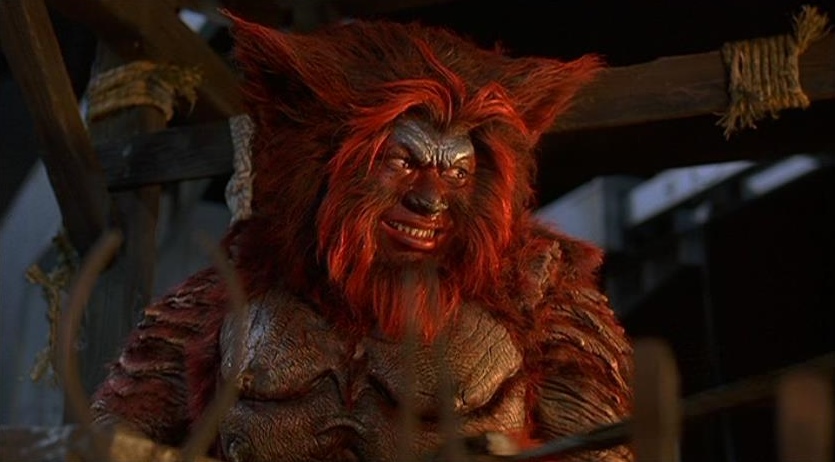
Chiba stars as Akira Inugami, the last of his kind – he’s not exactly a wolfman
– he doesn’t transform into another form, but possesses the attributes of a
wolf, with heightened senses and quick reflexes. Inugami helps a
tiger-woman/junkie fight yakuza thugs and shady government agents who want to
harness her energy for their own nefarious ends. Based on the manga Urufu Gai by Kazumasa Hirai and directed
by Kazuhiko Yamaguchi, it’s a nutty blend of action and horror, and a hell of a
ride. Just watch it. You’ll be glad you did. And don’t forget to fasten your
seatbelts.
Rating: ***½. Available on Blu-ray, Shudder, Kanopy

Lake of Dracula (1971)
This is the second title of Yamamoto’s loose trilogy, bookended by The Vampire Doll (1970) and Evil of Dracula (1974). Shin Kishida stars
in the title role, with a performance that’s closer to Lee than Lugosi, imposing
and animalistic. Akiko (Midori Fujita) re-experiences
a traumatic event from her past, and begins to notice people in her town are falling
under the spell of a mysterious figure. Unfortunately, her younger sister
Natsuko (Sanae Emi) and fiancée Dr. Takashi Saeki (Chôei Takahashi) refuse to
believe her. The first two-thirds drag (most of the action is reserved for the
final act), but it’s heavy on atmosphere.
Rating: ***. Available on Blu-ray (in boxed set, The Bloodthirsty Trilogy)

Tomie (1998) Director Ataru Oikawa and writer Ataru Oikawa’s
tepid adaptation of the Junji Ito manga is slow going, but it has its moments. Miho
Kanno plays Tomie Kawakami, a girl with a mesmerizing effect on all who cross
her path. Death and misfortune follow. The film could have benefitted from more
of Ito’s signature style and general weirdness. Instead, we’re subjected to a
collection of generic J-horror tropes with a singular story (instead of the
episodic narrative from the manga). The most damning aspect, however, is Kanno’s
bland performance, failing to capture the alluring quality of the titular
character. Skip the film and read the manga instead.
Rating: **. Available on DVD
NOTE: This is my 100th edition of Quick Picks and
Pans (I’ve really done that many?). Thanks to all my readers, old and new!